
Vietnam Proxy Guide: How to Choose, Verify, and Configure a Vietnam IP
Vietnam Proxy Guide: How to Choose, Verify, and Configure a Vietnam IP
Obtaining a Vietnam IP address is easy; keeping it stable and undetected is the challenge. Whether you are scraping e-commerce data from local marketplaces, verifying ad placements in Ho Chi Minh City, or managing localized accounts, the quality of your infrastructure dictates your success rate.
This guide moves beyond marketing labels like "VIP proxy" to help you choose the correct architecture (Residential vs. Datacenter) and configure your connection for stability.
Start gathering data with LycheeIP’s proxies
What is a Vietnam proxy and how does it work?
A Vietnam proxy acts as an intermediary gateway between your device and the internet. When you route traffic through this gateway, your requests appear to originate from a Vietnam-based IP address rather than your actual location.
Technically, this involves an HTTP/S or SOCKS5 handshake where the proxy server forwards your request headers to the destination server. The destination server sees the proxy’s ASN (Autonomous System Number) and geolocation data, identifying the traffic as "local."
Note: A proxy is distinct from a VPN. While a VPN tunnels all system traffic for privacy, a proxy is typically configured at the application level (e.g., inside a web scraper, a specific browser profile, or an automation script) for granular control over data collection and identity management.
Why use a proxy in Vietnam? (Technical Use Cases)
Engineering teams and operations managers typically deploy Vietnam proxies for four specific workflows:
- Localized Data Extraction: Scraping pricing and inventory from Vietnam-specific e-commerce platforms (like Shopee Vietnam or Lazada) that geoblock or segment content based on IP origin.
- SEO & SERP Verification: Verifying Google search results to ensure rankings and snippets appear correctly for users in Hanoi or Da Nang.
- Ad Tech Validation: Confirming that localized ads are displaying correctly and checking for affiliate fraud within the region.
- Account Management: Reducing "suspicious login" flags by maintaining a consistent, local IP identity for banking, social media, or seller accounts accessing Vietnam-facing portals.
Choosing the wrong proxy type is the most common cause of immediate blocking. Use this matrix to match the proxy type to your objective.
| Feature | Static Datacenter | Dynamic Residential | "VIP" (Marketing Term) |
| Source | Commercial data centers | Real consumer devices (Wi-Fi/4G) | Varies (often shared DC) |
| Speed | High (>1Gbps, <50ms) | Moderate (varies by peer) | Varies |
| Trust Score | Low to Medium | High | Low to Medium |
| Best For | Speed, API scraping, high throughput | Scraping tough targets, Account Ops | Budget browsing |
| Cost | Lower | Higher | Usually Low |
Key Takeaway:
- Use Datacenter Proxies when you need raw speed and are targeting sites with weak security.
- Use Residential Proxies when you need to emulate human behavior to bypass strict anti-bot systems (like Cloudflare or Akamai).
You will often see the term "VIP proxy server" when searching for Vietnam IPs. In the proxy industry, "VIP" is not a technical standard. It is a marketing label often used by consumer-grade providers to describe a Dedicated or Private proxy.
If you are buying a "VIP" proxy, verify the following specifications to ensure you aren't just buying a marked-up shared IP:
- Exclusivity: Is the IP assigned only to you, or is it "VIP" because it’s shared by fewer people than the free tier?
- Uptime: Does it come with an SLA (Service Level Agreement)?
- Protocol: Does it support SOCKS5 for UDP traffic, or just HTTP?
Real "VIP" status comes from infrastructure quality, clean subnets and correct ASN registration, not the label on the checkout page.
Start gathering data with LycheeIP’s proxies
How to set up a Vietnam proxy
Configuration depends on your tool stack. Below are standard setups for browsers and command lines.
1. Browser Configuration (Firefox/Chrome)
For manual testing, configure the proxy directly in your browser or use an extension like FoxyProxy.
- Go to Settings > Network Settings.
- Select Manual proxy configuration.
- Input the IP (e.g., 113.160.x.x) and Port provided by your vendor.
- If the proxy requires authentication, you will be prompted for a Username and Password upon loading your first page.
2. cURL / Terminal
For quick connectivity tests, pass the proxy credentials in the command string:
Bash
curl -x "http://username:password@vietnam-proxy-ip:port" "http://httpbin.org/ip"
3. Python (Requests)
For developers integrating into scrapers:
Python
proxies = {
"http": "http://user:pass@vietnam-ip:port",
"https": "http://user:pass@vietnam-ip:port",
}
requests.get("https://target-site.vn", proxies=proxies)
How to verify your IP is actually in Vietnam
Never trust the dashboard alone. Verify your exit node using third-party databases.
- Geo-Location Check: Visit a site like ip-api.com or whatismyipaddress.com. The "Country" should strictly say "Vietnam."
- Leak Test: Ensure your real DNS isn't leaking. If the IP says Vietnam but the DNS says "United States," sophisticated firewalls will block you.
- Latency Check: A Vietnam proxy should have higher latency if you are pinging it from Europe/US compared to a local server. If latency is impossibly low (e.g., 10ms from New York), it may be a virtual location, not a physical one.
Troubleshooting common Vietnam proxy failures
If your connection is failing, use this table to diagnose the root cause.
| Symptom | Likely Cause | Solution |
| Connection Timeout | The specific residential peer went offline. | Enable auto-rotation or increase retry logic in your code. |
| 403 Forbidden | The IP range (ASN) is blacklisted by the target. | Switch from Datacenter to Residential IPs. |
| CAPTCHA Loops | User-agent does not match the IP fingerprints. | Align your User-Agent string; ensure cookies are handled correctly. |
| Slow Speeds | Congested network or poor routing. | Test a different sub-region or switch to a high-throughput datacenter IP. |
Start gathering data with LycheeIP’s proxies
How LycheeIP handles Vietnam infrastructure
For developers who need a stable Vietnam IP without the guesswork, LycheeIP provides infrastructure that prioritizes uptime and clean pools over marketing fluff.
How LycheeIP fits your workflow:
- Dynamic Residential: Access a pool of Vietnam IPs that are filtered by AI algorithms to ensure high success rates. These IPs undergo a cooling period of over six months to minimize "used" signals.
- Static Datacenter: If you need speed, LycheeIP offers Vietnam datacenter IPs with <50ms latency and 1Gbps+ throughput, ideal for high-volume tasks that don't require deep evasion.
- Stable Availability: With a 99.98% network availability SLA, you avoid the instability common with cheap "VIP" lists.
- Developer Control: Manage IPs via a simple API or web dashboard, with clear billing based on traffic (Residential) or IP count (Datacenter).
Assumptions and limitations
- Speed Variance: Residential proxies rely on consumer networks; speeds in Vietnam can fluctuate based on local ISP conditions (Viettel, VNPT, FPT).
- Rotation necessity: No single IP remains "clean" forever. For high-volume scraping, rotation is mandatory.
- Legal Compliance: Always respect the robots.txt of target sites and local regulations regarding data privacy when collecting data in Vietnam.
Start gathering data with LycheeIP’s proxies
Frequently Asked Questions:
1. Can I use a free Vietnam proxy list?
You can, but it is not recommended for professional use. Free proxies often have extremely slow speeds, high failure rates, and significant security risks (including data sniffing). They are typically blacklisted by major Vietnam websites.
2. What is the difference between a Vietnam proxy and a VPN?
A VPN encrypts your entire device's internet connection. A proxy usually only reroutes traffic for a specific application or browser. Proxies are better for tasks like web scraping or managing multiple accounts simultaneously.
3. Does LycheeIP offer SOCKS5 for Vietnam proxies?
Yes, LycheeIP supports both HTTP/HTTPS and SOCKS5 protocols, allowing for more flexible integration with various software and automation tools.
4. Why is my Vietnam proxy slow?
If you are using a residential proxy, you are routing traffic through a real user's device in Vietnam. If that user has a slow connection, your proxy will be slow. Datacenter proxies are generally much faster.
5. How do I rotate my Vietnam IP address?
With LycheeIP’s dynamic residential proxies, rotation is handled automatically via the gateway. You simply make a request, and the system assigns a fresh IP from the pool.
6. Is it legal to use a Vietnam proxy?
Using a proxy server is generally legal. However, what you do with the proxy (e.g., scraping copyrighted data or bypassing security controls) depends on the terms of service of the target website and local laws.

Recommended Articles
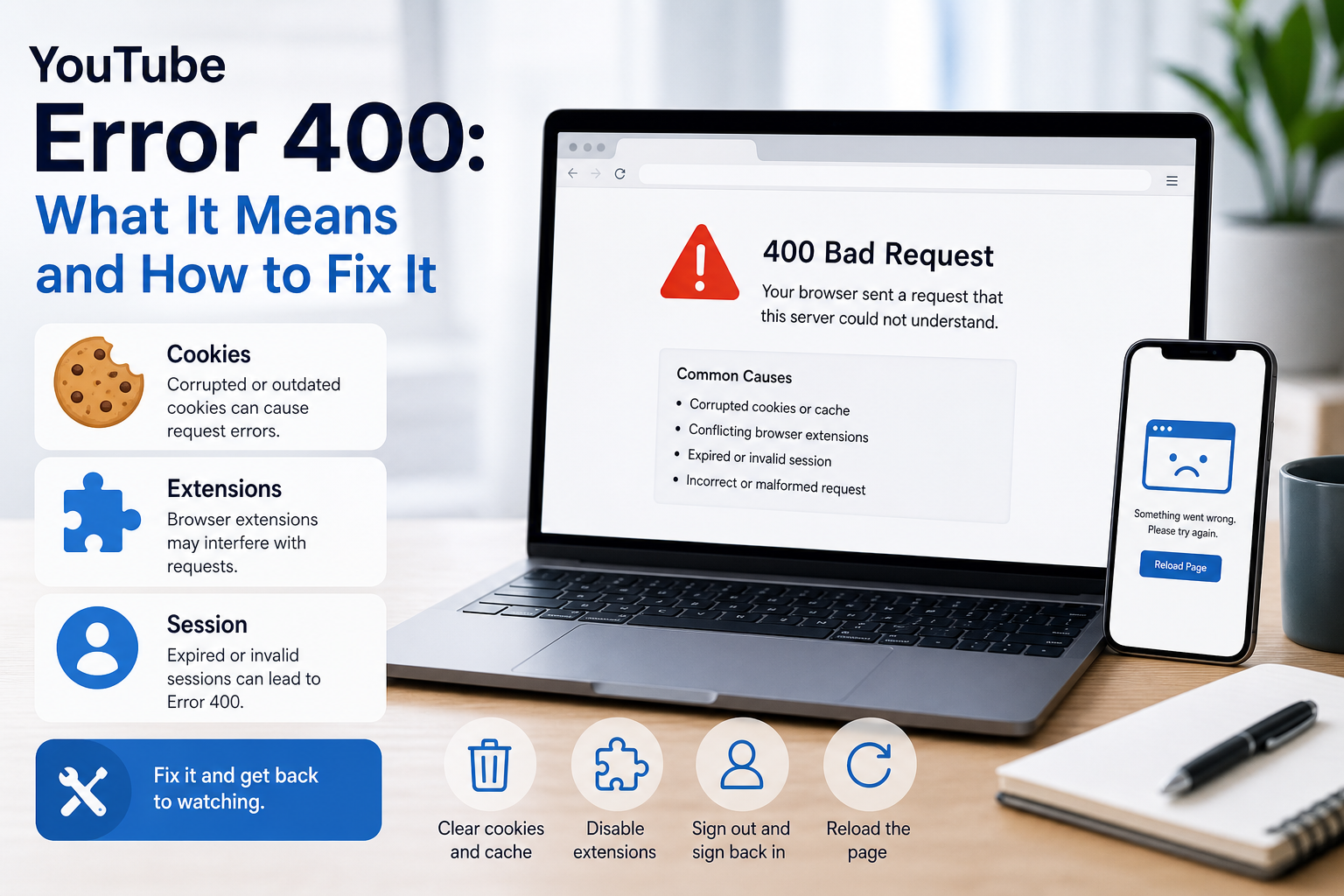
YouTube Error 400: What It Means and How to Fix It
In HTTP terminology, a 400 Bad Request is a client-error response. MDN explains that servers commonly return 400 when they consider the request malformed, incorrectly framed, or deceptively routed. The important troubleshooting clue is that repeating the exact same request without changing anything is expected to fail again.
View Details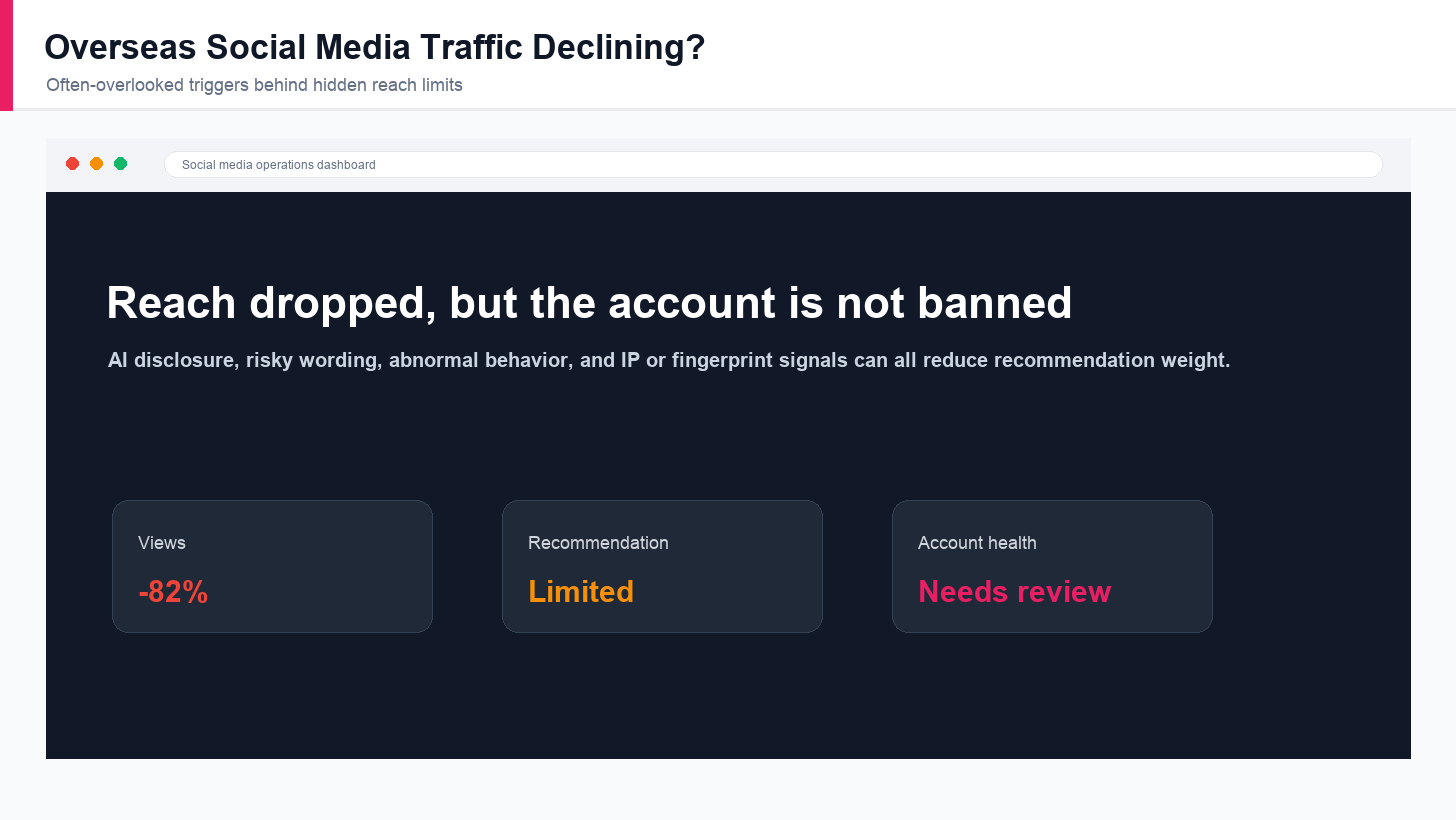
Overseas Social Media Traffic Declining? These Reach-Limiting Triggers Are Often Overlooked
A practical guide to overlooked overseas social media reach drops, covering AI content disclosure, risky wording, abnormal account behavior, hidden reach-limiting signals, and account environment checks.
View Details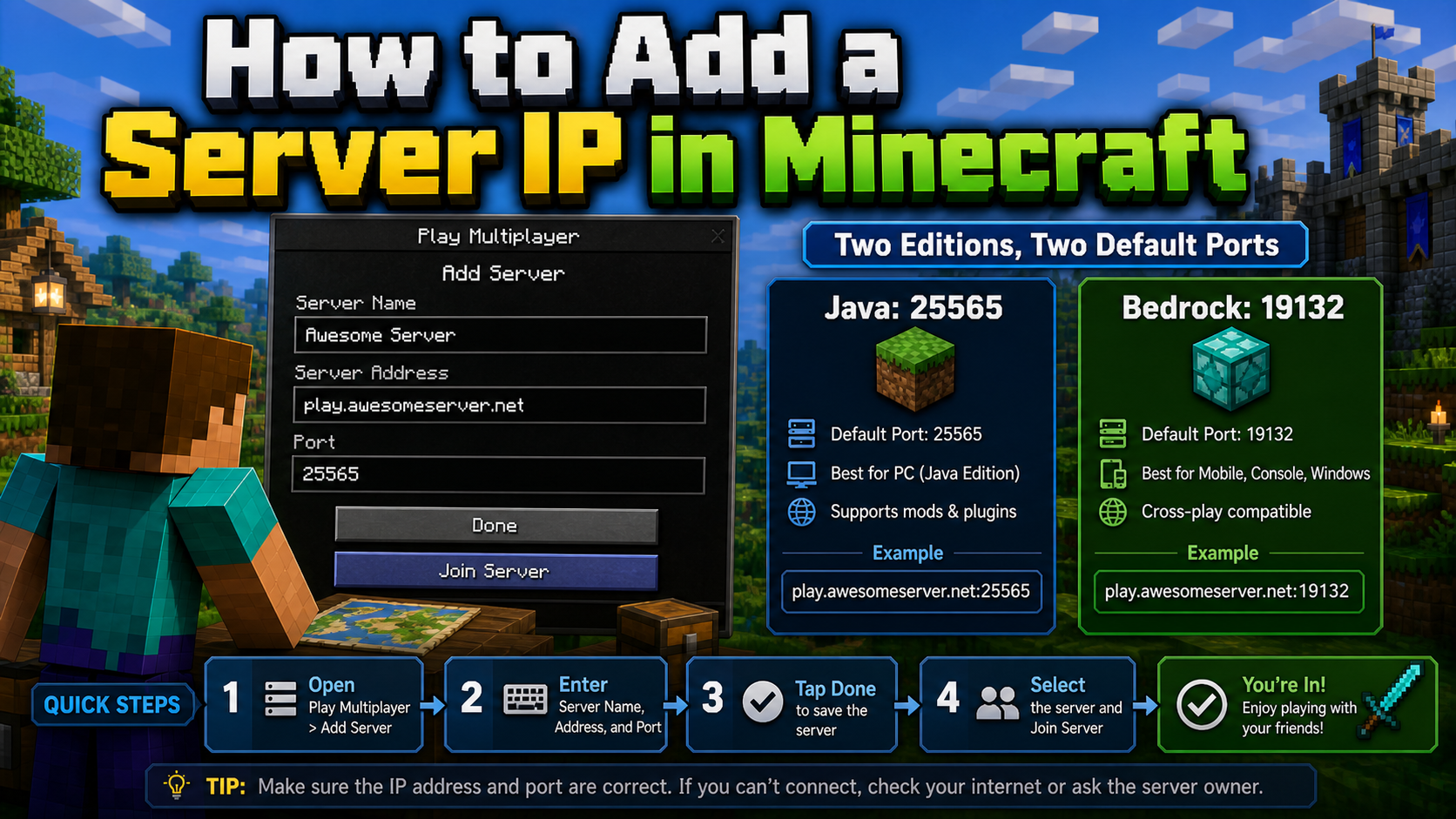
How to Add a Server IP in Minecraft Step by Step
Learn exactly where to enter a Minecraft server IP in Java, Bedrock, and Pocket Edition, plus how to fix common connection errors, ports, and edition mismatches.
View Details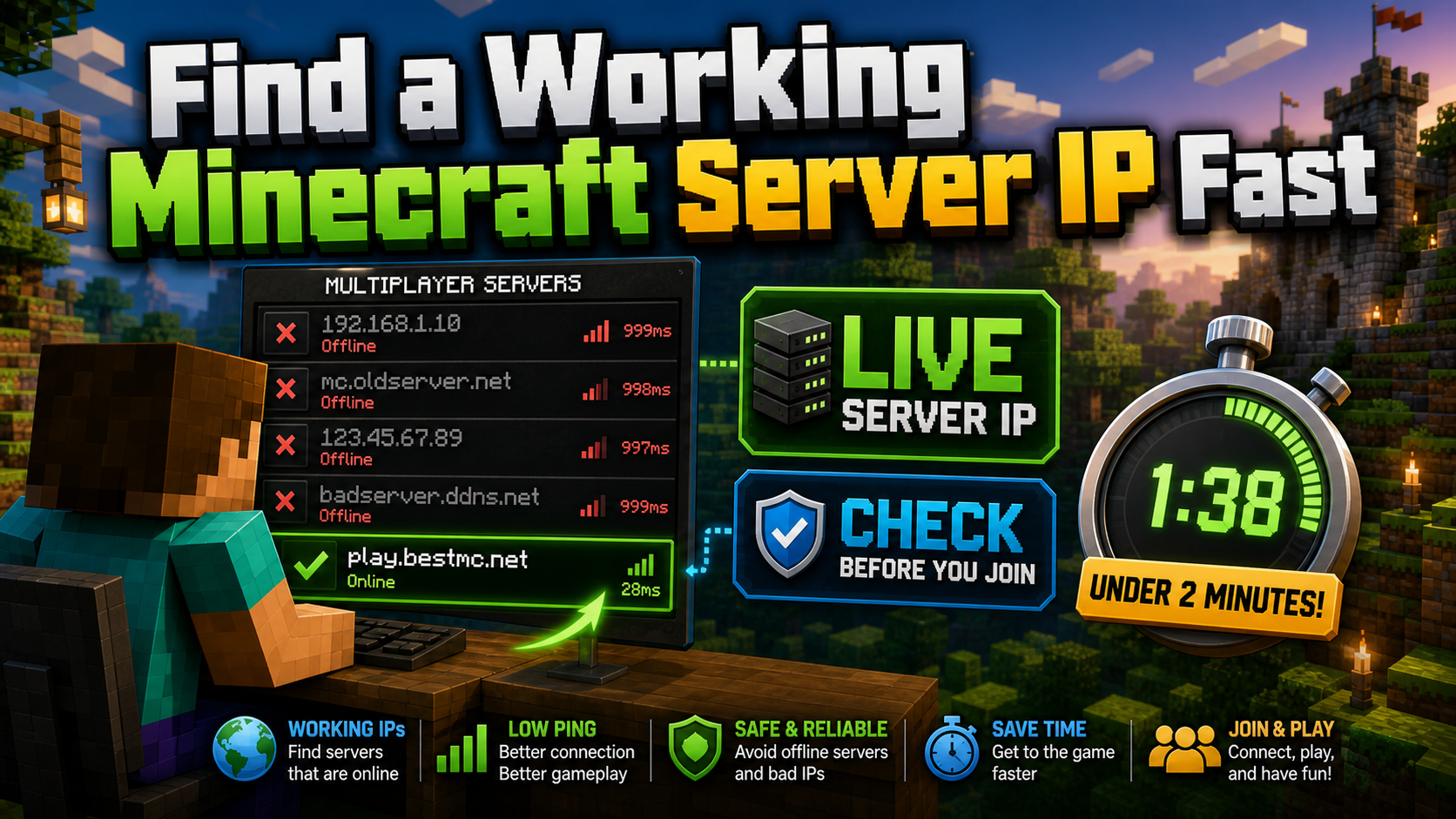
How to Find a Working Minecraft Server IP Fast
Stop wasting time on dead Minecraft server IPs. Learn how to verify live servers quickly, read status icons, check ports, and source updated server addresses.
View Details
Best 24/7 Online Minecraft Server IPs — No Downtime
Find reliable 24/7 Minecraft server IPs for Java and Bedrock, plus uptime checks, port basics, ping guidance, crossplay notes, and network stability tips.
View Details