
Static vs Rotating Proxies: Which Should You Use in 2025?
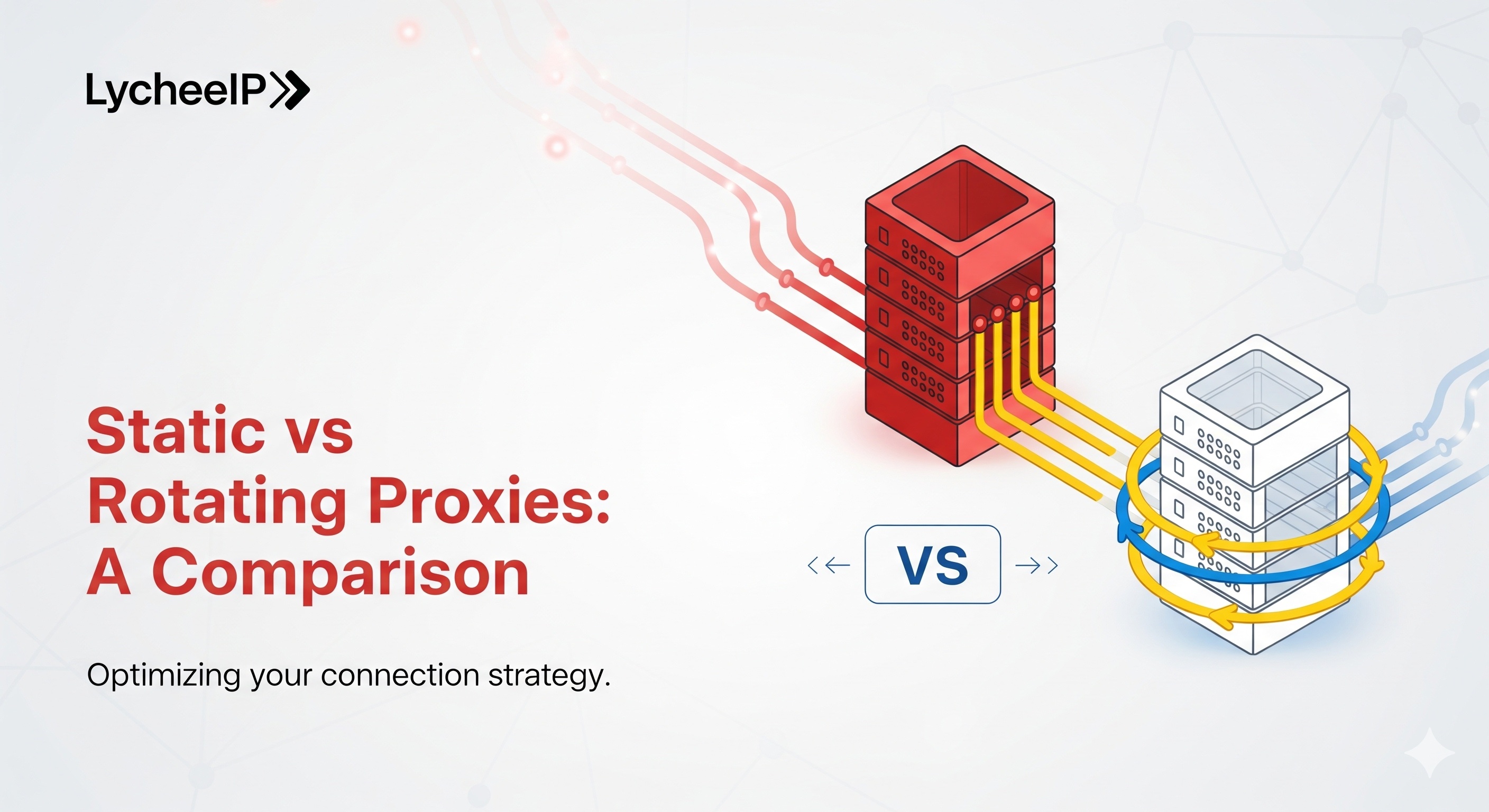
When scraping the web or managing online accounts in 2025, your choice of proxy is a critical decision that directly impacts your project's success, cost, and stability. At LycheeIP, one of the most common questions we hear from clients is which of the two most popular modes; static or rotating, is right for their needs.
Understanding how they work is the key to picking the right tool for your task and avoiding unnecessary blocks or costs. As proxy experts, we've created this guide to define each type, outline their benefits, and help you make a confident decision.
Use LycheeIP Static & Rotating Proxies
Definitions: Understanding the Core Concepts
Before comparing them, let's establish a clear definition for each proxy type.
- Static Proxies provide you with a single, fixed IP address from a datacenter or an Internet Service Provider (ISP). Because the IP address stays the same, every connection you make to a target website comes from the same identity. They are typically sold as individual IPs, and once configured, every request you send goes through that same address.
- Rotating Proxies (sometimes called dynamic proxies) automatically change the outgoing IP address for your connections. A rotation server assigns a new address from a large pool, either for every new request you make or at set time intervals. Consequently, rotating proxies make you appear as a different visitor each time, which is invaluable for tasks requiring high anonymity.
The Benefits and Limitations of Static Proxies
Now that we've defined the "what," let's explore the "why." Static proxies are prized for their stability and predictability, making them the superior choice for certain tasks.
Key Benefits Include:
- Stable Identity: Because a static proxy maintains a fixed IP, it is ideal for any task that requires a consistent session. This is crucial for managing multiple social media accounts, accessing restricted corporate dashboards, or navigating multi-step workflows like an e-commerce checkout.
- Speed and Reliability: These proxies typically come directly from high-speed data centers or ISPs and do not involve the extra hops required for rotation. This results in faster connection speeds and consistently high uptime.
- Predictable Performance: Furthermore, a single, known IP address makes it easy to whitelist your connection with services that expect a known identity, such as payment gateways.
However, this very stability creates a trade-off. Because all of your requests originate from the same IP, they are easier for sophisticated anti-bot systems to detect and block if overused.
Use LycheeIP Static & Rotating Proxies
The Benefits and Limitations of Rotating Proxies
In contrast, rotating proxies are the tool of choice when anonymity and scale are the primary goals.
Key Benefits Include:
- High Anonymity and Block Avoidance: By changing IP addresses frequently, rotating proxies make it extremely difficult for websites to track your activity or implement IP-based bans. This is essential for bypassing CAPTCHAs and other security measures.
- Access to a Large IP Pool: These services often provide access to huge pools of residential or datacenter IPs. This allows your requests to be distributed across thousands of different addresses, which is critical for scraping large datasets without being detected.
- Flexible Targeting: In addition, most providers allow you to configure rotation by country or region, giving you precise control over your perceived location.
The main downside of rotating proxies is the potential for variability in speed and reliability, as performance depends on the quality of each individual IP in the pool.
Common Use Cases: Which Proxy Type Should You Choose?
To put this theory into practice, here’s a look at which proxy type our experts recommend for the most common tasks.
- For Large-Scale Web ScrapingRecommendation: Rotating Proxies. The rationale is that changing your IP address for each request is essential to avoid detection and distribute your requests across many different identities, which is crucial for successfully extracting large datasets.
- For Managing Multiple Accounts (e.g., Social Media, E-commerce)Recommendation: Static Proxies. This is because a steady IP address avoids constant session resets or re-authentication issues and is far less likely to trigger security alerts on platforms that monitor for suspicious login behavior.
- For Long Sessions (e.g., Online Banking, Dashboards)Recommendation: Static Proxies. Maintaining a consistent and trusted identity is necessary for these types of secure, long-duration connections.
- For Bypassing Geo-Restricted Content at ScaleRecommendation: Rotating Proxies. Access to a large pool of IPs from different regions and automatic rotation make it much harder for streaming services or e-commerce sites to block you based on location.
- For Testing Websites from a Single LocationRecommendation: Static Proxies. A fixed IP ensures that all your test results are consistent and reproducible, which is vital for accurate quality assurance (QA) testing.
Use LycheeIP Static & Rotating Proxies
Your Decision Checklist: A Quick Summary
To help you decide at a glance, here is a simple checklist.
You should choose a Static Proxy if:
- Your priority is a single, fixed IP address for session consistency.
- You need the highest possible speed and stability.
- Your task involves account management, online banking, or other multi-step workflows.
You should choose a Rotating Proxy if:
- Your priority is high anonymity and avoiding IP-based blocks.
- Your task involves large-scale, anonymous data collection.
- You need to distribute your requests across many different IPs and locations.
Conclusion: The Right Tool for the Right Job
Ultimately, the choice between static and rotating proxies comes down to your specific goal. Static proxies deliver the stability and speed required for tasks that demand a consistent identity. In contrast, rotating proxies provide the anonymity and scale that are critical for large-scale data collection.
In practice, many of our most sophisticated clients use a combination of both: static proxies for logging in and managing accounts, and rotating proxies for the heavy data extraction that follows.
If you need a provider that offers both high-quality static and dynamic rotating proxies, consider LycheeIP. Our network includes millions of reliable IPs in over 100 countries, with a guaranteed 99.98% availability. Whether you’re managing accounts or collecting data from around the globe, LycheeIP provides a flexible, user-friendly platform to support your entire workflow.
Use LycheeIP Static & Rotating Proxies
Frequently Asked Questions (FAQ)
To help you further, our team has answered some of the most frequently asked questions about this topic.
1) What’s the difference between static, rotating, and “sticky” proxies?
These terms define how your IP address behaves. A static proxy means you keep the same IP for your entire session. In contrast, a rotating proxy automatically changes your IP. A “sticky” proxy is a hybrid: it’s a rotating proxy that holds the same IP for a fixed window (e.g., 1, 10, or 30 minutes) before rotating to a new one.
2) What are ISP (or static residential) proxies?
ISP proxies are a powerful middle ground. They are hosted on fast, stable servers but use IP addresses that are officially registered to consumer Internet Service Providers (ISPs). This gives them the speed of a data center with the high trust of a residential IP.
3) When should I choose static vs. rotating for web scraping?
The choice depends on your target. Use a static proxy for any process that requires a consistent login. On the other hand, use a rotating proxy for large-scale, anonymous crawling, especially on targets that have strict rate limits.
5) Do rotating proxies really help avoid bans and rate limits?
Yes, absolutely. This is their primary advantage. By spreading your requests across thousands of different IP addresses, rotation makes your traffic look like it's coming from many different users, which is highly effective at avoiding simple IP-based blocks.
6) Which proxy type is better for social media or account management?
For managing a single, high-value account, static (or ISP) proxies are the industry standard to avoid security alerts. However, for short, automated tasks across many different accounts, rotating proxies (with short sticky windows) can be more efficient.
7) Is it legal to use proxies for web scraping?
Using a proxy is legal, but the legality of web scraping depends on what you scrape and how you do it. It is essential to comply with all applicable laws, respect the website's Terms of Service, and avoid scraping personal or copyrighted data.

Recommended Articles
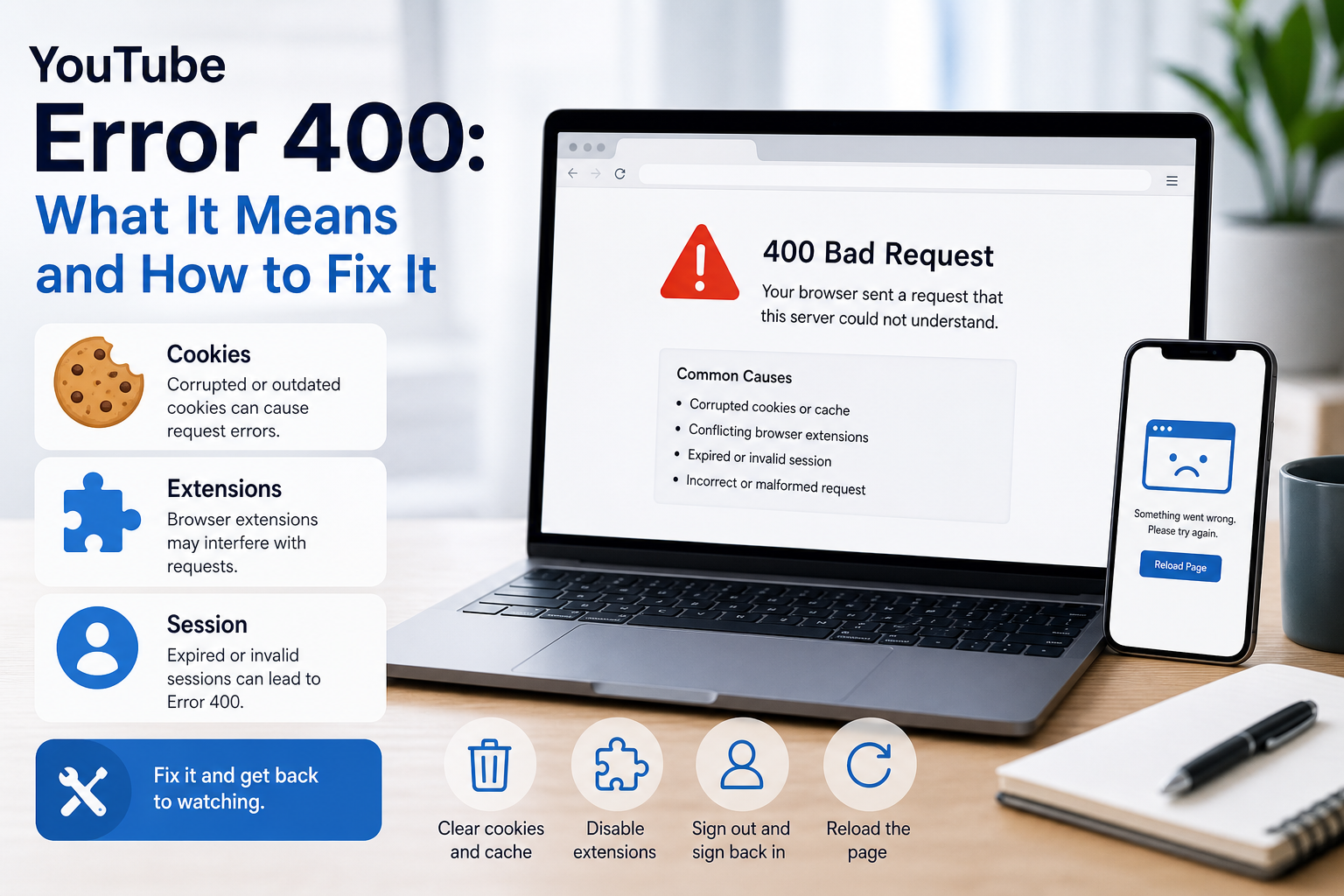
YouTube Error 400: What It Means and How to Fix It
In HTTP terminology, a 400 Bad Request is a client-error response. MDN explains that servers commonly return 400 when they consider the request malformed, incorrectly framed, or deceptively routed. The important troubleshooting clue is that repeating the exact same request without changing anything is expected to fail again.
View Details
Overseas Social Media Traffic Declining? These Reach-Limiting Triggers Are Often Overlooked
A practical guide to overlooked overseas social media reach drops, covering AI content disclosure, risky wording, abnormal account behavior, hidden reach-limiting signals, and account environment checks.
View Details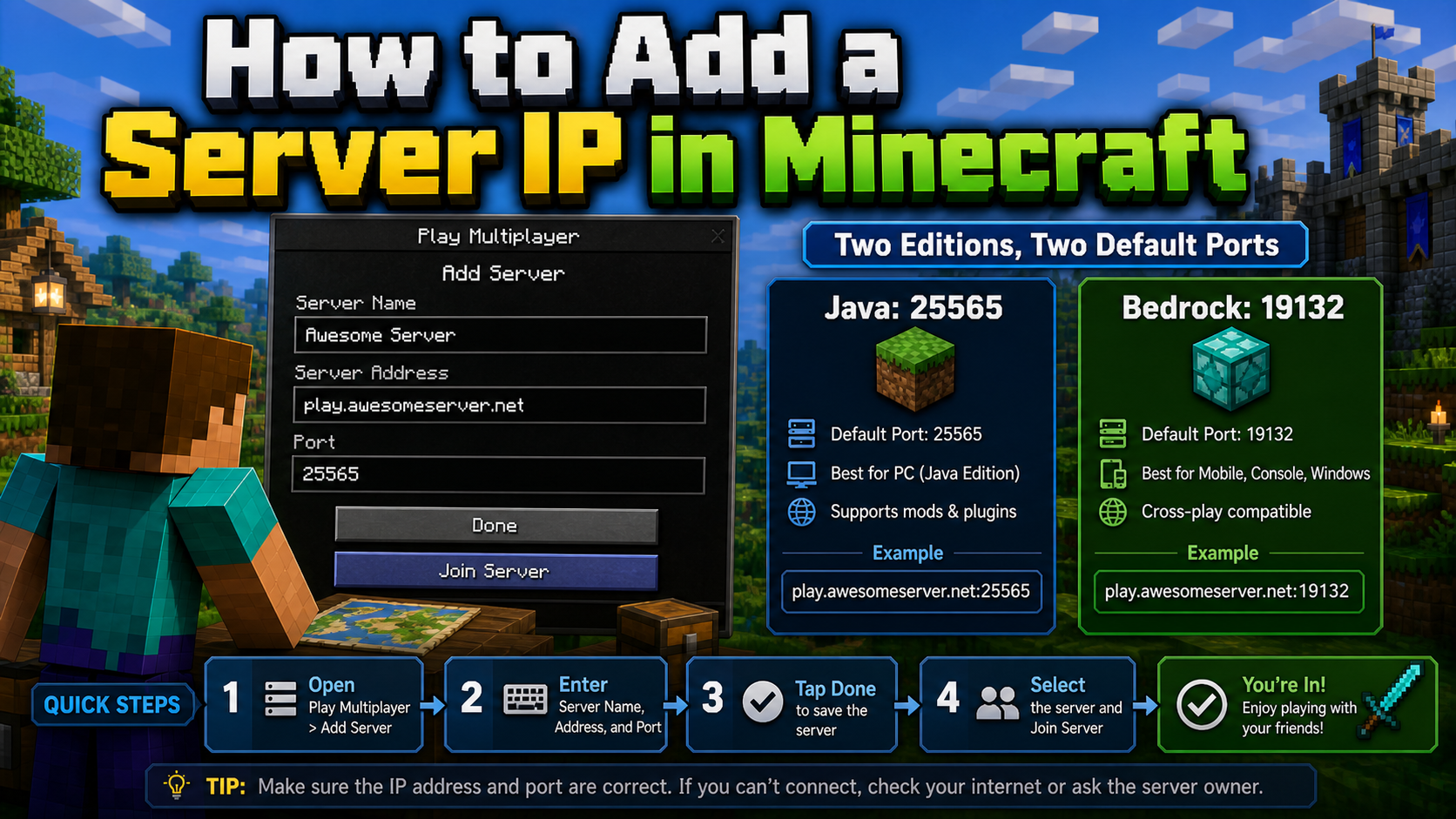
How to Add a Server IP in Minecraft Step by Step
Learn exactly where to enter a Minecraft server IP in Java, Bedrock, and Pocket Edition, plus how to fix common connection errors, ports, and edition mismatches.
View Details
How to Find a Working Minecraft Server IP Fast
Stop wasting time on dead Minecraft server IPs. Learn how to verify live servers quickly, read status icons, check ports, and source updated server addresses.
View Details
Best 24/7 Online Minecraft Server IPs — No Downtime
Find reliable 24/7 Minecraft server IPs for Java and Bedrock, plus uptime checks, port basics, ping guidance, crossplay notes, and network stability tips.
View Details