
Starlink Weapons: How Satellites Changed Modern War
Russia is mounting Starlink terminals to drones. Here's why that changes everything.
The marriage of commercial satellite internet and military drones represents one of the most significant tactical shifts in modern warfare, and it is happening right now over the battlefields of Ukraine. Reports emerging from the conflict zone indicate Russian forces have successfully integrated SpaceX's Starlink terminals into their unmanned aerial vehicles (UAVs), fundamentally altering the calculus of drone warfare.
This development highlights a critical inflection point: private technology platforms now control battlefield capabilities that were once the exclusive domain of nation-states. The implications ripple far beyond any single conflict, forcing us to reconsider who holds power in 21st-century warfare.
Explore LycheeIP global routing
Breaking the Tether - How Satellite Internet Extends Strike Range
Traditional military drones operate under significant constraints. Before the integration of satellite internet, operators faced several rigid operational bottlenecks:
- Radio Frequency (RF) Limitations: Most tactical drones rely on standard RF links that limit their operational range to approximately 50–100 kilometers from their ground control station.
- Operator Vulnerability: Because of the short RF leash, operators must position themselves relatively close to the front lines, exposing highly trained personnel and expensive equipment to enemy artillery and counter-drone fire.
- Electronic Warfare Susceptibility: Standard radio signals are highly vulnerable to localized electronic warfare (EW) measures designed to jam or intercept the control feed.
Starlink changes this equation entirely.
By mounting a Starlink terminal onto a drone platform, operators gain direct access to SpaceX's massive constellation of over 5,000 low Earth orbit (LEO) satellites. Suddenly, a drone operator in Moscow can control an aircraft hovering over Kharkiv in real-time. Command inputs and video feeds travel through space rather than vulnerable, ground-based relay stations.
The technical advantages of this orbital tether are staggering:
- Extended Range: The operational radius expands from tens of kilometers to potentially thousands. Geography becomes almost irrelevant when your command link bounces through orbital infrastructure.
- Bandwidth Capacity and Latency: Historically, adapting standard Transmission Control Protocol (TCP) for space communications involved significant technical hurdles, as detailed in IETF RFC 2488 on enhancing TCP over satellite channels. However, Starlink’s LEO architecture overcomes these legacy bottlenecks, easily handling data rates exceeding 100 Mbps. This enables high-definition video streaming, allowing operators to identify targets and make split-second decisions based on real-time intelligence.
- Resilience Against Jamming: Unlike traditional radio frequencies concentrated in specific bands, Starlink uses phased-array antennas and rapid frequency hopping across Ku and Ka bands. Disrupting this signal is exponentially harder and would likely require targeting the satellites themselves—an escalation with massive geopolitical consequences.
- Coordination Capabilities: Multiple drones can operate in coordinated swarms, sharing intelligence and synchronizing strikes through the satellite network. What once required complex ground-based coordination centers can now happen autonomously in the field.
The tactical implications are already visible. Ukrainian forces pioneered Starlink integration with consumer drones early in the conflict to coordinate artillery strikes and conduct deep reconnaissance. That Russia has now adopted and adapted this approach demonstrates how quickly asymmetric advantages dissipate when built on commercially available technology.
The Private Sector Takes Control of Military Infrastructure
Elon Musk didn't set out to become a military contractor when SpaceX launched Starlink. The project aimed to provide global internet coverage, particularly to underserved rural regions. Yet, within weeks of Russia's 2022 invasion of Ukraine, Starlink terminals became critical military infrastructure, donated by SpaceX to Ukrainian forces after Russian cyberattacks crippled conventional communications.
This created an unprecedented situation: a private company, accountable primarily to shareholders rather than any government, controlled a capability that determined battlefield outcomes.
The tensions became public in late 2022 when Musk briefly considered cutting Starlink access for Ukrainian military operations. The backlash from international politicians and military analysts was severe. Musk reversed his position, but the episode exposed a troubling reality: commercial platforms designed for civilian use have become indispensable military assets, yet they entirely lack the command structures, accountability mechanisms, and international legal frameworks that govern traditional defense contractors.
This dynamic reveals a fundamental shift in military power structures:
- Corporate Veto Power: Private companies can theoretically deny service to nation-states, even allied governments conducting lawful military operations. This inverts traditional hierarchies where governments compel corporate cooperation through regulation.
- Dual-Use Technology Proliferation: Unlike weapons systems with clear military applications, satellite internet is a civilian technology with military utility. Export controls designed to prevent weapons proliferation are ill-equipped to address internet services anyone can purchase online.
- The "Musk Doctrine": Tech CEOs now exercise geopolitical influence traditionally reserved for elected officials or military commanders, acting on personal views regarding appropriate uses of their technology in warfare.
- Accountability Gaps: If a Starlink-enabled drone strikes civilian infrastructure, who bears responsibility? The operator? The military command? The ISP for providing the enabling technology? International humanitarian law hasn't caught up with this distributed responsibility model.
SpaceX actively works to prevent unauthorized use of Starlink in Russia through geofencing and monitoring. Yet, reports persist of Russian forces acquiring terminals through black markets and circumventing restrictions. The company faces an impossible dilemma: completely locking down the network undermines the civilian use cases that justify the service, but allowing gray-market access enables adversaries to exploit the exact same capabilities.
The Future of Warfare in the Platform Age
The integration of Starlink with military drones is not an isolated development, it is a preview of warfare's trajectory for the next several decades. Understanding this future requires grappling with several interconnected trends:
Doctrinal Transformation
Military doctrine is rapidly adapting. The U.S. military's Joint All-Domain Command and Control (JADC2) concept envisions seamlessly connecting sensors and shooters across all warfare domains. Commercial satellite constellations provide the necessary backbone for this real-time data sharing. However, reliance on commercial platforms introduces single points of failure that adversaries can exploit through economic pressure or targeted cyberattacks.
The Kessler Syndrome Risk
As military operations increasingly depend on LEO satellites, these assets become priority targets. Anti-satellite (ASAT) weapons are no longer theoretical, several major powers have successfully tested them. The danger is a cascading chain reaction of collisions creating massive debris fields. According to NASA's guidelines on orbital debris, this phenomenon, known as the Kessler Syndrome, could render entire orbital regions completely unusable for decades.
Regulatory Catch-Up
International law governing armed conflict (primarily the Geneva Conventions) predates not just satellite internet, but the internet itself. Legal scholars debate whether commercial satellite constellations qualify as protected civilian infrastructure or dual-use military objectives. Updating these frameworks requires consensus among spacefaring nations with competing interests, a lengthy process that technology consistently outpaces.
Economic Warfare Tools
Control of commercial platforms creates new leverage in geopolitical competition. Imagine a future crisis where a superpower threatens to deny satellite competitors access to its physical markets unless service is restricted to an adversary. Economic interdependence, usually discussed as a peace-promoting force, becomes a severe vulnerability when critical digital infrastructure crosses physical borders.
Democratization of Advanced Capabilities
The Starlink-drone combination perfectly illustrates how commercial technology democratizes military capabilities once restricted to major powers. A well-funded non-state actor can theoretically acquire satellite internet service and drone hardware to achieve global strike capabilities that required billion-dollar investments a generation ago.
The AI Amplification
As artificial intelligence matures, satellite-enabled drones will increasingly operate autonomously, making targeting decisions faster than human oversight allows. Commercial cloud computing platforms already provide the AI infrastructure for these applications, repeating the same pattern: civilian technology, military application, and private sector control.
Explore LycheeIP global routing
LycheeIP (Developer-First Proxy Infrastructure)
While military strategists grapple with the implications of orbital mega-constellations, enterprise technology teams face their own battles regarding global network access, data extraction, and overcoming geographical bottlenecks. LycheeIP is a developer-first proxy and data infrastructure platform designed to provide technical operators with resilient, globally distributed network routing.
Just as decentralized satellite networks provide operational reach by bypassing localized ground constraints, engineering and QA teams rely on robust data infrastructure to bypass regional blocks for legitimate commercial use cases—such as software QA, application geo-testing, authorized security auditing, and public-data collection where permitted. By integrating dynamic residential IPs to simulate authentic localized user traffic, or leveraging high-throughput datacenter proxy networks for stable data aggregation, organizations can build their own resilient digital operations. (Note: Always ensure your data collection and routing practices comply with applicable local laws and target site Terms of Service.) Whether validating localized app deployments or ensuring network security, LycheeIP provides the scalable infrastructure necessary for modern, borderless development.
The Verdict: A New Era Demands New Frameworks
Russia mounting Starlink terminals to drones is more than a tactical innovation, it is a symptom of warfare's absolute transformation. The traditional monopoly that nation-states held on force projection is eroding as commercial platforms provide capabilities that were unimaginable in private hands just two decades ago.
This creates profound risks. The current trajectory leads toward unaccountable corporate actors making battlefield decisions, the proliferation of advanced capabilities to unstable regions, and legal frameworks too outdated to provide clear guidance.
Addressing these challenges requires immediate, coordinated action:
- International Norms: Spacefaring nations must develop a consensus on acceptable military uses of commercial space infrastructure, backed by verification mechanisms.
- Corporate Responsibility: Companies operating dual-use platforms need rigorous frameworks for responsible use decisions, including government liaisons and transparent restriction policies.
- Resilience Investments: Military forces depending on commercial platforms must develop analog backup capabilities and defensive measures against supply disruptions.
- Legal Modernization: International humanitarian law requires urgent updating to address autonomous systems, commercial military infrastructure, and space-based warfare.
The Russia-Starlink-drone nexus is just the beginning. Within years, we will see similar integration with satellite imaging, AI-powered targeting, and cyberweapons—all built on commercial technology platforms. Satellites have changed modern war. The harder question is whether our institutions can change fast enough to keep pace.
Explore LycheeIP global routing
Frequently Asked Questions
Q: How exactly does Starlink improve military drone capabilities?
A: Starlink provides high-bandwidth, low-latency satellite internet connectivity that extends drone operational range from roughly 50–100 kilometers to potentially thousands of kilometers. It enables real-time HD video streaming for better targeting, improves resistance to electronic jamming, and allows multiple drones to coordinate through the satellite network, removing the geographical constraints of traditional radio-controlled drones.
Q: Can SpaceX actually prevent Russia from using Starlink?
A: SpaceX uses geofencing technology and IP monitoring to restrict service in sanctioned areas, but enforcement is imperfect. Forces reportedly acquire terminals through third-party countries or black markets and deploy them in areas where service is active. Completely blocking unauthorized use would require shutting down service in entire contested regions, affecting legitimate civilian users—a tradeoff SpaceX has historically been cautious to make.
Q: Is it legal for commercial satellite companies to support military operations?
A: The legal landscape is extremely murky. Providing commercial services that militaries happen to use likely falls within existing frameworks, but actively supporting combat operations may trigger different regulatory requirements. International law governing armed conflict hasn't fully addressed commercial dual-use infrastructure, leaving companies navigating gray areas between civilian service providers and defense contractors.
Q: What happens if countries start destroying commercial satellites in wartime?
A: Attacking commercial satellites would mark a significant escalation. It could trigger the Kessler Syndrome, where debris from destroyed satellites creates cascading collisions that make orbital regions unusable for decades. Additionally, it would likely be considered an attack on civilian infrastructure under international law, potentially justifying retaliatory action and degrading global digital services.
Q: Will other satellite internet providers create the same military problems as Starlink?
A: Yes, and potentially worse. Amazon's Project Kuiper, China's planned mega-constellations, and other competitors will multiply these geopolitical challenges. Each provider will have different governance structures, national loyalties, and restriction policies. This creates a fragmented landscape where military actors can shop between providers for the least restrictive orbital option.

Recommended Articles

Best Real Estate Scrapers in 2026
Best Real Estate Scrapers in 2026
View Details
How to Choose a Web Crawler: A Technical Decision Framework
The wrong way to choose a web crawler is to begin with a list of products. The right starting point is the system you need to build. Before comparing tools, define:
View Details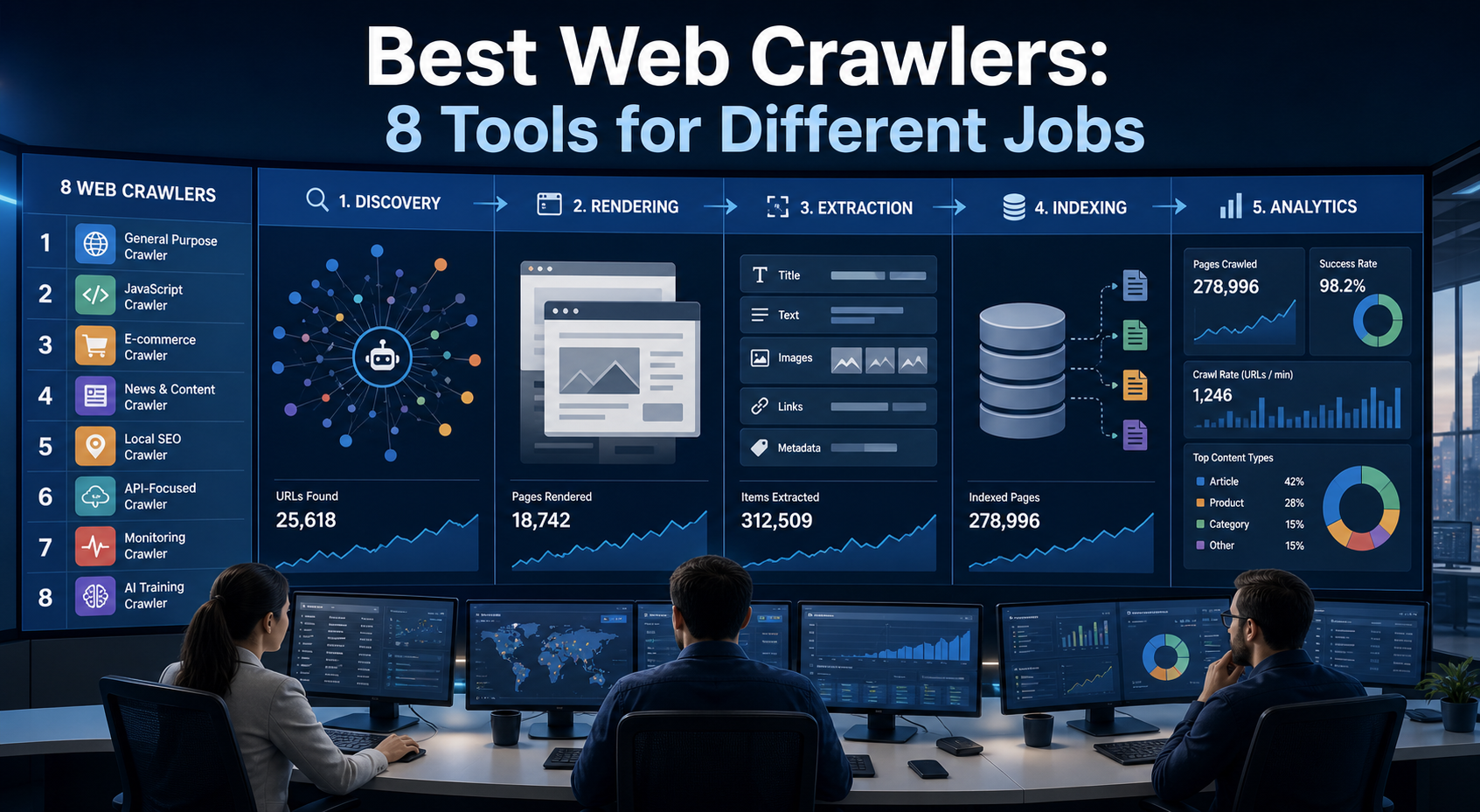
Best Web Crawlers: 8 Tools for Different Jobs
There is no single best web crawler for every project. A technical SEO audit, an AI knowledge pipeline, an internet archive, and a distributed search index may all involve crawling URLs, but they require different capabilities. The most useful way to compare web crawler tools is therefore to ask what job each one was designed to perform. This guide evaluates eight strong options across:
View Details
Web Scraping Ecommerce Websites With Python: A Practical Guide
Recommended meta title: Web Scraping Ecommerce Websites With Python: Guide Recommended meta description: Learn how to scrape ecommerce websites with Python using Requests, Beautiful Soup, Playwright, and Scrapy, with validation and scaling guidance. URL slug: /web-scraping-ecommerce-websites-python/
View Details
How to Train an AI Model With Web Data Safely
To train an AI model with web data, start by deciding whether you actually need training. Then collect representative sources, preserve provenance, remove duplicates and low-quality content, create leakage-resistant splits, build a baseline, fine-tune or train the appropriate model, and evaluate on real held-out examples before deployment.
View Details