
How Starlink Is Killing Traditional Cell Carriers
Your cell carrier might be obsolete sooner than you think. While AT&T, Verizon, and T-Mobile continue investing billions in 5G macro-towers and fiber-optic infrastructure, SpaceX's Starlink is quietly building a network that could make those massive terrestrial investments economically irrelevant.
The company's "Direct-to-Cell" satellite technology promises something traditional telecommunications carriers have struggled to deliver for decades: truly universal coverage without dead zones, exorbitant roaming fees, or the need for specialized, bulky satellite phones.
This isn't science fiction or a distant future promise. Starlink has already launched hundreds of satellites equipped with direct-to-cell capabilities, partnered globally with major carriers, and successfully completed initial text-messaging tests. For network engineers, data teams, and telecommunications operators, the implications are staggering—and the timeline for disruption is moving much faster than the industry wants to admit.
Test global networks with LycheeIP
How Direct-to-Cell Satellites Eliminate Cell Towers
Traditional cellular networks rely on a ground-based infrastructure topology that hasn't fundamentally changed since the 1980s. Your smartphone connects to the nearest physical cell tower, which then routes your call or data through a complex network of fiber-optic backhaul cables and switching stations. This model has severe, baked-in limitations.
The Tower Problem
Cell carriers need towers positioned within a few miles of their users to maintain usable signal strength. In urban environments, this means deploying thousands of towers—each costing between $150,000 to $500,000 to build, plus ongoing maintenance, electricity, and exorbitant land lease costs.
In rural areas, the economics completely collapse. Building a $300,000 tower to serve 50 people in remote Montana makes absolutely no financial sense, which is exactly why roughly 15-20% of the US landmass still lacks adequate, high-speed mobile coverage.
Starlink's direct-to-cell satellites solve this by effectively placing the cell tower in space. Each specialized satellite orbits at approximately 340 miles altitude and is equipped with an advanced eNodeB modem. To your existing LTE smartphone, this satellite looks and acts exactly like a standard cell tower on the horizon.
The Technical Breakthrough
The physics and engineering challenges required to achieve this were enormous. Traditional communications satellites orbit at 22,000 miles (Geosynchronous Equatorial Orbit) and require large, directional parabolic dishes to communicate. Starlink satellites operate in Low Earth Orbit (LEO) and utilize massive phased-array antennas capable of creating hundreds of dynamically focused spot beams.
These LEO satellites had to compensate for several massive technical hurdles:
- Severe Doppler Shift: Because the satellites move at 17,000 mph relative to the ground, the radio frequencies constantly compress and stretch. The system requires incredibly sophisticated, real-time frequency adjustment.
- Link Budget / Signal Strength: Modern smartphones were never designed to transmit a radio signal 340 miles into space. The satellites must use extremely sensitive, large-aperture receivers to "hear" the faint 200-milliwatt transmission from a standard iPhone.
- Rapid Handoffs: Because LEO satellites cross the horizon in just minutes, your active connection must smoothly transfer (hand-off) to the next satellite seamlessly without dropping the data packet.
Coverage Advantages
A single Starlink direct-to-cell satellite can project coverage over thousands of square miles. With a constellation goal of tens of thousands of satellites, multiple nodes will be visible from any point on Earth simultaneously.
This infrastructure shift immediately eliminates:
- Dead zones in national parks, mountainous terrain, and open oceans.
- Coverage gaps on isolated highways.
- The need for complex international roaming agreements.
- Complete communication blackouts during natural disasters. When Hurricane Ian destroyed terrestrial cell towers across Florida, affected areas remained without service for weeks. A space-based network remains completely immune to ground-level weather events.
Cost Comparison Between Starlink and Traditional Carriers
The economics of satellite versus terrestrial networks reveal exactly why traditional carriers are panicking. While Starlink's initial Capital Expenditure (CapEx) for rocket launches is astronomical, the operational model presents an insurmountable competitive advantage over time.
Infrastructure Costs
Traditional telecommunications is a capital-intensive nightmare. In 2021, T-Mobile spent $23 billion acquiring mid-band spectrum; Verizon spent $45 billion on C-band spectrum in 2020. That is pure cost before pouring a single concrete foundation for a tower.
Traditional Carrier Costs (Per Tower):
- Construction: $150,000 – $500,000
- Annual Land Lease: $20,000 – $50,000
- Electricity: $10,000 – $20,000 annually
- Maintenance & Upgrades: $15,000 – $30,000 annually
- Fiber Backhaul Connectivity: $10,000+ annually
Starlink Costs (Per Satellite):
- Satellite Construction: ~$250,000 (driven down by extreme in-house manufacturing economies of scale).
- Launch Cost: Marginal cost utilizing reusable Falcon 9 rockets.
- Lifespan: ~5 years before orbital decay requires replacement.
- Ongoing Overhead: Zero land leases, zero local zoning permits, and zero per-location electricity bills.
A single Starlink satellite can serve a geographic footprint that might require 50 to 100 terrestrial cell towers. Those 100 towers would cost tens of millions to build and millions more to operate annually.
Market Implications
This economic model threatens the foundational "rural cross-subsidization" strategy of legacy carriers. Currently, highly profitable urban towers subsidize the losses incurred by maintaining unprofitable rural coverage.
If direct-to-cell satellite technology captures the rural and frequent-traveler demographics, terrestrial carriers lose that revenue while still being forced to maintain their expensive urban infrastructure. This could force urban price increases, driving even more customers to hybrid or satellite-first alternatives. Furthermore, when a terrestrial cell tower becomes obsolete, it represents stranded capital that must be manually decommissioned. When a Starlink satellite reaches its end-of-life, it safely burns up in the atmosphere and is replaced by a newer model on the next rocket launch.
LycheeIP (Developer-First Proxy Infrastructure)
As global connectivity shifts from localized terrestrial towers to borderless satellite constellations, the way engineering and data teams test network boundaries must also evolve. LycheeIP is a developer-first proxy and data infrastructure platform that helps technical teams reliably route and scale their network requests.
When developers build applications designed to utilize Starlink's Direct-to-Cell network, they need to rigorously test how their mobile APIs handle extreme global roaming scenarios and variable latency. By integrating a reliable proxy infrastructure, QA teams can globally simulate these complex network handoffs without leaving their desks. Utilizing dynamic IP networks allows automated test suites to seamlessly rotate geographic locations, mimicking a user transitioning from a terrestrial 5G connection in New York to a satellite link in rural Canada. Conversely, for infrastructure teams that need to maintain highly secure, persistent connections for heavy backend data ingestion or competitive intelligence gathering across global markets, datacenter IP solutions provide the dedicated, high-speed bandwidth necessary. Testing your edge cases with LycheeIP ensures your application remains resilient, regardless of whether your end-users connect via a cell tower or a satellite.
Test global networks with LycheeIP
Timeline for Mainstream Satellite-to-Phone Adoption
While the underlying physics and economics are sound, several factors will determine how quickly satellite connectivity actually replaces traditional carrier revenue.
Phase 1: Text and Emergency Services (2024–2025)
The first commercial services are strictly focusing on SMS text messaging and emergency SOS features. Current bandwidth limitations mean data-intensive applications aren't viable yet. Apple's iPhone 14/15 already offers proprietary emergency satellite SOS, proving massive consumer appetite for the feature.
Starlink, in partnership with T-Mobile (US), Rogers (Canada), and Optus (Australia), is rolling out basic SMS capabilities. This is positioned as a "value-add" to existing terrestrial plans rather than a standalone replacement.
Phase 2: Voice and Limited Data (2025–2027)
Voice calling requires significantly more continuous bandwidth and lower latency than asynchronous texting. Starlink's larger V2 Mini satellites will provide the capacity for voice services and basic IoT telemetry.
This represents the first major disruption point. Users who prioritize coverage over speed—such as agricultural workers, maritime operators, and rural residents—could switch entirely to satellite-first plans. Limited data (1–5 Mbps per user) will also become feasible, which is adequate for messaging apps, basic email, and GPS navigation.
Phase 3: Mainstream Adoption and Broadband (2028+)
Full, head-to-head competition with traditional terrestrial carriers for broadband data requires several milestones:
- Bandwidth Density: Current direct-to-cell technology provides roughly 2–7 Mbps per satellite beam, shared among active users. Future massive Gen3 satellites with highly advanced laser inter-satellite links must increase this capacity 10x to 20x to support modern app usage.
- Regulatory Hurdles: The FCC (and global equivalents) must establish permanent frameworks, such as the Supplemental Coverage from Space (SCS) regulations, to authorize mobile satellite operations across standard terrestrial spectrum bands without interfering with existing ground networks.
- Hardware Integration: While current smartphones work technically, future device modems will likely include optimized antenna arrays specifically designed to talk to LEO satellites, drastically improving speed and battery life.
The Verdict: Evolution, Not Immediate Revolution
Traditional cell carriers aren't dying tomorrow morning, but they are staring down the exact same disruption curve that Netflix brought to Blockbuster—a structurally superior economic model that takes a decade to fully manifest.
For Consumers:
If you live in a dense urban or suburban area with excellent 5G coverage, you will remain on terrestrial networks for the foreseeable future. The physics of 5G macro-towers will always provide more raw bandwidth density in crowded cities than a satellite 340 miles away. However, if you are an off-grid worker, frequent traveler, or live in a rural dead zone, satellite connectivity will become your primary lifeline within the next 24 months.
The Long View:
By 2030, we will operate in a seamless hybrid model. Your smartphone will default to high-speed 5G when in the city, and instantly, invisibly hand off to a Starlink satellite the moment you drive out of terrestrial range.
Traditional carriers that successfully pivot to becoming "connectivity aggregators" (partnering with satellite providers) will survive. Those stubbornly clinging strictly to the legacy, tower-based model will follow copper landline providers into irrelevance. The technology that will replace the modern cell tower is already orbiting overhead; it is simply waiting for bandwidth density to catch up with its ambition.
Test global networks with LycheeIP
Frequently Asked Questions
Q: Does Starlink's Direct-to-Cell technology work with my current phone?
A: Yes. Starlink's direct-to-cell satellites communicate using standard LTE protocols. This means your existing, unmodified smartphone can connect to them just as it would a normal cell tower. You do not need a specialized, bulky satellite phone or a new hardware upgrade to send basic texts.
Q: Will satellite internet directly to my phone be as fast as terrestrial 5G?
A: No. Physics dictates that early direct-to-cell services will only provide 2–7 Mbps speeds, which is suitable for text messaging, basic voice calls, and lightweight browsing—far slower than terrestrial 5G's 100+ Mbps. High-density urban areas will always require 5G towers for maximum, gigabit data speeds.
Q: Why would a carrier like T-Mobile partner with Starlink if it threatens their core business?
A: It is a classic 'cooperate or die' defensive strategy. Partnering with satellite providers allows carriers to instantly market "100% geographic coverage" and prevent customer churn to competitors. By partnering with Starlink, T-Mobile gained a massive coverage advantage over AT&T and Verizon. They are sacrificing some future infrastructure control to maintain their current market dominance.
Q: What happens to the millions of existing cell towers after satellite adoption?
A: Cell towers will not disappear completely. Urban and high-density suburban areas will absolutely maintain ground-based 5G/6G networks for high-bandwidth data needs. However, isolated rural towers will likely be decommissioned over the next decade as their maintenance costs eclipse their value, shifting that traffic entirely to the sky.
Q: Can direct-to-cell satellites handle emergency services during natural disasters?
A: Yes, and this is their most critical advantage. Because the infrastructure is in space, satellites remain fully operational when terrestrial hurricanes, earthquakes, or wildfires destroy ground-based power grids and fiber lines. Satellite networks provide an unkillable communications backbone for first responders and citizens during major crises.

Recommended Articles
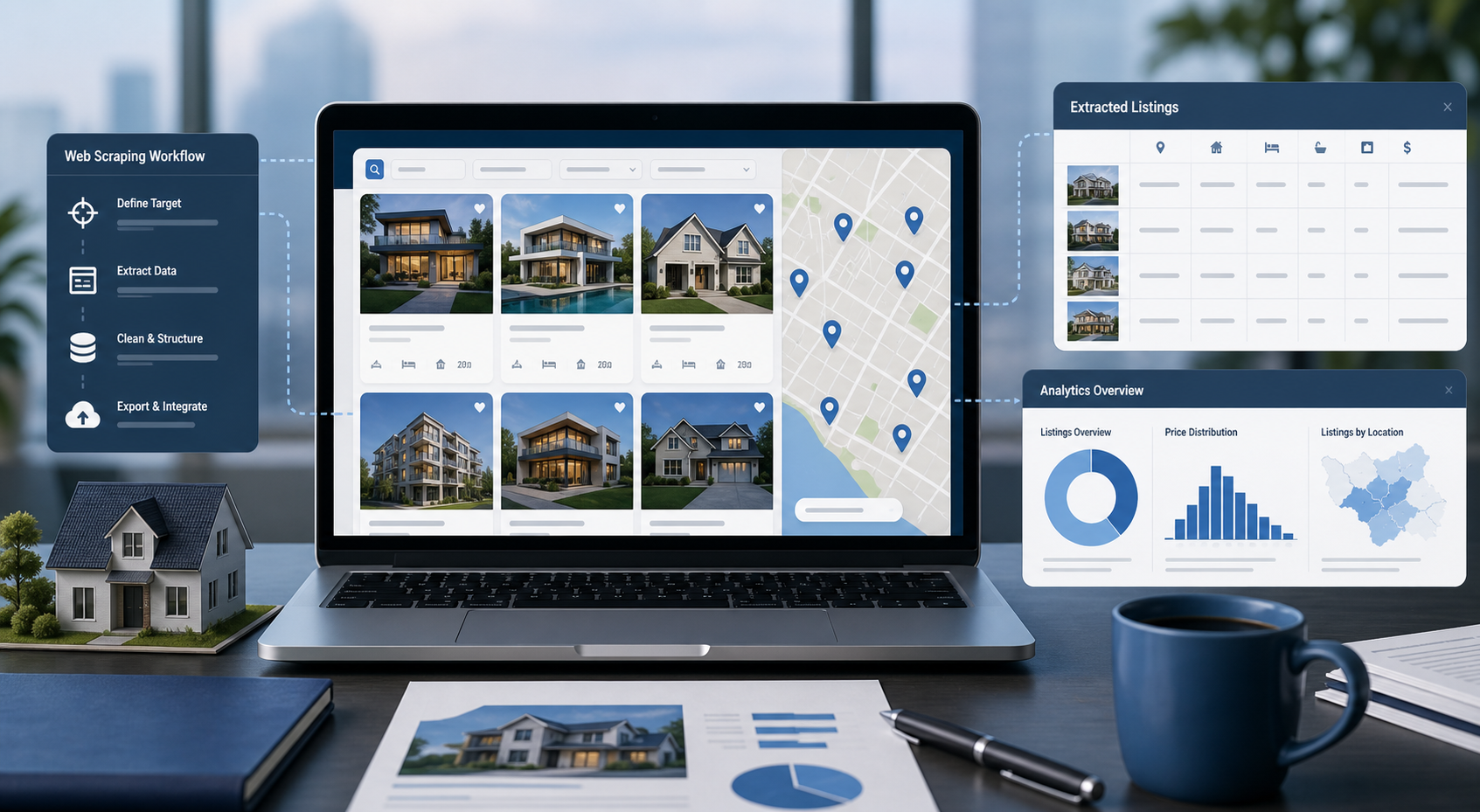
Best Real Estate Scrapers in 2026
Best Real Estate Scrapers in 2026
View Details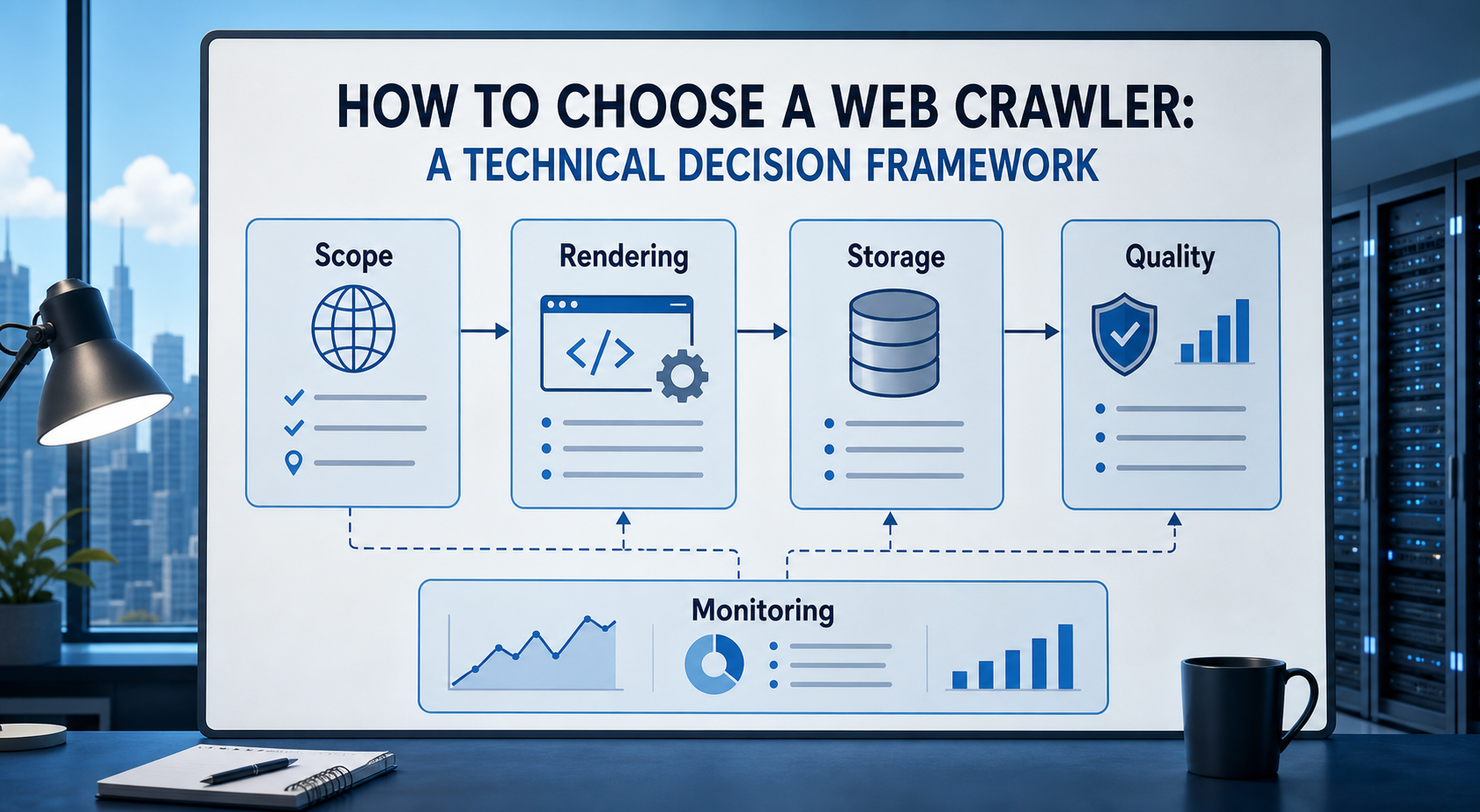
How to Choose a Web Crawler: A Technical Decision Framework
The wrong way to choose a web crawler is to begin with a list of products. The right starting point is the system you need to build. Before comparing tools, define:
View Details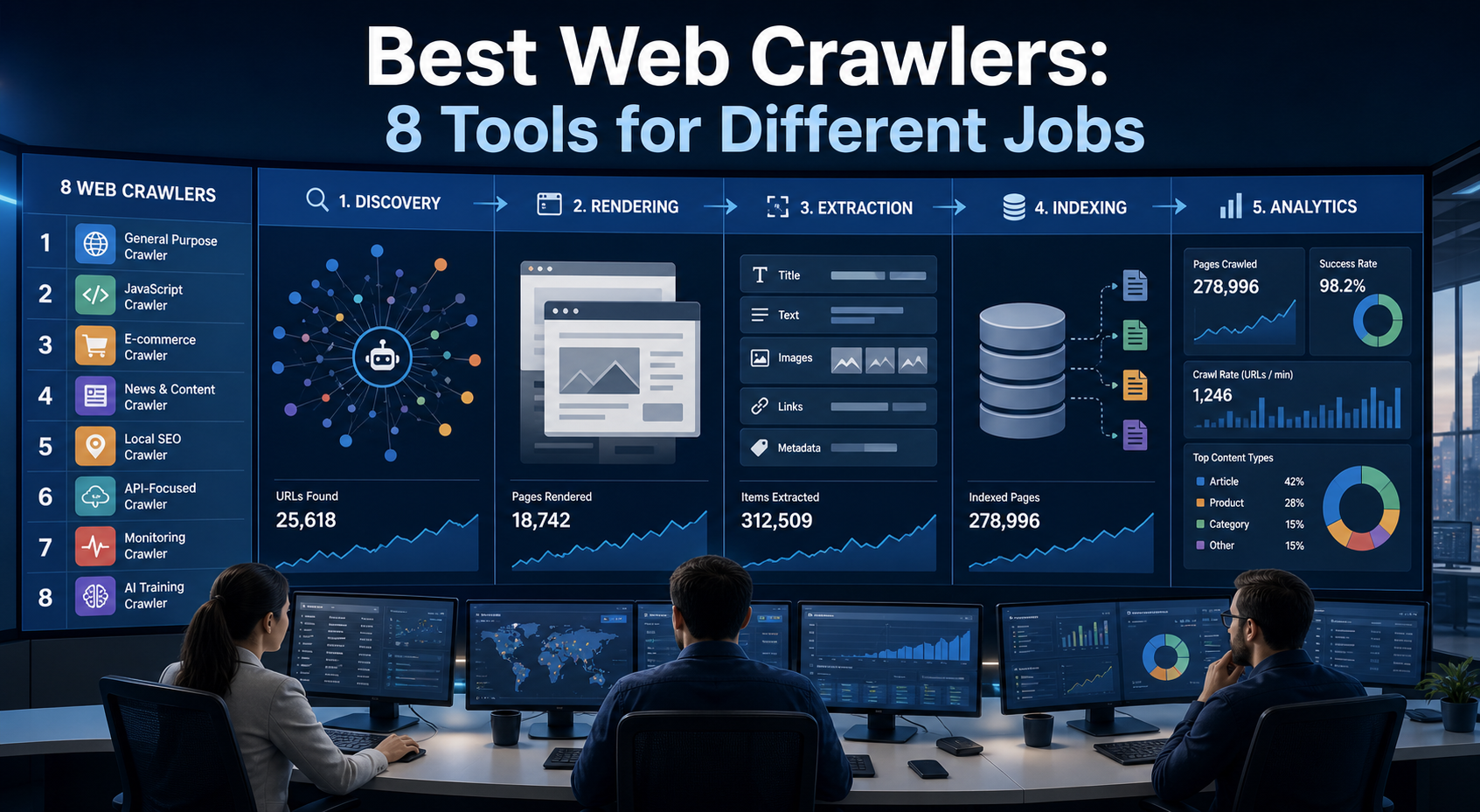
Best Web Crawlers: 8 Tools for Different Jobs
There is no single best web crawler for every project. A technical SEO audit, an AI knowledge pipeline, an internet archive, and a distributed search index may all involve crawling URLs, but they require different capabilities. The most useful way to compare web crawler tools is therefore to ask what job each one was designed to perform. This guide evaluates eight strong options across:
View Details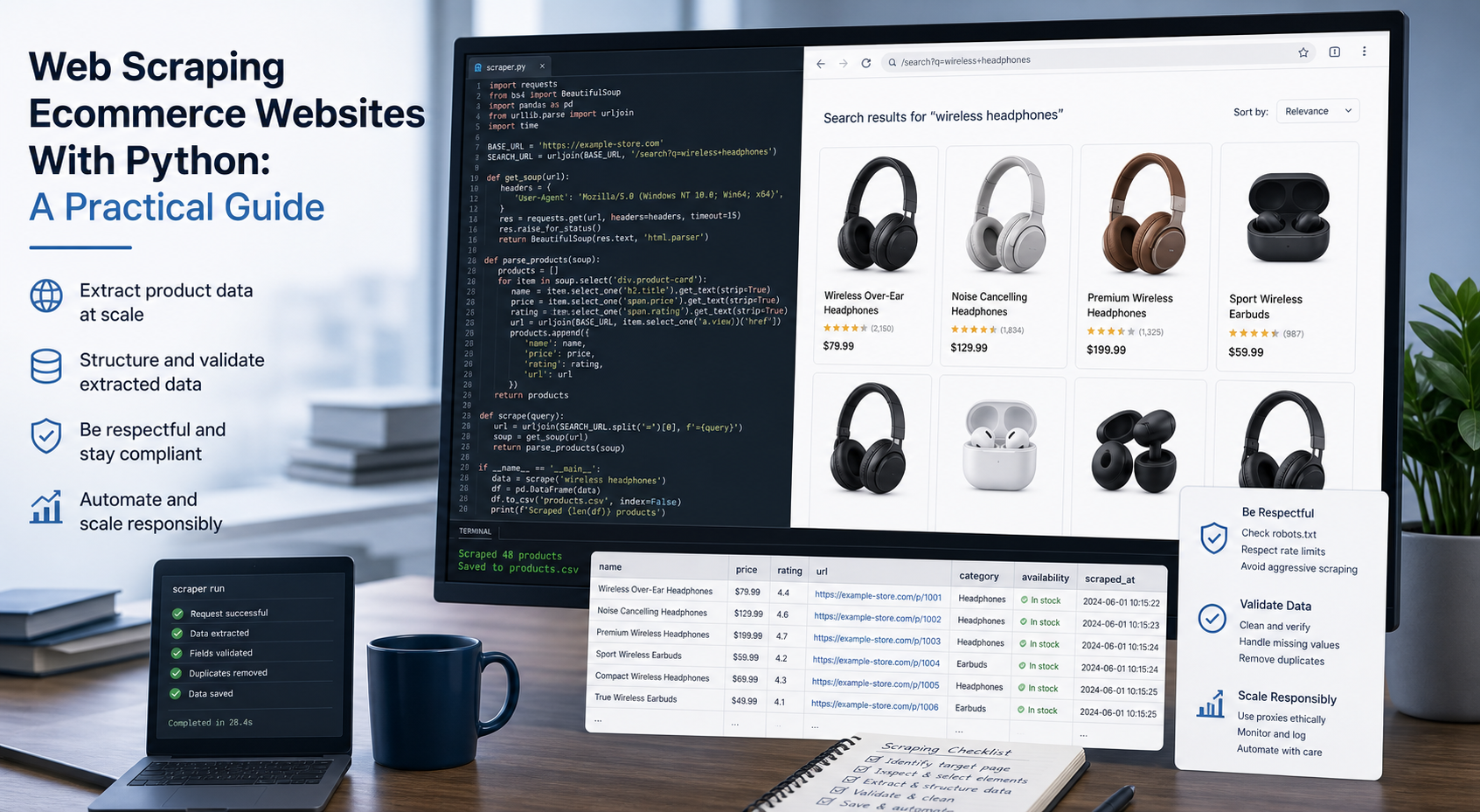
Web Scraping Ecommerce Websites With Python: A Practical Guide
Recommended meta title: Web Scraping Ecommerce Websites With Python: Guide Recommended meta description: Learn how to scrape ecommerce websites with Python using Requests, Beautiful Soup, Playwright, and Scrapy, with validation and scaling guidance. URL slug: /web-scraping-ecommerce-websites-python/
View Details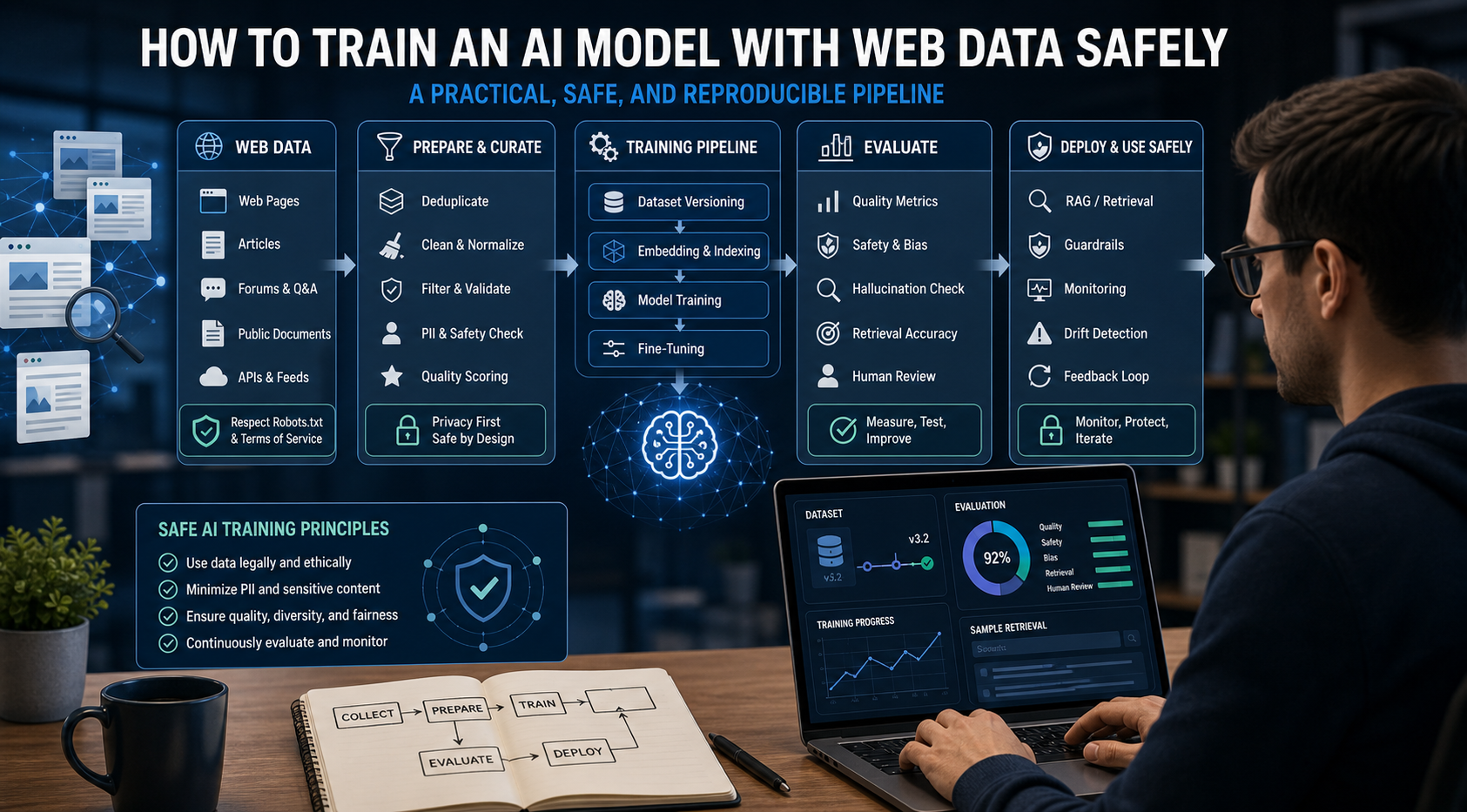
How to Train an AI Model With Web Data Safely
To train an AI model with web data, start by deciding whether you actually need training. Then collect representative sources, preserve provenance, remove duplicates and low-quality content, create leakage-resistant splits, build a baseline, fine-tune or train the appropriate model, and evaluate on real held-out examples before deployment.
View Details