
How Starlink Could Kill Your Cell Phone Bill
What if your smartphone bypassed terrestrial infrastructure entirely, connecting directly to low Earth orbit satellites without requiring a traditional cell carrier?
For millions of mobile users, data teams, and enterprise fleet operators, monthly cellular bills represent a massive, frustratingly inflexible operational expense. Billions of dollars flow annually to legacy providers like Verizon, AT&T, and T-Mobile—often for network coverage that degrades the moment a device drops out of urban macro-cell range. Rural residents and remote technical operators know this pain intimately: paying premium, high-tier prices for connectivity that vanishes on country roads, in mountain valleys, or anywhere fiber backhaul hasn't reached.
SpaceX's Starlink "Direct-to-Cell" technology promises to fundamentally rewrite this equation. By equipping low Earth orbit (LEO) satellites with advanced LTE modems, SpaceX is deploying infrastructure that could eventually commoditize traditional carriers. But is this an overhyped science fiction concept, or a legitimate, architectural threat to the global wireless industry? Let's break down the technical realities, the network economics, and what this means for the future of mobile connectivity.
Test Networks With LycheeIP
How Starlink Satellites Connect to Your Existing Phone
The most disruptive aspect of Starlink's Direct-to-Cell system isn't just its orbital deployment—it is its backward compatibility. It works seamlessly with the unmodified LTE silicon already sitting in your pocket.
Unlike legacy satellite phone services (such as Iridium) that required bulky, specialized hardware and massive external antennas, Starlink's second-generation (V2 Mini) satellites function as autonomous cell towers flying in low Earth orbit. These satellites carry massive, highly advanced phased-array antennas—each roughly 25 square meters in size. These arrays project highly focused LTE beams directly to standard smartphones. At the network layer, your iPhone or Android device’s baseband processor cannot distinguish between a signal originating from a tower three miles away and a satellite 340 miles overhead.
The technical achievement relies on three core engineering pillars:
- Massive Coverage Zones: Traditional cell towers serve geographic footprints measured in single-digit miles due to curvature and terrestrial obstacles. A Starlink satellite, operating in the vacuum of space with unobstructed line-of-sight (LoS), can project a cell footprint exceeding 1,000 square miles.
- Doppler Shift Compensation: Satellites move at roughly 17,000 mph, causing massive frequency shifts. Starlink's network handles this complex Doppler compensation server-side, ensuring the standard smartphone radio maintains its lock without requiring hardware modifications.
- Strategic Spectrum Partnerships: Rather than fighting regulators to become a standalone carrier, SpaceX partnered with existing networks (T-Mobile in the U.S., Rogers in Canada, KDDI in Japan). This allows Starlink to legally broadcast over licensed mobile spectrum, leveraging the Supplemental Coverage from Space (SCS) framework established by regulatory bodies like the FCC.
However, physics still dictates the rollout. The service arrives in phased bandwidth tiers. Initial capabilities (2024/2025) strictly support SMS text messaging. Voice protocols and lightweight data payloads will follow as satellite density increases. This staged approach reflects a strict link budget reality: current satellite beam capacity can support thousands of asynchronous text messages, but cannot yet handle dense, concurrent TCP streams like video.
The Real Cost: Traditional Plans vs. Satellite Service
To understand if Starlink will actually eliminate your cell bill, we have to examine the underlying unit economics of network deployment.
Traditional Carrier Pricing Reality
A typical unlimited enterprise or consumer plan from a major U.S. carrier runs $65 to $85 per month for a single line. While multi-line configurations reduce per-user costs, the Average Revenue Per User (ARPU) remains aggressively high to offset the massive Capital Expenditure (CapEx) of terrestrial 5G rollouts.
These prices purchase excellent urban and suburban throughput. However, they come with severe geographic limitations. Step off a major highway corridor, deploy an IoT sensor in an agricultural field, or run logistics through a remote valley, and that expensive "unlimited" plan delivers zero packets. Carriers charge exorbitant roaming fees for international data, and massive coverage gaps leave roughly 14% of the geographic United States without reliable mobile broadband.
Starlink's Emerging Pricing Model
Starlink has not announced standalone Direct-to-Cell pricing because the architecture functions as a roaming add-on through partners like T-Mobile. For eligible T-Mobile customers, satellite SMS fallback will be seamlessly included in existing plans at no additional charge.
This bundled approach means you won't immediately "replace" your carrier bill. Instead, carriers will absorb Starlink's wholesale connectivity costs, utilizing satellite coverage as a churn-reduction tool.
The financial calculus shifts dramatically for rural operators who currently choose between:
- Paying full price ($75+) for incomplete terrestrial coverage.
- Procuring specialized, low-bandwidth satellite terminals ($50–$150/month) with expensive per-megabyte data caps.
- Abandoning mobile connectivity entirely for fixed-line connections.
For these users, a standard mobile plan with native satellite fallback delivers true ubiquitous coverage for the exact same price urban users pay for tower-only service. It is a massive upgrade in value per dollar.
Long-Term Disruption Potential
The real threat to carrier billing models emerges over the next 3 to 5 years as the orbital constellation reaches peak density. If Starlink eventually launches an independent Mobile Virtual Network Operator (MVNO) or direct-to-consumer service, pricing wars are inevitable.
A hypothetical $40/month Starlink mobile plan offering guaranteed nationwide baseline coverage would drastically undercut major carriers. Consider the Total Cost of Ownership (TCO) over a five-year hardware lifecycle:
- Traditional Carrier: $80/month × 60 months = $4,800 (with severe remote dead zones).
- Future LEO Scenario: $40/month × 60 months = $2,400 (with 100% geographic coverage).
That $2,400 difference disrupts the entire telecom profit margin.
Coverage Showdown: Where Satellites Win and Lose
Cost is only half the equation; physics determines the practical usability of the network.
Where Starlink Dominates
- Rural and Remote Deployments: Traditional carriers lack the economic incentive to trench fiber and build a $250,000 macro-tower to serve 50 users. Starlink covers these areas by default. A logistics fleet operating in the Montana wilderness receives the same network availability as a user in downtown Denver.
- Topographical Dead Zones: Mountains and valleys block terrestrial RF propagation. Overhead satellites possess direct line-of-sight to valley floors and remote trails, fundamentally altering backcountry safety and remote IoT sensor deployment.
- Maritime and Aviation: Standard cellular signals degrade roughly 10 miles offshore. Starlink's footprint covers open oceans. While legacy maritime VSAT services exist, they are notoriously expensive and slow. Direct-to-Cell democratizes offshore communications.
- Disaster Resilience: Hurricanes, wildfires, and grid failures quickly disable terrestrial towers and their backup generators. Satellites remain safely operational in orbit. During infrastructure-destroying events, satellite fallback provides an unkillable communication backbone.
Where Traditional Carriers Still Win
- Urban Density and Throughput: A single satellite beam covering hundreds of square miles must multiplex its bandwidth among all active nodes. A densely populated city block easily overwhelms a satellite's spectral efficiency. Terrestrial 5G networks, utilizing high-frequency bands and dense cell spacing, deliver multi-gigabit speeds that satellites simply cannot match in cities.
- Indoor Penetration: RF signals traveling 340 miles from space attenuate heavily when passing through roofs, concrete, and multi-story structures. Your phone will effortlessly connect to Starlink outdoors, but will likely drop the signal in a basement. Terrestrial towers provide the necessary signal gain for deep indoor penetration.
- Latency-Sensitive Applications: The physics of distance adds a baseline propagation delay. Signals traveling to a LEO satellite and back introduce 20–40 milliseconds of latency, compared to 1–10 milliseconds for a local 5G edge network. While perfectly fine for voice and messaging, real-time algorithmic trading or competitive gaming requires terrestrial infrastructure.
Test Networks With LycheeIP
The Hybrid Future
The future of mobile networking is not a zero-sum game between space and earth—it is intelligent, multi-path routing.
Modern mobile operating systems will seamlessly manage connections across both mediums. Your device will utilize high-throughput 5G towers in urban centers, and autonomously failover to a Starlink satellite the moment it detects terrestrial packet loss on a rural highway. This hybrid architecture maximizes the bandwidth density of ground networks and the ubiquitous availability of orbital networks.
Telecom providers recognize this shift. Partnering with LEO satellite operators allows them to patch their coverage maps overnight without pouring concrete. Carriers that fail to adopt this hybrid model will be outmaneuvered by those that do.
The Verdict: Will Starlink Actually Kill Your Cell Bill?
Short answer for right now: Not yet. However, it is rapidly killing the premium you pay for incomplete, localized coverage.
You cannot cancel your enterprise or personal mobile plan and go "satellite-only" this year. The technology is too early in its deployment phase, bandwidth is strictly limited to low-payload protocols, and indoor coverage remains a physical barrier.
Medium-term outlook (2025–2026): As SpaceX enables VoLTE (Voice over LTE) and basic data routing, satellite connectivity becomes functionally equivalent to baseline terrestrial service for lightweight operations. Once users realize they have 100% geographic uptime, telecom providers will be forced to aggressively justify their high monthly premiums.
Long-term future (2027+): As bandwidth density improves via larger antennas and laser inter-satellite links, basic global connectivity will commoditize. Much like how municipal Wi-Fi transformed basic internet access, widespread LEO cellular service could drive basic connectivity costs to near-zero, forcing carriers to only charge a premium for ultra-high-speed urban 5G access.
Who Should Care Right Now?
You should actively monitor this technology if you:
- Manage mobile workforces, logistics fleets, or IoT networks in remote geographic zones.
- Operate in maritime, agricultural, or backcountry environments beyond the reach of standard towers.
- Require highly resilient, automated failover networks for emergency response operations.
- Currently utilize T-Mobile and want to leverage upcoming zero-cost coverage expansions.
You can ignore this for now if you:
- Primarily operate inside dense urban or suburban environments with robust 5G infrastructure.
- Require ultra-low latency connections for edge-computing or real-time application streaming.
- Need deep, indoor network penetration without relying on local Wi-Fi calling.
LycheeIP (Developer-First Proxy Infrastructure)
As telecommunication networks evolve into complex, hybrid architectures combining terrestrial 5G and low Earth orbit satellite connections, developers and QA teams face entirely new challenges. Applications must now be rigorously tested to handle diverse network handoffs, variable latency spikes, and geographic IP shifts. LycheeIP is a developer-first proxy and data infrastructure platform designed to help technical teams reliably route, scrape, and manage global network requests.
Engineering teams rely on this data infrastructure platform to simulate real-world routing and verify regional API performance across the globe. By leveraging dynamic residential IPs, testing frameworks can mimic mobile users hopping between cell towers and satellite connections across completely different geographic zones, ensuring your application doesn't drop active sessions during network failovers. Additionally, data teams building coverage maps, testing localized content, or conducting market research can utilize high-performance datacenter IP solutions to gather competitive intelligence without triggering aggressive rate limits. Operating alongside a reliable developer-first proxy provider ensures that as the physical layer of the internet changes, your application's routing and data collection pipelines remain perfectly intact.
Test Networks With LycheeIP
Frequently Asked Questions
Q: Do I need a special phone, antenna, or hardware modification to use Starlink Direct-to-Cell?
A: No. Starlink's Direct-to-Cell architecture communicates using standard LTE protocols. It works with existing, unmodified LTE-compatible smartphones—including most iPhones and Android devices manufactured within the last decade. The satellites broadcast standard cellular signals that your device's existing baseband processor natively understands.
Q: How much will Starlink's satellite phone service cost consumers?
A: Standalone pricing has not been finalized because Starlink is executing a B2B carrier partnership model first. T-Mobile customers, for example, will receive satellite SMS fallback included in most of their existing plans at no additional charge. If Starlink eventually launches a direct-to-consumer mobile plan, industry analysts project highly disruptive pricing, but official figures remain unannounced.
Q: When will Starlink Direct-to-Cell service be fully available?
A: Text messaging (SMS/MMS) capabilities are rolling out in phases throughout 2024 for partner networks like T-Mobile in the U.S. Voice calling and data routing are scheduled for testing and deployment in 2025. Total network capacity and speeds will scale linearly as SpaceX launches more V2 and V3 satellites through 2026.
Q: Will Starlink satellite service work reliably indoors?
A: No. RF signals transmitted from low Earth orbit experience severe attenuation when passing through solid materials like concrete, steel roofs, and multiple floors. You will experience optimal performance outdoors with a clear, unobstructed view of the sky. Traditional terrestrial cell towers will remain vastly superior for deep indoor building penetration.
Q: Can I cancel my current carrier and switch entirely to Starlink right now?
A: Not yet. Direct-to-Cell is currently launching strictly as a supplemental roaming service through partner carriers, not as an independent MVNO replacement. The initial rollout is limited to text messaging. Full carrier replacement will not be a viable, operational reality until voice and data features mature closer to 2026.

Recommended Articles
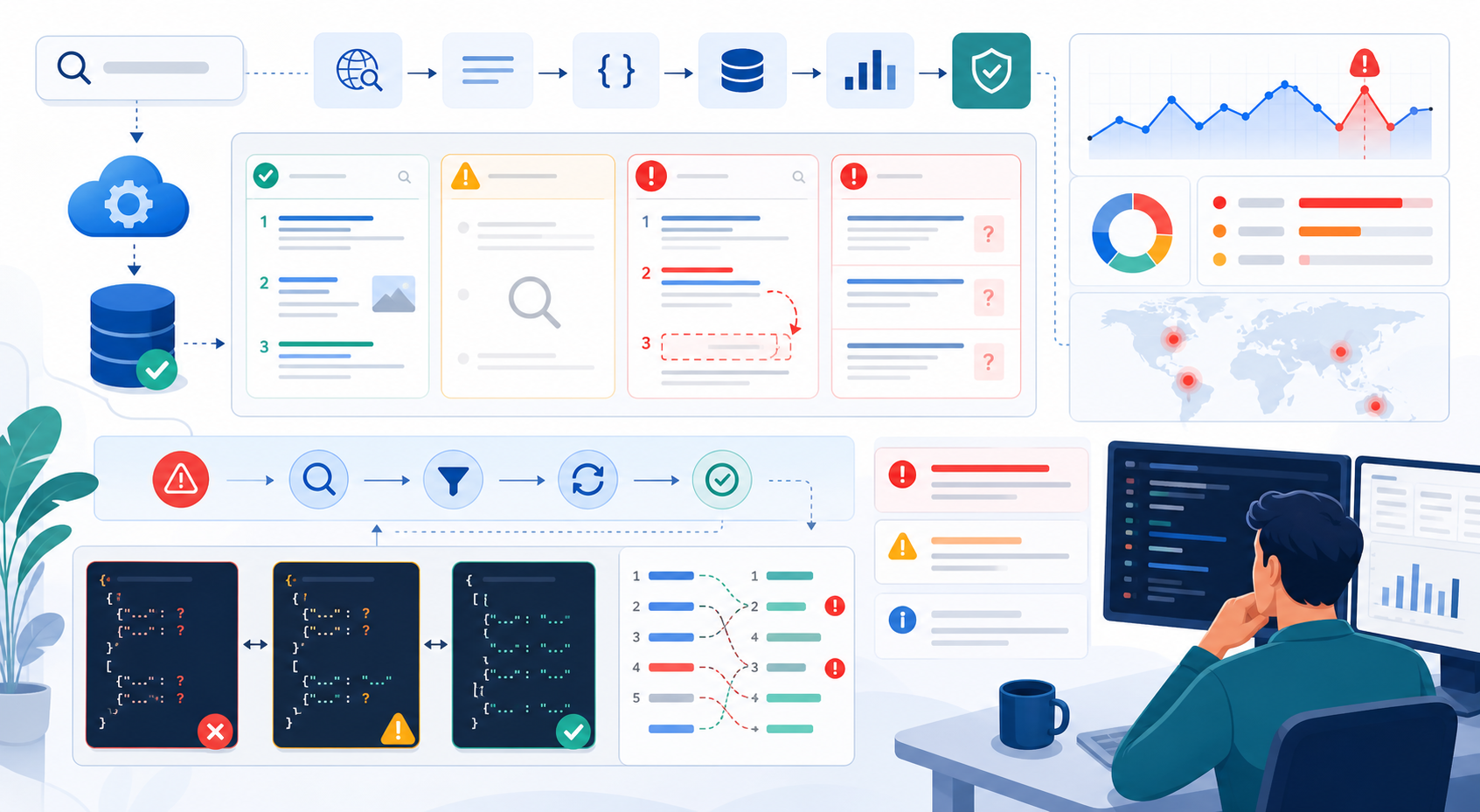
SERP API Troubleshooting: Fix Empty, Wrong, or Inconsistent Search Results
SERP API failures are not limited to obvious HTTP errors. A request can return successfully and still produce empty, incomplete, geographically wrong, duplicated, or misinterpreted search data. Production troubleshooting therefore has to separate transport problems from provider processing, SERP differences, and downstream parsing errors.
View Details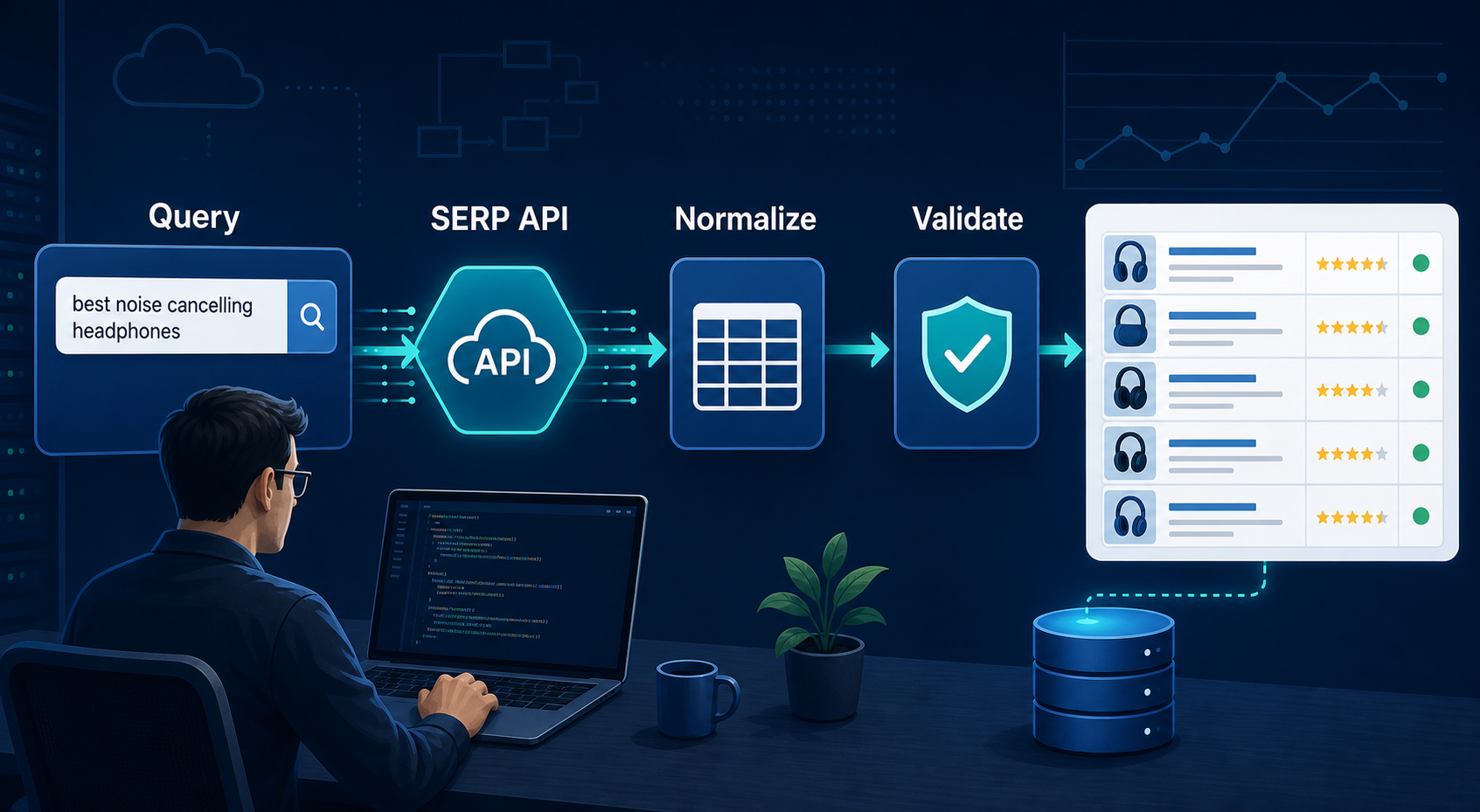
SERP API Python: How to Build a Reliable Search Data Pipeline
This guide shows a provider-neutral workflow for building that pipeline. It does not rank SERP API vendors. Instead, it focuses on the implementation choices that make a Python integration easier to operate, test, and migrate.
View Details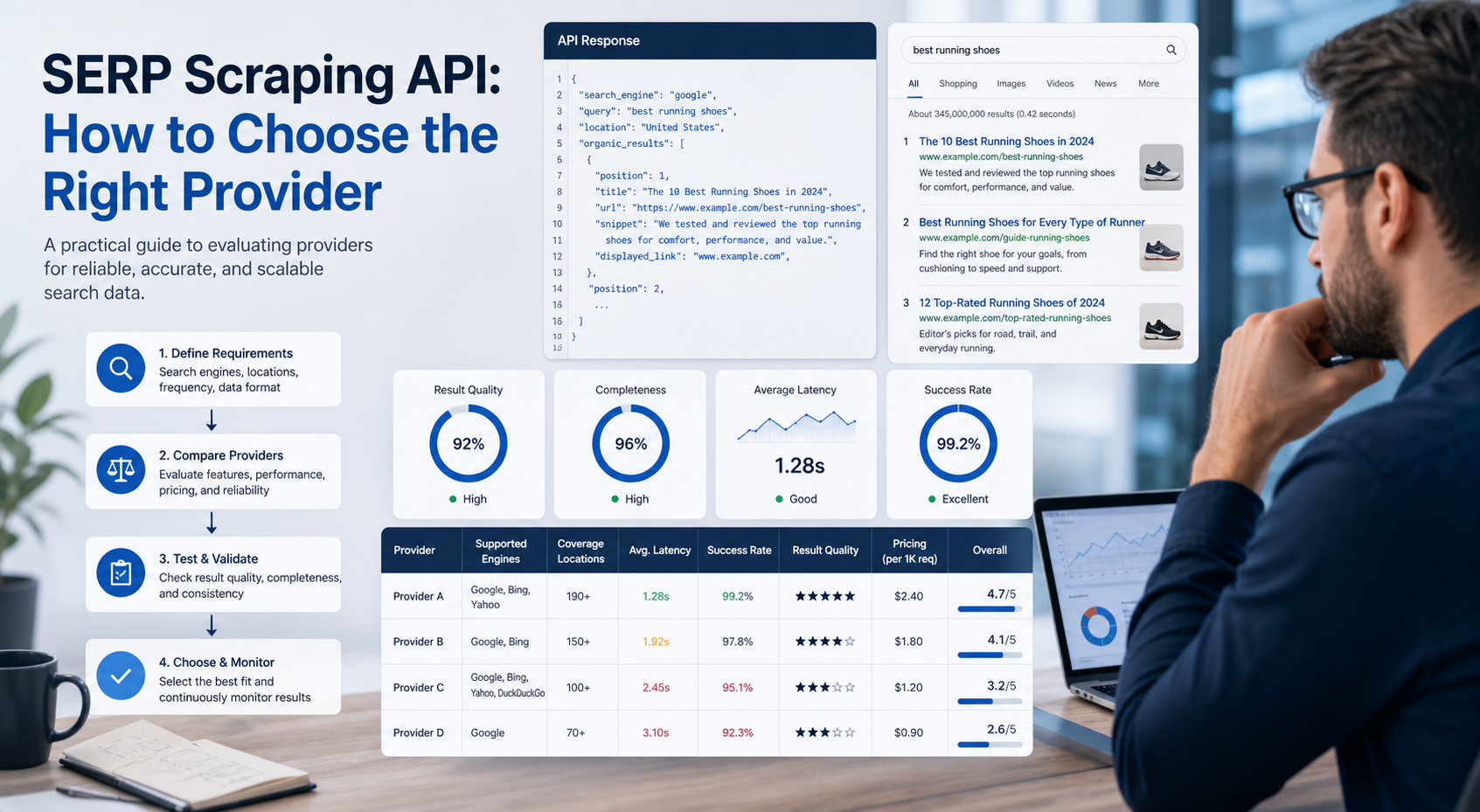
SERP Scraping API: How to Choose the Right Provider
Recommended Meta Description: Compare SERP scraping APIs by data coverage, localization, reliability, workflow fit, and cost structure, then choose and validate the right provider.
View Details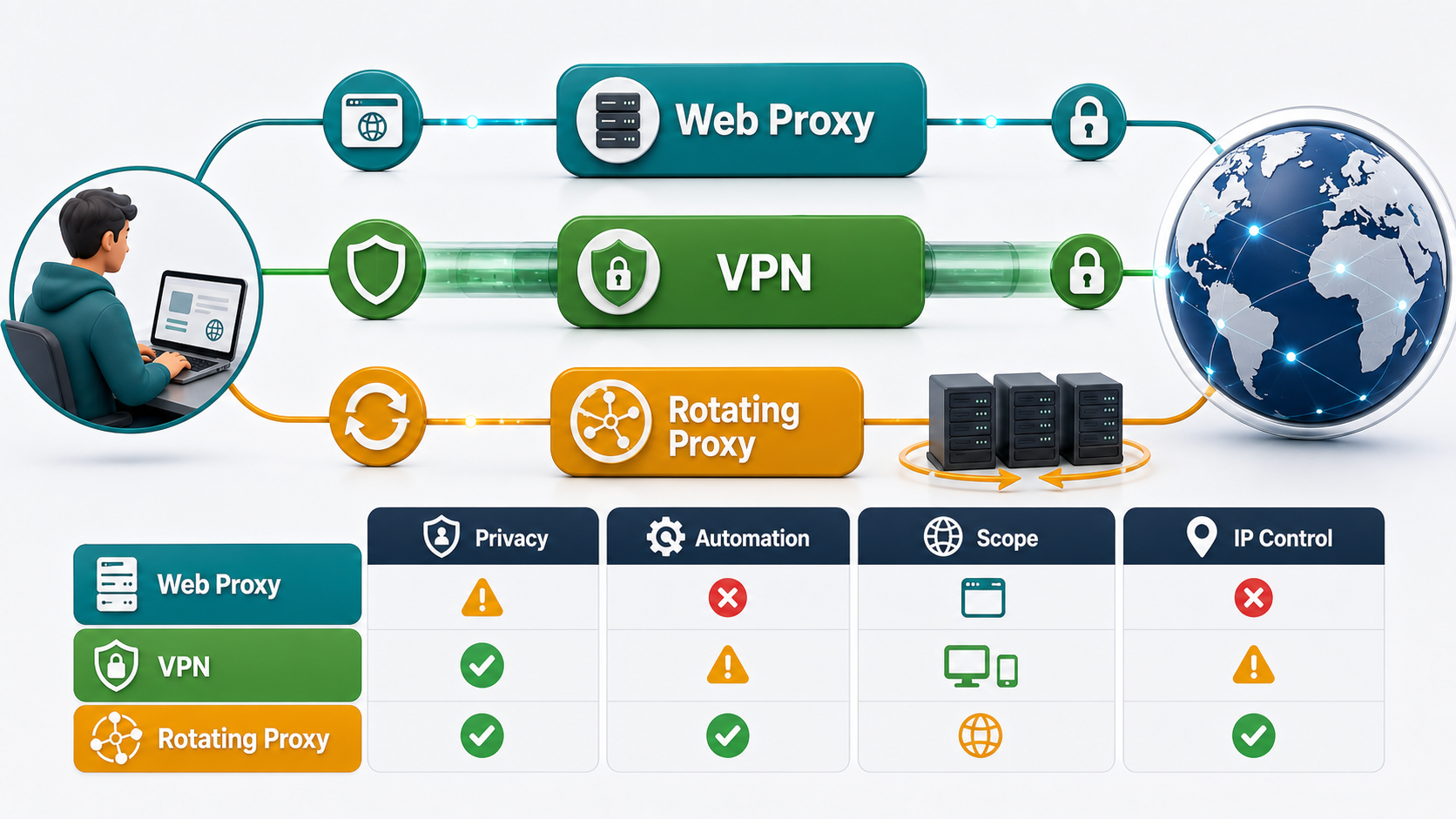
Free Web Proxy vs VPN vs Rotating Proxy: Which Should You Use?
Compare free web proxies, VPNs, rotating proxies, static proxies, and datacenter proxies by scope, encryption, IP control, automation, streaming, and account workflows.
View Details
BlockAway Not Working? Fix Common Proxy, Video, and Access Problems
Troubleshoot BlockAway when pages are blocked, YouTube fails, JavaScript breaks, speed drops, sessions expire, or mobile access behaves differently.
View Details