
Replace Ads With Art: The Chrome Extension Breakdown
What if every ad you saw online was replaced by a Van Gogh or a NASA photo?
If that sounds like a fever dream, it isn't — it's exactly what a quietly brilliant Chrome extension already does, and most users have no idea it exists. Browser ads are one of the most universally disliked elements of the modern web. They're visually noisy, often irrelevant, and increasingly aggressive. Ad blockers help, but they leave behind blank white voids — dead space that makes pages feel broken and disjointed.
This extension takes a completely different approach: instead of erasing ads, it replaces them with something genuinely worth looking at.
Explore LycheeIP Proxy Network
Museum Databases as an Ad Network
The core mechanic is straightforward but technically clever. When the extension detects an ad container on a webpage — the exact div elements and iframe slots that would normally load a banner or auto-playing video ad — it intercepts that space. Instead of rendering the ad script, it injects a high-resolution image pulled directly from a rotating pool of public domain artwork.
The sources are legitimate, high-quality, and impressive. The extension taps into open APIs from world-class institutions like the Metropolitan Museum of Art and the Art Institute of Chicago. Both organizations have released hundreds of thousands of digitized works into the public domain under Creative Commons Zero (CC0) licensing.
- What this means: No copyright friction, no licensing fees, and an effectively inexhaustible library of content ranging from ancient Egyptian artifacts to Impressionist paintings to modernist photography.
The selection process isn't just random noise, either. Images are algorithmically filtered for quality and display dimensions:
- A wide "leaderboard" ad slot (e.g., 728x90) receives a landscape painting.
- A "skyscraper" sidebar ad (e.g., 160x600) surfaces a vertical portrait or a detailed manuscript illustration.
Because the extension dynamically maps artwork aspect ratios to the specific dimensions of the ad slot, the substitution looks incredibly intentional rather than like a poorly cropped, jury-rigged error.
For developers reading this: The extension accomplishes all of this using a lean, purposeful architecture. It relies on a Content Script (as documented by MDN Web Docs) to monitor the Document Object Model (DOM) for known ad container signatures. Meanwhile, a background service worker handles the asynchronous API calls to the museum endpoints.
The Hover Layer That Makes It Actually Useful
Replacing intrusive ads with pretty images would be enough to satisfy most users. However, the extension goes one step further by implementing an interaction layer that transforms each artwork replacement into a small, seamless educational moment.
When you hover your cursor over any replaced ad slot, a subtle, elegant overlay appears. This overlay displays critical metadata about the artwork:
- The Title
- The Artist Name
- The Approximate Date of creation
- The Source Institution
It is the exact kind of metadata you'd see printed on a placard next to a painting in a physical museum, delivered in context without requiring you to click away, open a new tab, or disrupt your reading.
This specific detail is where the UX (User Experience) thinking gets genuinely sharp. The overlay doesn't auto-play. It doesn't strobe or demand your immediate attention. It simply rewards curiosity. If you happen to notice a painting and wonder about it, the information is exactly one hover away. If you don't care and want to keep reading your article, it stays completely invisible.
That is a behavioral design pattern that most modern ad tech actively works against; here, user agency is baked right into the core experience.
Imagine stumbling across Hokusai's The Great Wave off Kanagawa filling a massive sidebar slot on a crowded news site. That simple hover metadata turns a passive visual experience into something grounded and real. You know exactly what you're looking at, where it comes from, and that it is an authentic piece of human history — not just AI-generated filler content.
Explore LycheeIP Proxy Network
LycheeIP (Developer-First Proxy Infrastructure)
LycheeIP is a developer-first proxy and data infrastructure platform designed for secure, high-performance web data extraction and global traffic routing.
When developers build complex browser extensions or automated agents that rely on parsing localized DOM structures or scraping public data across the globe, they need a robust network layer to handle the load. For instance, if a QA team needs to test how an ad-replacement extension behaves on websites restricted to European or Asian markets, relying on a single local IP won't work. By integrating LycheeIP's global network, teams can use dynamic IPs to accurately emulate legitimate regional traffic, ensuring geo-restricted elements load properly for testing. Furthermore, if a development team needs to aggregate massive public datasets (like open-source museum archives or e-commerce data) to feed their own custom APIs, utilizing high-speed datacenter proxies guarantees rapid, continuous data collection without triggering disruptive IP blocks. By leveraging a professional proxy infrastructure, technical operators can scale their public data operations safely and reliably. (Note: Always ensure your data extraction practices comply with applicable laws and the target website's Terms of Service).
No Server, No Problem
Perhaps the most technically interesting aspect of this extension is what it explicitly doesn't need.
There is no proprietary backend server. There is no custom Content Delivery Network (CDN) to pay for. There is no subscription model, and no account creation required. The extension is a pure, 100% client-side tool that outsources all of its heavy lifting directly to existing public infrastructure.
The museum APIs handle the content delivery. The user's browser handles the rendering. The extension itself acts essentially as a smart, lightweight coordinator — pattern-matching ad slots, querying open endpoints, and managing the display logic locally.
This specific architecture has massive real-world implications:
- Total Privacy: No user data is collected, logged, or transmitted back to any extension-controlled server. (This aligns perfectly with privacy guidelines set out by the Internet Engineering Task Force (IETF), which advocates for minimizing data collection in web protocols).
- High Reliability: The extension is only as fragile as the museum APIs it depends on — and those APIs are maintained by incredibly well-resourced, publicly funded institutions.
- Infinite Scalability: Adding new artwork sources means adding a few lines of code for new API integrations, not building out expensive new server infrastructure.
From a developer perspective, this is a highly compelling proof of concept. It demonstrates exactly what browser extensions can accomplish when they smartly lean on the existing ecosystem rather than trying to stubbornly rebuild it. The web already contains an enormous amount of publicly accessible, high-quality, free content. Extensions that know how to route around the commercial noise and surface that content intelligently are performing a genuine public service.
For general users, the takeaway is much simpler: your web browser is vastly more customizable than you probably realize. Sometimes the most elegant, transformative solutions aren't the ones that require the most resources — they're the ones that creatively redirect the resources that already exist.
Explore LycheeIP Proxy Network
Frequently Asked Questions
Q: Is this extension free to use?
A: Yes. The extension is completely free and requires no account or subscription whatsoever. Because it relies entirely on public domain museum APIs, there are zero licensing costs that need to be passed on to the user.
Q: Does it work the exact same way as a traditional ad blocker?
A: Not exactly. Traditional ad blockers ruthlessly remove ad content and leave empty, blank space behind. This extension detects those exact same ad containers but fills them with artwork instead of simply hiding them. This results in a much more visually complete, aesthetically pleasing browsing experience.
Q: Where does the artwork actually come from?
A: The extension dynamically pulls images from the open, public APIs of major cultural institutions, including the Metropolitan Museum of Art and the Art Institute of Chicago. All works served to your screen are in the public domain under Creative Commons Zero (CC0) licensing.
Q: How does hovering over an image show the artwork details?
A: When the extension injects an artwork image into an ad slot, it simultaneously attaches a JavaScript "hover" event listener to that specific DOM element. When your mouse triggers that listener, it renders an overlay using the exact metadata returned alongside the image from the museum API (including the title, artist, date, and institution).
Q: Does the extension collect any of my browsing data?
A: No. The extension operates entirely client-side, meaning there is no proprietary backend server monitoring your activity. API calls go directly from your local browser to the museum endpoints. Absolutely no user data is captured or stored by the extension itself.
Q: Can developers build on this concept for other use cases?
A: Absolutely. The core architecture — using a DOM-monitoring content script paired with simple calls to public APIs — is highly replicable and easily extensible. Developers could easily swap out museum APIs for NASA image archives, public library historical collections, or any other open dataset to create entirely new visual experiences.

Recommended Articles
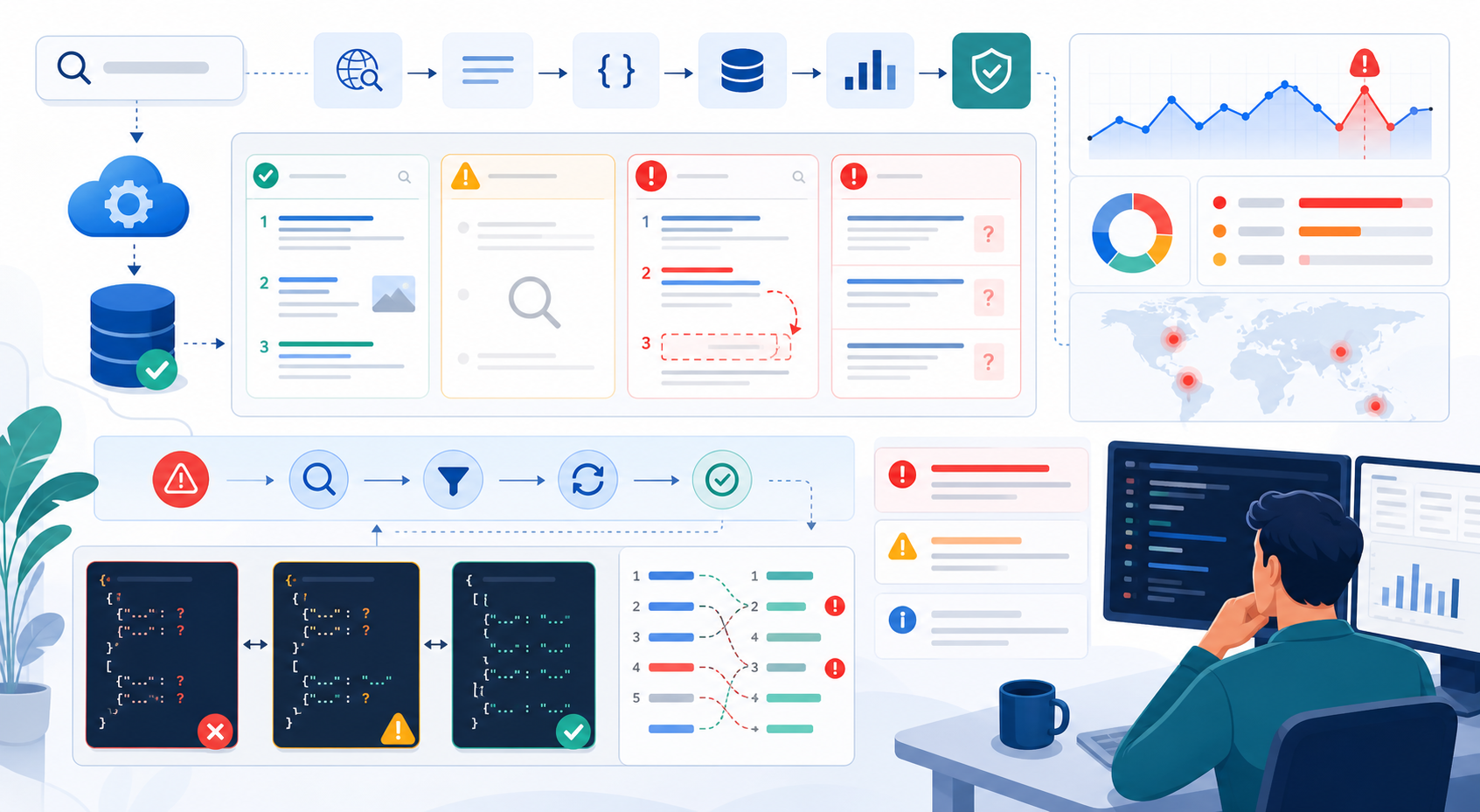
SERP API Troubleshooting: Fix Empty, Wrong, or Inconsistent Search Results
SERP API failures are not limited to obvious HTTP errors. A request can return successfully and still produce empty, incomplete, geographically wrong, duplicated, or misinterpreted search data. Production troubleshooting therefore has to separate transport problems from provider processing, SERP differences, and downstream parsing errors.
View Details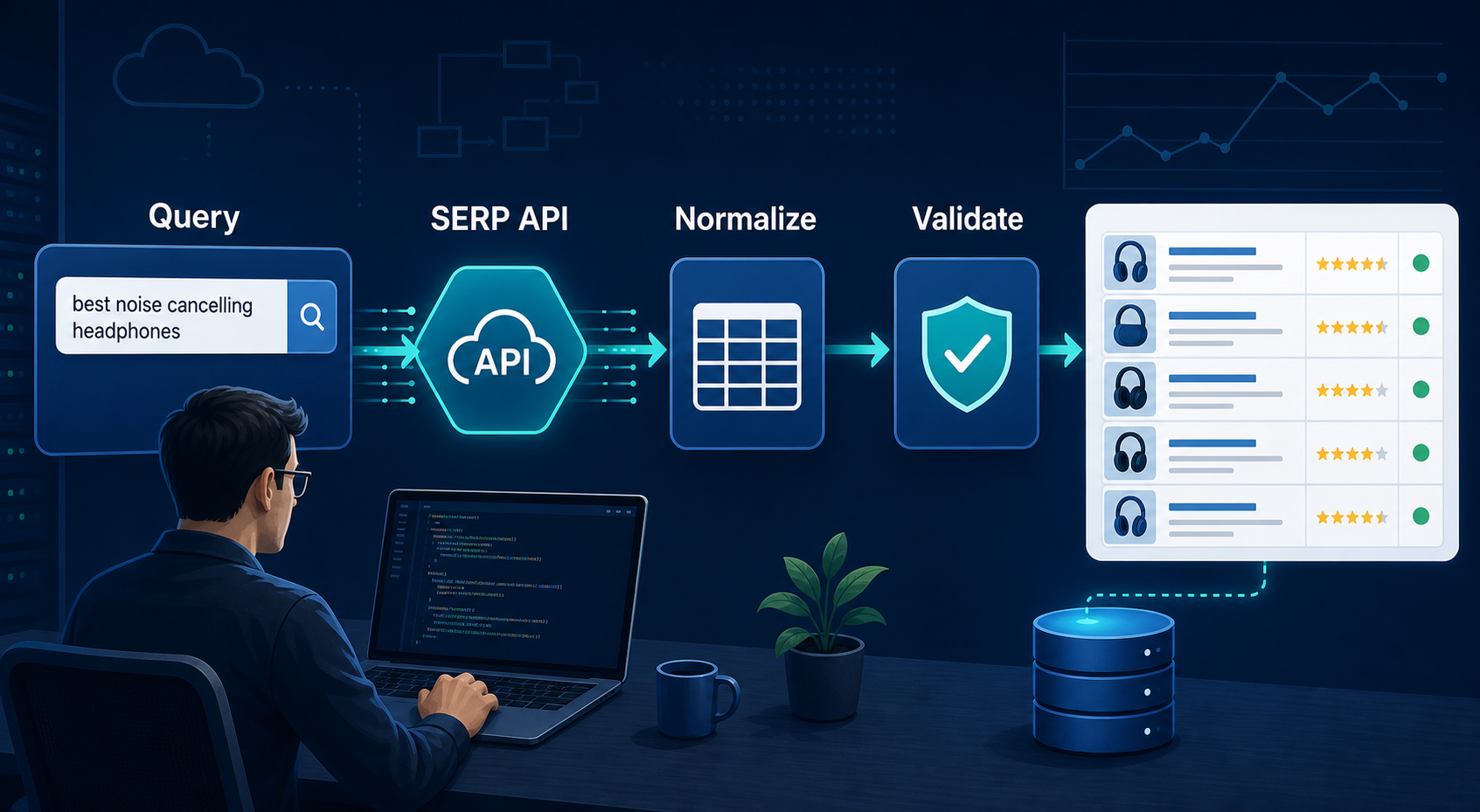
SERP API Python: How to Build a Reliable Search Data Pipeline
This guide shows a provider-neutral workflow for building that pipeline. It does not rank SERP API vendors. Instead, it focuses on the implementation choices that make a Python integration easier to operate, test, and migrate.
View Details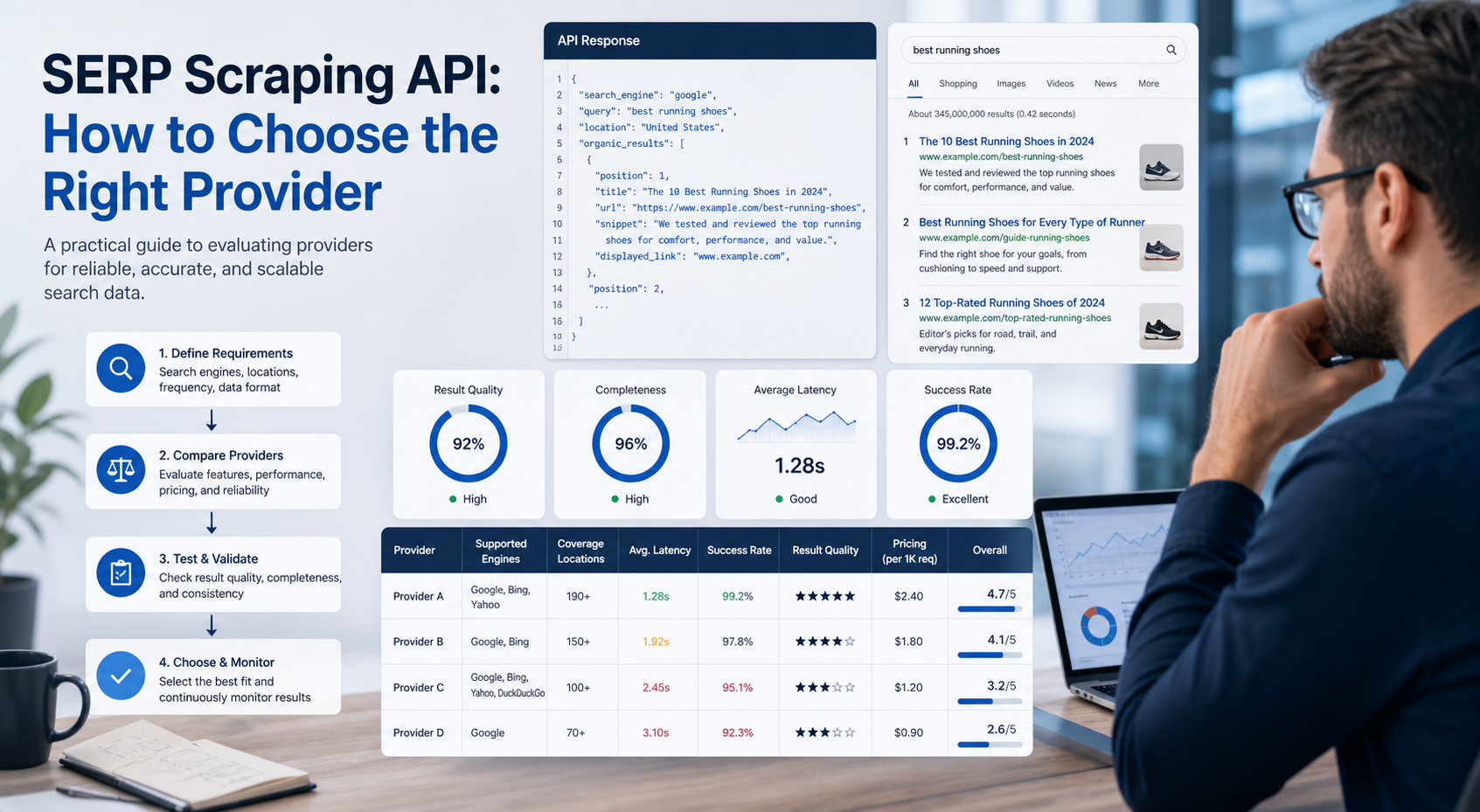
SERP Scraping API: How to Choose the Right Provider
Recommended Meta Description: Compare SERP scraping APIs by data coverage, localization, reliability, workflow fit, and cost structure, then choose and validate the right provider.
View Details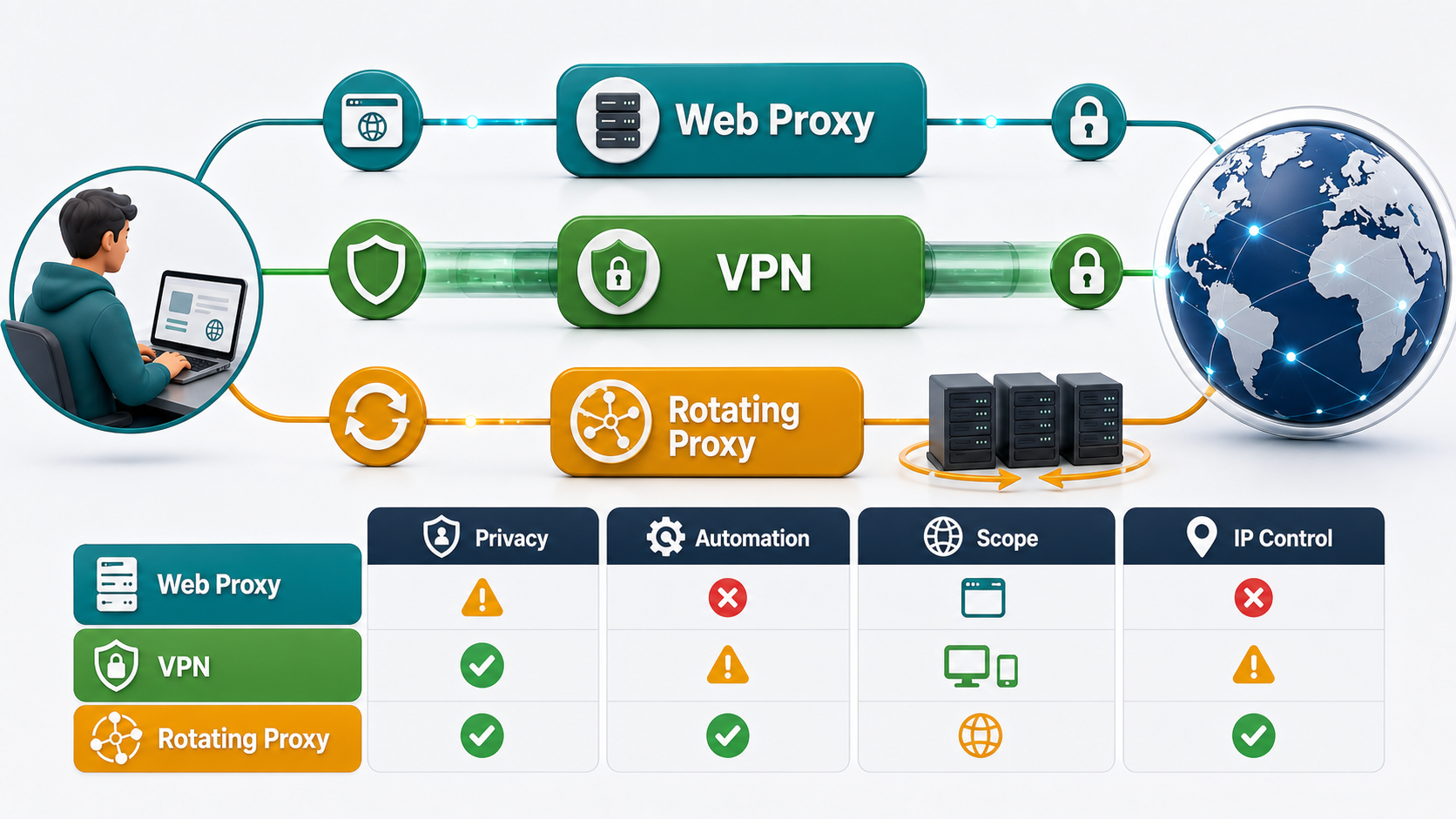
Free Web Proxy vs VPN vs Rotating Proxy: Which Should You Use?
Compare free web proxies, VPNs, rotating proxies, static proxies, and datacenter proxies by scope, encryption, IP control, automation, streaming, and account workflows.
View Details
BlockAway Not Working? Fix Common Proxy, Video, and Access Problems
Troubleshoot BlockAway when pages are blocked, YouTube fails, JavaScript breaks, speed drops, sessions expire, or mobile access behaves differently.
View Details