
PS4 vs PS5 Web Browser Exploits: Latest Jailbreak Status & Analysis
PS4 vs PS5 Web Browser Exploits: Latest Jailbreak Status & Analysis
A web browser is generally viewed as a simple portal to the internet, but in the context of gaming consoles, it represents a significant, often vulnerable attack surface. For developers and security researchers, the PS4 and PS5 web browser exploits of 2025 offer a fascinating case study in how limited-functionality rendering engines can be manipulated to achieve kernel-level access.
At LycheeIP, we understand that whether you are scraping data or testing network security, the integrity of the client, be it a desktop browser or a console interface, is paramount. This article analyzes the current state of console jailbreaks, contrasts console architectures with most popular web browsers, and outlines the technical implications for security teams.
Use LycheeIP to test rotating proxies
What is the current PS4 vs PS5 jailbreak status in 2025?
The current status indicates that while stable jailbreaks exist for specific older firmware versions on both PS4 and PS5, the window for exploitation is narrowing due to aggressive patching by Sony. Active exploits primarily rely on vulnerabilities within the WebKit rendering engine used by the console's web browser.
Recent exploit drops and community signals
Throughout early 2025, the security research community has reported success in chaining WebKit userland exploits with kernel vulnerabilities. On the PS4, these chains are more mature, often allowing for full "GoldHEN" (Homebrew Enabler) payloads. On the PS5, the "hidden" web browser remains the primary vector. Researchers have demonstrated that by triggering specific memory overflows via malicious HTML pages, they can escape the browser sandbox.
Firmware compatibility snapshot
Understanding which firmware matches which vulnerability is critical.
| Console | Target Vulnerability | Firmware Status (2025) | Notes |
| PS4 | WebKit + Kernel | fw 9.00 - 11.00 (varies) | Highly stable exploits available; extensive homebrew support. |
| PS5 | WebKit (Userland) | fw 3.xx - 4.xx / 7.xx | Kernel exploits exist but are less stable; often requires specific entry points. |
| PS5 | BD-J (Blu-ray) | Various | Alternative vector, but WebKit remains the focus for digital-only users. |
How does the console web browser architecture differ from desktop engines?
Console browsers typically utilize a stripped-down version of WebKit, similar to Apple Safari, but lack the robust feature sets and frequent security patches found in Google Chrome or Microsoft Edge.
While most popular web browsers on desktops run on the Chromium engine (used by Chrome, Edge, and Brave Browser) or Gecko (Mozilla Firefox), PlayStation consoles rely on a customized WebKit fork. On the PS5, Sony actually removed the dedicated browser app icon to reduce the attack surface. However, the engine remains present to handle captive portals (like hotel Wi-Fi logins) and user manuals.
Why the browser user interface is limited on consoles
To prevent users from staying in the browser environment, the console browser user interface is minimal. It lacks an address bar, extension debugging tools, and standard navigation buttons. This obfuscation makes it difficult for casual users to navigate, but it does not stop researchers from directing the browser to exploit hosts via DNS redirection or message links.
Which specific web browser vulnerabilities enable these exploits?
Exploits usually target how the web browser parses code, specifically looking for Use-After-Free (UAF) bugs or heap overflows in the rendering process.
Memory corruption and the HTML rendering process
The core of the issue lies in how browsers work when processing complex HTML and JavaScript. If a researcher can write a script that confuses the browser's memory management, they can inject arbitrary code. This is similar to concepts taught in Web Dev Simplified tutorials regarding DOM manipulation, but applied maliciously to overflow buffers.
How cookies and caching play a role in persistence
While cookies are generally used for session management in recommended web browsers, on a console, the cache can sometimes be used to store payloads. If the web browser caches a malicious page, the exploit can be triggered offline or more reliably upon subsequent visits, creating a semi-persistent entry point known as a "cache attack."
The PS5 browser is functional but strictly utilitarian, lacking the quality-of-life features found in the most popular web browsers used by developers.
Feature gap: Tabs and tab management, extensions, and bookmarks
In a desktop environment, productivity relies on tabs and tab management to multitask, and bookmarks and favorites to save resources. The PS5 browser supports none of these natively. Furthermore, it does not support extensions, meaning users cannot install ad-blockers or privacy tools. This lack of extensibility makes the browser significantly less secure than a hardened Firefox or Brave Browser setup.
The workaround: Using YouTube com Chrome browser redirects
Since there is no address bar, users often exploit the "Link to Service" feature. For example, linking a Google account allows a user to navigate to the Google search page. From there, searching "YouTube com Chrome browser" or similar terms allows them to pivot to external sites, effectively breaking out of the intended "walled garden" to load exploit hosts.
Which are the best private browsers in 2025 for security research vs. console use?
If you are analyzing exploits or conducting research, you should never use a console browser for general surfing. Instead, use the best private browsers in 2025 on a secure machine.
Tor browser comparison and Brave Browser features
For maximum anonymity during research, a Tor browser comparison often highlights its superior routing through volunteer nodes, though it is slower. For speed and privacy, Brave Browser is often cited among recommended web browsers because it blocks trackers and fingerprinting by default—features entirely absent on the PS4/PS5 web browser.
Mozilla Firefox and Opera Browser privacy settings
Mozilla Firefox remains a top choice for developers due to its container tabs, which isolate cookies and data. Opera Browser offers a built-in VPN (proxy), though for enterprise-grade scraping or testing, developers prefer dedicated infrastructure like LycheeIP over built-in browser VPNs.
Incognito/private mode vs. true network anonymity
Console browsers may offer a rudimentary incognito/private mode, but this only prevents local history storage. It does not hide IP addresses from Sony or ISPs. True anonymity requires rotating residential proxies, which mask the traffic origin at the network level, regardless of the web browser being used.
How do developers test browser compatibility and exploit safety?
Testing how a web browser handles code requires specific tools that are stripped from consoles.
Extension debugging and reader mode limitations
On desktop Google Chrome or Apple Safari, developers use "Inspect Element" and extension debugging consoles to view network requests. These tools are blocked on consoles. Additionally, features like reader mode, which strips clutter for easier reading, are inconsistent on gaming hardware, making the parsing of text-heavy exploit payloads difficult.
Responsible testing environments
When researching how browsers work under stress, security teams should use isolated environments.
- Network Isolation: Never test exploits on a main corporate network.
- Proxy Usage: Use LycheeIP’s residential proxies to simulate traffic from different regions to see if the web browser behavior changes based on geo-location headers.
- Virtualization: Where possible, emulate the browser engine environment rather than running solely on bare metal hardware.
What are the risks of using outdated console browsers?
The beginners guide to web browsers always emphasizes one rule: keep your software updated. Console jailbreaking requires the opposite—staying on old firmware.
Data exfiltration and lack of private browsing protections
Running an outdated web browser on an internet-connected device exposes you to known CVEs (Common Vulnerabilities and Exposures). Unlike Microsoft Edge or Apple Safari, which update in the background, a console stayed on Firmware 9.00 is permanently vulnerable to years-old exploits. This risks data exfiltration if the console is used for logging into third-party services.
Can you mitigate risks without losing functionality?
Yes, but it requires strict network discipline.
Network segmentation and traffic monitoring
If you must use a vulnerable console for testing:
- Block Update Domains: configuring your router (or proxy gateway) to block Sony’s update servers helps maintain the firmware version.
- VLANs: Keep the console on a separate VLAN from your workstations.
- Monitor Headers: Watch the User-Agent strings. The console web browser identifies itself clearly, which makes it easy to filter out of normal network logs.
The PS4 and PS5 web browser exploits of 2025 demonstrate the fragility of modern web rendering engines. While tools like Google Chrome, Mozilla Firefox, and Brave Browser offer robust protections and extensions, console browsers remain stripped-down, high-value targets for researchers.
For developers investigating these vulnerabilities or managing data infrastructure, the key is isolation and accurate data collection. Whether you are analyzing headers or testing region-specific browser behavior, control over your network identity is essential.
Practical next step: If you are testing browser behavior across different regions or need to scrape data without triggering anti-bot mechanisms, verify your IP reputation.
Frequently Asked Questions:
1. Can I install extensions on the PS5 web browser?
No. The PS5 web browser does not support extensions or add-ons. Unlike Google Chrome or Mozilla Firefox, it is a limited environment designed only for basic system functions, meaning you cannot install ad-blockers, password managers, or debugging tools.
2. Is the PS5 browser safe for private browsing?
Not particularly. While it doesn't save history in the same way a desktop browser does, it lacks the advanced anti-fingerprinting features found in the best private browsers in 2025 like Brave Browser or Tor. It relies on standard cookies and WebKit caching, which can be inspected if the console is compromised.
3. How do I access the hidden web browser on PS5?
The PS5 does not have a browser app icon. Users typically access it by sending a message to a friend (or a second account) containing a URL (like google.com). Clicking this link opens the internal web browser. This method is frequently used to trigger exploits or access YouTube com Chrome browser redirects.
4. What is the difference between the PS4 browser and desktop browsers?
The main differences are the engine version and interface. The PS4 uses an older, custom fork of WebKit (similar to Apple Safari). It lacks a full browser user interface, has no tabs and tab management, and cannot render modern HTML standards as effectively as updated desktop browsers like Microsoft Edge.
5. Why are WebKit vulnerabilities so common in console jailbreaks?
WebKit is the rendering engine that powers the browser. Because it is complex and handles untrusted code (websites), it often contains bugs. Since the console OS trusts the web browser process to some degree, researchers use these WebKit bugs (like buffer overflows) as the first step to break out of the sandbox and attack the kernel.
6. Do I need a proxy to test console browser exploits?
For security research, yes. Using a proxy allows you to inspect traffic between the console and the exploit host. It also protects your local network identity. Developers often use proxies to test how the console web browser reacts to geo-blocked content or specific headers.

Recommended Articles
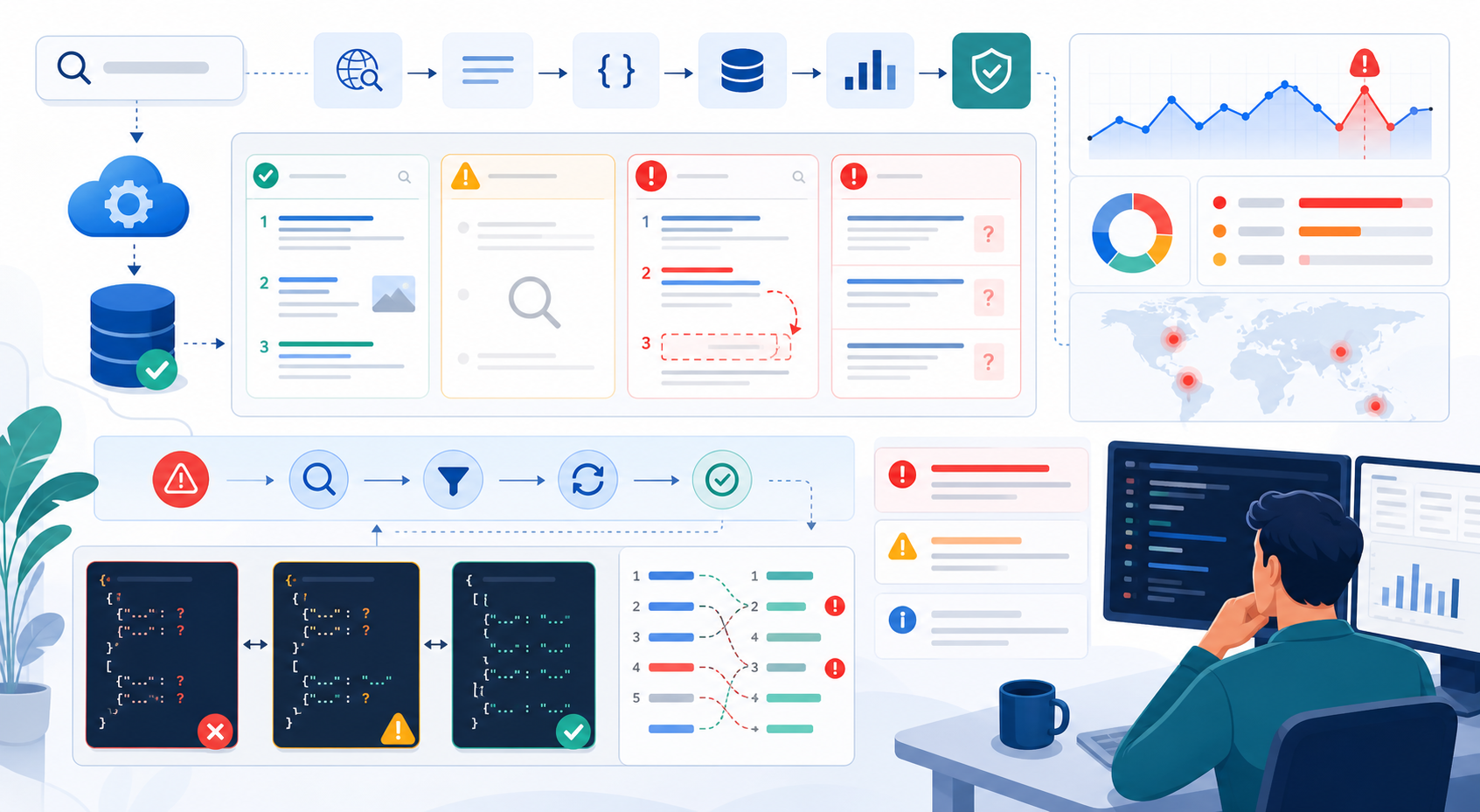
SERP API Troubleshooting: Fix Empty, Wrong, or Inconsistent Search Results
SERP API failures are not limited to obvious HTTP errors. A request can return successfully and still produce empty, incomplete, geographically wrong, duplicated, or misinterpreted search data. Production troubleshooting therefore has to separate transport problems from provider processing, SERP differences, and downstream parsing errors.
View Details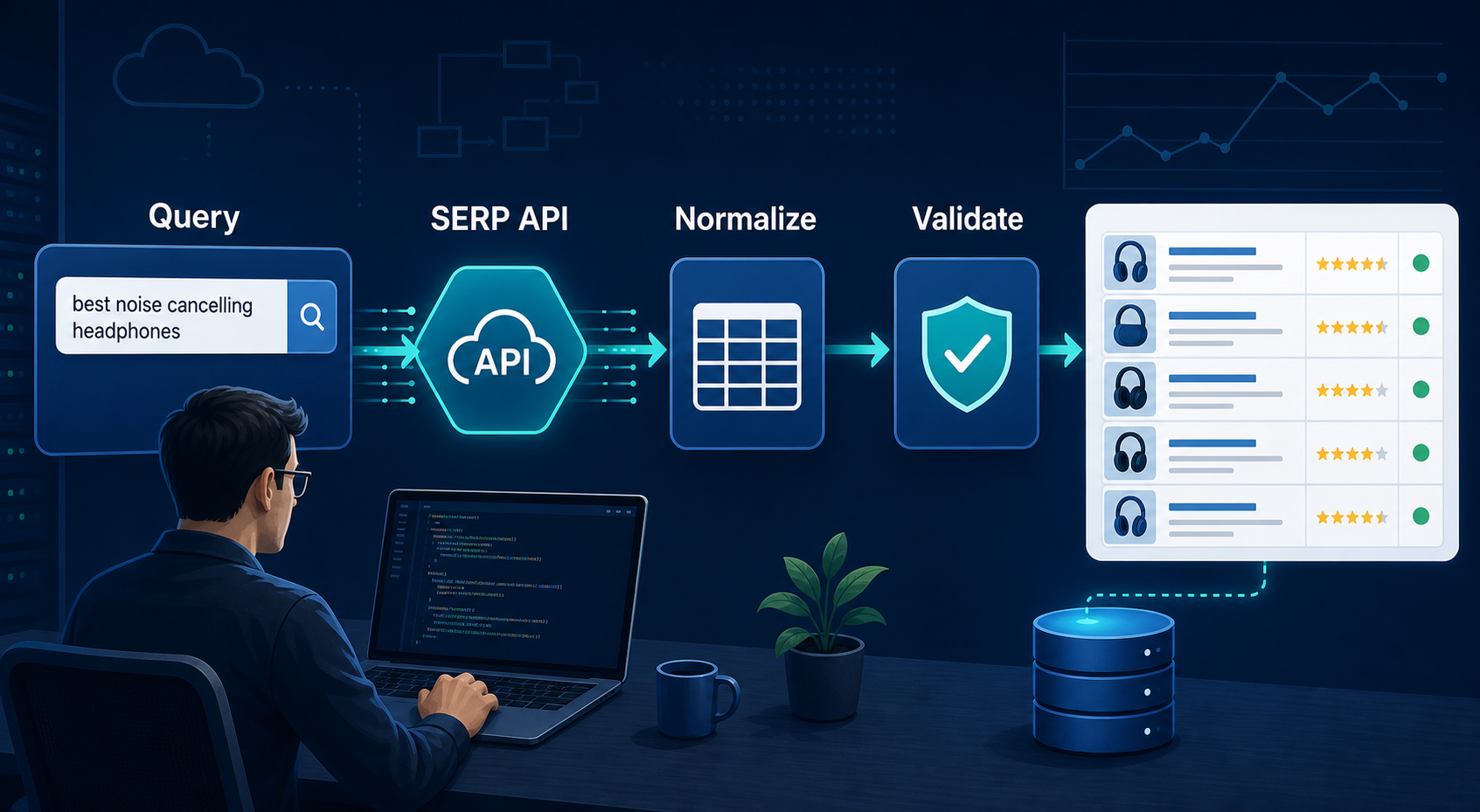
SERP API Python: How to Build a Reliable Search Data Pipeline
This guide shows a provider-neutral workflow for building that pipeline. It does not rank SERP API vendors. Instead, it focuses on the implementation choices that make a Python integration easier to operate, test, and migrate.
View Details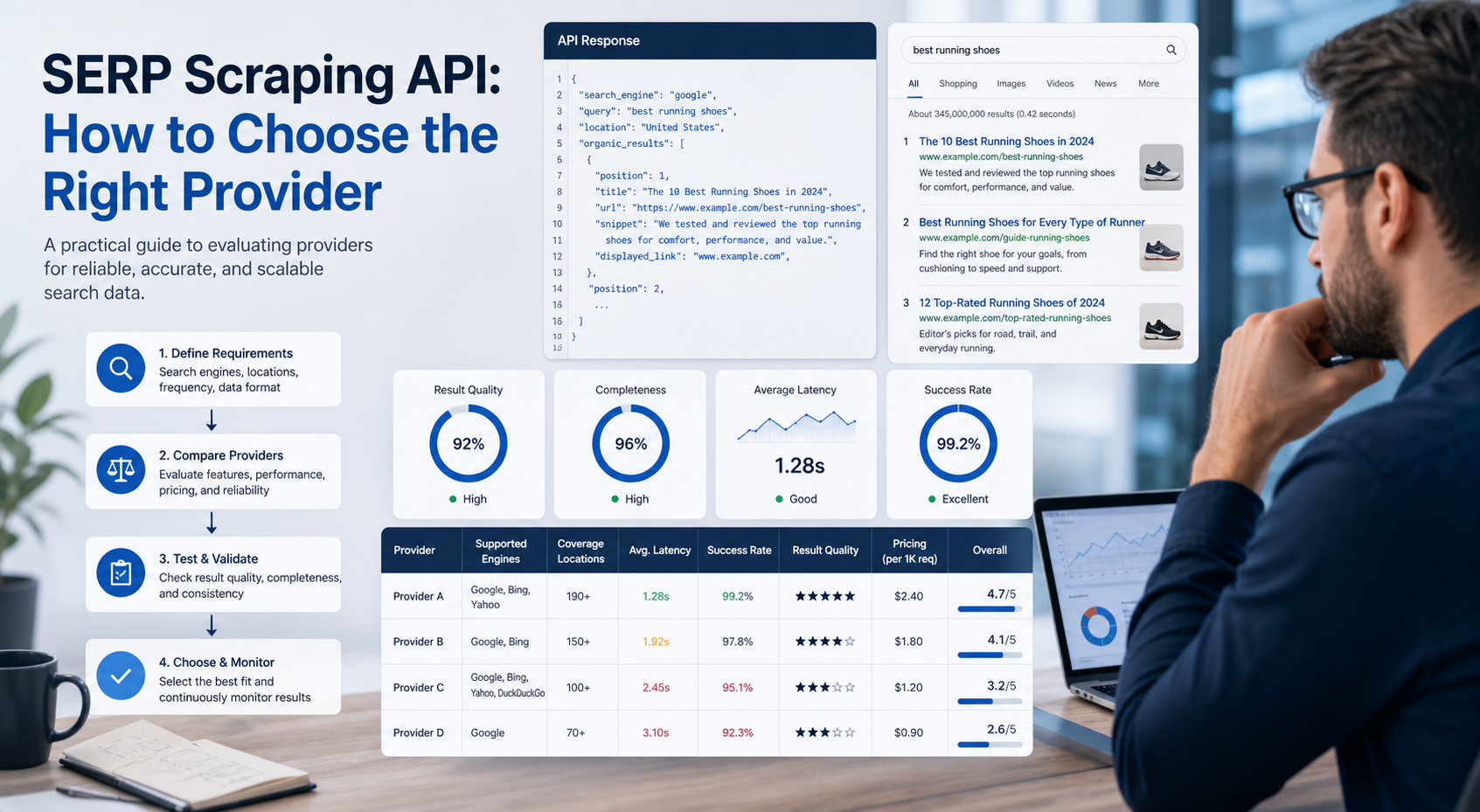
SERP Scraping API: How to Choose the Right Provider
Recommended Meta Description: Compare SERP scraping APIs by data coverage, localization, reliability, workflow fit, and cost structure, then choose and validate the right provider.
View Details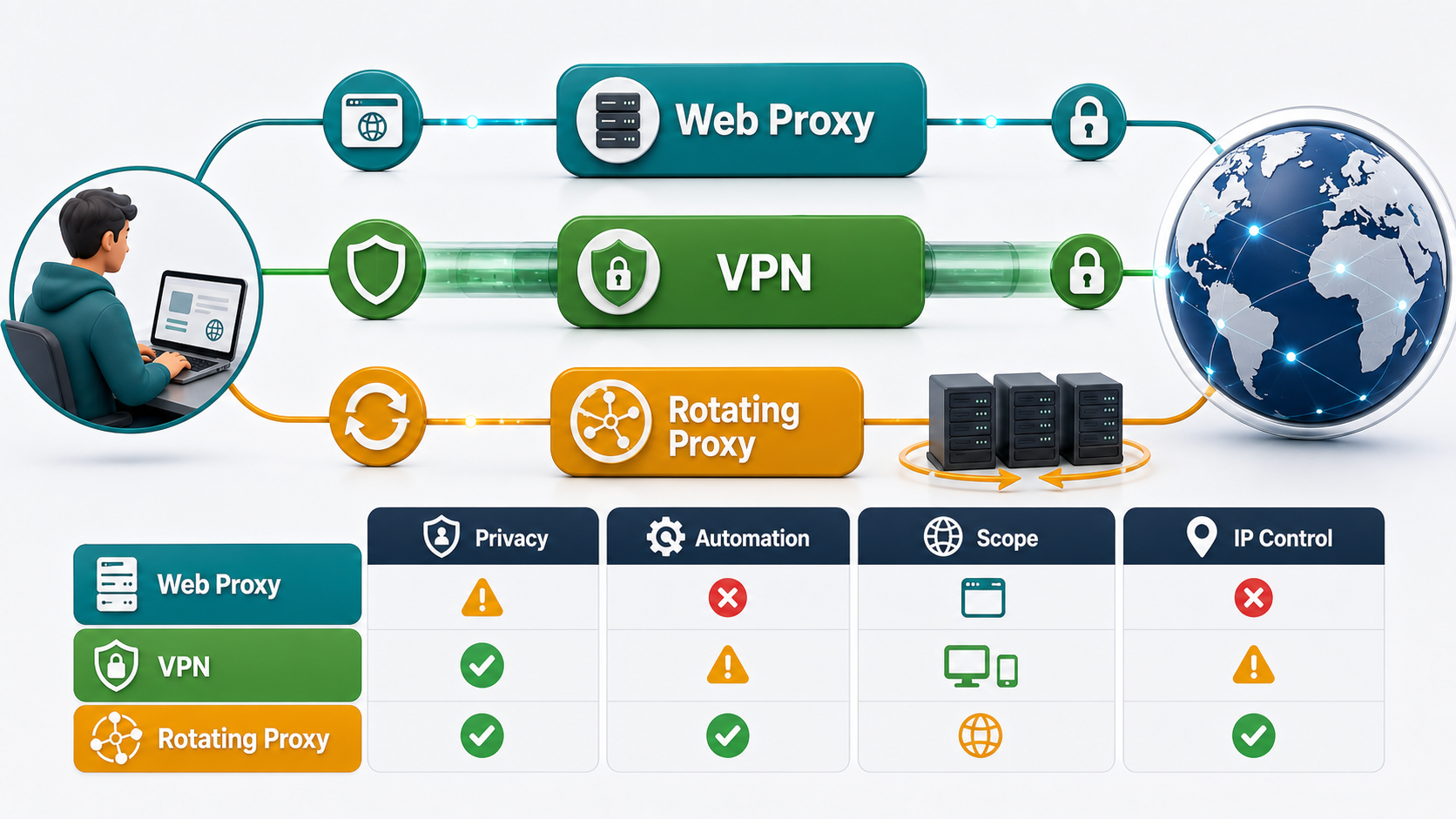
Free Web Proxy vs VPN vs Rotating Proxy: Which Should You Use?
Compare free web proxies, VPNs, rotating proxies, static proxies, and datacenter proxies by scope, encryption, IP control, automation, streaming, and account workflows.
View Details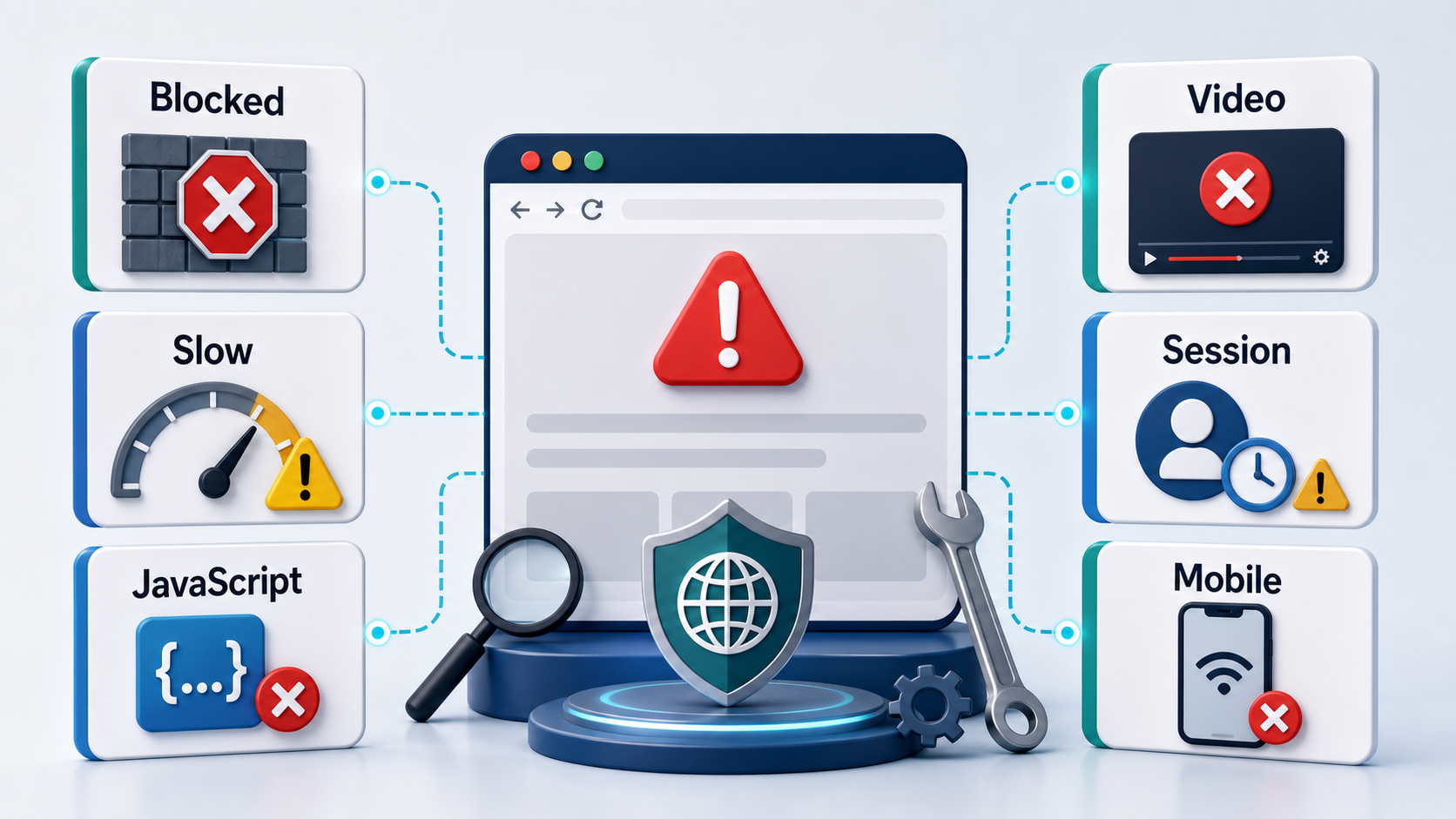
BlockAway Not Working? Fix Common Proxy, Video, and Access Problems
Troubleshoot BlockAway when pages are blocked, YouTube fails, JavaScript breaks, speed drops, sessions expire, or mobile access behaves differently.
View Details