
MCP vs ADK: Pick the Right Agent Framework
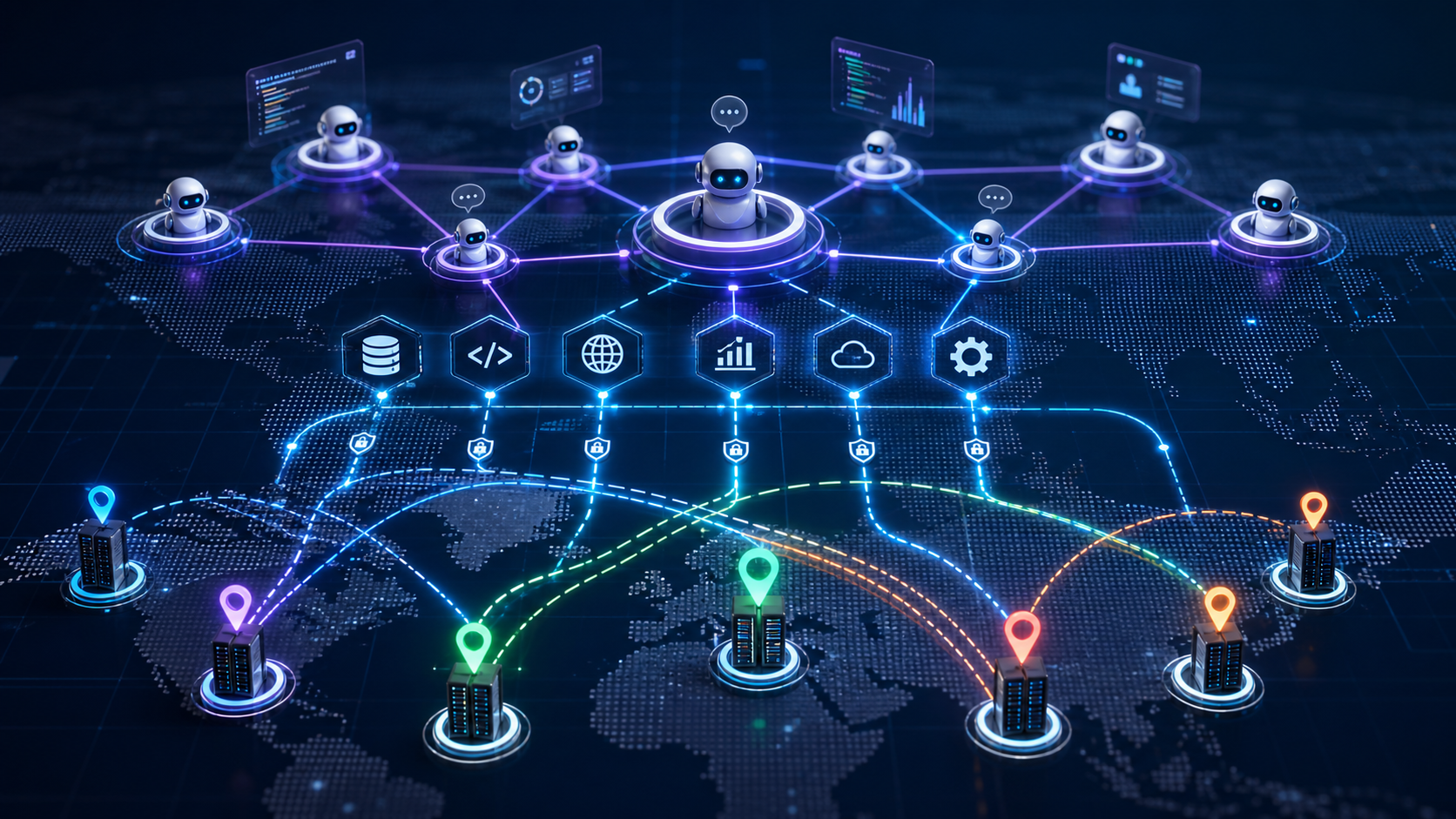
MCP and ADK both power AI agents — but using one where you need the other will wreck your system.
This is a problem that shows up more often than it should. Teams building multi-agent systems read about MCP and ADK, see that both relate to AI agents, and treat them as alternatives. They pick one, build around it, and then hit a wall when their architecture cannot handle what they actually need.
The confusion is understandable. Both frameworks are relatively new, documentation overlaps in places, and the agent ecosystem is moving fast. But MCP and ADK solve different problems at different layers of your stack. Conflating them leads to brittle integrations, poor task delegation, and systems that scale badly under real production load.
This article breaks down what each framework actually does, how they complement each other, and gives you a clear decision framework for which to use — and when to use both.
What MCP and ADK Actually Do
MCP Is About Tool Connectivity
MCP — the Model Context Protocol — is a protocol for connecting AI models to external tools, data sources, and services. Think of it as a standardized interface layer that lets an agent reach outside itself.
When an agent needs to query a database, call an API, run a code interpreter, read a file, or fetch live web data, MCP defines how that connection is structured. It standardizes the handshake between the model and the tool so that the model does not need custom integration code for every external system.
The value of MCP is interoperability and modularity. A tool built to the MCP spec can be connected to any MCP-compatible model or runtime without rebuilding the adapter each time. This matters at scale when your agent needs access to dozens of different data sources or capabilities.
Key characteristics of MCP:
- Protocol-level specification, not a runtime or orchestration engine
- Defines how tools expose their capabilities to a model
- Handles input/output schema, tool descriptions, and invocation contracts
- Works at the boundary between the model and the external world
- Does not manage how agents communicate with each other
ADK Is About Agent Orchestration
ADK — the Agent Development Kit, most associated with Google's open-source release — is a framework for building, structuring, and coordinating agents. Where MCP handles what an agent can reach, ADK handles how agents are organized, how they delegate tasks, and how multi-agent workflows are structured.
ADK provides the scaffolding for agent hierarchies. A root agent can spawn sub-agents, delegate specific tasks down the tree, collect results, and synthesize a response. It manages state across agent interactions, controls how context is passed between agents, and defines how agents hand off control.
ADK also supports different agent types — sequential agents, parallel agents, loop agents — that map to different workflow patterns. This structural flexibility is what makes it suitable for complex multi-step reasoning and task decomposition.
Key characteristics of ADK:
- Runtime framework for defining and running agents
- Manages agent hierarchies, delegation, and coordination
- Controls task decomposition and result synthesis
- Handles state management across agent turns
- Designed for multi-agent systems, not just single-agent tool use
Why Teams Conflate Them
The confusion comes from a surface-level similarity: both frameworks involve agents doing things in the world. But the layer at which they operate is completely different.
MCP operates at the tool integration layer. ADK operates at the orchestration layer. An agent built with ADK still needs MCP (or equivalent tool integrations) to interact with external systems. MCP alone gives you tool access but no structure for coordinating multiple agents working on a shared goal.
Using MCP where you need ADK means you end up with tool-capable agents that have no reliable way to collaborate. Using ADK without thinking carefully about tool integration means your well-orchestrated agents cannot reliably act on the world.
Building a Reliable Multi-Agent System
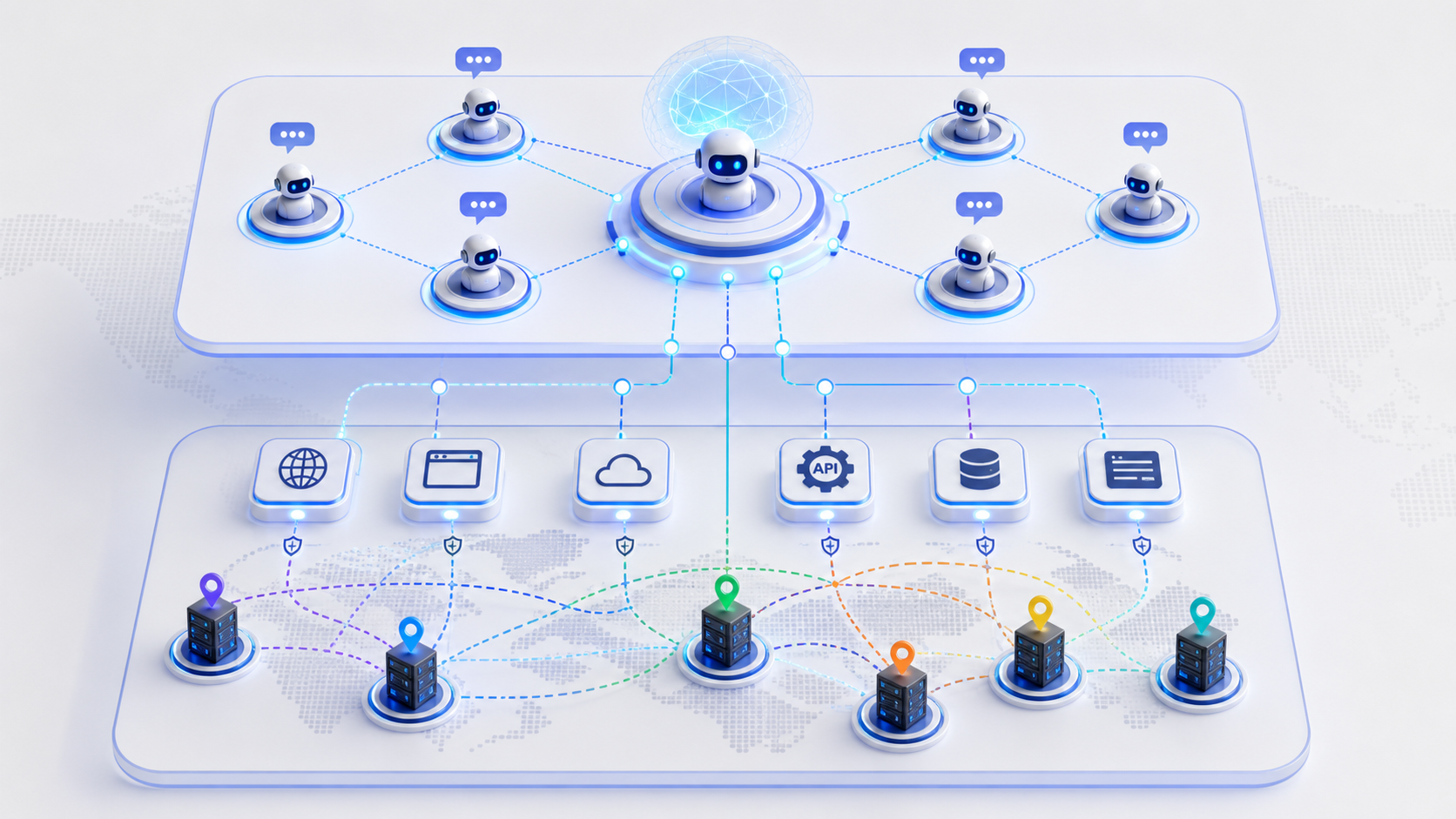
The Two-Layer Stack
A production-ready multi-agent system needs both layers working correctly.
- Orchestration layer (ADK): defines how agents are structured, how tasks are broken down, and how results flow between agents
- Tool integration layer (MCP): defines how agents access external systems, data sources, APIs, and services
Think of ADK as the nervous system and MCP as the hands. The nervous system coordinates and delegates. The hands reach into the world and interact with it.
Neither works well in isolation for complex systems. A well-orchestrated multi-agent pipeline with no reliable tool layer cannot act. A tool-rich agent with no orchestration layer cannot collaborate.
A Practical Example: Competitive Intelligence Workflow
Consider a multi-agent system built to collect and analyze competitor pricing data across several markets.
Without ADK, using only MCP:
You have a single agent with access to web scraping tools, structured via MCP. The agent can fetch pages, parse data, and return results. But the workflow is linear. If you need to parallelize across markets, handle retries, route different tasks to specialized sub-agents, or synthesize results from multiple concurrent data pulls, a single MCP-connected agent has no native structure for this. You end up building orchestration logic manually in application code, which defeats the purpose of using an agent framework.
With ADK + MCP:
A root orchestrator agent receives the task: collect and compare pricing for a product category across five regional markets. ADK allows the root agent to spawn five parallel sub-agents, each assigned to one market. Each sub-agent uses MCP-connected tools to fetch the relevant web data. Results return to the root agent, which synthesizes the comparison and hands off to a reporting agent.
The workflow is modular, auditable, and scalable. Adding a sixth market means spawning another sub-agent, not rewriting application logic.
Watch: MCP vs ADK in Modern AI Agent Systems
For a quick visual overview, this related IBM Technology video explains how MCP and ADK fit together in modern agent architectures.
Where Proxy Infrastructure Enters the Picture
For data collection workflows — whether for competitive pricing research, SERP monitoring, ad verification, or geo-specific content testing — the tool layer that MCP connects to often depends on proxy infrastructure.
When an agent fetches public web data, the IP origin of that request matters. Requests from datacenter proxies are blocked more aggressively by many sites. Dynamic residential proxies, which route traffic through real user devices, are less likely to trigger blocks for legitimate data collection tasks. Static residential proxies offer the consistency of a fixed IP with the trust profile of a residential address, which is useful for session-based workflows.
In an ADK-orchestrated multi-agent system, each sub-agent making web requests should route through geo-appropriate proxy endpoints. For a pricing research workflow spanning multiple regions, each regional sub-agent should use proxies that match the target geography. This is where proxy infrastructure becomes a direct dependency of the tool layer.
Providers like LycheeIP offers proxy infrastructure that fits into these automated workflows — residential proxies, datacenter proxies, and static residential proxies that can be integrated at the tool layer, giving agents geo-appropriate IP routing without manual intervention per request.
When using proxies in any automated data collection workflow, always respect the terms of service of the sites you access, review robots.txt files where applicable, avoid overloading target servers, and limit collection to publicly available data for legitimate research purposes.
Tradeoffs to Understand
| Dimension | MCP | ADK |
|---|---|---|
| Primary role | Tool connectivity | Agent orchestration |
| Scope | Single agent to external system | Multiple agents coordinating |
| State management | Per-tool invocation | Across agent turns and sessions |
| Scalability model | Add more tools | Add more agents/hierarchies |
| Complexity overhead | Low for single agent | Higher, justified for multi-agent |
| Best fit | Simple tool access | Complex task delegation |
When MCP Alone Is Enough
Not every use case needs ADK. A single-agent system with a clear, bounded task — fetch this data, summarize this document, call this API — does not need orchestration infrastructure. MCP handles the tool connections cleanly, and the overhead of ADK adds complexity without a return.
MCP alone works well when:
- You have one agent with one or a small set of tools
- The task is linear and does not require parallel execution
- There is no need to delegate subtasks to specialized agents
- You are prototyping and want minimal framework overhead
When ADK Becomes Necessary
ADK becomes the right choice — and MCP alone becomes insufficient — when:
- Multiple agents need to coordinate on a shared goal
- Tasks need to be decomposed and run in parallel
- Different subtasks require different specialized capabilities
- State needs to persist and be passed across agent interactions
- You need auditability and control over which agent handled which step
- You are building for production scale, not a prototype
Decision Matrix
How to Choose
Use this framework to determine what your system actually needs before committing to an architecture.
Step 1: Define the task structure
Is the task a single, linear operation — or does it decompose into multiple parallel or sequential subtasks? If the task is single and linear, MCP is likely sufficient. If the task decomposes, you need ADK.
Step 2: Count the agents
Do you need one agent or multiple? If one, MCP handles tool connectivity. If multiple agents need to collaborate, ADK is the orchestration layer.
Step 3: Evaluate state requirements
Does context need to persist across multiple agent turns or be passed between agents? MCP does not manage cross-agent state. ADK does.
Step 4: Assess production requirements
Are you prototyping or building for production? ADK's overhead is justified for production systems with multiple agents. For early-stage exploration, start with MCP and layer in ADK when the workflow complexity justifies it.
Decision Summary
| Use Case | Use MCP | Use ADK | Use Both |
|---|---|---|---|
| Single agent, bounded task | Yes | No | No |
| Single agent, many tools | Yes | No | Optional |
| Multi-agent parallel execution | No | Yes | Yes |
| Complex task decomposition | No | Yes | Yes |
| Production multi-agent system | No | Yes | Yes |
| Prototype with tool access | Yes | No | No |
Proxy Infrastructure in the Tool Layer
For teams building agent systems that collect public web data workflows, the tool layer is not just about API calls and database queries. Many real-world agent workflows depend on HTTP requests to external sites — for market research, SERP monitoring, geo-specific content testing, price tracking, and ad verification.
These workflows require reliable proxy infrastructure at the tool layer. When an ADK-orchestrated set of sub-agents is collecting regional pricing data, each agent's web requests need to originate from the right geography with the right IP profile to avoid blocks and ensure data quality.
LycheeIP provides proxy infrastructure — including residential proxies, datacenter proxies, and static residential proxies — that can be integrated into the tool layer of an agent stack. Teams using MCP to define their web scraping tools can configure those tools to route through LycheeIP proxy endpoints, giving agents geo-appropriate IP routing as part of the standard tool invocation.
This is a practical integration point: the orchestration layer (ADK) coordinates which agents fetch which data, and the tool layer (MCP plus proxy infrastructure) ensures those requests succeed with the right IP context.
Common Mistakes and Considerations
Mistake 1: Treating MCP as an orchestration layer
MCP defines the contract between an agent and a tool. It does not manage how agents coordinate. Teams that try to simulate orchestration through tool chaining in MCP end up with fragile, hard-to-debug systems.
Mistake 2: Adding ADK overhead to simple single-agent tasks
ADK is powerful but not free. For a simple, single-agent use case, ADK adds complexity without benefit. Match the framework to the actual task complexity.
Mistake 3: Ignoring state management design early
State management in multi-agent systems is easy to underdesign. How context passes between agents, how results are stored, and how errors propagate need explicit design decisions before you build. ADK provides the primitives, but the design is on you.
Mistake 4: Not planning the tool layer for production conditions
A tool that works in a dev environment with no rate limits or IP restrictions often fails in production. If your agents make web requests at scale, proxy infrastructure, rate limiting, and retry logic need to be part of the tool layer design, not afterthoughts.
Mistake 5: Conflating protocol and framework maturity
Both MCP and ADK are relatively young. The specifications and APIs are still evolving. Build with abstraction boundaries in mind so that framework updates do not require full rewrites.
Consideration: Responsible data collection
If your agent workflows collect public web data, ensure that your tools and proxy configuration are used for legitimate purposes — public data research, competitive analysis, localization testing, monitoring. Always review the terms of service for target sites, respect rate limits, and avoid practices that could harm the availability or integrity of target systems.
Conclusion
MCP and ADK are not competitors. They operate at different layers of the agent stack and solve different problems.
MCP is your tool integration protocol. It defines how agents connect to external systems and standardizes those connections so tools are reusable and interoperable. ADK is your orchestration framework. It defines how agents are structured, how they delegate tasks, and how multi-agent workflows coordinate toward a shared goal.
The mistake teams make is treating these as alternatives. For any non-trivial multi-agent system, you need both: MCP handling the boundary between agents and external tools, ADK handling the coordination between agents themselves.
Start by mapping your task structure. If the task is single, linear, and bounded, MCP alone is enough. As soon as you need parallel execution, specialized sub-agents, or cross-agent state management, add ADK. Build the orchestration layer and the tool layer independently so each can evolve without breaking the other.
The teams that get this right end up with agent systems that are modular, debuggable, and scalable. The teams that conflate the two frameworks spend months untangling architecture decisions they should have made on day one.
Frequently Asked Questions
Q: What is the main difference between MCP and ADK?
A: MCP is a protocol for connecting agents to external tools and services. ADK is a framework for structuring and coordinating multiple agents. MCP handles what an agent can access. ADK handles how agents work together.
Q: Can I use MCP without ADK?
A: Yes. For single-agent systems with a clear, bounded task, MCP handles tool connectivity without needing ADK. ADK becomes necessary when you have multiple agents that need to coordinate, delegate tasks, or share state.
Q: Can I use ADK without MCP?
A: Yes, but your agents will have limited ways to interact with external systems unless you build custom tool integrations. MCP provides a standardized integration layer that makes tool connections reusable and consistent.
Q: When should I use both MCP and ADK together?
A: Use both when building production multi-agent systems that need to decompose tasks, run agents in parallel, pass state between agents, and interact with external tools or data sources. ADK handles orchestration; MCP handles tool access.
Q: How does proxy infrastructure relate to MCP and ADK?
A: Proxy infrastructure lives in the tool layer. When agents make web requests — for scraping, monitoring, or data collection — those requests route through proxy endpoints configured in the tool definition. MCP standardizes how the tool is invoked; proxy infrastructure determines the IP context of the request.
Q: Is ADK production-ready?
A: ADK is open-source and actively developed, but like any relatively new framework, it is still evolving. Teams using it in production should build with abstraction boundaries so that API changes do not require full rewrites.
Q: Does MCP work with any AI model?
A: MCP is designed as a model-agnostic protocol. In principle, any model runtime that implements the MCP specification can use MCP-compatible tools. In practice, adoption varies by provider and runtime, so check compatibility for your specific stack.
Q: What types of tools can be connected via MCP?
A: Any external capability that can be described with an input/output schema can be wrapped as an MCP tool — APIs, databases, code interpreters, file systems, web scraping endpoints, and data services. The protocol handles the contract between the model and the tool.
Q: What is the right way to handle web data collection in a multi-agent system?
A: Design the data collection capability as a tool in the MCP layer, configure it with appropriate proxy routing for geo-specific requests, and let ADK coordinate which agents invoke that tool for which tasks. Always respect site terms of service, robots.txt, and rate limits.
Q: How do I decide which framework to start with?
A: Start with MCP if you are building a single agent that needs tool access. Add ADK when your system needs multiple agents to coordinate. Do not add ADK overhead before your task complexity justifies it — but plan your architecture so you can layer it in when needed.

Recommended Articles
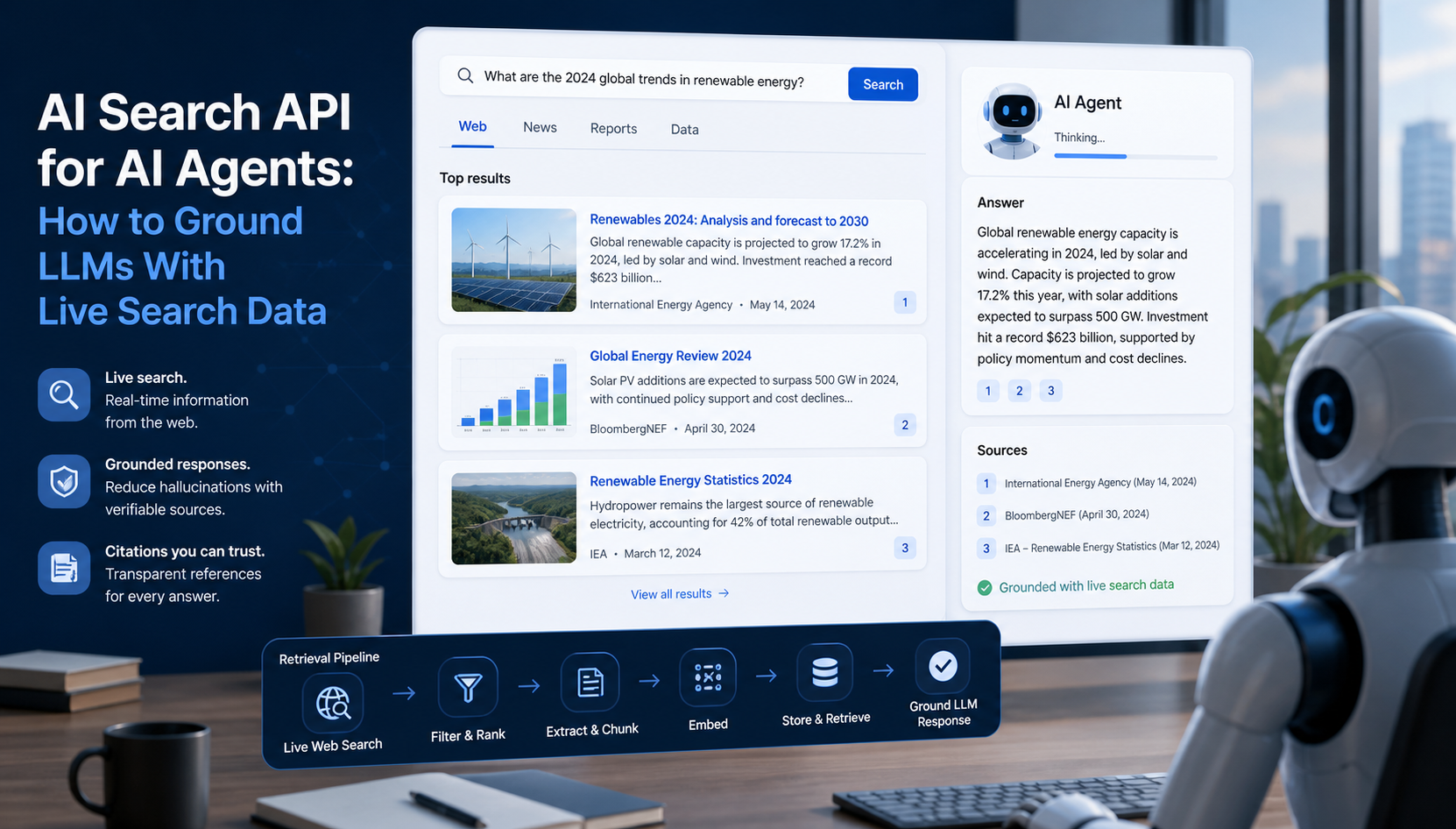
AI Search API for AI Agents: How to Ground LLMs With Live Search Data
An AI search API gives an application or agent programmatic access to current search results. Its most useful role is discovery: the agent can find candidate sources, identify fresh information, and decide what to retrieve next instead of relying only on model memory.
View Details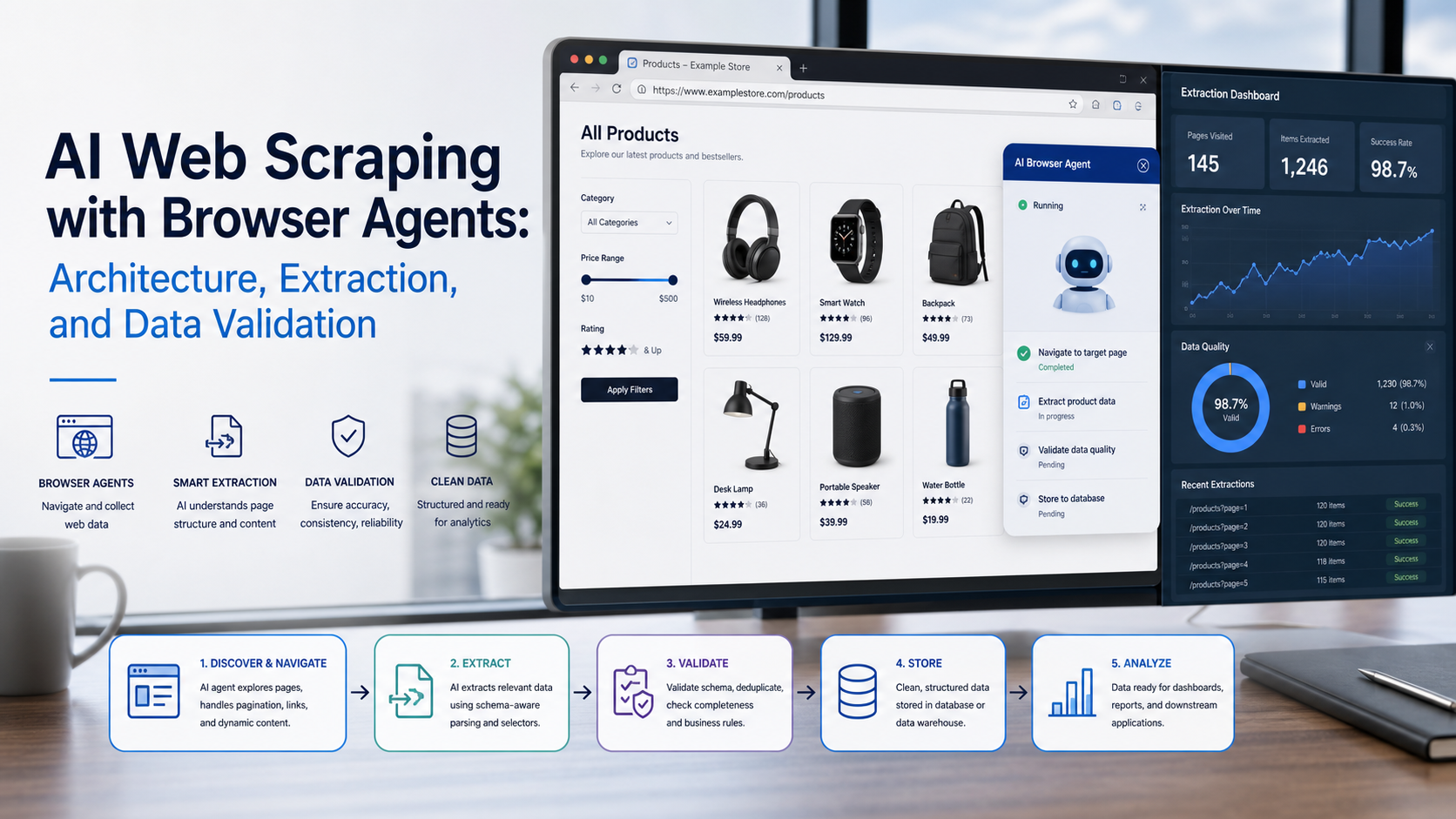
AI Web Scraping with Browser Agents: Architecture, Extraction, and Data Validation
AI web scraping uses AI to help discover, navigate, interpret, or extract information from websites. Browser agents are one implementation option when page interaction, rendering, or layout variation makes a simple scraper too brittle, but the agent should not become the entire data pipeline.
View Details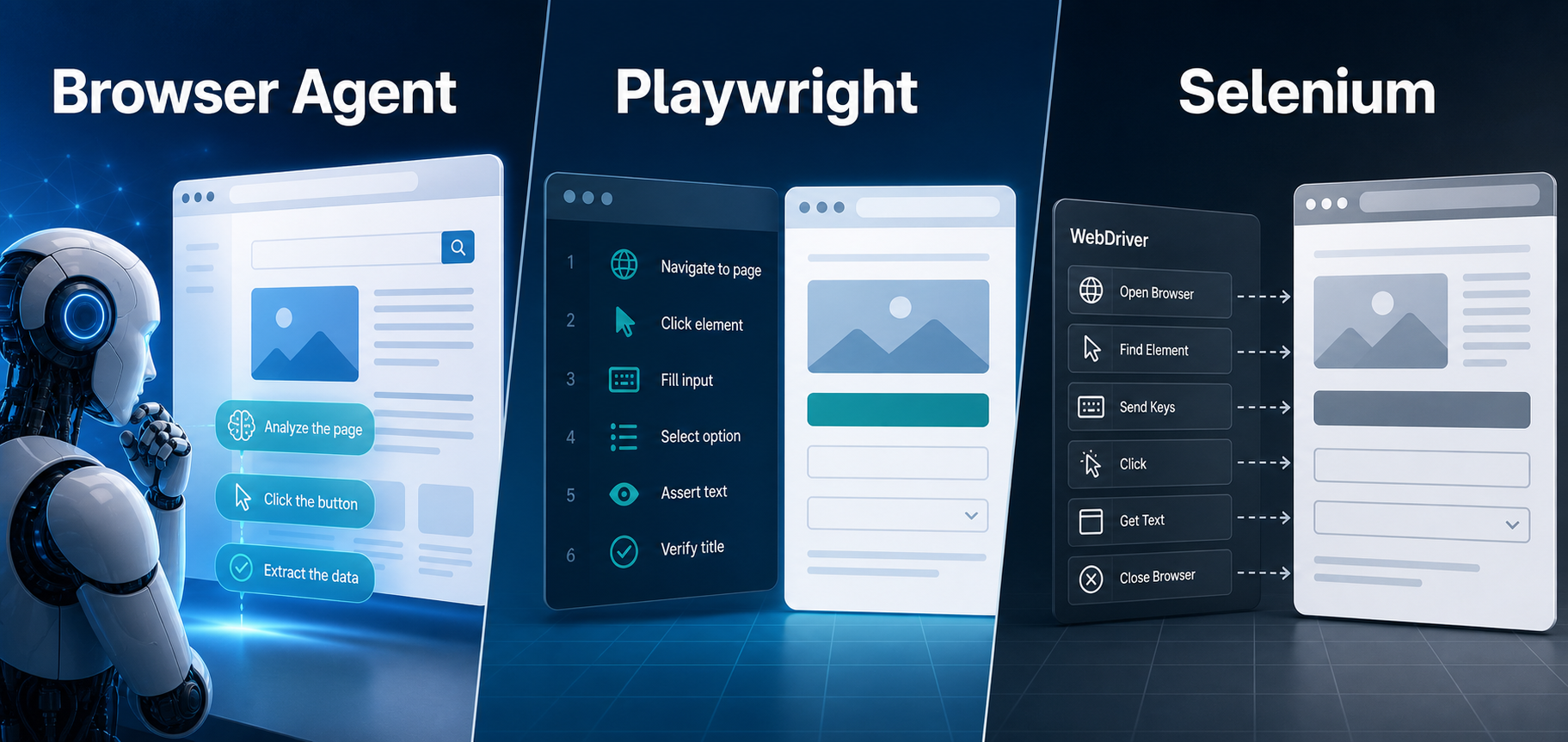
AI Browser Automation: Browser Agents vs Playwright vs Selenium
A browser agent interprets a goal and decides what browser action to take next. Playwright and Selenium can execute explicit, testable browser logic defined by developers. In 2026, however, Playwright also provides official MCP and agent-oriented workflows, so Playwright is no longer just the deterministic alternative to agentic automation. It can also serve as the browser-control layer inside an agent system.
View Details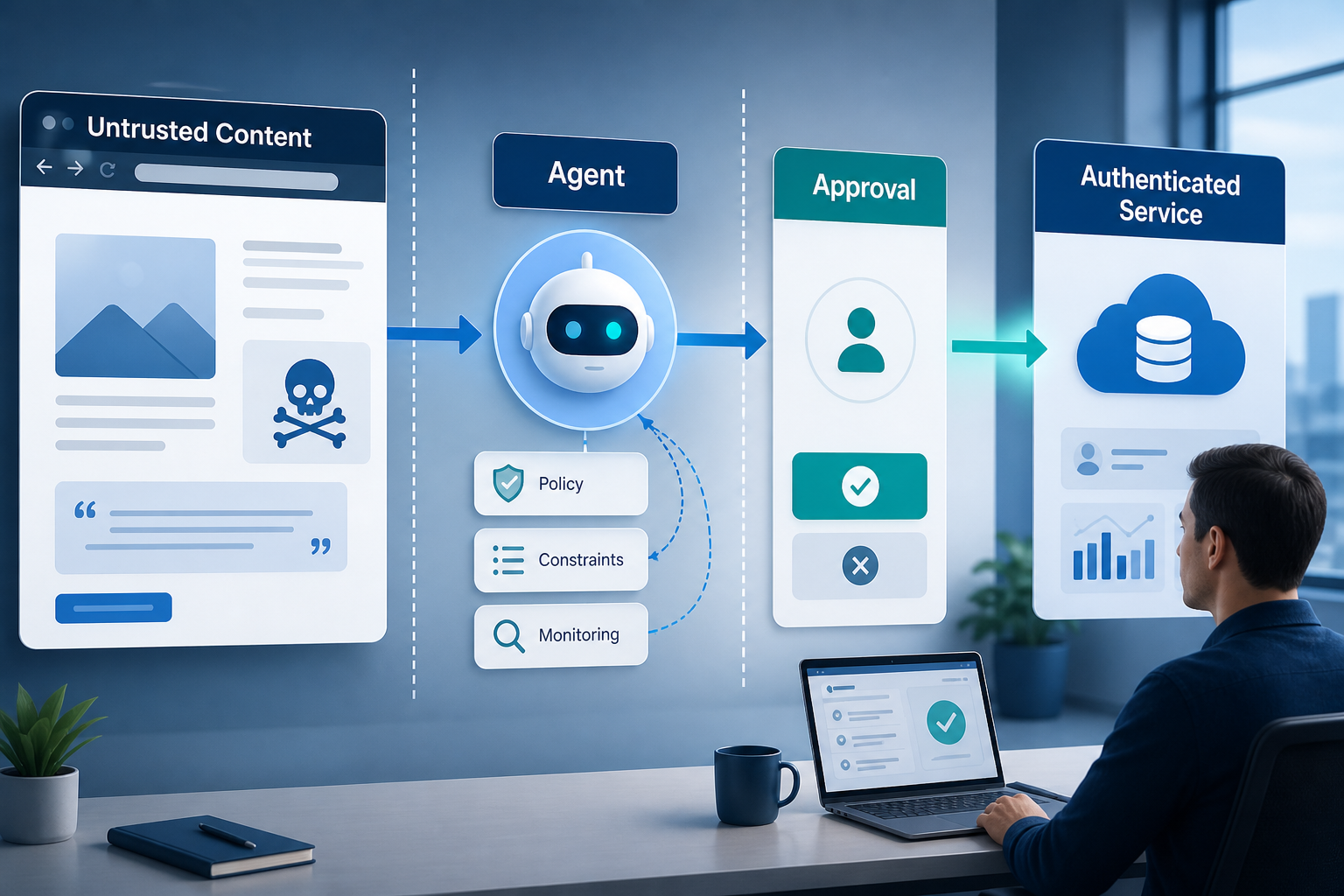
Agentic Browser Security: Prompt Injection, Permissions, and Safe Deployment
That combination creates risks that are different from ordinary browsing and traditional automation. The most important is indirect prompt injection, where hostile instructions hidden in web content attempt to redirect the agent away from the user's goal. Google describes indirect prompt injection as a primary new threat for agentic browsing and has introduced layered defenses that include origin constraints, independent action checks, threat detection, and user confirmation for sensitive actions. Google's Chrome security architecture is a useful reference for how browser-agent defenses are evolving.
View Details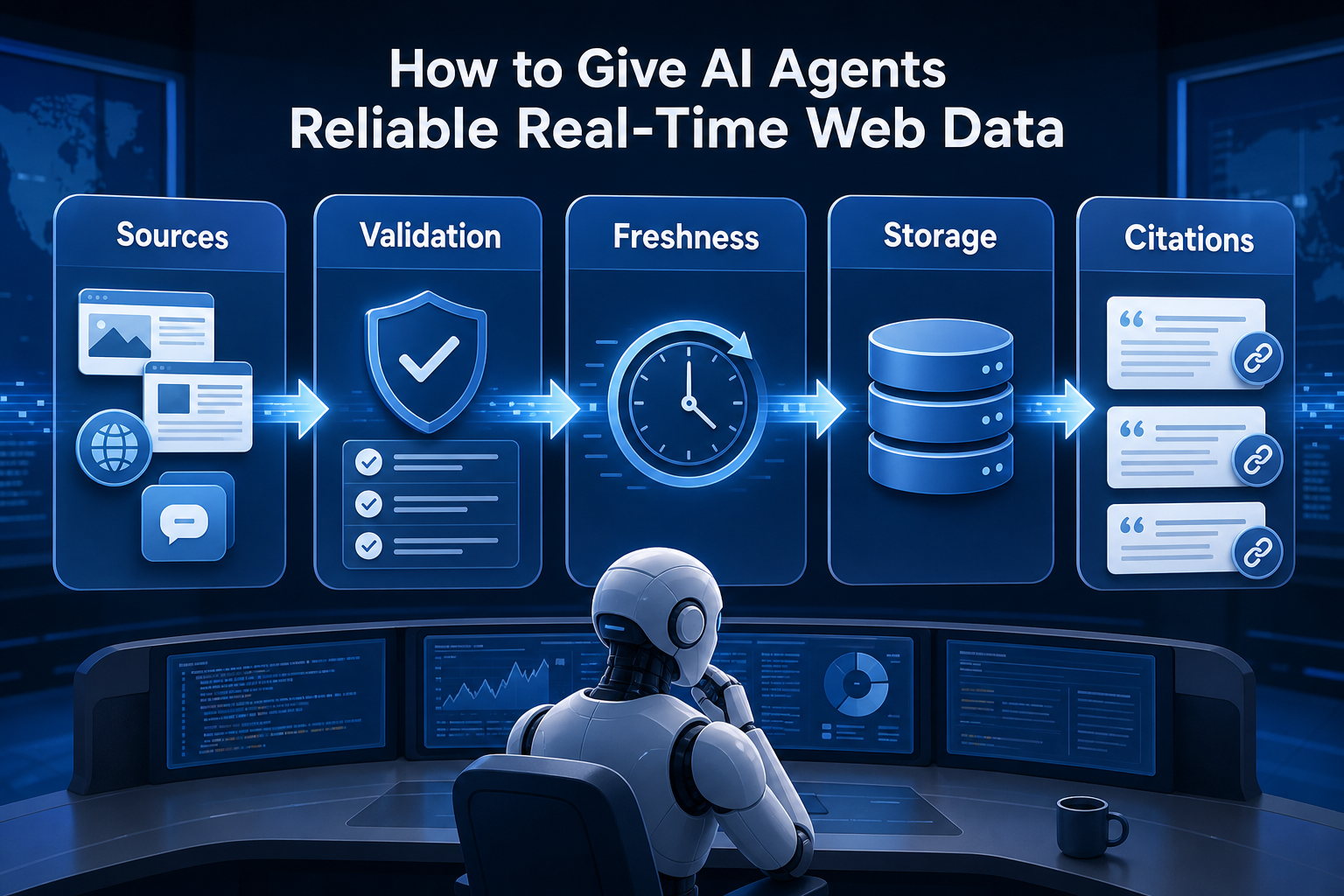
How to Give AI Agents Reliable Real-Time Web Data
A production-ready solution therefore needs more than a web scraper. It needs a web data layer that connects acquisition, validation, storage, retrieval, security, and observability. This guide explains how to design that layer.
View Details