
Health Care Proxy: Powers, Forms, and Choosing Your Agent
Health Care Proxy: Powers, Forms, and Choosing Your Agent
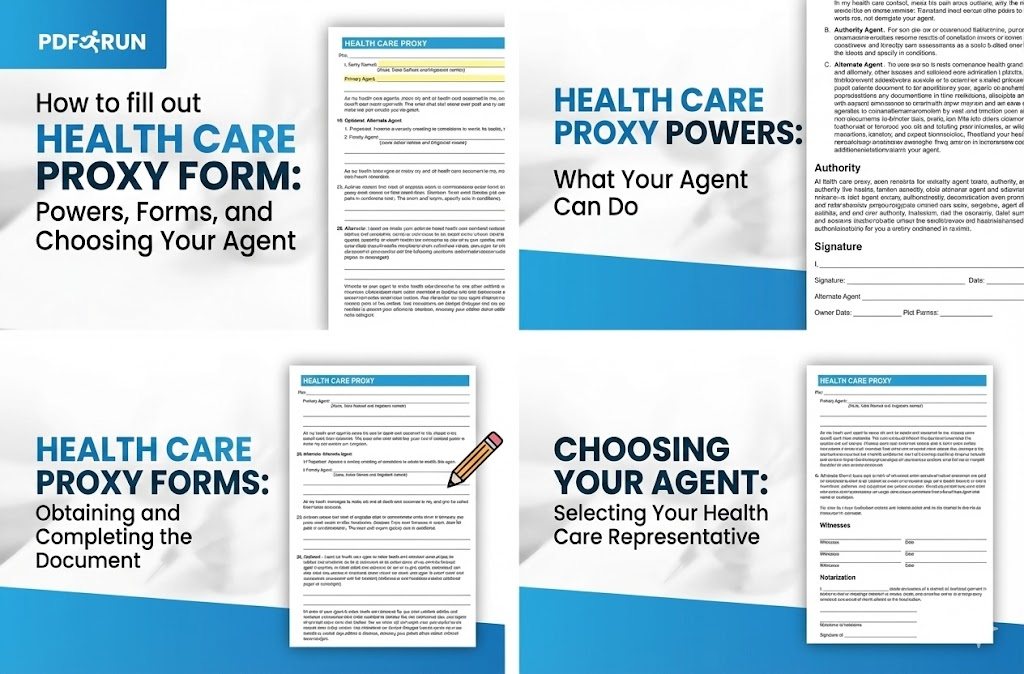
A health care proxy is a legal document that authorizes a trusted individual to make medical decisions on your behalf if you become unable to communicate. In the world of data infrastructure, where LycheeIP operates, a proxy server acts as an intermediary to ensure reliable connection and security. Similarly, in the legal and medical world, a health care proxy acts as your personal intermediary, ensuring your "output" (your wishes and values) is delivered correctly even when your own system is offline (incapacitated).
Designating a health care proxy is a critical component of personal risk management. It ensures that if you face a medical crisis, your treatment path remains consistent with your values rather than defaulting to standard protocols or state laws that may not align with your wishes.
Use LycheeIP to test rotating proxies
What is a health care proxy and why does it matter?
A health care proxy matters because it provides a clear chain of command for your medical care when you cannot speak for yourself. Without this designation, doctors may be forced to rely on state statutes to determine who makes decisions, which can lead to delays, family disputes, or care you would not have wanted. It is a failover mechanism for your personal autonomy.
What does a health care proxy do that ordinary consent cannot?
Ordinary consent requires you to be conscious, oriented, and capable of processing information in real-time. A health care proxy bridges the gap when those faculties are lost due to coma, anesthesia, or cognitive decline. It grants your agent the legal standing to access your medical records, consult with specialists, and approve or refuse procedures just as you would. The power of a health care proxy essentially transfers your informed consent rights to your agent for the duration of your incapacity.
How does a health care proxy support advance care planning?
Advance care planning is the broader strategy of preparing for future health scenarios, and the proxy is the tactical execution of that strategy. While a living will lists specific instructions (like code), advance care planning acknowledges that medical situations are unpredictable. By appointing a proxy, you create a dynamic decision-making structure. The National Institute on Aging emphasizes that these documents are vital for ensuring your end of life care decisions are respected, reducing the burden on family members who might otherwise have to guess your preferences.
How does a health care proxy work in real medical situations?
A health care proxy works by activating only after a medical professional determines you lack the capacity to make decisions. It is not a "superuser" permission that overrides you while you are awake and alert; it is a standby protocol. Once active, the medical team looks to your agent for all consents and refusals.
When does a doctor decide your proxy should speak for you?
Doctors invoke the proxy authority when an evaluation confirms you cannot understand your condition or communicate a choice. This assessment is clinical, often involving attending physicians or specialists. If you are temporarily unconscious from a car accident, the power of a health care proxy activates immediately. If you recover consciousness, the authority reverts back to you. This ensures that your autonomy is preserved whenever possible, with the proxy serving as a backup node.
How do end of life care decisions show up in practice?
End of life care decisions are rarely black and white; they often involve nuanced choices about trade-offs between longevity and quality of life. In practice, your proxy might face questions about whether to insert a feeding tube, how long to continue mechanical ventilation, or whether to transition to hospice care. Because end of life care decisions are highly personal, your agent must apply "substituted judgment"—making the choice they believe you would make, rather than what they would want for themselves.
Use LycheeIP to test rotating proxies
Who should you choose as your health care proxy?
You should choose a health care proxy who is assertive, calm under pressure, and thoroughly familiar with your values. This person, often called an agent or surrogate, needs to be able to separate their own emotions from your instructions.
What qualities make someone a strong medical power of attorney for health care?
A strong candidate for a medical power of attorney for health care (another term for proxy) possesses specific "uptime" reliability traits:
- Availability: They must be reachable during emergencies.
- Decisiveness: They must be able to make hard calls regarding end of life care decisions without freezing.
- Advocacy: They must be willing to push back against hospital bureaucracy if your wishes are being ignored.
- Integrity: They must respect the power of a health care proxy by strictly following your advance care planning discussions.
Which questions should you ask your health care proxy before signing?
Before executing the document, verify alignment by asking:
- "Are you willing to enforce end of life care decisions that might result in my death if that is what I have requested?"
- "Can you handle conflict with other family members who might disagree with my advance care planning?"
- "Do you understand the health care proxy limitations regarding financial matters?"
- "Are you comfortable acting as my medical power of attorney for health care knowing the emotional weight involved?"
How can non-family alternatives for a health care proxy protect partners?
Non-family alternatives for a health care proxy are essential for unmarried partners, LGBTQ+ individuals, or those estranged from biological family. Without a specific Health care Proxy form naming your chosen partner, many state laws default to "next of kin" (parents, siblings, or adult children). This can result in partners being locked out of ICU rooms or excluded from end of life care decisions. Naming a friend or partner explicitly overrides these default hierarchies.
How do you complete a health care proxy form step by step?
You complete a health care proxy form by obtaining the correct template for your state, filling in your agent's details, and signing it in the presence of required witnesses or a notary.
Which health care Proxy form should you use in your state?
You should use a Health care Proxy form that is recognized by the state where you primarily reside or receive care. While many forms are similar, specific requirements for witnessing and notarization vary. For example, New York requires two witnesses, neither of whom can be the agent. Using the correct Health care Proxy form ensures that the document will be accepted by hospital legal departments without delay.
How can a Free printable health care Proxy form help you get started?
A Free printable health care Proxy form lowers the barrier to entry, allowing you to draft your directive immediately without legal fees. Many state Departments of Health or Bar Associations offer a Free printable health care Proxy form as a PDF download.
- Download: Search for your state's official .gov or .org site.
- Verify: Ensure the Free printable health care Proxy form has a revision date within the last few years.
- Execute: Print and sign according to instructions.
- Note: While a Free printable health care Proxy form is legally valid, ensure it covers your specific advance care planning needs.
How should you store and share your Health care Proxy form?
Store your Health care Proxy form where it can be accessed instantly. Think of it like an API key that needs to be retrievable.
- Physical: Keep the original Health care Proxy form in a fireproof box.
- Digital: Upload a scan to your patient portal or a secure cloud drive.
- Distribution: Give copies of the Health care Proxy form to your agent, alternate agent, and primary care physician.
- Wallet: Carry a card indicating you have a medical power of attorney for health care and where it is located.
What is the difference between a health care proxy and power of attorney?
The difference between a health care proxy and a power of attorney lies in the domain of authority: one governs the body, the other governs the estate. Just as LycheeIP distinguishes between residential proxies (for user emulation) and datacenter proxies (for speed), the law distinguishes between medical and financial agents.
Use LycheeIP to test rotating proxies
How does a health care proxy vs power of attorney compare?
When analyzing health care proxy vs power of attorney, the distinctions are clear:
| Feature | Health Care Proxy | Financial Power of Attorney |
| Primary Scope | Medical treatment, surgery, end of life care decisions. | Bank accounts, real estate, taxes, contracts. |
| Activation | Usually only upon incapacity (medical judgment). | Can be effective immediately or upon incapacity. |
| Also Known As | Medical power of attorney for health care. | Durable POA, General POA. |
| Agent Role | Communicates with doctors. | Communicates with banks and lawyers. |
Why do many people need both a health care proxy and a financial power of attorney?
You likely need both because a health care proxy cannot pay your medical bills, and a financial POA cannot consent to surgery. If you are incapacitated, you have two distinct sets of problems: your physical health and your financial solvency. Comprehensive advance care planning includes executing both a medical power of attorney for health care and a durable financial power of attorney to ensure total coverage.
What are the main limitations of a health care proxy?
The main health care proxy limitations are that the agent cannot contradict your previously written instructions and cannot act outside the scope of medical care. The power of a health care proxy is a delegated authority, not an absolute dictatorship.
Which decisions are outside the power of a health care proxy?
Decisions outside the power of a health care proxy typically include:
- Financial Management: They cannot access your bank account to pay for the care they just approved.
- Contrary to Living Will: If your living will explicitly forbids a ventilator, the proxy generally cannot override that written instruction.
- Psychosurgery or Sterilization: Many states have health care proxy limitations preventing agents from consenting to these specific procedures without a court order.
- Illegal Acts: An agent cannot demand treatments that are not legally available or medically indicated.
How do state laws shape health care proxy limitations?
State laws define the boundaries of health care proxy limitations. Some states require specific language to authorize tube feeding withdrawal, while others assume that authority exists unless stated otherwise. Furthermore, a medical power of attorney for health care is state-specific; a form signed in California may not be automatically honored in Florida without legal review. Always check if your Free printable health care Proxy form includes clauses that address these specific state-level health care proxy limitations.
When should you review or update your health care proxy?
You should review your health care proxy every 3 to 5 years or whenever a significant life change occurs. Advance care planning is an iterative process, not a "write once, read never" static file.
How often should you revisit advance care planning documents?
You should revisit advance care planning documents regularly to ensure the person named is still willing and able to serve. Relationships change, and an agent named ten years ago may no longer be the best fit for making end of life care decisions. Regular audits ensure your "medical stack" is up to date.
What life events signal that it is time to update your health care proxy?
Update your health care proxy and medical power of attorney for health care if:
- Relationship Status Changes: You marry, divorce, or separate.
- Agent Unavailability: Your named proxy dies, becomes ill, or moves away.
- Diagnosis: You are diagnosed with a serious condition that changes your view on end of life care decisions.
- Relocation: You move to a new state with different health care proxy limitations.
- Conflict: You realize your current agent struggles with the power of a health care proxy and may not follow your wishes.
Comparison Table: Medical Documents at a Glance
| Document Type | Purpose | Trigger |
| Health Care Proxy | Appoints a person to make decisions. | When you cannot speak for yourself. |
| Living Will | Written instructions for end of life care decisions. | Terminal condition + incapacity. |
| DNR (Do Not Resuscitate) | Medical order to withhold CPR. | Immediate cardiac/respiratory arrest. |
| Financial POA | Manages money/assets (distinct from health care proxy). | Specified date or incapacity. |
Use LycheeIP to test rotating proxies
Frequently Asked Questions:
1. Can I use a Free printable health care Proxy form from any website?
You should be cautious. While you can use a Free printable health care Proxy form, ensure it is the official form for your specific state (usually found on the state Department of Health website). Generic forms may not meet local witnessing requirements or address specific health care proxy limitations.
2. Does a medical power of attorney for health care expire?
Generally, a medical power of attorney for health care does not expire unless you revoke it, create a new one with a later date, or if the document lists a specific expiration date. It remains valid indefinitely as part of your advance care planning.
3. What happens if I don't have a health care proxy?
If you lack a proxy, doctors will turn to state law ("surrogacy statutes") to identify a decision-maker, usually a spouse or closest blood relative. This default list may not reflect your choice, especially regarding end of life care decisions or for unmarried partners.
4. Can my agent override my living will?
Typically, no. The power of a health care proxy is usually subordinate to your clear, written instructions in a living will. However, some states allow you to grant "broad" powers that let the agent interpret your wishes differently if medical circumstances change unexpectedly.
5. Is a health care proxy the same as a medical power of attorney for health care?
Yes, in most contexts. The terms health care proxy and medical power of attorney for health care are often used interchangeably to describe the document appointing an agent. However, "Power of Attorney" without the "Medical" qualifier usually refers to finances.
6. Can I name more than one person on my Health care Proxy form?
It is generally advised to name one primary agent and one alternate. Naming two people to act simultaneously (co-agents) can lead to deadlocks and delays in end of life care decisions if they disagree.

Recommended Articles

Akamai Bypass for Web Scraping
Akamai Bypass for Web Scraping
View Details
Browser Security Settings Most Users Never Touch
Stop leaving your personal data wide open. We reveal the crucial security toggles buried in your browser that instantly lock down your passwords and hide your daily web traffic.
View Details
Stop Saving Passwords in Your Browser
Letting Chrome or Safari remember your passwords feels incredibly convenient, but it is a massive security risk. Discover the hidden dangers of browser autofill and exactly what you should be using instead.
View Details
Should You Pay for a Browser? The Case For and Against
Are you currently paying for your free browser with your personal data? Discover if upgrading to a paid tool like Brave Origin is the ultimate privacy hack or just a complete waste of your cash.
View Details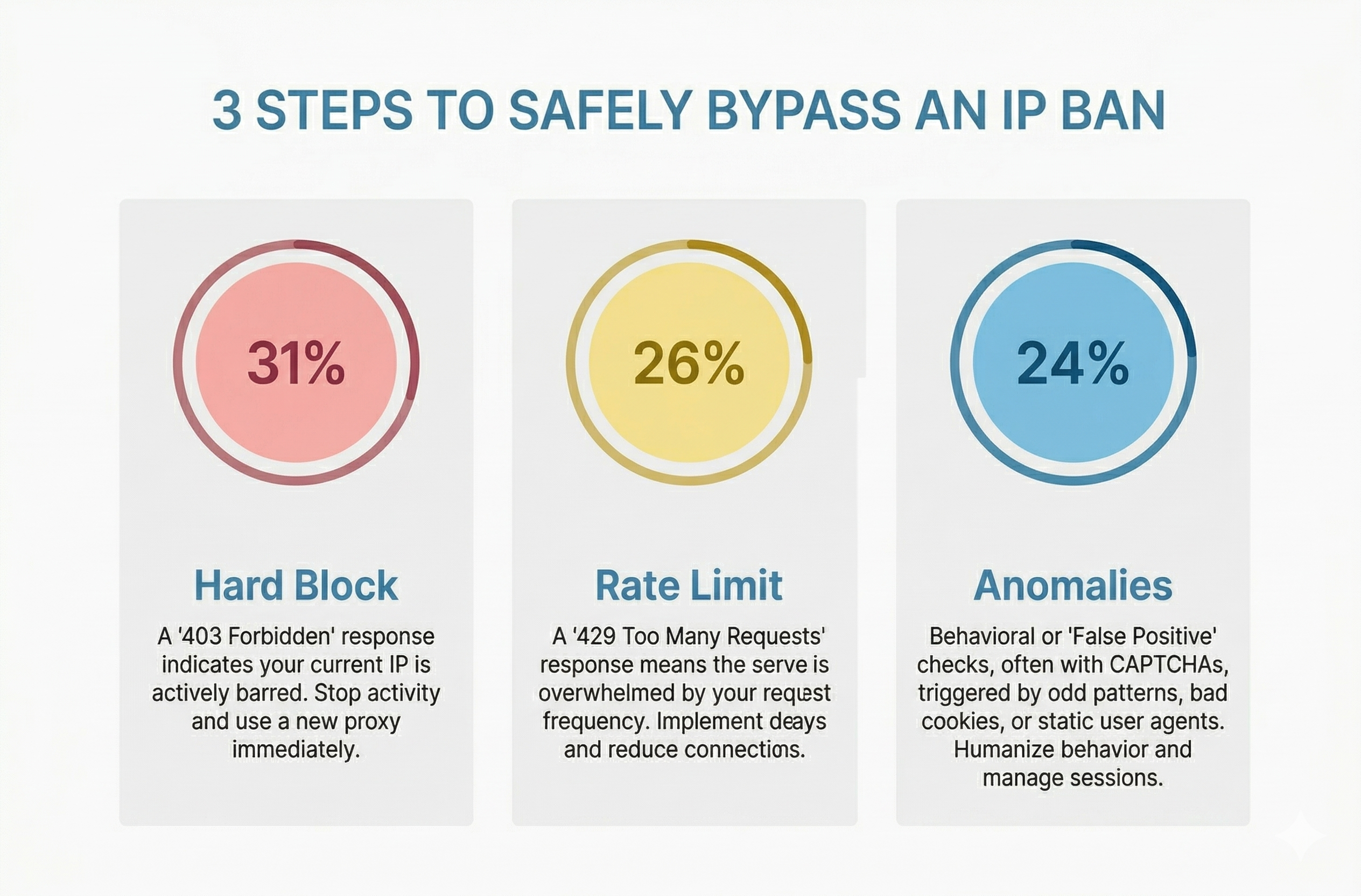
How to Bypass an IP Ban Safely by Diagnosing 403s, 429s, and False Positives
Diagnose 403s, 429s, and false positives quickly. Use this technical checklist to recover network access, reduce blocks, and scale data pipelines safely.
View Details