
Google Gemini 24/7 Automation Agents Explained
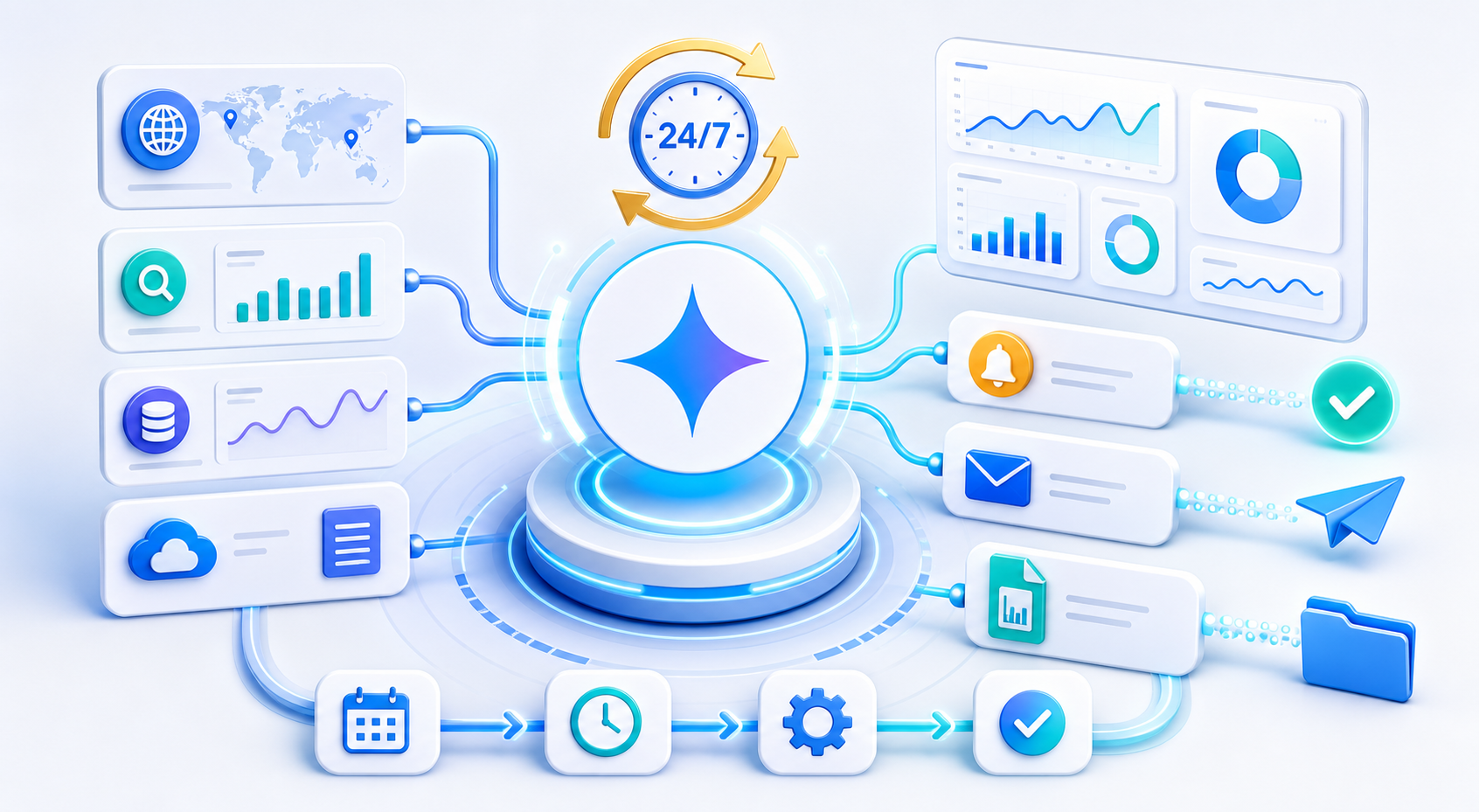
Google's new AI agents work 24/7 so you don't have to—here's how to set them up. For entrepreneurs and digital marketers, the reality of manual monitoring and task execution is clear: productivity stops when you do. When you're asleep, your competitors might be tracking market changes, monitoring SERP rankings, collecting public data, or responding to customer inquiries. The limitation of working hours creates gaps in awareness, response times, and competitive intelligence.
This guide focuses on practical execution details, infrastructure constraints, and automation choices around Google Gemini 24/7 Automation Agents Explained. It preserves the core workflow from the source article while repairing structure for clean publication.
For direct product context and implementation ideas, compare LycheeIP proxy infrastructure, Static residential proxies, Rotating residential proxies, Datacenter proxies.
Google's new AI agents work 24/7 so you don't have to—here's how to set them up. For entrepreneurs and digital marketers, the reality of manual monitoring and task execution is clear: productivity stops when you do. When you're asleep, your competitors might be tracking market changes, monitoring SERP rankings, collecting public data, or responding to customer inquiries. The limitation of working hours creates gaps in awareness, response times, and competitive intelligence.
Google Gemini Spark introduces a solution to this constraint: AI agents that operate continuously, executing tasks, monitoring conditions, and generating reports without human intervention. These agents can automate workflows that previously required constant attention, from daily briefings compiled from multiple sources to monitoring changes across websites, ad placements, or pricing data.
For teams running data collection workflows, geo-testing campaigns, or e-commerce research operations, the ability to automate monitoring and response tasks means catching opportunities and issues in real time, regardless of timezone or working hours. This article explains how to configure Gemini Spark agents for round-the-clock automation, which use cases deliver the most value, and how this approach compares to alternative AI agent platforms.
Setting Up Google Gemini Spark for 24/7 Automation Tasks
Google Gemini Spark agents operate as persistent task executors within the Gemini ecosystem. Unlike traditional AI chat interactions that end when you close the window, Spark agents maintain context, execute scheduled tasks, and can be configured to run continuously without manual triggering.
Understanding Gemini Spark Architecture
Spark agents function as specialized instances of Gemini models configured with specific instructions, data sources, and execution parameters. Each agent can be assigned:
- Persistent instructions: The core behavior and task definition that guides all agent actions
- Data source connections: Access to Google Workspace files, external APIs, or web resources
- Execution schedules: Time-based triggers or event-based conditions that activate the agent
- Output destinations: Where results are delivered (email, Google Docs, Sheets, or third-party integrations)
The 24/7 capability comes from setting agents to run on recurring schedules or continuous monitoring modes rather than single-execution tasks.
Initial Configuration Steps
To set up a Spark agent for always-on operation:
- Define the agent's purpose
Be specific about what the agent should accomplish. Vague instructions produce inconsistent results. Instead of "monitor competitors," specify "check competitor pricing pages daily at 6 AM EST and log changes to a Google Sheet with timestamp, product name, old price, and new price."
- Connect necessary data sources
Grant the agent access to relevant information sources. For market monitoring, this might include specific URLs, Google Search results, or connected databases. For internal automation, connect Google Drive folders, Sheets, or external APIs.
- Set execution parameters
Configure when and how often the agent runs. Options include:
- Fixed schedules (daily at specific times, hourly intervals)
- Event-based triggers (when a document is updated, when specific keywords appear in search results)
- Continuous monitoring with configurable check intervals
- Configure output and notifications
Specify where results should go and when you should be alerted. Effective setups separate routine logging (stored quietly in Sheets or Docs) from urgent alerts (sent via email or messaging platforms).
Technical Considerations for Continuous Operation
Running agents 24/7 introduces challenges that don't exist with manual, one-time tasks:
Rate limiting and resource management
Agents checking external websites or APIs must respect rate limits and avoid overloading target servers. Configure appropriate intervals between checks. For public data collection workflows that require frequent access to the same sources, agents may need to route requests through proxy infrastructure to avoid IP-based blocking.
When monitoring multiple e-commerce sites or SERP results across different locations, distributing requests across different IP addresses prevents detection patterns that trigger anti-bot measures.
Data accumulation and storage
Continuous monitoring generates significant data over time. An agent checking 20 competitor prices daily produces 7,300 data points annually per product. Configure data retention policies and use Google Sheets with archiving rules or connect to proper databases for long-term storage.
Error handling and recovery
Agents must handle failures gracefully. If a target website is temporarily unavailable, the agent should retry with exponential backoff rather than flooding the site with requests or silently failing without logging the issue.
Cost awareness
While Gemini Spark operates within Google's AI platform, continuous execution consumes API calls and processing resources. Monitor usage patterns during initial deployment to ensure costs align with the value delivered.
Authentication and Access Management
For agents accessing protected resources or internal systems, proper authentication setup is critical:
- Use service accounts rather than personal credentials for production agents
- Apply least-privilege principles: grant only the specific permissions each agent requires
- Rotate credentials periodically and log all agent actions for audit purposes
- When agents must authenticate to external services, store credentials securely using Google Secret Manager or equivalent solutions
Must-Try Use Cases for Automated Daily Briefs and Monitoring
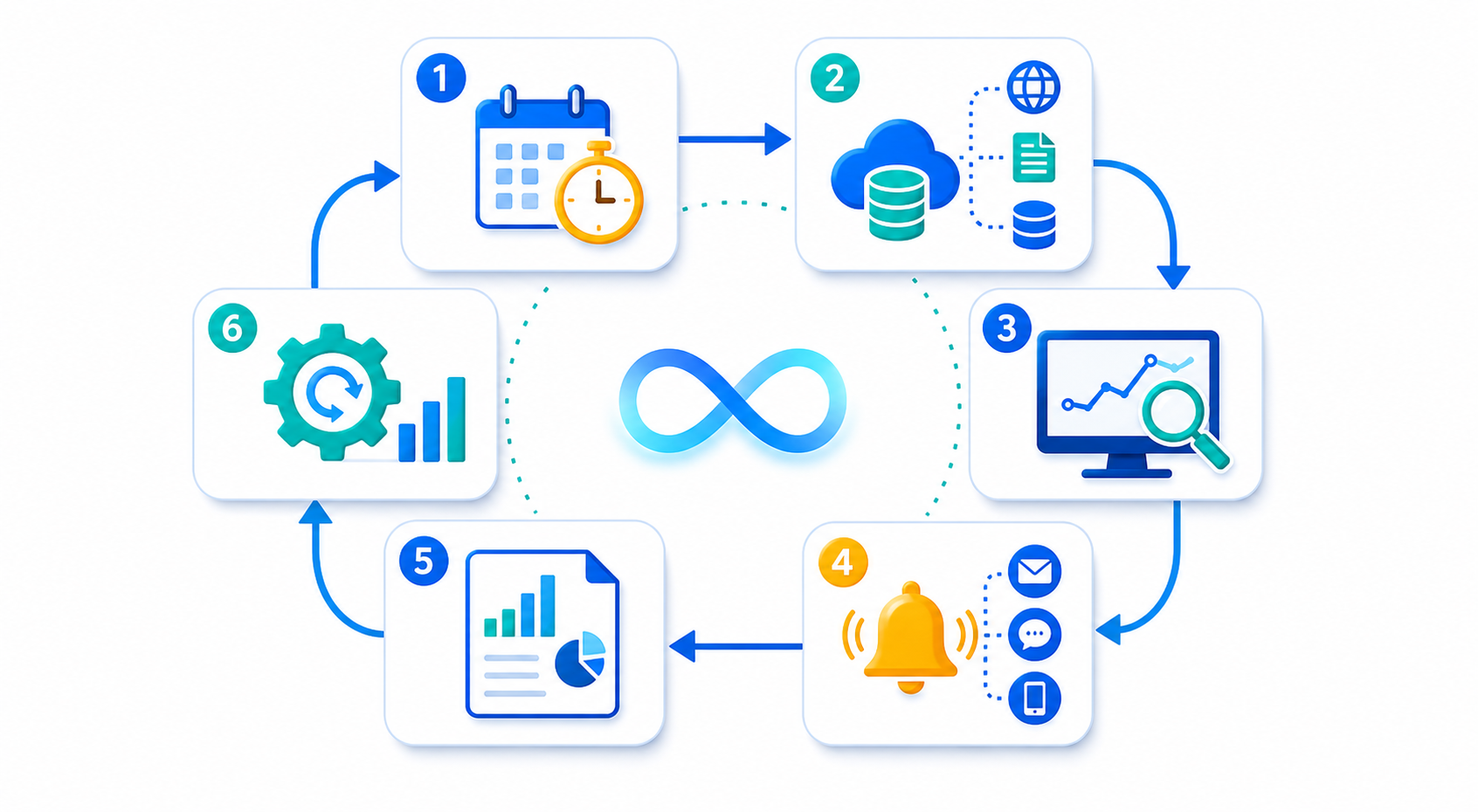
The most valuable Spark agent implementations solve specific, recurring problems that consume disproportionate time when done manually.
Automated Daily Market Intelligence Briefs
Use case: Compile a morning briefing that includes overnight news, competitor updates, SERP ranking changes, and social media mentions.
Configuration:
- Schedule: Daily at 6 AM in your timezone
- Data sources: Google News searches for specific keywords, competitor website monitoring, Google Search Console API, social listening tools
- Output: Formatted email digest with sections for each intelligence category
- Value: Replaces 30-60 minutes of manual research every morning
Implementation considerations:
For SERP monitoring across multiple geographic markets, the agent needs to simulate searches from different locations. This requires either using Google's geo-targeting parameters (when available) or routing requests through proxy infrastructure with IPs in target regions.
Static residential proxies work well for this use case because they maintain consistent IP addresses over time, avoiding the session interruption issues that can occur with rotating proxies during multi-step data collection workflows.
E-Commerce Competitive Pricing Monitoring
Use case: Track competitor pricing across multiple products and marketplaces, alerting when prices drop below your current pricing or when stockouts occur.
Configuration:
- Schedule: Every 6 hours or hourly during peak shopping periods
- Data sources: Competitor product pages, marketplace listings
- Output: Google Sheet with historical pricing data; email alerts only when prices cross defined thresholds
- Value: Enables dynamic pricing strategies and identifies competitive threats immediately
Technical requirements:
E-commerce sites frequently implement anti-scraping measures. Agents making frequent requests to the same sites from the same IP address will encounter blocks or CAPTCHAs.
For legitimate competitive intelligence and public data collection, routing agent requests through residential proxy infrastructure prevents blocking while respecting rate limits and terms of service. Rotating residential proxies distribute requests across many real user IPs, making the traffic pattern indistinguishable from regular browsing.
When configuring agents for price monitoring, include logic to respect robots.txt directives and implement reasonable delays between requests to avoid overloading target servers.
Ad Verification and Placement Monitoring
Use case: Verify that your advertisements appear correctly across different regions, devices, and platforms, and that they're not displayed on inappropriate sites.
Configuration:
- Schedule: Every 4 hours during campaign active periods
- Data sources: Ad platform APIs, direct webpage checks
- Output: Dashboard showing ad placement verification status; alerts for policy violations or incorrect placements
- Value: Protects brand reputation and prevents budget waste on misplaced ads
Geographic verification requirements:
Ad placements vary by user location. An agent running from a single location sees only the ads served to that region. Comprehensive verification requires checking how ads appear from multiple countries and cities.
This is a core use case for geo-testing infrastructure. By routing verification requests through proxies in target markets, agents can confirm that localized ad campaigns appear correctly for intended audiences.
Datacenter proxies offer a cost-effective solution for basic geo-verification, while residential proxies provide higher success rates for platforms with sophisticated bot detection.
SEO and Content Performance Tracking
Use case: Monitor SERP rankings for target keywords, track backlink acquisition, and identify content ranking changes before they significantly impact traffic.
Configuration:
- Schedule: Daily ranking checks; hourly during major algorithm updates
- Data sources: Google Search results, Search Console API, backlink monitoring services
- Output: Trend charts in Google Sheets; alerts when rankings drop more than 3 positions or new competing content appears
- Value: Enables rapid response to ranking losses and identifies successful content strategies
Distributed monitoring approach:
Search results personalize based on location, search history, and device type. Accurate ranking monitoring requires checking from clean sessions across different locations.
Agents performing SERP monitoring should route requests through different IP addresses for each check to avoid personalization bias. residential proxies from target geographic markets provide the most accurate view of how real users in those locations experience search results.
Customer Support Inquiry Categorization
Use case: Monitor incoming support emails or chat transcripts, categorize by urgency and topic, and route to appropriate team members or trigger automated responses.
Configuration:
- Schedule: Continuous monitoring with 5-minute check intervals
- Data sources: Email inbox, support ticket system API
- Output: Tagged and routed tickets; immediate escalation alerts for high-priority issues
- Value: Ensures urgent issues receive immediate attention even outside business hours
Integration requirements:
This use case requires connecting Gemini Spark to your support platform's API. Most modern help desk systems (Zendesk, Intercom, Freshdesk) provide webhooks or polling endpoints that agents can monitor.
Configure the agent to process new inquiries in batches rather than one at a time to improve efficiency, but ensure high-priority keywords ("urgent," "account locked," "billing error") trigger immediate processing.
Data Quality Monitoring for Scraping Workflows
Use case: Monitor automated web scraping pipelines for data quality issues, structural changes to target sites, or collection failures.
Configuration:
- Schedule: After each scraping job completion
- Data sources: Scraping job logs, collected data samples, target website structure checks
- Output: Quality score dashboard; alerts when data completeness drops below thresholds or site structure changes are detected
- Value: Catches scraping failures immediately rather than discovering broken pipelines days later
Implementation pattern:
Agents should validate both the collection process (did the scraper run successfully?) and the data quality (does the collected data match expected patterns?).
For teams running large-scale public data collection operations, agents can compare current scraping results against historical baselines, flagging anomalies that indicate either target site changes or infrastructure issues.
When scraping workflows use proxy infrastructure, agents should also monitor proxy performance metrics (success rates, response times, geographic distribution) to identify proxy-related issues before they impact data quality.
Explore LycheeIP Proxy Infrastructure
Comparing Gemini Automation to Other AI Agent Platforms
Google Gemini Spark exists within a crowded market of AI automation tools. Understanding how it compares to alternatives helps determine when Gemini is the right choice.
Gemini Spark vs. Custom-Built Automation Scripts
Traditional approach: Python scripts with scheduling (cron jobs) running on servers or cloud functions.
Gemini advantages:
- Natural language configuration instead of code
- Built-in Google Workspace integration without API setup
- Easier maintenance: update instructions instead of debugging code
- Lower technical barrier for non-developers
Traditional automation advantages:
- Complete control over execution logic and error handling
- No dependency on external AI service availability
- Lower per-execution cost for simple, high-frequency tasks
- Direct integration with any system through custom code
Decision factors:
Choose Gemini when the task involves natural language processing, content generation, or requires adapting to varying input formats. Choose custom scripts when the logic is deterministic, requires millisecond precision, or involves processing sensitive data that shouldn't leave your infrastructure.
For automation workflows that involve proxy infrastructure and web scraping, custom scripts often provide more reliable integration with proxy management systems and better control over request patterns and retry logic.
Gemini Spark vs. Zapier/Make.com
No-code automation platforms: Visual workflow builders connecting different services.
Gemini advantages:
- Intelligent decision-making based on content analysis
- Natural language understanding for complex categorization
- Ability to generate contextual summaries and reports
- More flexible handling of unstructured data
No-code platform advantages:
- Broader integration ecosystem (thousands of pre-built connectors)
- More reliable for simple, deterministic workflows
- Visual workflow debugging and monitoring
- Established error handling and retry mechanisms
Decision factors:
Use Gemini when the automation requires understanding meaning, context, or nuance. Use no-code platforms when connecting well-defined services with structured data flows.
Many teams use both: Zapier handles the plumbing between services, while a Gemini agent processes the intelligent decision-making steps within the workflow.
Gemini Spark vs. Dedicated AI Agent Platforms (AutoGPT, LangChain Agents)
Specialized agent frameworks: Tools built specifically for creating autonomous AI agents.
Gemini advantages:
- Managed infrastructure without deployment complexity
- Built-in Google ecosystem integration
- Lower setup time for standard monitoring and reporting tasks
- Predictable pricing through Google's model
Specialized framework advantages:
- Greater agent autonomy and multi-step reasoning
- Plugin ecosystem for extending capabilities
- Open-source flexibility and customization
- Choice of underlying models and cost optimization
Decision factors:
Gemini Spark suits straightforward, scheduled tasks with clear success criteria. Dedicated agent frameworks excel at complex, multi-step workflows requiring the agent to plan its own approach and use multiple tools to achieve an objective.
For data collection and monitoring workflows, Gemini's scheduled task approach often proves more reliable than fully autonomous agents that may take unexpected paths or consume excessive resources exploring solution spaces.
Gemini Spark vs. Claude Projects + API Automation
Alternative AI approach: Using Claude's project memory and API access for automation.
Comparison considerations:
- Both offer persistent context and instructions
- Claude Projects excel at maintaining complex, evolving project knowledge
- Gemini offers tighter Google Workspace integration
- Claude API often provides faster response times for some task types
- Cost varies significantly depending on task complexity and frequency
Decision factors:
Teams already invested in Google Workspace find Gemini integration seamless. Teams requiring deep document analysis or multi-turn reasoning within automation often prefer Claude. Both can be integrated into custom automation workflows when needed.
Cost and Resource Efficiency Comparison
Automation cost structures vary significantly:
Gemini Spark: Charged per API call or within Google Workspace subscriptions. Cost increases with execution frequency and complexity.
Custom scripts: Server/cloud function hosting costs (minimal for simple tasks) plus development and maintenance time.
No-code platforms: Tiered pricing based on task executions per month. Can become expensive at high volumes.
Dedicated frameworks: Infrastructure costs plus development time. Most economical at very high volumes with technical teams.
For most small to medium-scale automation workflows (dozens to hundreds of executions daily), Gemini Spark offers competitive total cost when including development and maintenance time.
LycheeIP and Proxy Infrastructure for Gemini Automation Workflows
Many of the most valuable 24/7 automation use cases involve collecting public data, monitoring websites, or verifying content across geographic regions. These workflows often require proxy infrastructure to function reliably at scale.
When Gemini agents monitor competitor pricing, verify ad placements, or collect SERP data, routing requests through the same IP address repeatedly triggers anti-bot measures. Target websites may block the IP, serve CAPTCHAs, or return incomplete data.
Frequently Asked Questions
What is the core value of Google Gemini 24/7 Automation Agents Explained?
Google Gemini 24/7 Automation Agents Explained matters because it turns a fragmented manual process into a repeatable workflow with clearer inputs, verification steps, and measurable outputs.
Where does proxy infrastructure fit into this workflow?
Proxy infrastructure becomes important when workflows need stable routing, session control, geo-targeting, or protection against rate limits while collecting or validating web data.
Related LycheeIP Guides and Resources
- LycheeIP proxy infrastructure
- Static residential proxies
- Rotating residential proxies
- Datacenter proxies
- Scale lead scraping to 100K+ with n8n
- Email verification in n8n scraping workflows
- Cloud-first network security learning path
- VPN privacy logging reality
- Advanced techniques to unmask anonymous IP addresses
- Free AI browser tools worth using in 2026
- AI browser automation: Tabbit vs traditional setup
- OpenClaw vs Hermes comparison
- TinyFish vs traditional scraping tools comparison

Recommended Articles
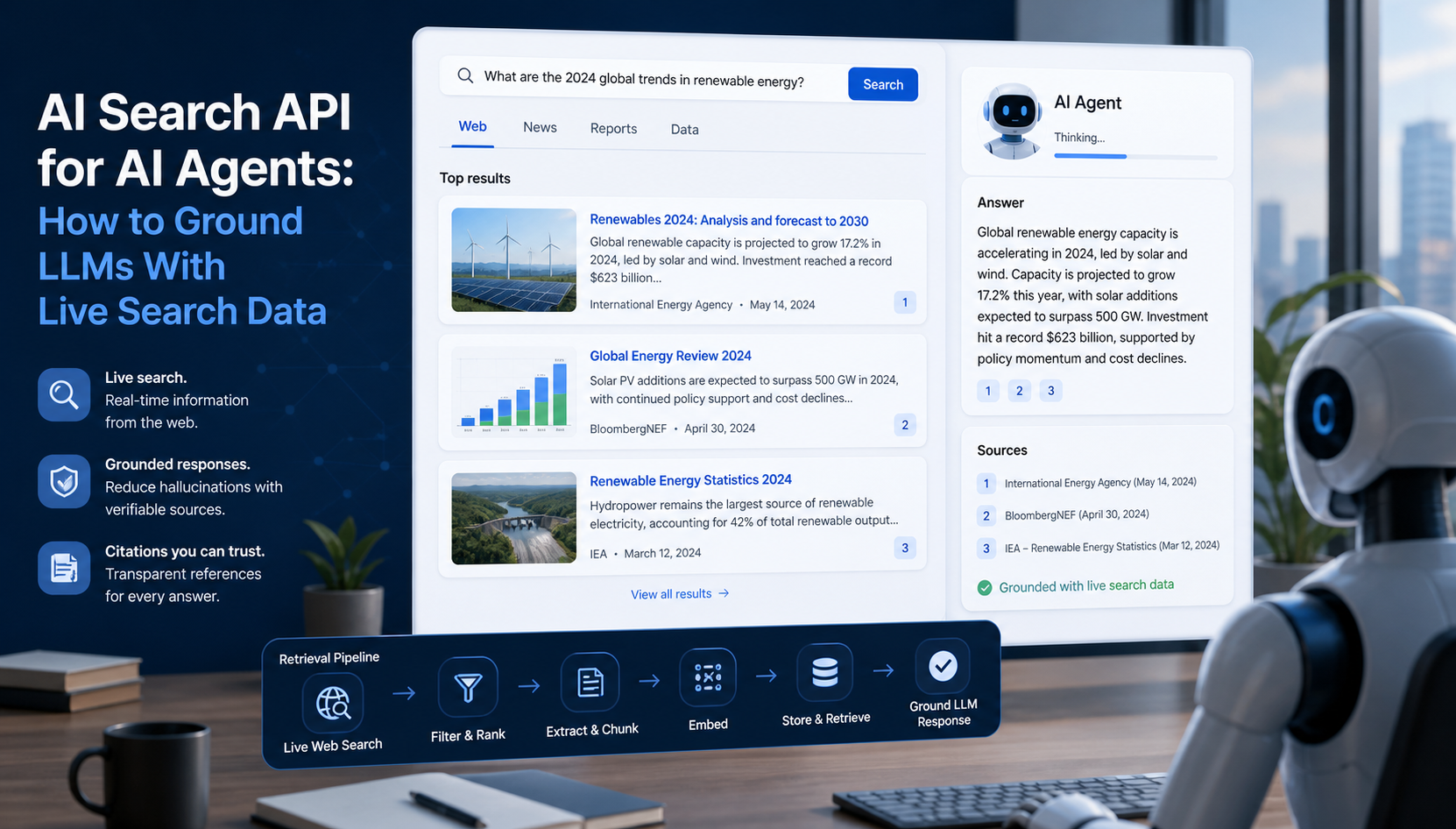
AI Search API for AI Agents: How to Ground LLMs With Live Search Data
An AI search API gives an application or agent programmatic access to current search results. Its most useful role is discovery: the agent can find candidate sources, identify fresh information, and decide what to retrieve next instead of relying only on model memory.
View Details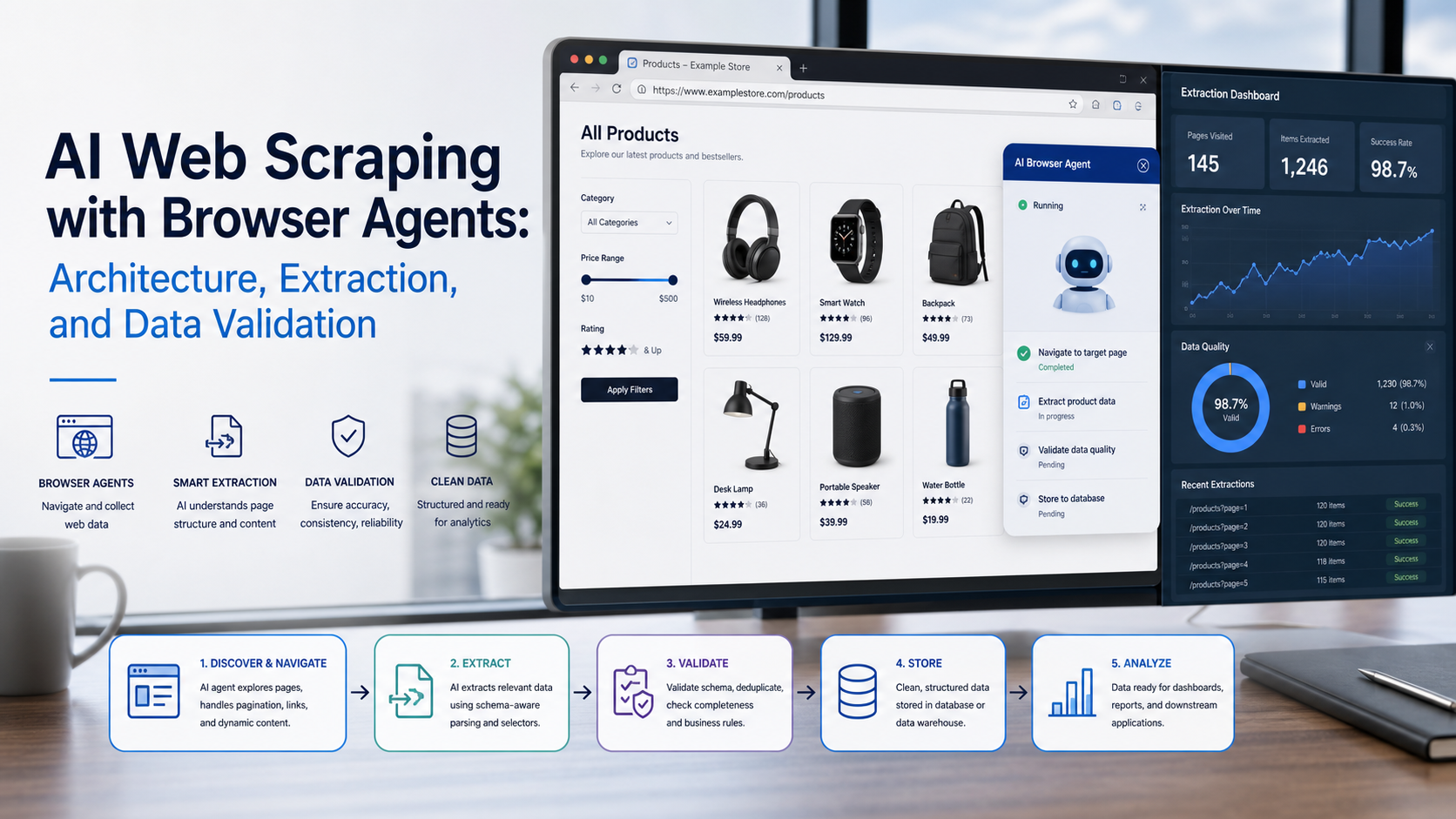
AI Web Scraping with Browser Agents: Architecture, Extraction, and Data Validation
AI web scraping uses AI to help discover, navigate, interpret, or extract information from websites. Browser agents are one implementation option when page interaction, rendering, or layout variation makes a simple scraper too brittle, but the agent should not become the entire data pipeline.
View Details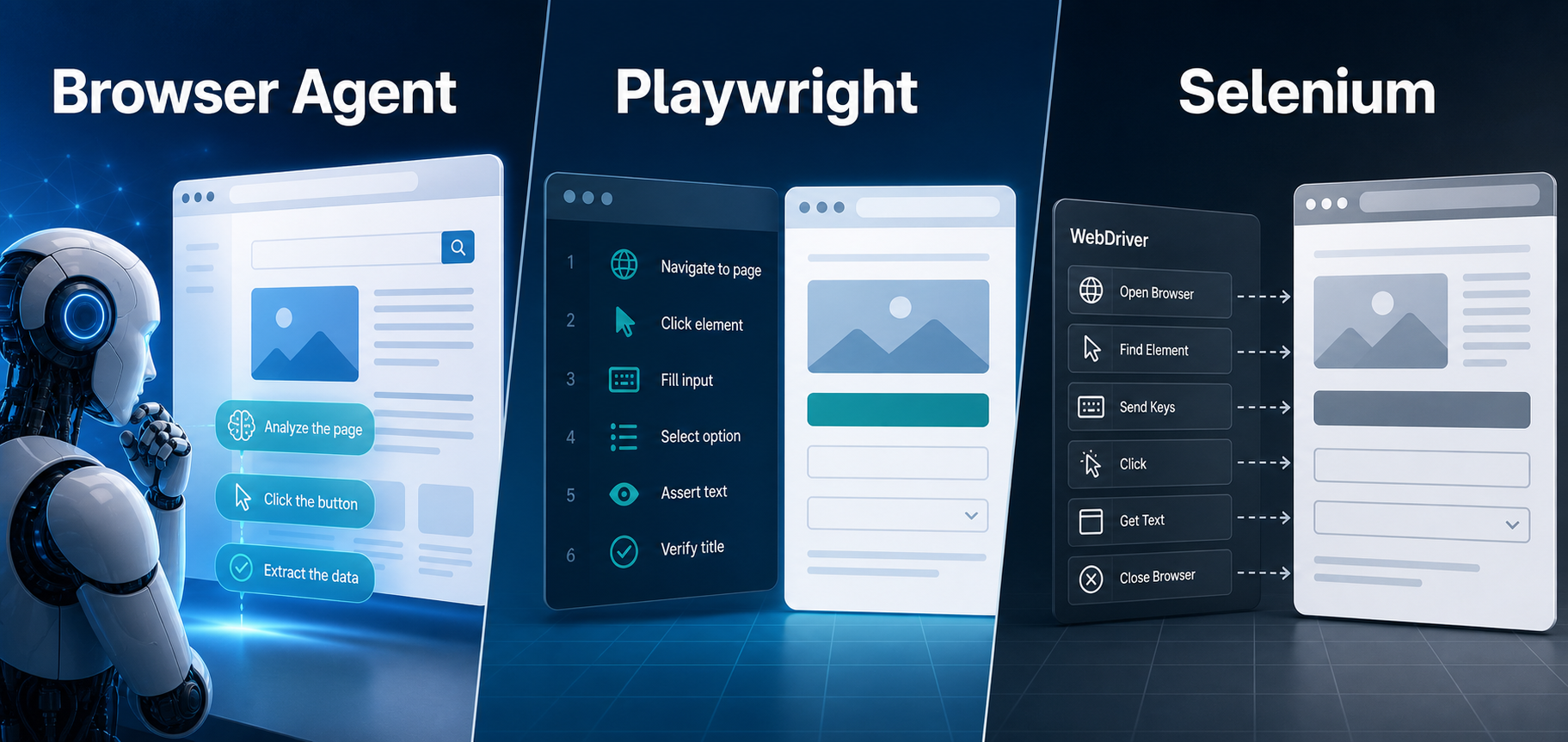
AI Browser Automation: Browser Agents vs Playwright vs Selenium
A browser agent interprets a goal and decides what browser action to take next. Playwright and Selenium can execute explicit, testable browser logic defined by developers. In 2026, however, Playwright also provides official MCP and agent-oriented workflows, so Playwright is no longer just the deterministic alternative to agentic automation. It can also serve as the browser-control layer inside an agent system.
View Details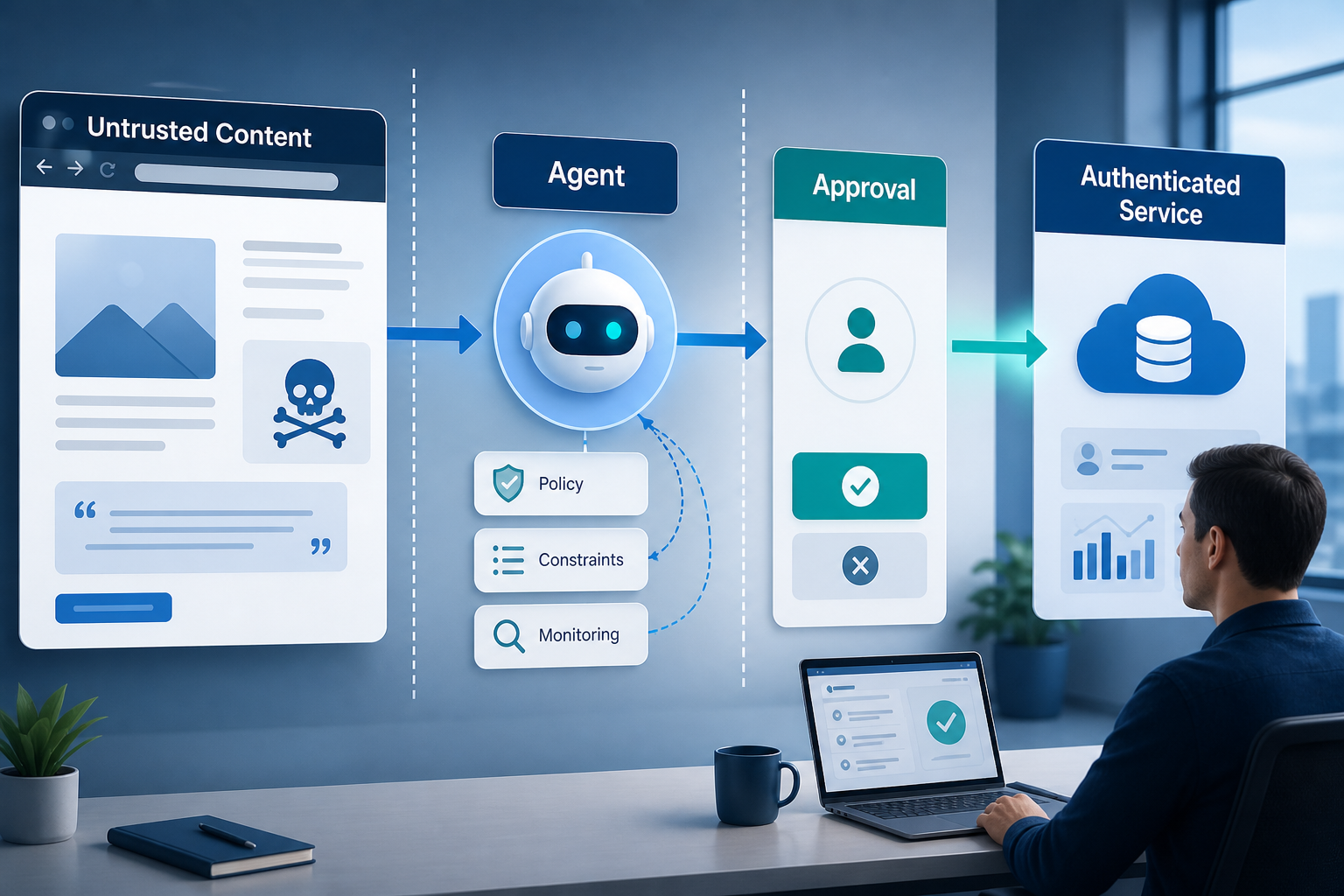
Agentic Browser Security: Prompt Injection, Permissions, and Safe Deployment
That combination creates risks that are different from ordinary browsing and traditional automation. The most important is indirect prompt injection, where hostile instructions hidden in web content attempt to redirect the agent away from the user's goal. Google describes indirect prompt injection as a primary new threat for agentic browsing and has introduced layered defenses that include origin constraints, independent action checks, threat detection, and user confirmation for sensitive actions. Google's Chrome security architecture is a useful reference for how browser-agent defenses are evolving.
View Details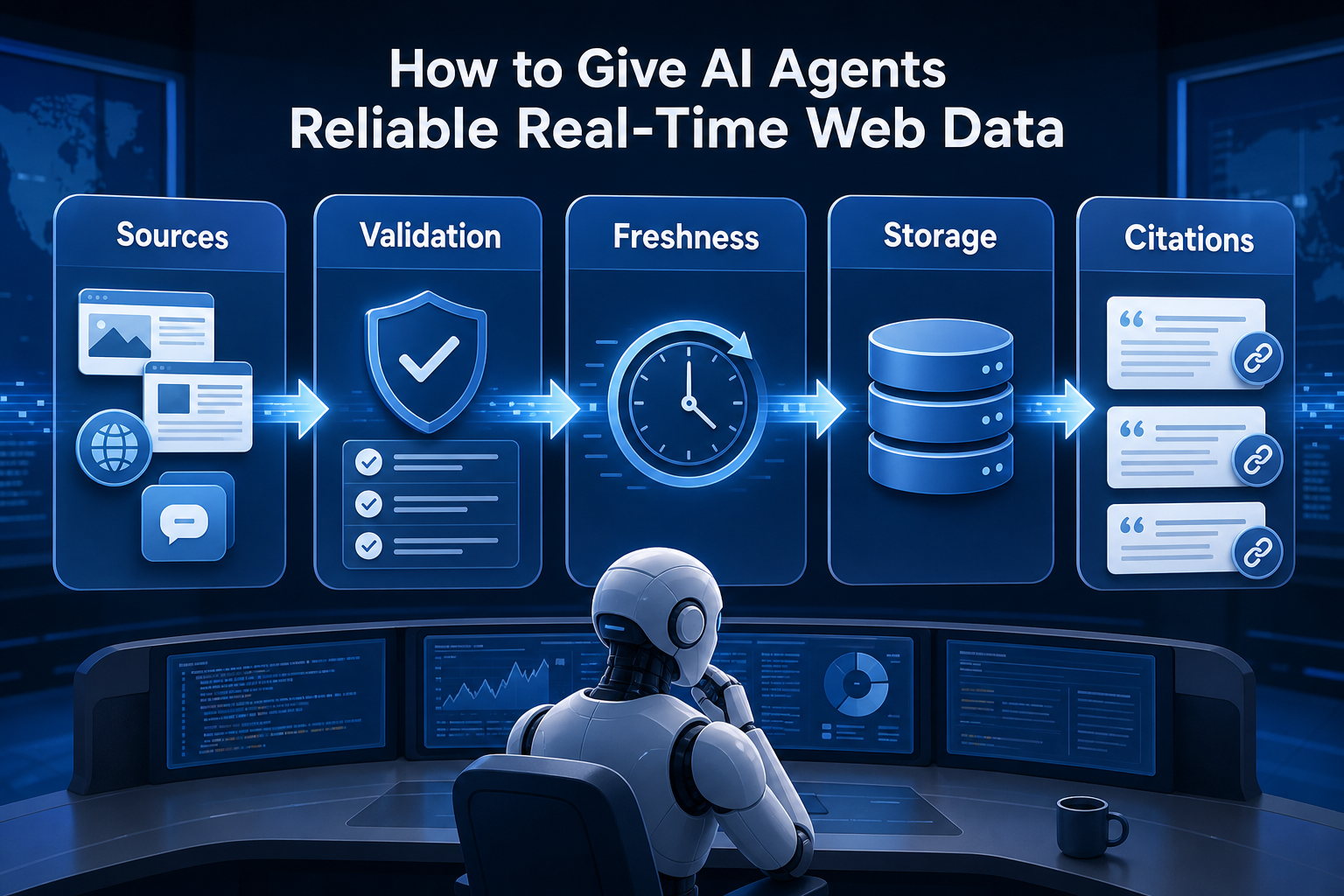
How to Give AI Agents Reliable Real-Time Web Data
A production-ready solution therefore needs more than a web scraper. It needs a web data layer that connects acquisition, validation, storage, retrieval, security, and observability. This guide explains how to design that layer.
View Details