
Bypass Bot Detection with AI Agent Browsers
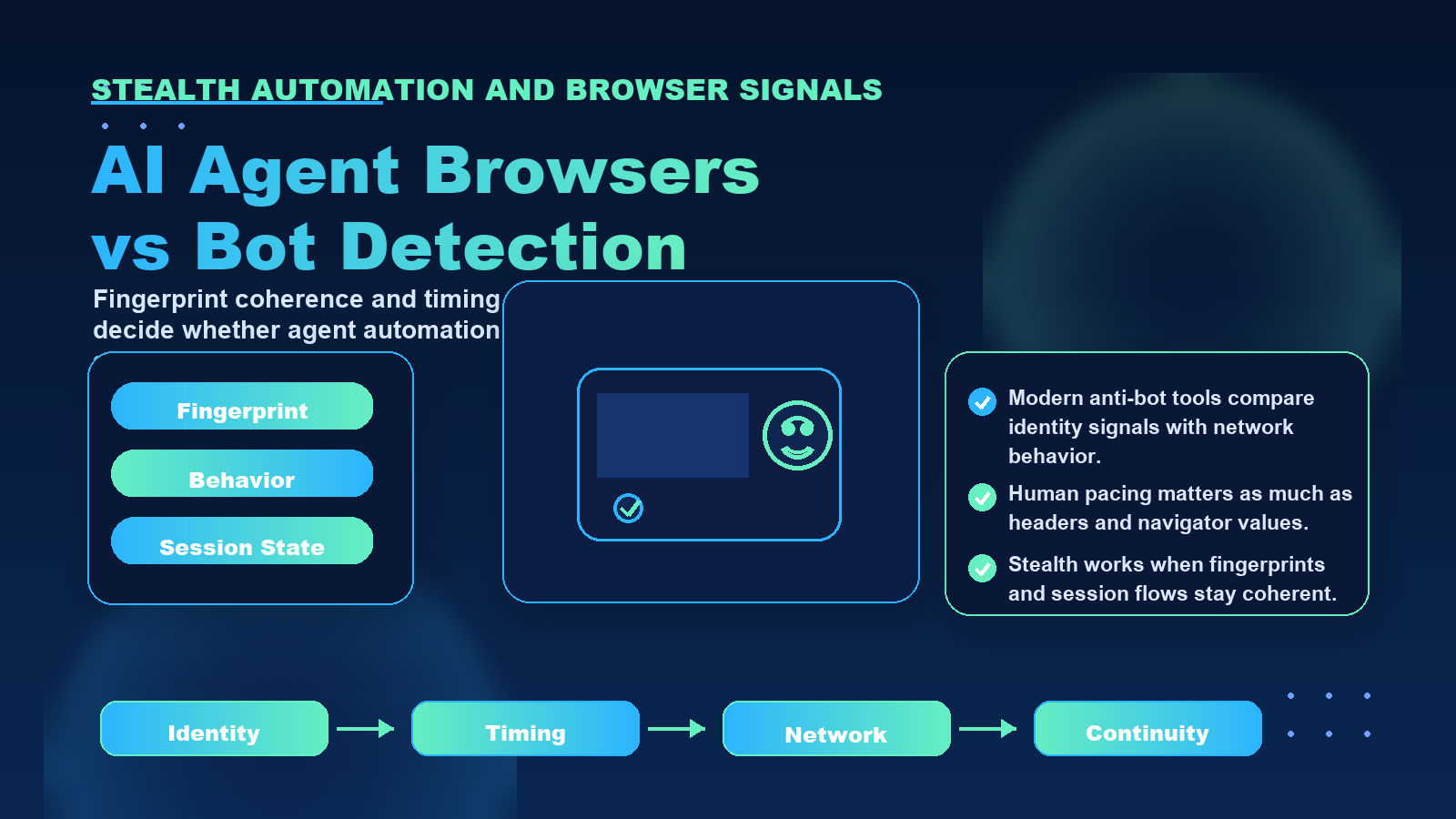
Vanilla Playwright gets blocked in milliseconds. This bypasses every check.
For teams comparing privacy, geo-testing, and data collection workflows, the practical question is not only what an IP address reveals. It is also how clean routing, trusted proxy infrastructure, session control, and compliance practices shape the final result.
For official technical background, see IANA number resources, ARIN IPv4 resources, RFC 791 Internet Protocol, MDN X-Forwarded-For reference.
Modern websites deploy sophisticated anti-bot systems that flag and block automated scrapers the moment they connect. What used to take seconds now happens in milliseconds. Traditional automation frameworks like Playwright, Puppeteer, and Selenium trigger detection algorithms before your first request completes. The result: blocked IPs, CAPTCHAs, rate limits, and failed scraping operations.
Stealth browser technology changes the game. By mimicking human traffic patterns at the browser fingerprint level, these tools read as legitimate users to even the most aggressive detection systems. This article explains how Camoufox and similar stealth browsers avoid bot detection algorithms, breaks down the 8 critical checks that determine whether you get blocked, and shows side-by-side results comparing regular browsers against stealth implementations.
How AI Agents Avoid Bot Detection with Camoufox
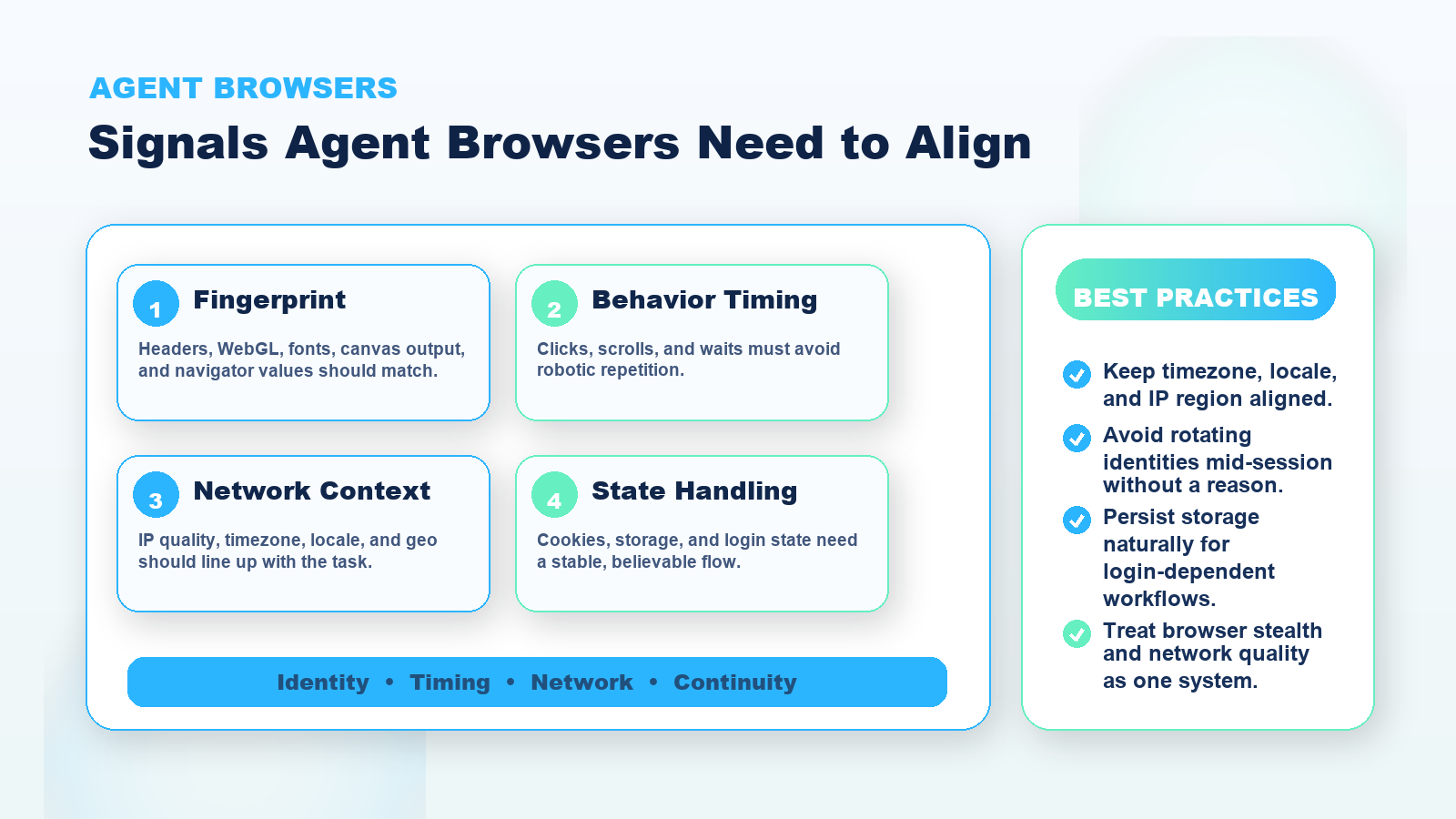
Related LycheeIP Guides and Resources

Recommended Articles
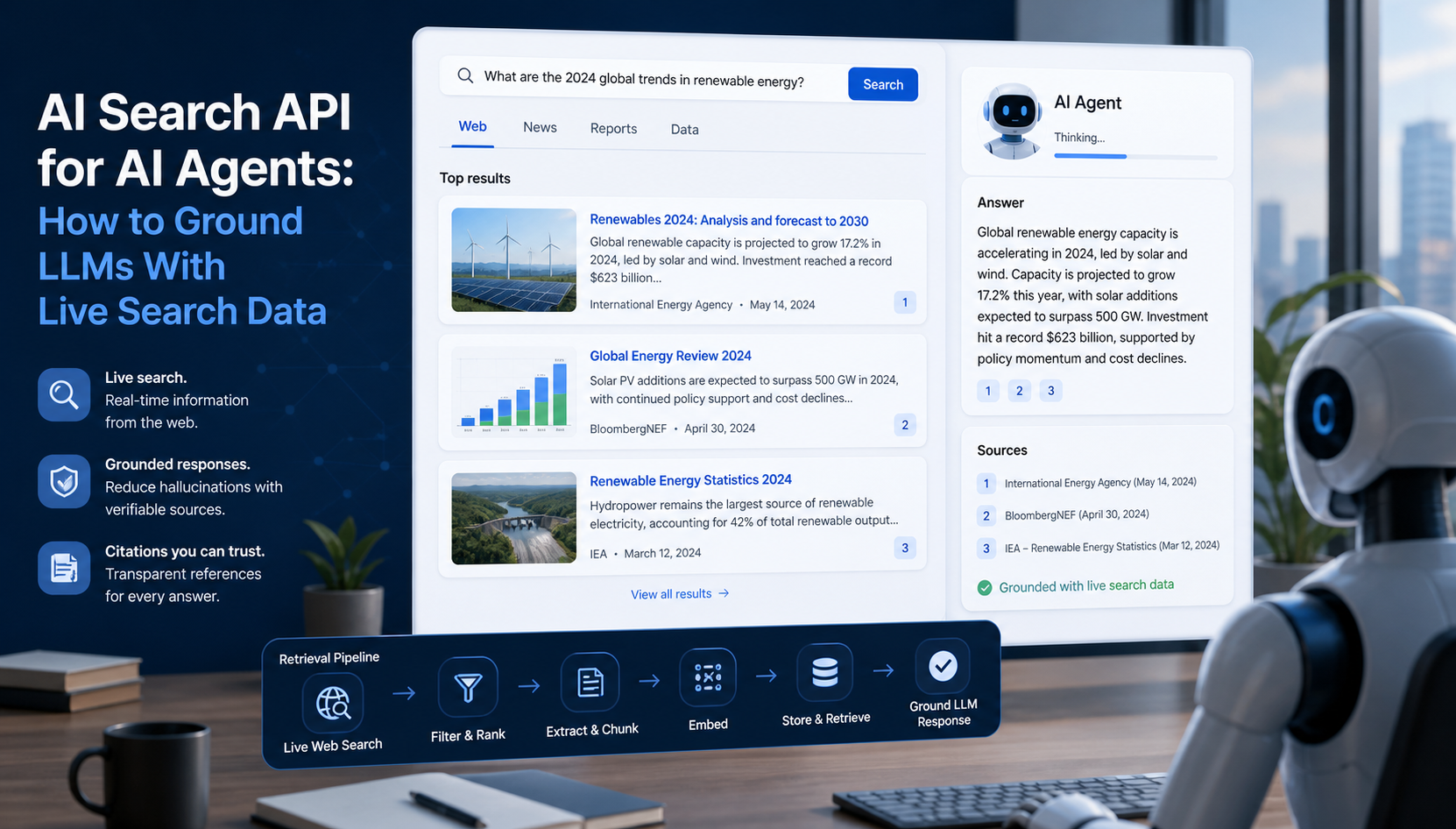
AI Search API for AI Agents: How to Ground LLMs With Live Search Data
An AI search API gives an application or agent programmatic access to current search results. Its most useful role is discovery: the agent can find candidate sources, identify fresh information, and decide what to retrieve next instead of relying only on model memory.
View Details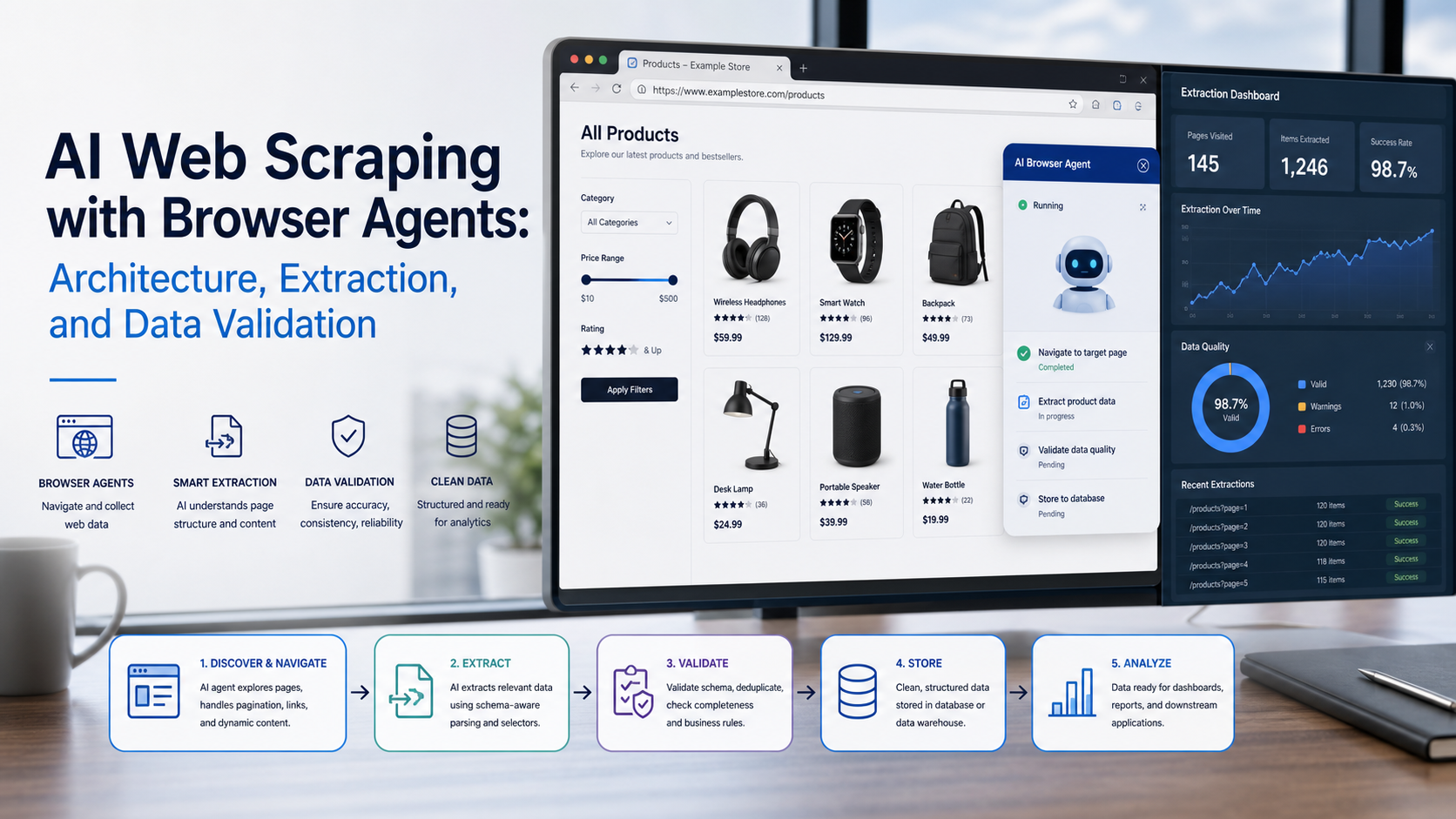
AI Web Scraping with Browser Agents: Architecture, Extraction, and Data Validation
AI web scraping uses AI to help discover, navigate, interpret, or extract information from websites. Browser agents are one implementation option when page interaction, rendering, or layout variation makes a simple scraper too brittle, but the agent should not become the entire data pipeline.
View Details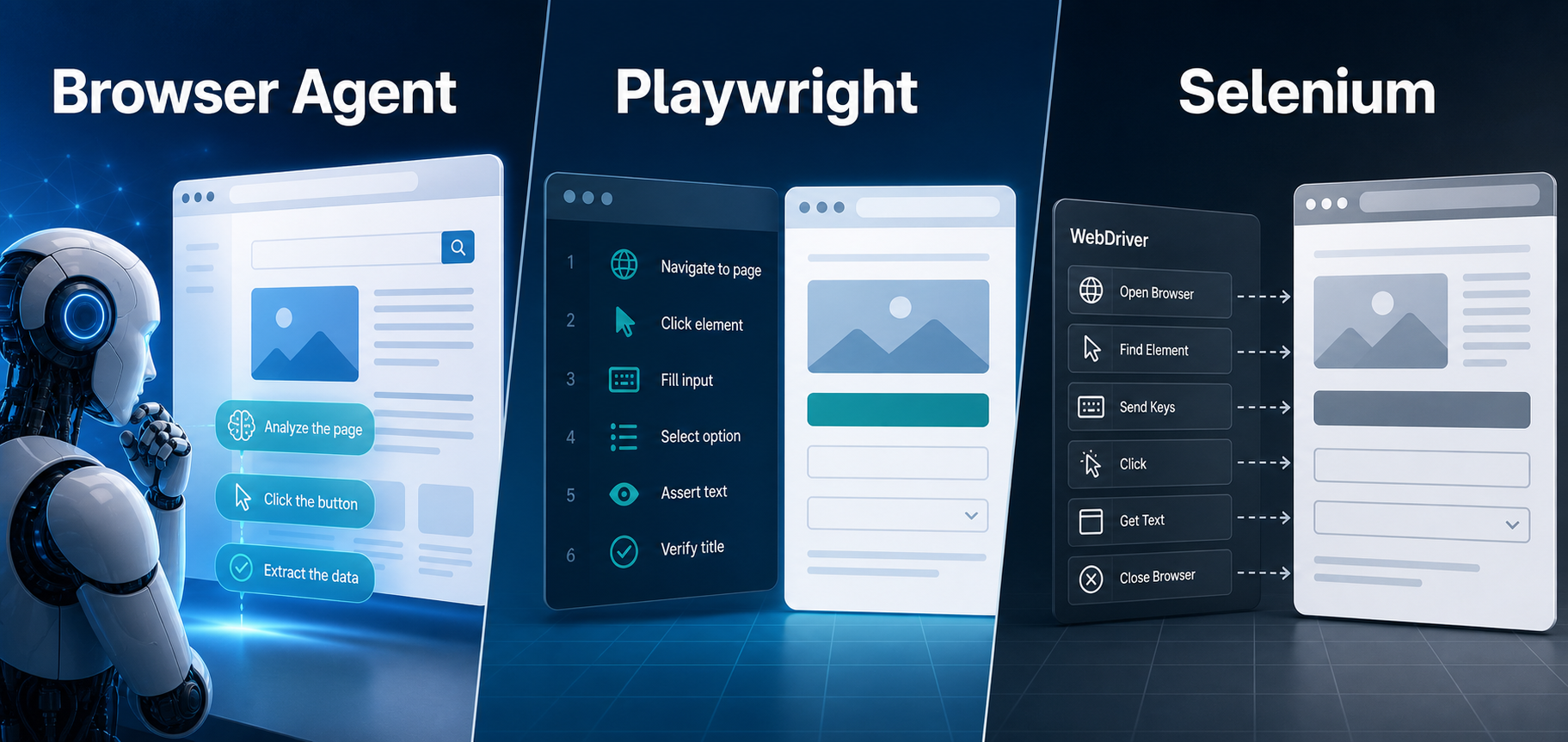
AI Browser Automation: Browser Agents vs Playwright vs Selenium
A browser agent interprets a goal and decides what browser action to take next. Playwright and Selenium can execute explicit, testable browser logic defined by developers. In 2026, however, Playwright also provides official MCP and agent-oriented workflows, so Playwright is no longer just the deterministic alternative to agentic automation. It can also serve as the browser-control layer inside an agent system.
View Details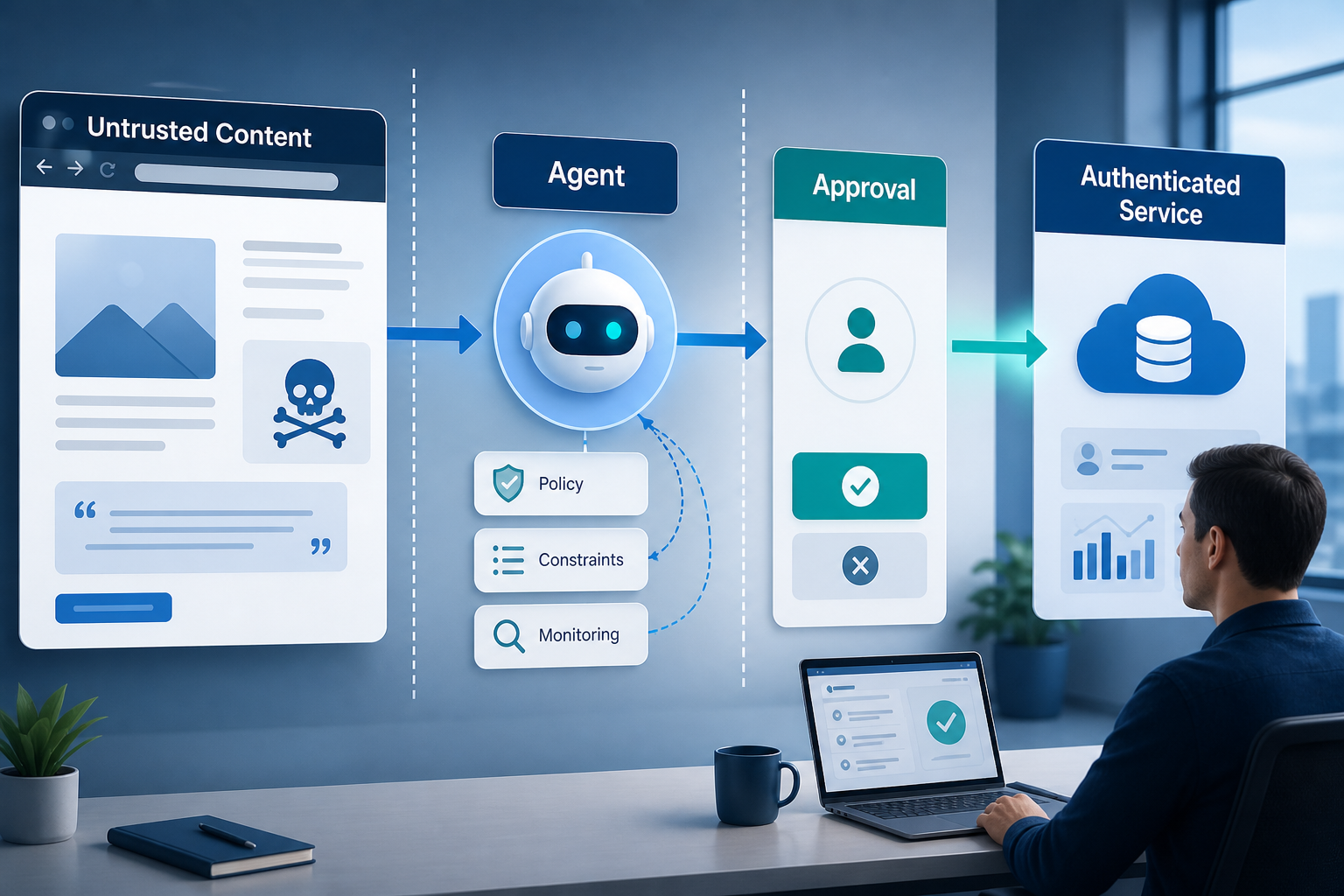
Agentic Browser Security: Prompt Injection, Permissions, and Safe Deployment
That combination creates risks that are different from ordinary browsing and traditional automation. The most important is indirect prompt injection, where hostile instructions hidden in web content attempt to redirect the agent away from the user's goal. Google describes indirect prompt injection as a primary new threat for agentic browsing and has introduced layered defenses that include origin constraints, independent action checks, threat detection, and user confirmation for sensitive actions. Google's Chrome security architecture is a useful reference for how browser-agent defenses are evolving.
View Details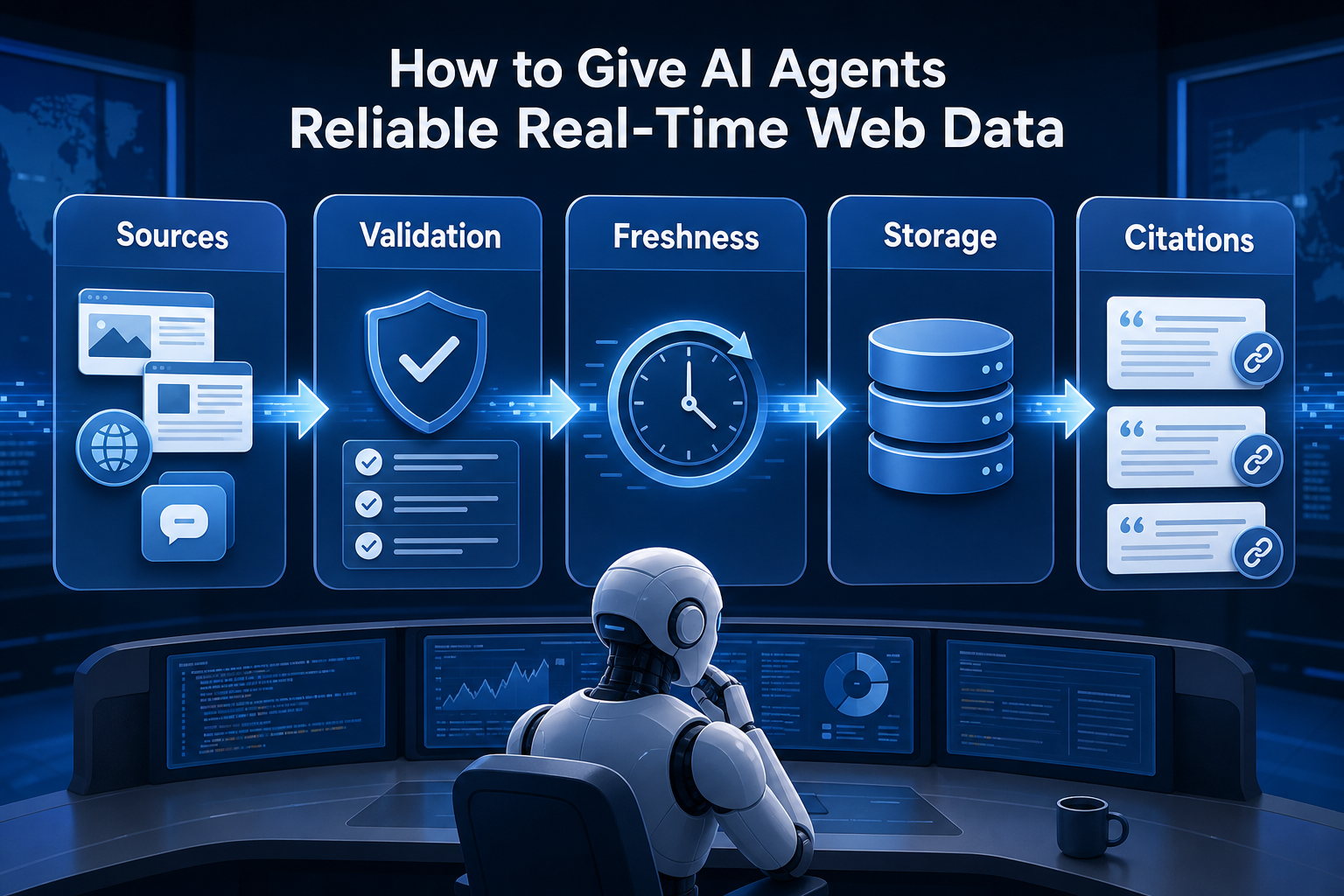
How to Give AI Agents Reliable Real-Time Web Data
A production-ready solution therefore needs more than a web scraper. It needs a web data layer that connects acquisition, validation, storage, retrieval, security, and observability. This guide explains how to design that layer.
View Details