
Why Browser Extensions Are Underrated Developer Tools
One developer built a free Chrome extension that changes how millions of people see the web — with almost no backend.
If that sentence makes you pause and think, wait, that's actually possible? — you're already proving the point. Browser extensions are one of the most underrated product categories available to indie developers, side project builders, and early-stage founders today. While the broader developer community obsesses over complex SaaS dashboards, heavy API integrations, and scaling cloud infrastructure, a quietly powerful distribution channel sits right there inside every user's browser: ignored, underutilized, and wide open.
Let's fix that.
Scale Globally With LycheeIP
The Zero-Server Advantage
Here is the first thing most developers get wrong about browser extensions: they assume building one is complicated. It isn't.
At their core, extensions are just HTML, CSS, and JavaScript — the exact same tech stack you already know. The manifest file that wires everything together is just a simple JSON document. Furthermore, the WebExtensions API documentation maintained by MDN provides a highly standardized, beginner-friendly, and free framework to build across modern browsers.
The Power of What You Don't Need
The more important realization, though, is what you don't need.
- You don't need a server.
- You don't need a database (in most cases).
- You don't need a complex authentication system, a heavy deployment pipeline, or a cloud provider billing you the moment your traffic spikes.
For a solo developer working nights and weekends, this changes everything.
Consider the "art-ad swap" project — an extension that replaces online advertisements with fine art images as users browse the web. The concept is elegant in its simplicity: intercept the space where an ad would load, and substitute it with a painting or photograph from a curated dataset bundled directly into the extension.
There are no API calls to an external server on every page load. There are no database queries. There is absolutely no monthly hosting bill. The entire product ships inside the local extension package itself.
Flattening the Cost Curve
That architectural decision — bundle the data, eliminate the backend — is what allows a solo developer to reach millions of users without worrying about infrastructure costs scaling out of control. A SaaS product with millions of active users is a billing nightmare waiting to happen. An extension with millions of users is just... an extension with millions of users. The cost curve is beautifully flat.
And the development speed? Legitimately fast. A focused developer can go from an idea to a working extension prototype in a single weekend. The submission process to the Chrome Web Store takes a few hours, and approval can happen within days. Compare that to the typical SaaS launch cycle — months of backend work, infrastructure setup, payment integration, and user onboarding flows — and the extension model starts looking less like a compromise and more like an unfair competitive advantage.
For indie developers who want to ship something real without quitting their job or raising funding, extensions are one of the few product formats where that is genuinely achievable.
The Power Under the Hood
If the cost argument is what gets you interested, the technical capabilities are what should get you genuinely excited.
Browser extensions don't just sit "on top" of the web — they operate inside it. They have access to capabilities that standard web applications simply cannot touch.
- Content Scripts let you read and modify the DOM of any page the user visits.
- Background Service Workers let you run persistent logic, intercept network requests, and respond to browser events.
- The Storage API gives you a lightweight, synchronized data layer tied strictly to the user's browser profile.
- The Tabs API lets you securely observe and control browser navigation.
Put those together, and you have a toolkit that enables an entirely different category of product:
- Productivity tools that modify third-party interfaces the user visits every day (e.g., adding keyboard shortcuts to Gmail, surfacing hidden data on e-commerce product pages).
- Privacy tools that intercept and block tracking network requests before they ever leave the browser.
- Research tools that aggregate data across multiple tabs or sessions without requiring users to copy-paste anything.
- Accessibility tools that dynamically reformat or restyle any webpage to meet a user's specific motor or visual needs.
The Capability Gap
The art-ad swap project is a perfect illustration of how this works in practice. Advertisements on the web are loaded via specific network patterns and injected into DOM nodes with identifiable class names. An extension can recognize those patterns, intercept the load, and substitute the content — all locally, all instantly, all without touching a remote server.
That kind of intervention is architecturally impossible for a standard web app to perform on third-party sites. It is only possible because extensions operate at the browser layer, with explicit user permission to do so.
If the problem you are solving involves how users experience the web — not just your own site, but the entire web — then an extension isn't just a viable option. It is often the only option.
(Note: There are real constraints to acknowledge. Extensions require user trust to install and are subject to browser vendor review policies. Cross-browser compatibility requires some additional work, though frameworks like Plasmo have significantly reduced that friction).
Scale Globally With LycheeIP
LycheeIP (Developer-First Proxy Infrastructure)
As developers move beyond simple client-side extensions and begin building tools that require testing localized experiences or aggregating data across thousands of global sites, relying on a single local IP address quickly becomes a bottleneck. LycheeIP is a developer-first proxy and data infrastructure platform designed to facilitate secure, high-performance web data extraction and global traffic routing.
When your extension or data tool requires automated QA testing to ensure it injects content correctly on European or Asian web pages, your testing suite needs to route through regional networks to avoid triggering localized blocks. LycheeIP allows teams to utilize dynamic IPs to accurately mimic genuine global user traffic for seamless geo-testing. Alternatively, if you are building an extension that relies on a backend pulling vast amounts of public data (like e-commerce pricing or flight data), utilizing high-speed datacenter proxies guarantees rapid, continuous data collection without getting quietly throttled. For tasks requiring long-term, authenticated session persistence, a dedicated static proxy ensures the connection remains stable. Integrating a robust proxy infrastructure ensures your web tools scale effortlessly across borders. (Note: Always ensure data collection practices comply with applicable laws and the target website's Terms of Service).
Built-In Distribution
The third underrated advantage of browser extensions is the one that most directly affects whether your product ever finds an audience: distribution.
The Chrome Web Store has over two billion active Chrome users as its potential audience. More importantly, it features a search interface that developers consistently underestimate. Users actively search the Chrome Web Store for tools to solve specific, immediate problems. They search for ad blockers, grammar checkers, price trackers, tab managers, and screenshot tools.
They find extensions, install them in two clicks, and start using them immediately.
- No account creation.
- No email confirmation.
- No tedious onboarding wizard.
That frictionless install flow is a product advantage that most SaaS founders would pay dearly to replicate. The standard B2C acquisition funnel — run ads, drive traffic to a landing page, capture email, nurture with a drip campaign, convert to signup, convert to active user — has been brilliantly compressed into a single action. Install. Done.
The Organic Flywheel
The art-ad swap extension didn't require a marketing budget. It didn't need a Product Hunt launch strategy or a convoluted growth hacking playbook. It showed up in search results for users who were already looking for something exactly like it, offered a clear value proposition in its store listing, and let the product speak for itself. Organic installs naturally followed.
For indie developers, this is a profoundly different acquisition model. You are not fighting for SEO rankings against established players with massive domain authority. You are not bidding on keywords against companies with heavily funded performance marketing teams. You are listed in a storefront where user intent is already sky-high, and the barrier to trying your product is nearly zero.
According to the Google Chrome Web Store Developer Policies, maintaining transparency and a clear value proposition is key to staying visible. The reviews and ratings system creates a compounding trust signal over time. Early installs lead to early reviews. Good reviews improve your store ranking. Better ranking leads to more installs.
The flywheel may be modest compared to viral consumer apps, but for a solo developer maintaining a project with zero infrastructure costs, even a slow-spinning flywheel generates real, meaningful traction.
The Bigger Picture
Browser extensions won't be the right format for every idea. If you are building a collaborative SaaS product with complex teams, user permissions, and tiered billing, you need a traditional web app.
But if you are an indie developer with a specific, scoped problem to solve — something that fundamentally changes how people experience the web — extensions deserve a serious look before you default to standing up a server.
The art-ad swap story isn't an anomaly. It is a proof of concept for an entire product category that the developer community keeps sleeping on. Zero infrastructure costs. Deep browser-level capabilities. Built-in global distribution. Frictionless user acquisition.
The tools are free. The distribution channel is open. The only thing missing is more developers willing to build there.
Ship the extension.
Scale Globally With LycheeIP
Frequently Asked Questions
Q: Do I need to know a special programming language to build a Chrome extension?
A: No. Chrome extensions are built with standard HTML, CSS, and JavaScript — the same foundational web technologies most developers already know. There is no proprietary language required, though tools like React or TypeScript can easily be used if you prefer them.
Q: How much does it cost to publish an extension on the Chrome Web Store?
A: Google charges a one-time developer registration fee of $5 USD to publish on the Chrome Web Store. After that, you can publish unlimited extensions with no per-submission or ongoing monthly fees.
Q: Can a browser extension really run with no backend server at all?
A: Yes, for many use cases. Extensions can bundle static data, use browser-native storage APIs, and perform all their logic locally on the user's machine. The art-ad swap project is a real-world example of a widely-used extension that operates entirely without a remote backend.
Q: What's the difference between a content script and a background service worker?
A: A content script runs specifically in the context of a web page and can read or modify that page's DOM. A background service worker runs independently of any particular page and handles persistent, global logic like intercepting network requests, managing extension state, or responding to broader browser events.
Q: Are browser extensions available across all browsers, or just Chrome?
A: Most modern browsers support extensions using the WebExtensions API standard, including Chrome, Firefox, Edge, and Brave. While some minor browser-specific differences exist, modern tools like Plasmo and WXT help developers build cross-browser extensions from a single codebase with minimal additional effort.
Q: Why do users hesitate to install browser extensions, and how can developers address that?
A: Users are cautious because extensions require permissions to access browsing data, creating legitimate privacy concerns. Developers can address this by requesting only the absolute minimum permissions necessary, being highly transparent in their store listing about what data is accessed and why, and publishing open-source code so users can verify the extension's behavior.

Recommended Articles
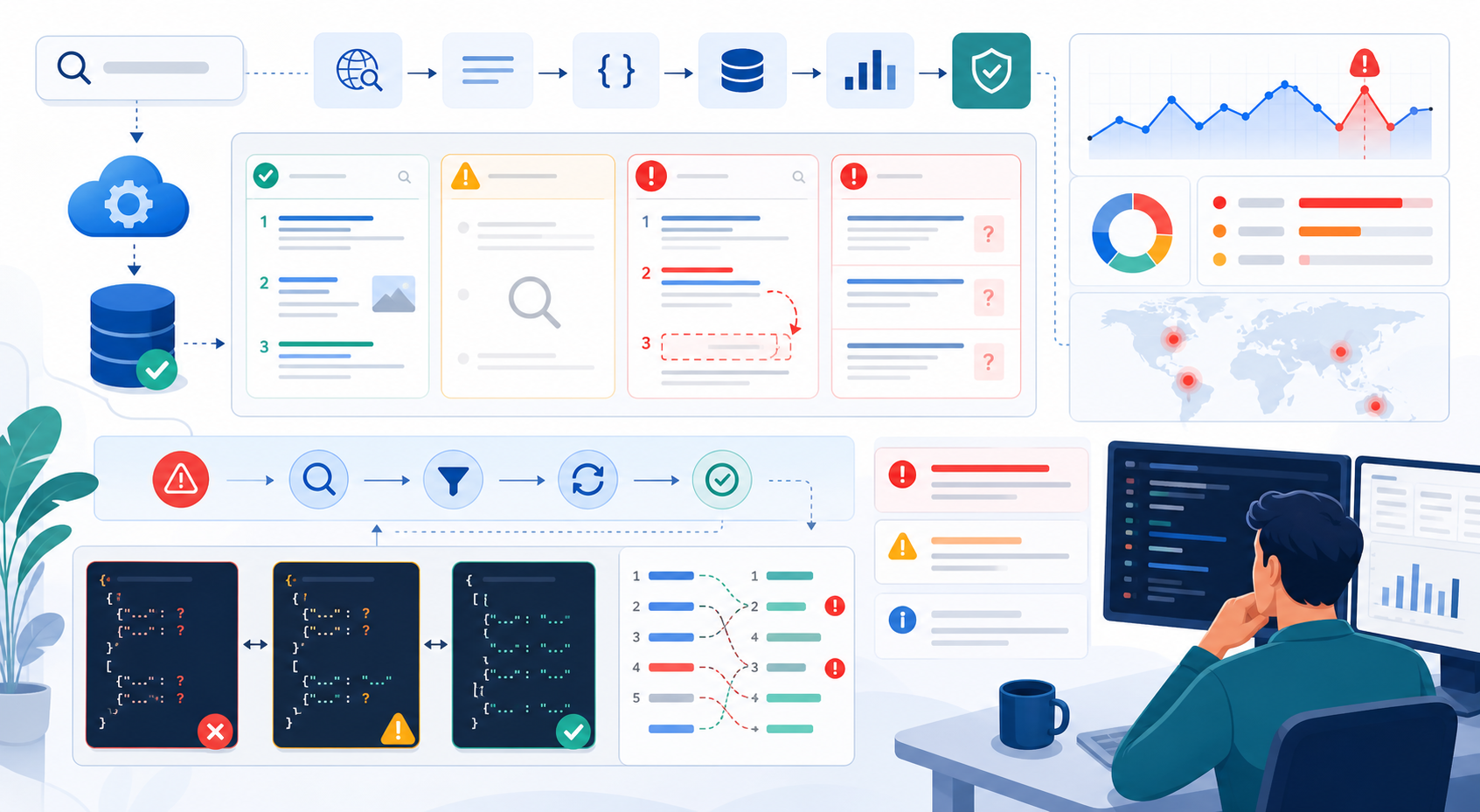
SERP API Troubleshooting: Fix Empty, Wrong, or Inconsistent Search Results
SERP API failures are not limited to obvious HTTP errors. A request can return successfully and still produce empty, incomplete, geographically wrong, duplicated, or misinterpreted search data. Production troubleshooting therefore has to separate transport problems from provider processing, SERP differences, and downstream parsing errors.
View Details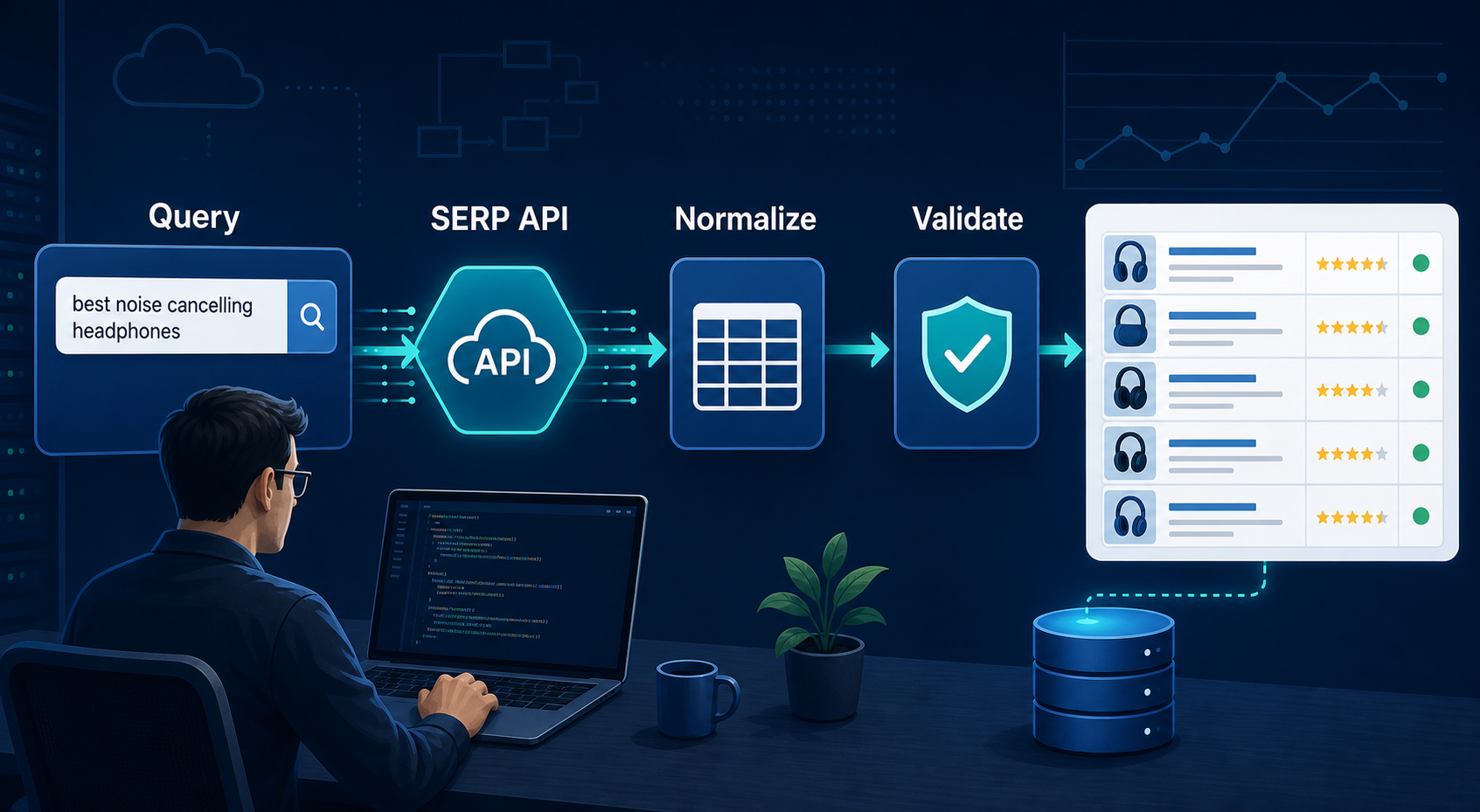
SERP API Python: How to Build a Reliable Search Data Pipeline
This guide shows a provider-neutral workflow for building that pipeline. It does not rank SERP API vendors. Instead, it focuses on the implementation choices that make a Python integration easier to operate, test, and migrate.
View Details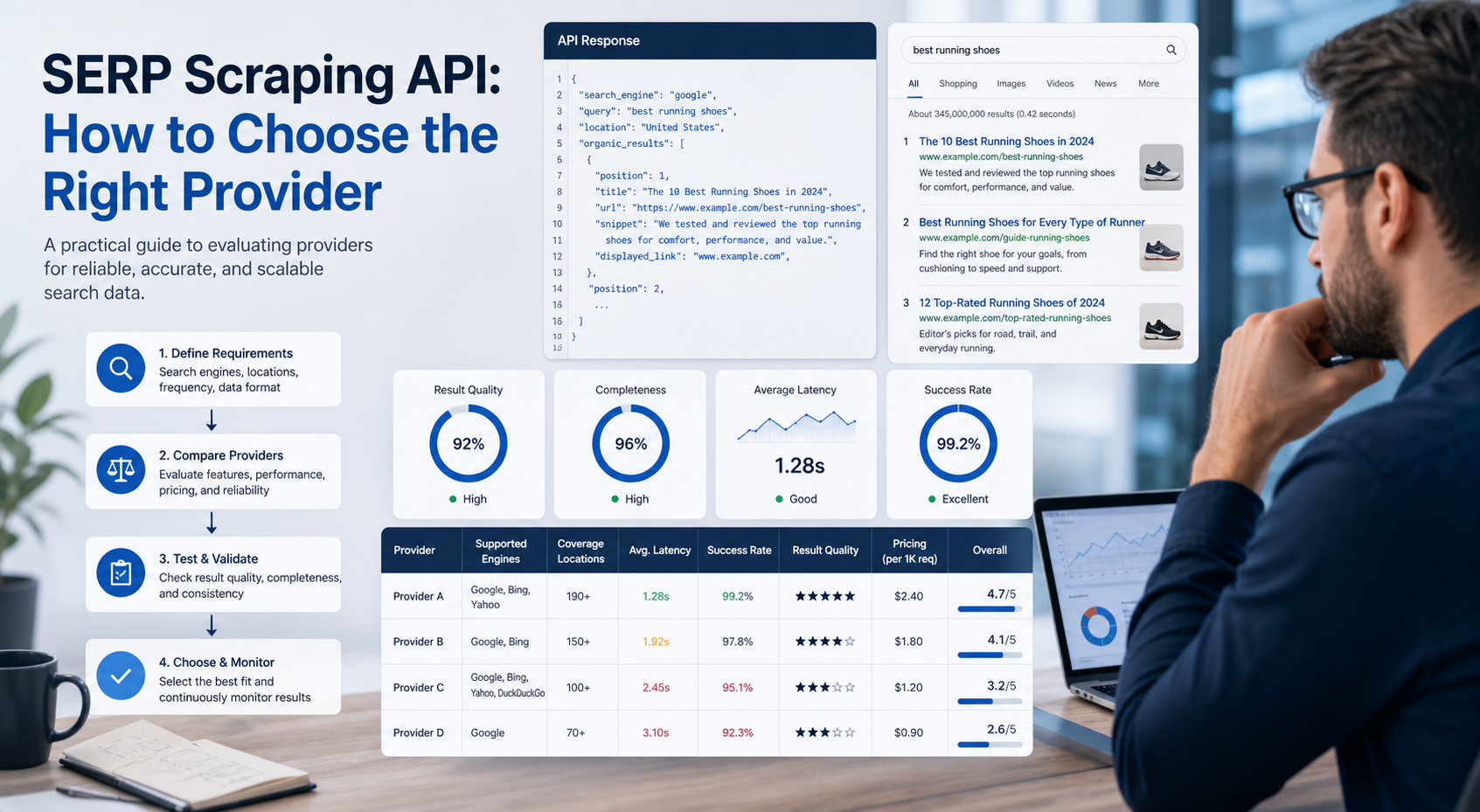
SERP Scraping API: How to Choose the Right Provider
Recommended Meta Description: Compare SERP scraping APIs by data coverage, localization, reliability, workflow fit, and cost structure, then choose and validate the right provider.
View Details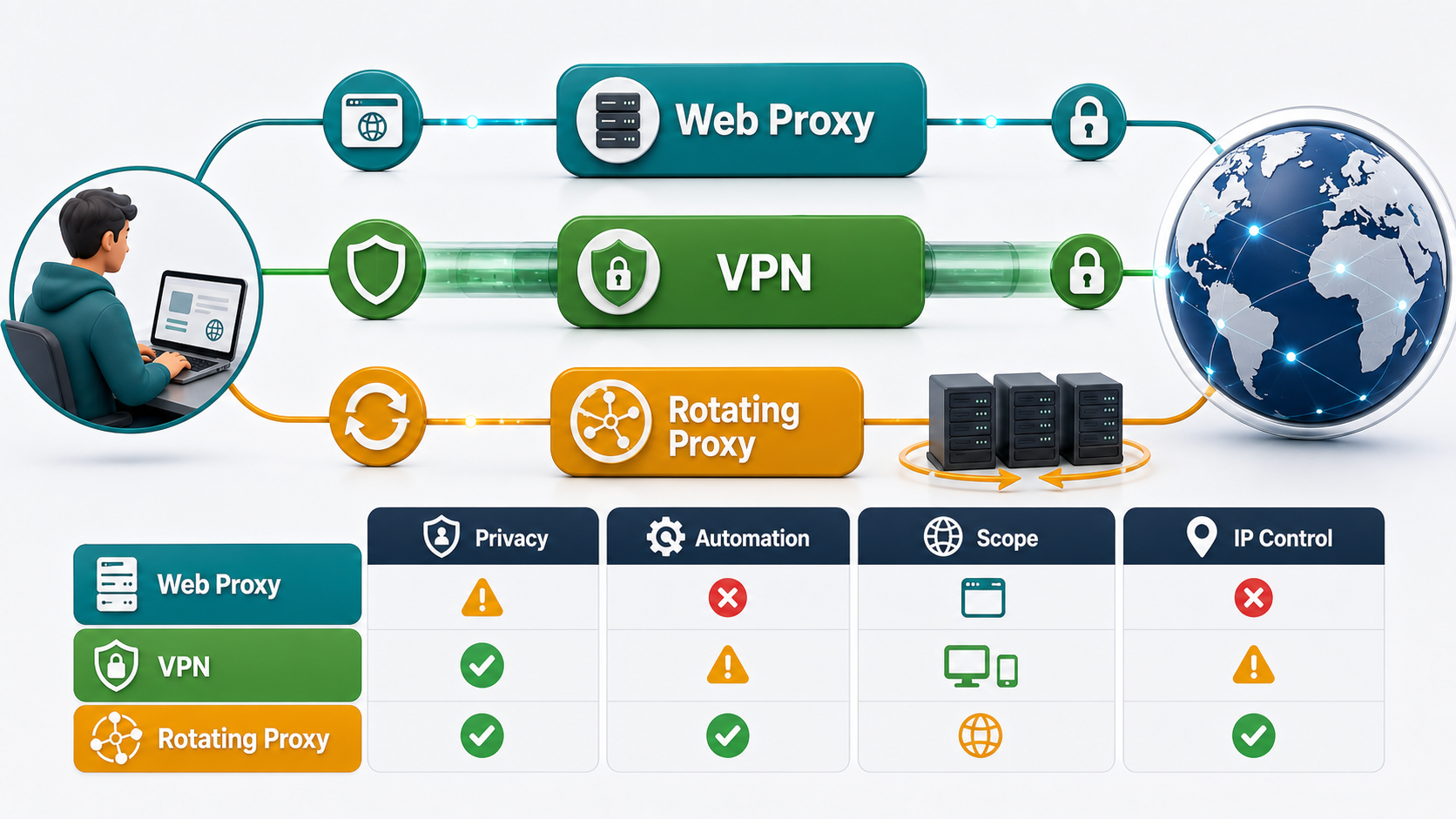
Free Web Proxy vs VPN vs Rotating Proxy: Which Should You Use?
Compare free web proxies, VPNs, rotating proxies, static proxies, and datacenter proxies by scope, encryption, IP control, automation, streaming, and account workflows.
View Details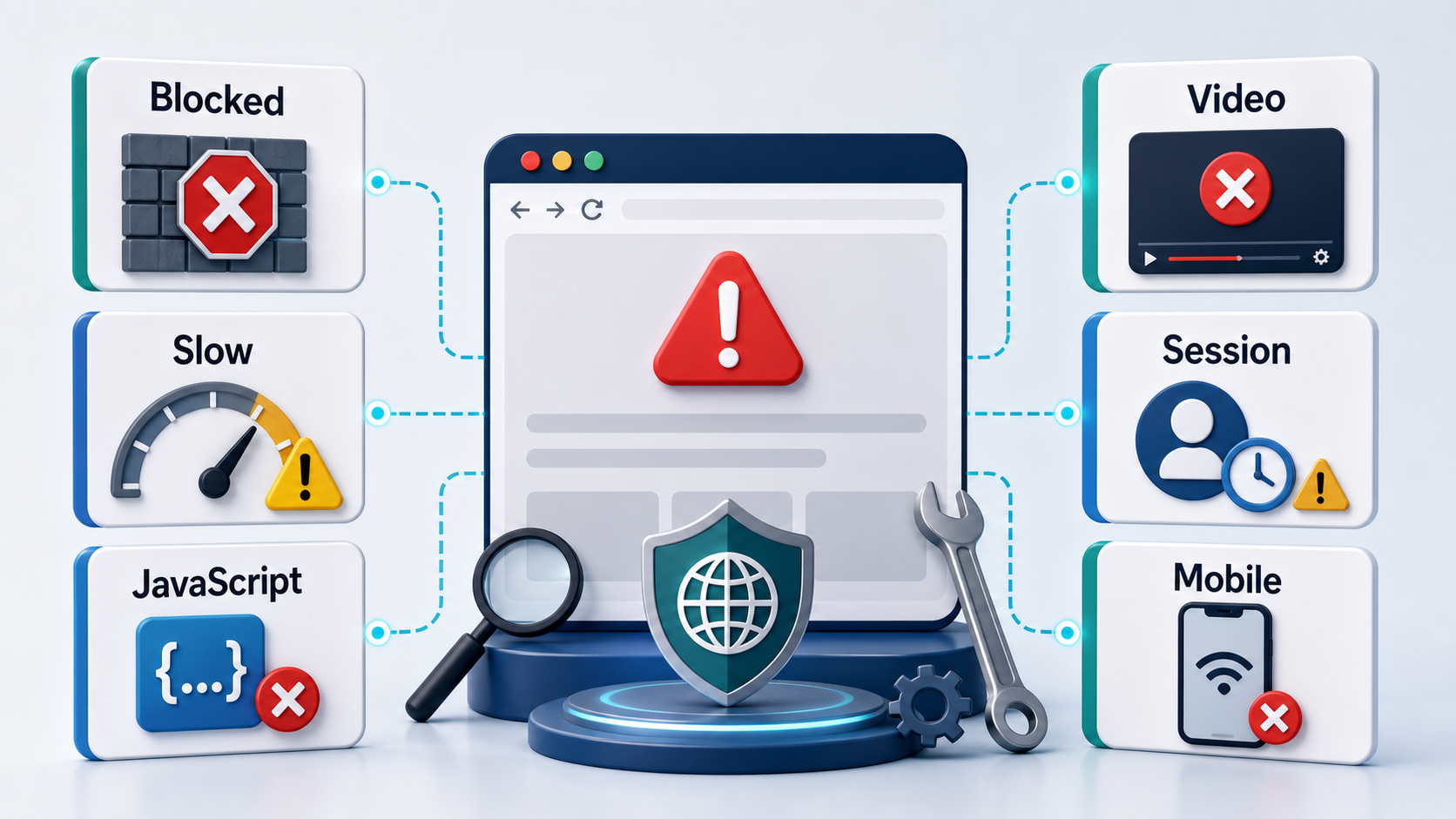
BlockAway Not Working? Fix Common Proxy, Video, and Access Problems
Troubleshoot BlockAway when pages are blocked, YouTube fails, JavaScript breaks, speed drops, sessions expire, or mobile access behaves differently.
View Details