
From Chatbot to Browser Agent: The AI Shift in 2026
AI stopped being a chatbot. Now it opens your browser, clicks around, and gets work done for you.
If you still think of artificial intelligence tools as sophisticated text boxes—interfaces where you type a prompt and read an answer—you are already behind the curve. The most significant architectural shift happening in AI right now is not about smarter text generation or larger context windows. It is about agency.
It is the transition to AI systems that do not just answer your questions but actively take over your keyboard, navigate your web applications, fill out forms, execute QA testing, and report back when the job is done. Most average users have not noticed this transition yet, which is exactly why developers and data teams must understand it now.
Scale Browser Agents With LycheeIP
OpenAI Codex — From Autocomplete to Autonomous Workflow Agent
When OpenAI first introduced Codex, the framing was modest and familiar. It was a code completion engine—a smarter version of autocomplete for software developers. You started typing a function, and Codex suggested how to finish it. Impressive, certainly, but conceptually simple: input goes in, output comes out, and the human stays in the driver's seat.
That framing is now entirely obsolete.
The Codex that exists in 2026 operates in a fundamentally different paradigm. It does not wait for you to type a half-finished line of Python. It receives a high-level goal—"build a web scraper that ethically collects public pricing data from these five competitor sites and dumps it into a Google Sheet every Monday morning"—and then it executes. It reasons through the steps. It writes the code, hits an error, parses the error log, refactors the script, runs it again, and iterates until the process works.
This leap from autocomplete to autonomous execution is the result of compounding capabilities. Modern agents now operate with:
- Persistent Memory: They remember context across sessions. The agent knows your preferred coding style, your staging environment architecture, and the architectural decisions you made last week without requiring re-prompting.
- Multi-Step Reasoning: Rather than generating a single block of output, the agent plans a sequence of actions, evaluates intermediate results, and adjusts its approach dynamically.
- Native Computer Use: Perhaps most dramatically, these agents interface directly with the operating system—reading file systems, running terminal commands, and interacting with web DOMs exactly as a human developer would.
In practice, the cognitive load has shifted entirely from execution to oversight. A developer who would have previously spent three hours writing, testing, and debugging an automation script can now dictate the parameters, step away, and return to a functioning solution.
However, commercial tools sitting inside proprietary ecosystems come with constraints: rigid API pricing, rate limits, and the reality that your proprietary workflows are running through someone else's infrastructure. This limitation is exactly why the open-source community has stepped in with enormous force.
Open-Source Agents Like Hermes Are Eating the Market
While proprietary models capture headlines, open-source agents are capturing enterprise infrastructure. Projects like Hermes have become some of the most actively discussed deployments in developer communities and IT circles over the past twelve months.
Built by Nous Research on an open-weight model architecture and designed specifically as an open-source AI agent framework, Hermes achieves what commercial tools struggle to democratize: autonomous browser automation that engineering teams can run, modify, and deploy without exorbitant subscription fees.
The mass adoption of open-source agents is driven primarily by three foundational advantages:
1. No Paywall, No Usage Ceiling
For individual developers and scaling businesses, the economics of per-token or per-action pricing from commercial AI agents adds up instantly. Running an agent that performs thousands of automated QA checks daily becomes financially unviable under subscription models. Deploying Hermes locally or on dedicated cloud infrastructure removes that financial ceiling entirely.
2. Full Customization and Extensibility
Enterprise operators need agents that can be trained on internal SOPs, integrated with legacy tooling, and audited for compliance. Closed-source agents create black boxes. Open-source agents provide total transparency. Developers can inspect every layer of the system logic, restrict behaviors, add specialized network capabilities, and securely integrate the agent into CI/CD pipelines.
3. Strict Data Sovereignty
When an AI agent browses on your behalf, it sees everything: authentication tokens, proprietary dashboards, and confidential communications. Regulated industries are simply not willing to route that telemetry through a third-party commercial service. Running an open-source agent on your own isolated infrastructure ensures data never leaves your environment.
The real-world deployments of these agents paint a vivid picture of modern automation. Legal teams deploy agents to monitor public regulatory databases. Growth teams run real-time, authorized price monitoring across global platforms. QA engineers use agents to automatically navigate user flows in staging environments to catch broken UI elements.
In every use case, the agent is performing a continuous job at a scale no human team could manually match. Open-source momentum guarantees that agentic AI is no longer the exclusive domain of tech giants; it is a foundational layer of modern software operations.
Scale Browser Agents With LycheeIP
The Browser Is the New Operating Environment for AI
There is a massive conceptual shift underneath all of this that changes how we must build software going forward.
For the past several years, the mental model for AI was the chat interface. The browser was simply a vehicle to access the AI, which lived in a distant data center. That model is inverting.
Increasingly, the browser is where the AI agent operates. The agent navigates URLs, reads page content, handles authentication flows, and extracts information using modern standards like the WebDriver BiDi protocol—all the things a human does in a browser, but autonomously.
This has profound implications:
- For Software Developers: If AI agents are becoming primary users of your web applications, your DOM must be agent-accessible. Forward-thinking teams are structuring page elements to be easily parsed by agents, providing machine-readable aria-labels, and building UIs that support both humans and autonomous systems gracefully.
- For Business Operators: The procurement question is no longer, "Which AI gives me the best creative writing?" The question is, "Which AI agent can reliably execute my team's workflows, integrate with our legacy tools, and maintain our privacy standards?"
- For Tech Enthusiasts: The rise of browser-as-agent environments introduces an entirely new software category: agent orchestration platforms. These systems coordinate multiple agents working in parallel across different browser sessions. The human shifts from being an operator to a supervisor—setting objectives, reviewing logs, and intervening during edge cases.
LycheeIP (Developer-First Proxy Infrastructure)
LycheeIP is a developer-first proxy and data infrastructure provider engineered to give technical teams absolute control over their network routing at scale.
When autonomous AI agents are deployed to execute hundreds of daily browser-based tasks—such as performing QA on localized web assets or ethically scraping region-specific public data—they inevitably face rate limits and bot-protection blocks. To ensure these automated agents can navigate the web unimpeded, developers must integrate a robust proxy network directly into the agent's operating environment. For continuous, high-volume tasks requiring localized access, utilizing dynamic IP routing allows the agent to simulate real, distributed human behavior across various ISPs. Conversely, when agents are running heavy backend workflows that demand lightning-fast, persistent session states, datacenter proxies provide unparalleled stability. Ultimately, coupling your AI workflows with developer-first data infrastructure ensures your agents can complete their objectives reliably without triggering network bans.
What Comes Next
The transition from chatbot to browser agent is not complete, and the friction points are real. Reliability remains the primary bottleneck. Agents that execute perfectly 90% of the time still fail in ways that require human oversight, and the blast radius of an autonomous agent failing is much wider than a chatbot generating a hallucinated paragraph. Verification is an open problem: when an agent claims a task is complete, how do you mathematically prove it performed the correct sequence of actions?
But the direction of the industry is unmistakable. The investments pouring into agentic workflows from both proprietary giants and open-source communities are not hedged bets. They reflect a unified consensus that the future of enterprise AI is autonomous execution.
The chatbot was just the introduction. It proved the underlying models could converse and reason. The browser agent is the actual application. It is where that reasoning gets pointed at real tasks in the real world.
If you are evaluating AI tools in 2026 and you are still primarily asking, "How smart is the chat?"—you are asking the wrong question. It is time to start asking what it can accomplish while you aren't looking.
Scale Browser Agents With LycheeIP
Frequently Asked Questions
Q: What is the fundamental difference between a chatbot and a browser agent?
A: A chatbot receives text input and produces text output; the human stays in control of all physical actions. A browser agent goes much further by autonomously navigating websites, clicking DOM elements, submitting forms, and completing multi-step workflows without requiring human input at each intermediate stage. The agent executes; the chatbot only advises.
Q: How has OpenAI Codex changed from its original version?
A: The original Codex was primarily an inline code autocomplete tool that suggested the next syntax block based on your current file. The 2026 iteration operates as a comprehensive workflow agent equipped with persistent memory, multi-step planning, and computer-use capabilities. It can receive a high-level goal, execute it across a real operating system, troubleshoot its own errors, and deliver a completed project.
Q: Why are open-source agents like Hermes gaining so much enterprise traction?
A: Open-source browser agents offer three non-negotiable advantages over commercial alternatives: the elimination of subscription and per-action fees, total architectural transparency for internal integrations, and the ability to run the agent entirely on private infrastructure. This ensures sensitive proprietary data never passes through a third-party server.
Q: Is browser agent AI reliable enough to trust with real business workflows?
A: Reliability has improved dramatically but remains an active engineering challenge. Browser agents excel at structured, repeatable tasks like data collection, QA testing, and workflow automation. However, they can still falter when encountering highly ambiguous instructions or unexpected UI redesigns. The current enterprise best practice is supervised automation, where agents execute the heavy lifting but humans review and approve the final outputs.
Q: Do I need to be a developer to use browser agents?
A: To deploy and host open-source agents like Hermes from scratch, technical knowledge of Docker, terminal environments, and API integrations is required. However, the barrier to entry has plummeted thanks to containerized setups and robust documentation. Meanwhile, commercial agentic platforms increasingly offer low-code or no-code graphical interfaces tailored for business operators rather than engineers.
Q: What kinds of tasks are browser agents best suited for right now?
A: Browser agents currently dominate highly repetitive, rule-based web tasks. This includes authorized competitive price monitoring, continuous QA testing of staging environments, data extraction from legacy portals lacking APIs, and aggregating daily reports from disjointed dashboards. They are less suited for tasks requiring creative human judgment or navigating highly unpredictable, abstract web environments.
Q: How should technical teams start evaluating browser agent tools?
A: Rather than evaluating tools based on conversational fluency, teams should assess agents using four core criteria: task reliability against their specific DOM structures, integration compatibility with their existing tech stack, the financial sustainability of the platform's pricing model at scale, and data sovereignty guarantees.

Recommended Articles
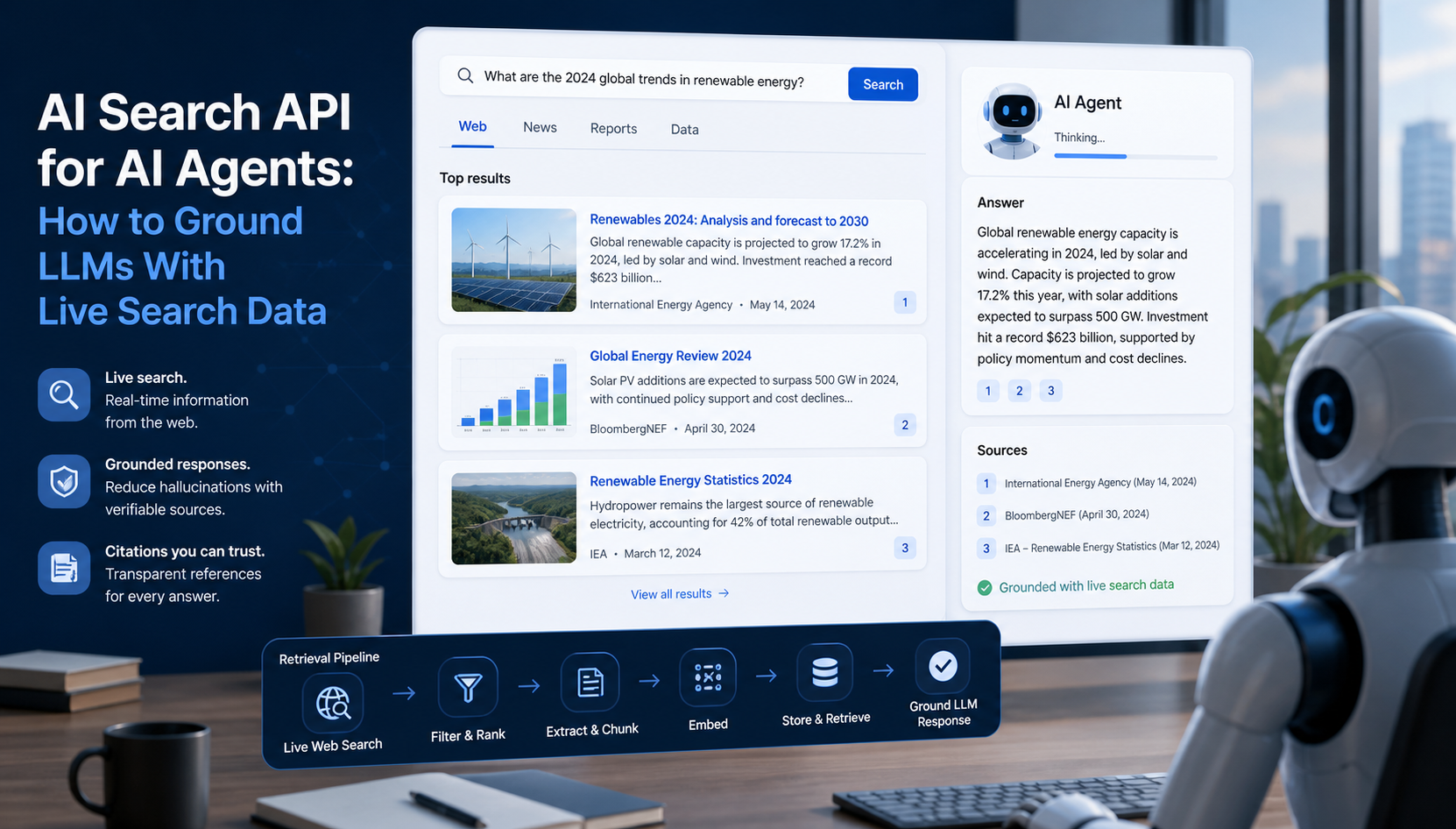
AI Search API for AI Agents: How to Ground LLMs With Live Search Data
An AI search API gives an application or agent programmatic access to current search results. Its most useful role is discovery: the agent can find candidate sources, identify fresh information, and decide what to retrieve next instead of relying only on model memory.
View Details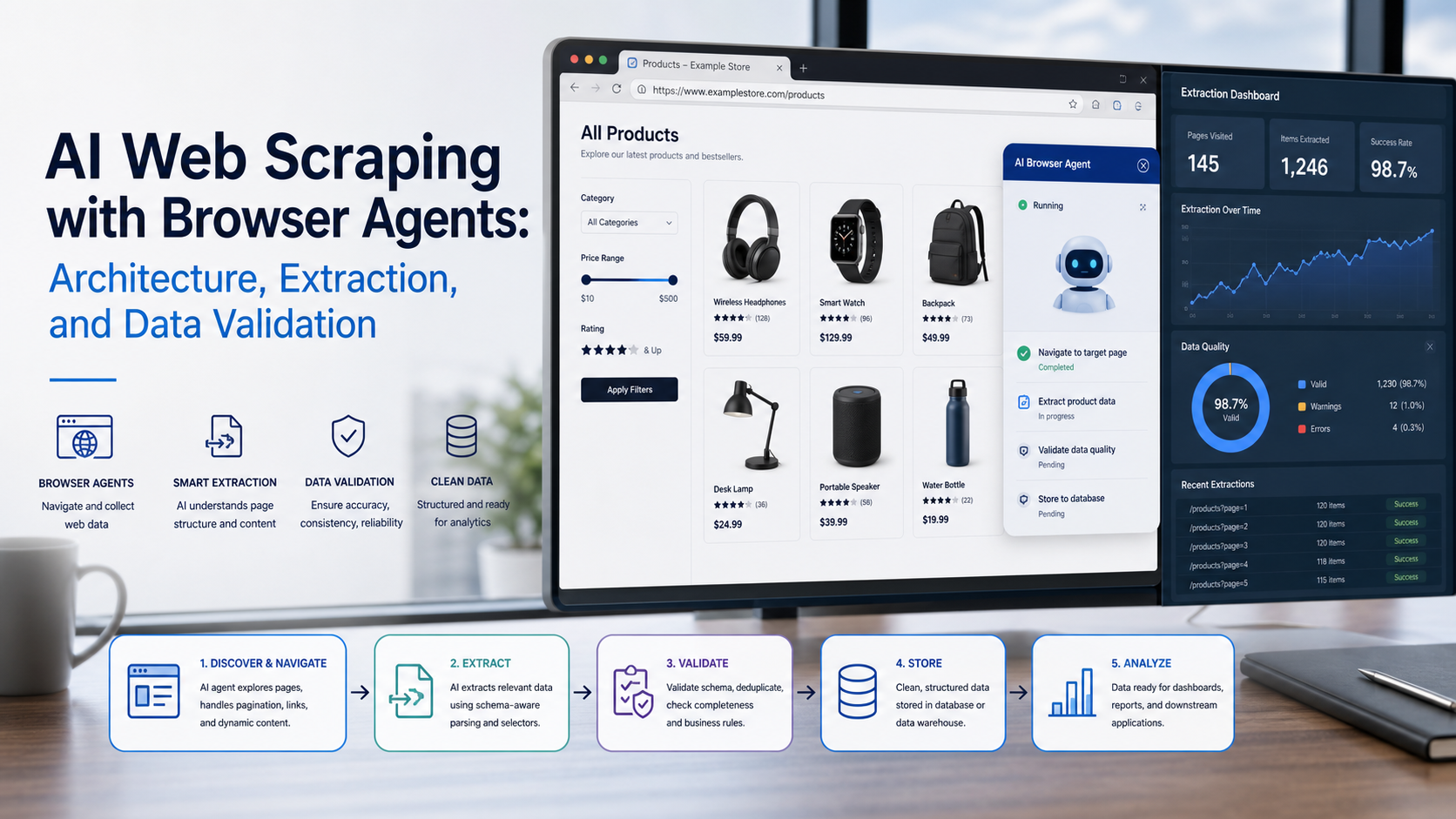
AI Web Scraping with Browser Agents: Architecture, Extraction, and Data Validation
AI web scraping uses AI to help discover, navigate, interpret, or extract information from websites. Browser agents are one implementation option when page interaction, rendering, or layout variation makes a simple scraper too brittle, but the agent should not become the entire data pipeline.
View Details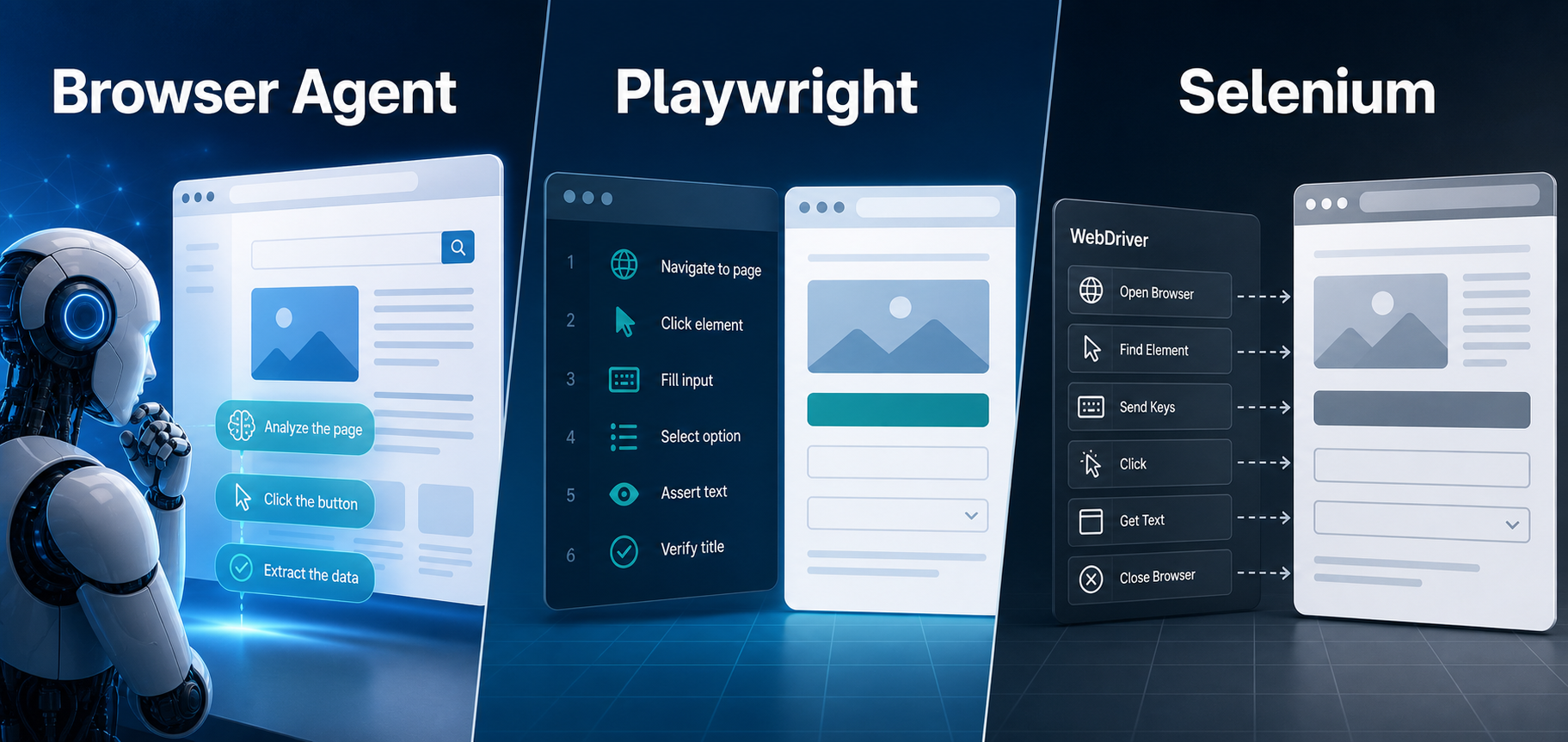
AI Browser Automation: Browser Agents vs Playwright vs Selenium
A browser agent interprets a goal and decides what browser action to take next. Playwright and Selenium can execute explicit, testable browser logic defined by developers. In 2026, however, Playwright also provides official MCP and agent-oriented workflows, so Playwright is no longer just the deterministic alternative to agentic automation. It can also serve as the browser-control layer inside an agent system.
View Details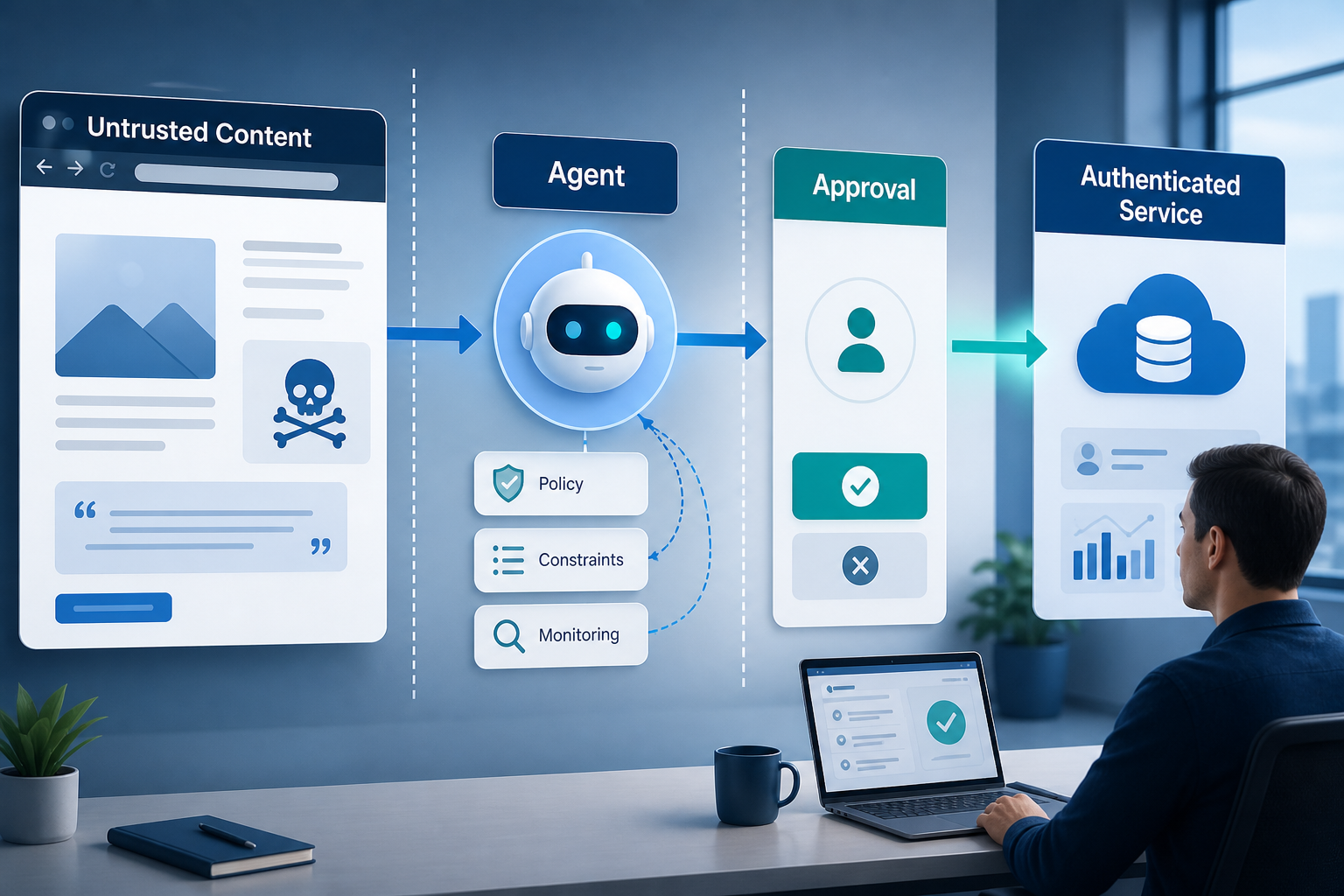
Agentic Browser Security: Prompt Injection, Permissions, and Safe Deployment
That combination creates risks that are different from ordinary browsing and traditional automation. The most important is indirect prompt injection, where hostile instructions hidden in web content attempt to redirect the agent away from the user's goal. Google describes indirect prompt injection as a primary new threat for agentic browsing and has introduced layered defenses that include origin constraints, independent action checks, threat detection, and user confirmation for sensitive actions. Google's Chrome security architecture is a useful reference for how browser-agent defenses are evolving.
View Details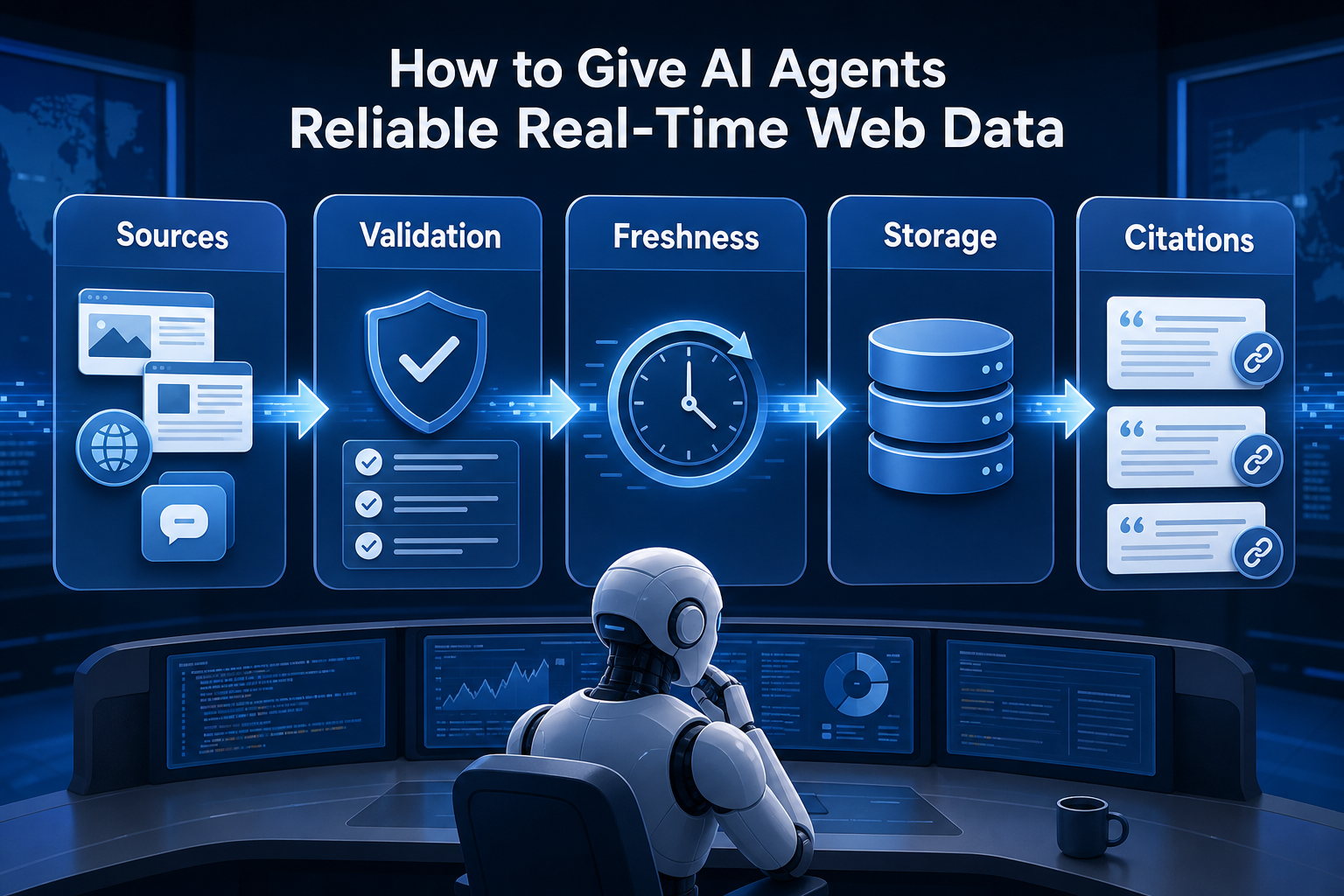
How to Give AI Agents Reliable Real-Time Web Data
A production-ready solution therefore needs more than a web scraper. It needs a web data layer that connects acquisition, validation, storage, retrieval, security, and observability. This guide explains how to design that layer.
View Details