
Cyber Warfare 2026: AI on the Digital Battlefield
Nation-states are deploying AI in cyber warfare operations at a terrifying scale. What began just a few years ago as the experimental integration of machine learning into offensive cyber capabilities has evolved into the systematic weaponization of artificial intelligence across the full spectrum of Advanced Persistent Threat (APT) campaigns.
By 2026, the digital battlefield has fundamentally transformed: attacks that once required teams of highly skilled human operators working over months now execute in mere hours with minimal human oversight. For security strategists, CISOs, and policy makers, this shift represents not merely a technological upgrade to existing threats, but a categorical change in the nature of cyber conflict itself, one that demands an urgent reassessment of defensive postures and resource allocation.
The implications extend far beyond the technical realm. AI-augmented cyber operations compress decision timelines, deeply complicate attribution, and lower the barriers to entry for highly sophisticated attacks. Critical infrastructure, energy grids, financial systems, healthcare networks, and transportation logistics, now faces adversaries that operate at machine speed with unprecedented adaptability.
Understanding exactly how AI reshapes this threat landscape has become essential for anyone responsible for defending enterprise networks.
Harden Cyber Defense with LycheeIP
AI in Advanced Persistent Threat Campaigns
Advanced persistent threats have long represented the absolute apex of offensive cyber capabilities. Traditionally, APT groups—often state-sponsored or state-directed, distinguished themselves through patient, methodical campaigns characterized by extensive reconnaissance, custom malware development, and a silent, persistent presence within target networks. These operations required substantial human expertise, time, and financial resources.
Artificial intelligence fundamentally alters this entire equation. Nation-state actors, including China's APT clusters (APT41, APT10), Russia's intelligence-backed groups (APT28, APT29), North Korea's Lazarus Group, and Iranian cyber units, have fully integrated machine learning into their operational toolkits. This integration manifests across multiple dimensions of the attack lifecycle.
Hyper-Targeted Reconnaissance
Target Selection and Profiling has become dramatically more sophisticated. AI systems can now autonomously analyze vast datasets—scraping social media, professional networks, corporate organizational charts, conference presentations, and even academic publications—to identify high-value human targets and map internal organizational structures.
Machine learning models accurately predict:
- Which individuals possess high-level network access credentials.
- Which specific executives are most likely to fall for social engineering based on their digital footprint.
- Which third-party vendors represent the most viable, weakly-defended supply chain attack vectors.
Where a team of human operators might identify dozens of potential targets over a month, AI systems evaluate thousands per minute with nuanced risk-reward calculations.
The Industrialization of Social Engineering
AI-Generated Social Engineering represents perhaps the most immediately concerning development for enterprise defenders. Large Language Models (LLMs) now craft highly convincing, hyper-personalized phishing emails at scale. These messages seamlessly incorporate personal details, recent professional context, and linguistic patterns that effortlessly bypass both automated email filters and human skepticism.
These aren't the generic, template-based messages of 2020 with minor customization. They are dynamically generated communications that adapt tone, content, and approach based on the specific target's psychological profile. Furthermore, deepfake technology adds audio and video dimensions, enabling the real-time impersonation of executives or trusted colleagues with alarming fidelity.
The Compression of the Attack Lifecycle
The acceleration of the attack lifecycle compounds all these capabilities. Traditional APT campaigns historically unfolded over many months: reconnaissance, initial access, privilege escalation, lateral movement, and finally, objective completion (exfiltration or destruction).
AI's compression of each phase means that campaigns which previously required 180 days now execute in weeks, or even days. This severe temporal compression shatters defensive paradigms built around Mean Time to Detect (MTTD) and Mean Time to Respond (MTTR) metrics that assume human-paced adversary operations.
Recent suspected AI-augmented campaigns actively demonstrate these trends. While attribution details often remain classified, security researchers have noted automation patterns and decision-making complexity in recent supply chain attacks that strongly suggest machine learning augmentation.
Automated Reconnaissance and Lateral Movement
Once inside a target network, AI-powered tools enable reconnaissance and lateral movement at scales and speeds that fundamentally challenge traditional defensive detection tools.
AI-Powered Network Scanning and Vulnerability Discovery
Modern offensive AI leverages machine learning to intelligently map network topology, identify critical assets, and discover exploitable weaknesses in real-time. Unlike conventional scanning tools that follow noisy, predetermined patterns, AI systems adapt their approach based on how the network responds. They learn exactly which probing techniques trigger SIEM (Security Information and Event Management) alarms and adjust their behavior accordingly to remain stealthy.
These tools ruthlessly prioritize the discovery of high-value assets—domain controllers, central database servers, and credential stores—and rapidly calculate the optimal exploitation paths to reach them.
Reinforcement Learning in the Network
Reinforcement learning models explore network environments much as they master complex strategy games like chess or Go: through trial, error, and optimization toward defined objectives. Each interaction yields data that refines the model's understanding of the network architecture and its defensive posture. The result is internal reconnaissance that appears entirely organic, perfectly mimicking legitimate user behavior patterns while systematically mapping the digital terrain.
Automated Exploitation and Privilege Escalation follows naturally. AI systems don't simply find isolated vulnerabilities; they chain them together in novel combinations to achieve rapid privilege escalation and persistent access. ML models trained on vast repositories of zero-day exploits, CVE databases, and proof-of-concept code can identify vulnerability patterns, automatically adapt known exploits to fit specific environments, and even generate entirely new exploitation techniques on the fly.
Intelligent Lateral Movement Algorithms
These algorithms optimize an attacker's pathways through compromised networks. Traditional lateral movement often leaves highly detectable traces: unusual Active Directory authentication patterns, abnormal east-west network traffic, or suspicious PowerShell process executions.
AI-augmented lateral movement employs deep behavioral modeling to perfectly mimic legitimate administrator activities. It times its operations to blend seamlessly with normal business cycles (e.g., executing data transfers during peak backup hours) and selects movement paths that mathematically minimize detection probability.
Autonomous Malware and Evasion
Adversarial Machine Learning techniques specifically target the defensive AI systems deployed by the enterprise. As organizations increasingly rely on machine learning for threat detection, attackers have developed methods to poison the defenders' training data, craft inputs that deliberately evade detection, or actively probe defensive models to map their exact decision boundaries.
Autonomous Malware represents the bleeding edge of this evolution. Self-propagating code equipped with AI-driven decision-making can adapt to encountered defenses, modify its own code structure (polymorphism) to avoid signature detection, and autonomously determine whether specific servers merit deeper exploitation or should be bypassed entirely.
Finally, the attribution challenge intensifies dramatically. When human operators work, they inadvertently leave linguistic fingerprints, timezone activity patterns, and specific tradecraft signatures that enable threat intelligence teams to attribute the attack to a specific nation-state. AI-driven operations deliberately obscure or falsify these indicators, allowing attackers to plant false flags and operate continuously without the constraints of human sleep schedules.
Harden Cyber Defense with LycheeIP
Critical Infrastructure Protection Strategies
Defending critical infrastructure against AI-augmented threats requires a comprehensive, defense-in-depth strategy spanning technology, organizational culture, and policy. To establish a durable baseline, organizations should routinely map their defensive coverage against MITRE ATT&CK framework contributions and actively participate in collective threat intelligence sharing initiatives as outlined by the Cybersecurity Information Sharing Act (CISA).
AI-Driven Defensive Measures
Fighting fire with fire is no longer optional. AI-Driven Defensive Measures offer the only viable counter to AI-powered attacks. Machine learning models designed for threat detection can analyze network traffic, user behavior, and millions of system logs at scales impossible for human SOC analysts. These systems identify micro-anomalies, detect zero-day exploits through strict behavioral analysis, and provide early warning of stealthy reconnaissance activity.
However, defensive AI requires continuous updating with real-time threat intelligence and robust validation to prevent adversarial manipulation.
Zero-Trust Architecture Enhanced by Machine Learning
A true Zero-Trust Architecture assumes the network is already breached and requires continuous verification for every action. AI systems can continuously assess authentication requests by evaluating not just static credentials, but dynamic contextual factors:
- Device security posture
- Geographic location and IP reputation
- Access time patterns
- Behavioral biometrics (keystroke dynamics, mouse movement)
Strict micro-segmentation limits an attacker's ability to move laterally, while machine learning continuously monitors all east-west traffic for anomalies. This architecture fundamentally denies attackers the implicit trust that enables traditional lateral movement, forcing them to continuously re-authenticate and exposing their presence.
Policy and Investment Priorities
To survive the 2026 threat landscape, critical sectors must focus their investments on:
- AI-Powered SOCs: Detection and response capabilities augmented with AI to handle machine-speed attacks.
- Air-Gapped Segmentation: Extreme network segmentation and physical isolation of critical Operational Technology (OT) from standard IT networks.
- Resilience Engineering: Building redundancy that enables manual operations during sustained cyber attacks.
- Continuous Testing: Utilizing AI-augmented red team exercises to constantly probe defensive perimeters.
LycheeIP (Developer-First Proxy Infrastructure)
LycheeIP is a developer-first proxy and data infrastructure provider designed to facilitate secure, distributed, and highly resilient network routing.
As nation-state actors and APT groups increasingly utilize automated, AI-driven reconnaissance to map external enterprise vulnerabilities, defensive security teams must proactively test their own perimeters to ensure their configurations can withstand machine-speed scanning. To conduct safe, authorized external attack surface management (EASM) and simulate automated threat actor reconnaissance, Red Teams and DevSecOps professionals rely on a robust core data infrastructure provider. By routing their authorized security testing tools through global dynamic IP networks, defenders can accurately mimic the highly distributed scanning patterns of modern APTs, effectively validating their rate-limiting and geo-blocking defenses. Furthermore, leveraging high-performance datacenter proxies or dedicated static IP configurations directly through the LycheeIP platform allows threat intelligence teams to safely scrape and analyze adversarial forums and OSINT feeds without exposing their internal corporate IP addresses to retaliatory targeting.
The Path Forward
The integration of AI into cyber warfare represents a permanent inflection point in digital conflict. By 2026, the threat landscape has evolved beyond recognition from even five years prior. Nation-state adversaries now operate with unprecedented speed, scale, and sophistication, while the line between peacetime intelligence gathering and wartime destructive attacks grows increasingly blurred.
For security strategists and policy makers, the imperative is absolute: defensive strategies must evolve as rapidly as offensive capabilities. This requires not merely buying new AI-powered security tools, but fundamentally rethinking security architectures, resource allocation, and workforce development.
The digital battlefield of 2026 offers no easy victories, but neither does it guarantee defeat. With a clear-eyed assessment of AI-augmented threats and strategic investment in resilience-focused architectures, critical infrastructure can be hardened against the most catastrophic scenarios.
The question is not whether nation-states will deploy AI in cyber warfare, they already are. The question is whether defenders will respond with equal sophistication, urgency, and resolve.
Harden Cyber Defense with LycheeIP
Frequently Asked Questions
Q: What are Advanced Persistent Threats (APTs) in the context of AI cyber warfare?
A: Advanced Persistent Threats are sophisticated, prolonged cyber attack campaigns typically conducted by nation-state actors. In the AI era, APTs leverage machine learning for enhanced target selection, automated social engineering, faster reconnaissance, and adaptive evasion techniques. AI transforms APTs from human-paced operations requiring months to execute into compressed campaigns that achieve their objectives in days.
Q: How is AI changing cyber warfare tactics compared to traditional methods?
A: AI fundamentally alters cyber warfare by accelerating attack timelines from months to hours. It enables the mass customization of highly convincing social engineering, automates complex vulnerability discovery and exploitation, and powers intelligent lateral movement that perfectly mimics legitimate user behavior. Unlike traditional attacks that follow pre-programmed, static paths, AI operations adapt in real-time to defensive responses.
Q: Which nation-states are most active in AI-enhanced cyber operations?
A: Major nation-state actors fully integrating AI into their cyber operations include China (APT41, APT10), Russia (APT28, APT29), North Korea (Lazarus Group), and Iran. These actors heavily leverage AI for target profiling, automated reconnaissance, and deepfake phishing campaigns.
Q: What can organizations do to protect critical infrastructure from AI-powered attacks?
A: Critical infrastructure protection requires a defense-in-depth strategy: implement AI-driven defensive measures for behavioral analytics, adopt strict Zero-Trust architectures with continuous authentication, deploy micro-segmentation to limit lateral movement, and build resilience by assuming compromise (e.g., maintaining offline, immutable backups and manual operational overrides).
Q: Will AI make cyber warfare more or less destructive?
A: AI will likely increase cyber warfare's destructive potential due to compressed attack timelines that drastically reduce human response windows. Automation enables the simultaneous targeting of multiple critical systems, while adaptive malware allows attacks to persist despite defensive measures. However, AI also greatly enhances defensive capabilities through improved, machine-speed threat detection. The net outcome depends entirely on whether defenders invest in AI as aggressively as attackers.

Recommended Articles
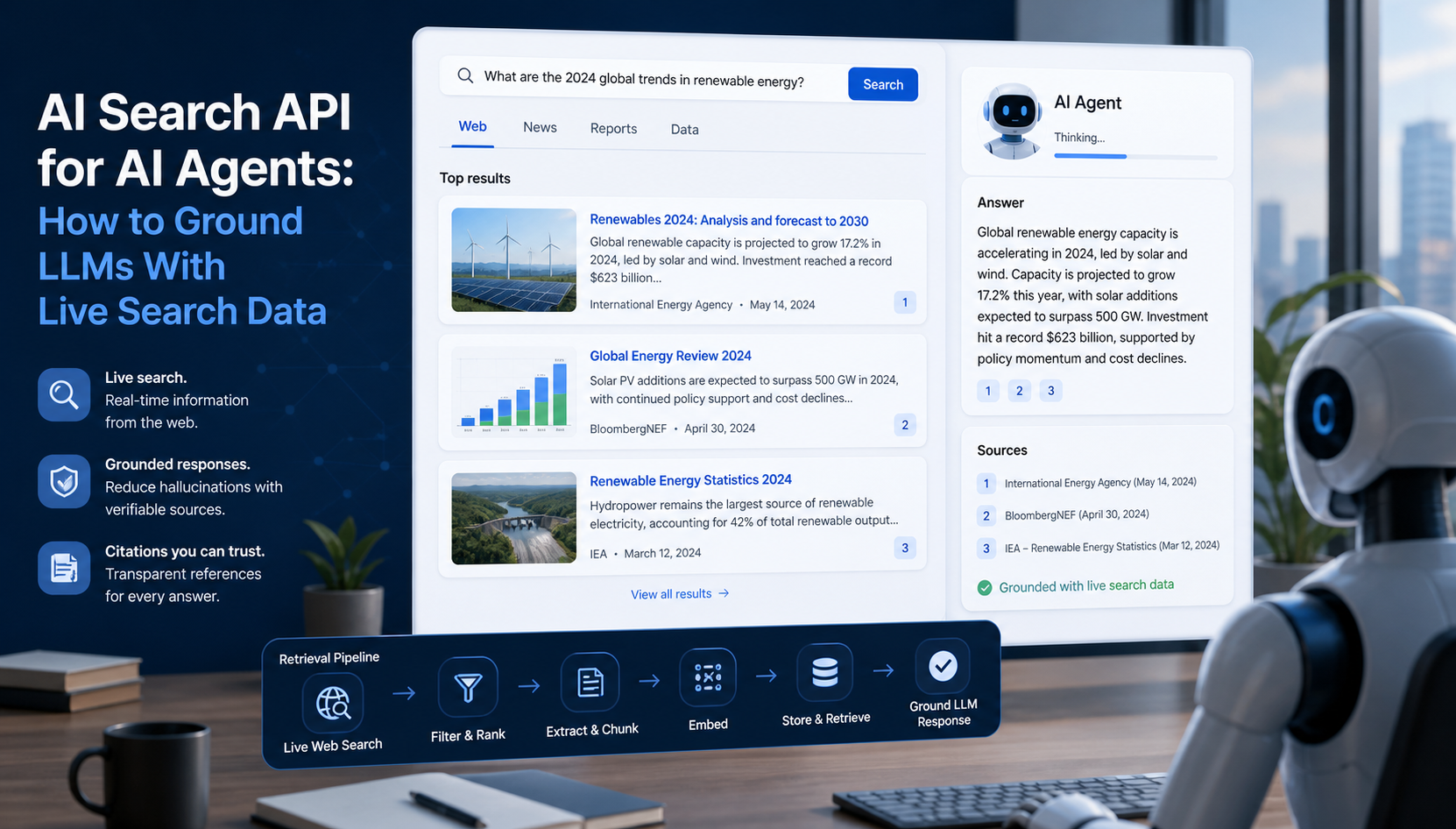
AI Search API for AI Agents: How to Ground LLMs With Live Search Data
An AI search API gives an application or agent programmatic access to current search results. Its most useful role is discovery: the agent can find candidate sources, identify fresh information, and decide what to retrieve next instead of relying only on model memory.
View Details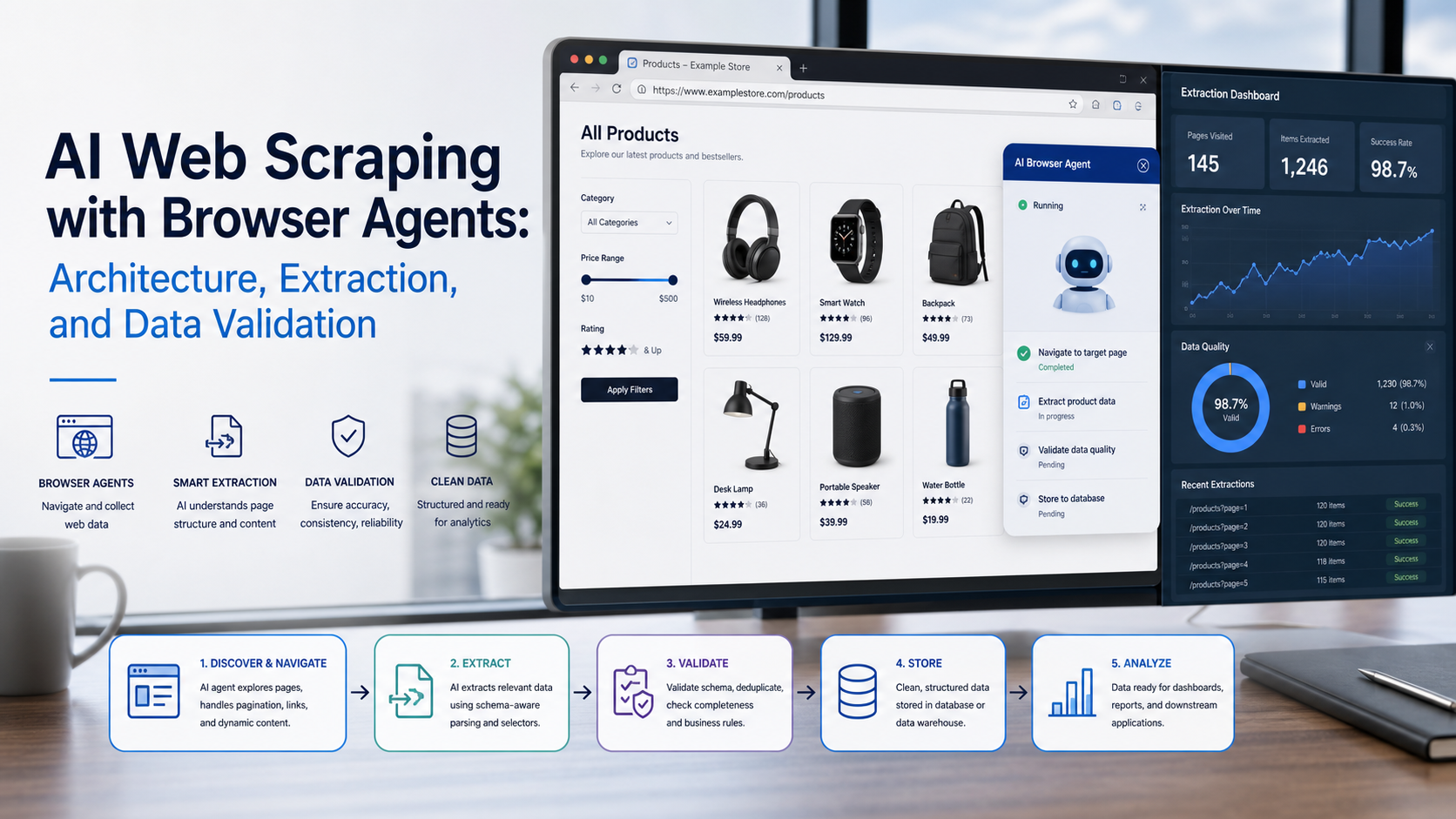
AI Web Scraping with Browser Agents: Architecture, Extraction, and Data Validation
AI web scraping uses AI to help discover, navigate, interpret, or extract information from websites. Browser agents are one implementation option when page interaction, rendering, or layout variation makes a simple scraper too brittle, but the agent should not become the entire data pipeline.
View Details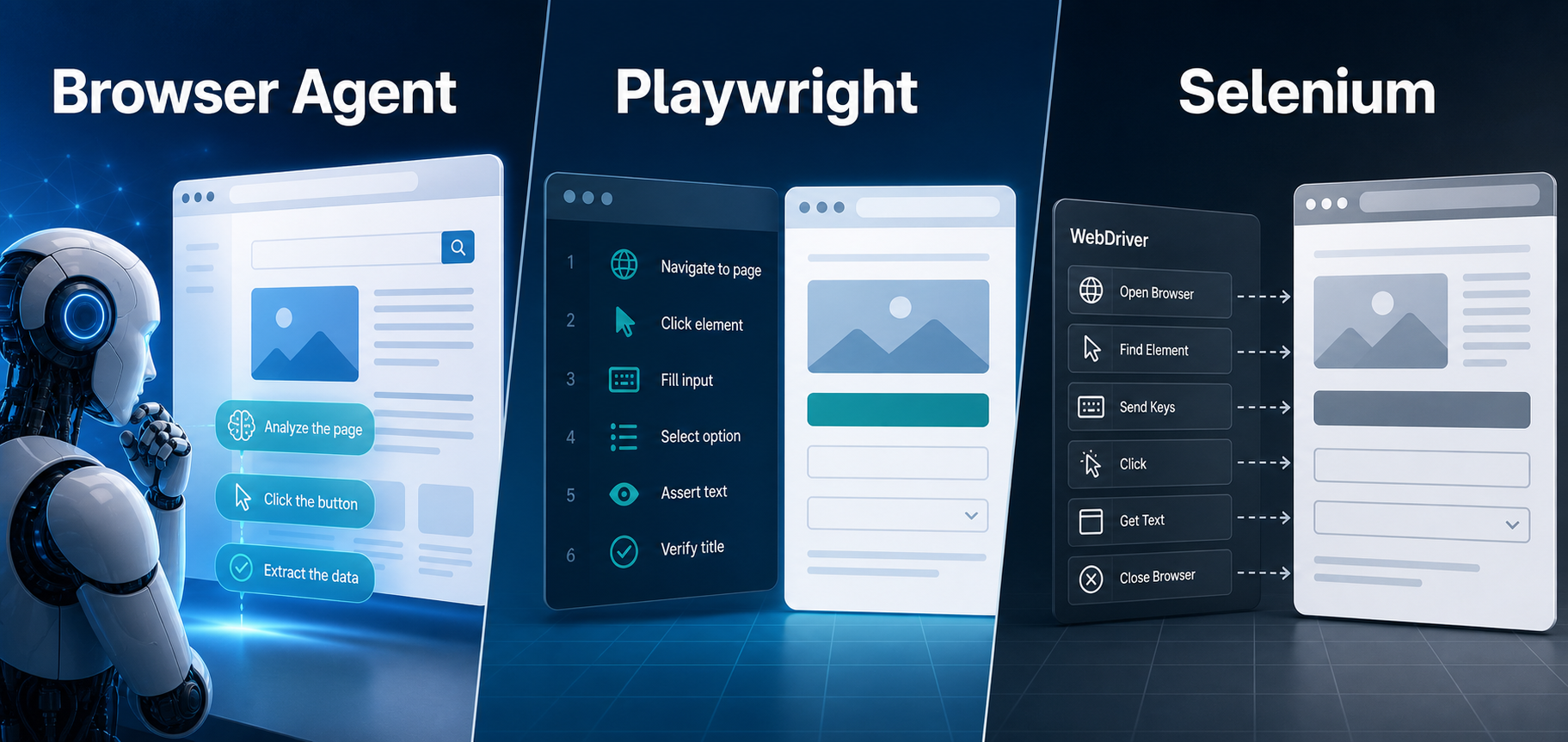
AI Browser Automation: Browser Agents vs Playwright vs Selenium
A browser agent interprets a goal and decides what browser action to take next. Playwright and Selenium can execute explicit, testable browser logic defined by developers. In 2026, however, Playwright also provides official MCP and agent-oriented workflows, so Playwright is no longer just the deterministic alternative to agentic automation. It can also serve as the browser-control layer inside an agent system.
View Details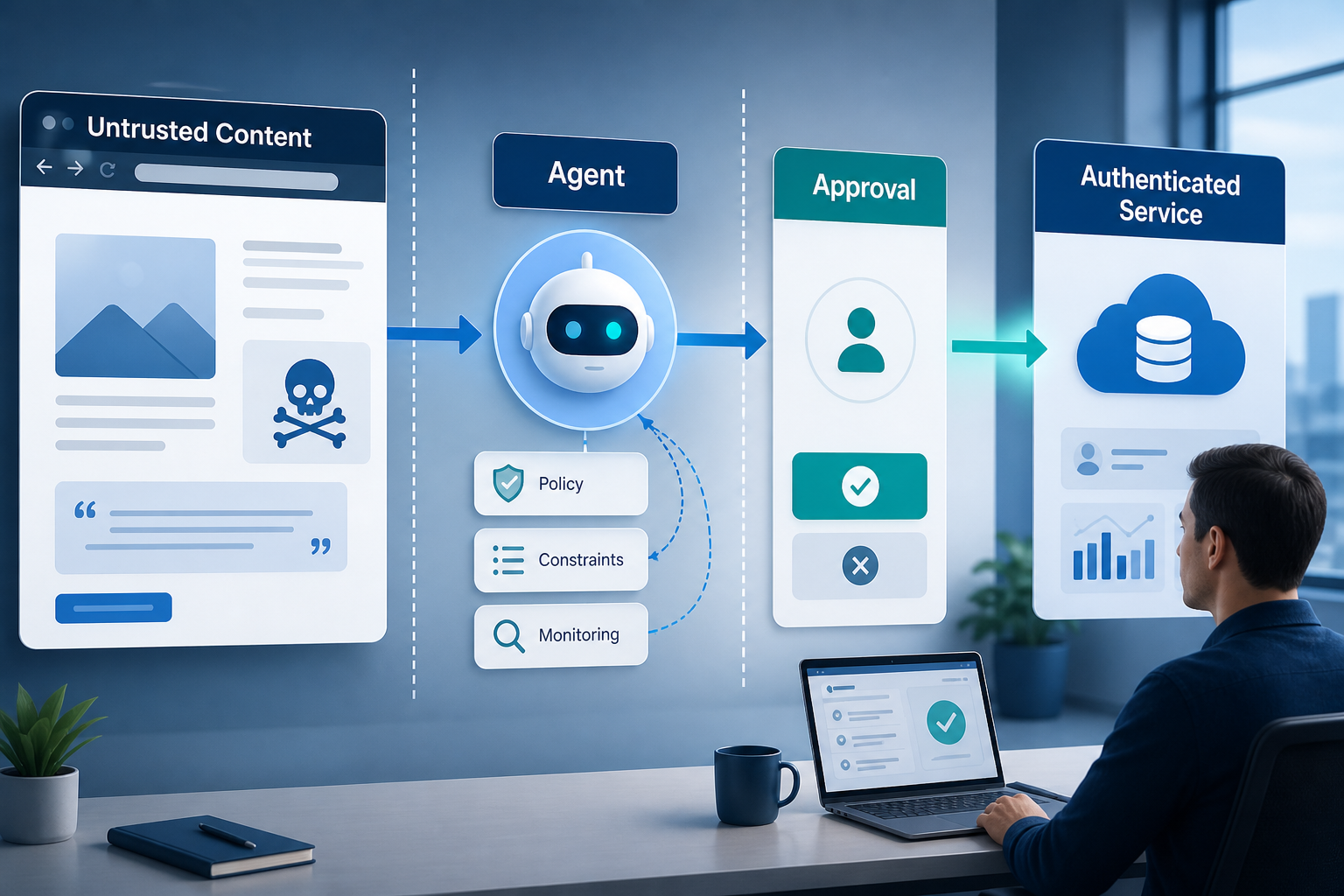
Agentic Browser Security: Prompt Injection, Permissions, and Safe Deployment
That combination creates risks that are different from ordinary browsing and traditional automation. The most important is indirect prompt injection, where hostile instructions hidden in web content attempt to redirect the agent away from the user's goal. Google describes indirect prompt injection as a primary new threat for agentic browsing and has introduced layered defenses that include origin constraints, independent action checks, threat detection, and user confirmation for sensitive actions. Google's Chrome security architecture is a useful reference for how browser-agent defenses are evolving.
View Details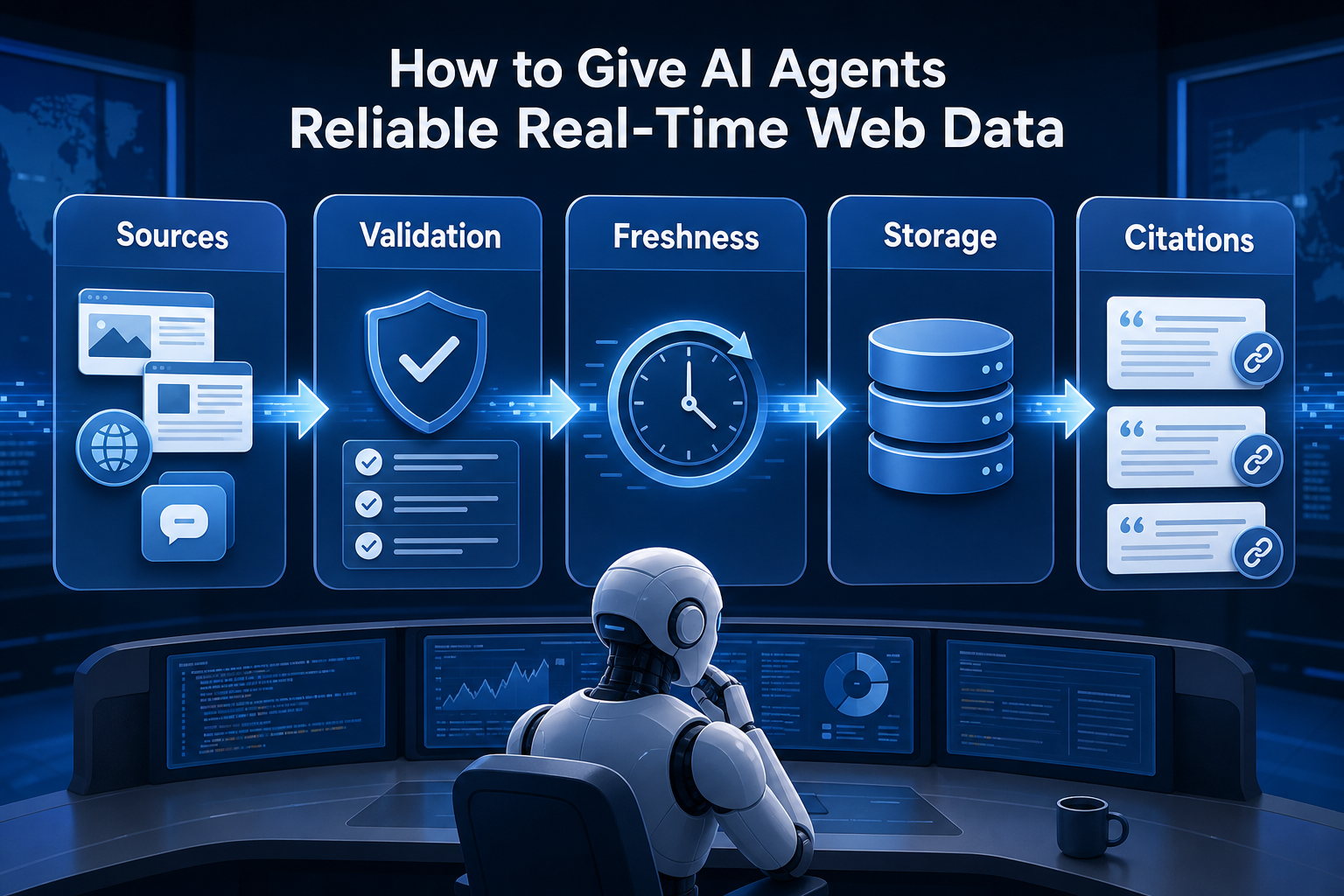
How to Give AI Agents Reliable Real-Time Web Data
A production-ready solution therefore needs more than a web scraper. It needs a web data layer that connects acquisition, validation, storage, retrieval, security, and observability. This guide explains how to design that layer.
View Details