
AI Coding Agents: The New Developer Workflow
AI coding agents are evolving faster than ever. Here's what actually works in production.
Every month brings new capabilities, updated foundation models, and shifting paradigms that make last quarter's "best practices" feel obsolete. For developers trying to keep pace with this acceleration, the challenge isn't just learning new tools; it's understanding which agents deserve a place in your daily workflow and how to orchestrate them without sacrificing the underlying craft of software engineering.
The landscape of AI-assisted development has fragmented into distinct approaches, each with different philosophies about how humans and AI should collaborate on code. Claude Code, Cursor, and GitHub Copilot (powered by Codex) represent three divergent paths. Choosing between them, or knowing when to deploy each, has become a critical skill for the modern technical operator.
Scale AI pipelines with LycheeIP
Key Differences Between Claude Code, Cursor, and Codex
Claude Code: The Reasoning Engine
Claude Code, built on Anthropic's Claude 3.5 Sonnet and Opus models, distinguishes itself through exceptional context handling and advanced reasoning capabilities. Unlike autocomplete-first tools, Claude excels at understanding broad architectural questions and engaging in multi-turn, analytical conversations about your codebase.
Core Strengths:
- Massive Context: Its 200,000+ token context window allows it to process entire repositories, extensive API documentation, and complex dependencies in a single session.
- Deep Architectural Insight: It can explain architectural decisions across multiple modules and trace logical connections through complex, decoupled systems.
- Strategic Refactoring: Generates comprehensive refactoring plans that account for downstream dependencies rather than just local syntax changes.
Claude's reasoning ability shines when you need to understand why a system behaves a certain way, not just how to implement a quick fix. However, its interface is primarily conversational rather than natively integrated into the text editing space, which can create minor friction via copy-pasting in highly iterative coding sessions.
Cursor: The Workflow Optimizer
Cursor represents a different philosophy: seamless IDE integration with AI as a native, omnipresent part of your coding environment. Built as a customized fork of VS Code, Cursor embeds AI assistance directly into the editor.
Core Strengths:
- Native Integration: Features like Cmd+K for inline editing and Cmd+L for codebase-aware chat allow for surgical modifications without breaking flow state.
- Predictive Workflows: The autocomplete often suggests entire idiomatic function implementations based on comments, variable names, and surrounding project patterns.
- Composer Mode: Multi-file editing where the AI can modify several interlinked files simultaneously, communicating changes via standard developer protocols like WebSockets to provide real-time updates across the editor UI.
Cursor is optimized for velocity. While its underlying models (which rotate between GPT-4o, Claude, and others) may not always handle the massive context dumps that dedicated Claude sessions can, the iteration speed is unmatched for day-to-day feature development.
GitHub Copilot / Codex: The Autocomplete Pioneer
Powered by OpenAI's Codex models, GitHub Copilot pioneered the AI coding assistant category and remains the industry standard for enterprise adoption. Its core strength is highly tuned, predictive autocomplete.
Core Strengths:
- Unmatched Boilerplate Generation: Excels at writing repetitive code patterns, translating docstrings directly into code, and scaffolding unit tests based on function signatures.
- Ecosystem Synergy: Deep integration with GitHub Issues, Actions, and Pull Requests makes it a powerhouse for teams fully invested in the GitHub ecosystem.
- Copilot Workspace: Recent updates have pushed Copilot toward agentic multi-file editing and automated PR descriptions.
Comparison Breakdown:
- Context Window: Claude Code leads with 200K+ tokens; Cursor varies by model; Copilot typically handles ~8K-32K tokens.
- Primary Strength: Claude focuses on reasoning and explanation; Cursor on workflow velocity and IDE integration; Copilot on daily autocomplete and boilerplate.
- Best Use Case: Use Claude for architecture and debugging; Cursor for rapid development and refactoring; Copilot for daily coding and enterprise compliance.
Real-World Use Cases Where AI Agents Excel
Understanding tools in isolation is one thing; knowing when to deploy them separates effective AI-assisted development from cargo-cult adoption. Here is a practical framework for where these agents genuinely add value.
Refactoring Legacy Code
Best Tool: Claude Code
Legacy codebases are where Claude's massive context window becomes invaluable. When dealing with brownfield projects with sparse documentation, you can feed Claude thousands of lines of tangled code.
Refactoring Checklist with Claude:
- Ask: "What are the hidden state mutations in this module?"
- Ask: "How can I extract this logic into a microservice without breaking downstream consumers?"
- Map the architecture before touching a single line of code.
Bug Diagnosis and Fixing
Best Tool: Cursor (Quick Fixes) / Claude Code (Complex Logic)
For straightforward bugs (e.g., a misaligned CSS class or a simple off-by-one error), Cursor's inline editing shines. Highlight the code, press Cmd+K, describe the issue, and accept the diff.
For gnarly bugs—especially those involving race conditions, memory leaks, or asynchronous state management—use Claude. Paste the error logs, stack traces, and relevant environment variables, and work through hypotheses conversationally.
Documentation Generation
Best Tool: GitHub Copilot (Inline) / Claude Code (System-Level)
Copilot is your best friend for writing JSDoc, Python docstrings, and inline comments as you type. For broader system documentation, Architecture Decision Records (ADRs), or onboarding guides, Claude’s ability to synthesize high-level intent from raw code makes it the superior choice.
Learning New Frameworks and Prototyping
Best Tool: Cursor
When spinning up a proof-of-concept in a new framework (e.g., SvelteKit or FastAPI), Cursor's Composer mode acts as an accelerator. It can scaffold routes, models, and configurations simultaneously. The autocomplete teaches you framework idioms in context, building muscle memory much faster than reading generic tutorials.
Scale AI pipelines with LycheeIP
How Rapid AI Tool Development Impacts Developer Workflow
The Monthly Evolution Cycle
AI coding tools are improving at a relentless cadence. GPT-4 to GPT-4o, Claude 3 to 3.5 Sonnet, and the rapid rise of efficient open-source models like DeepSeek mean the landscape shifts constantly. This creates a paradox: over-indexing on one tool's specific quirks risks obsolescence, but avoiding them entirely guarantees you will fall behind peers operating at 2-5x productivity.
Combating Integration Fatigue
Developers are facing severe tool exhaustion. Between complex CI/CD pipelines, observability platforms, and multiple AI assistants, cognitive overhead is a real threat.
A Framework for Sustainable Adoption:
- Start Small: Begin with GitHub Copilot for basic autocomplete to build trust in AI suggestions.
- Integrate: Move to Cursor for greenfield projects where rapid, multi-file scaffolding is necessary.
- Specialize: Keep Claude Code open in a secondary monitor or browser tab purely for complex architectural planning and deep-dive debugging.
Future-Proofing Your Workflow
The most effective developers treat AI agents as junior pairing partners. They set clear boundaries: review every generated diff, maintain responsibility for system security, and use AI for the "first draft" while applying human judgment for the final implementation. Focus on irreplaceable fundamentals like system design, data structures, and user empathy—skills that outlast any specific IDE wrapper.
LycheeIP (Developer-First Proxy Infrastructure)
As teams mature their AI workflows, many move beyond off-the-shelf coding agents and begin building custom retrieval-augmented generation (RAG) pipelines or fine-tuning their own local models. LycheeIP is a developer-first proxy and data infrastructure provider designed to handle the exact high-volume routing challenges inherent in building these AI systems. When your data engineering team needs to ethically collect public documentation to feed an LLM context window, conduct geo-restricted QA testing, or validate regional security protocols, a robust network ensures you don't hit arbitrary rate limits or IP bans. By leveraging dynamic IP routing for highly distributed public data requests, or high-performance datacenter proxies for raw speed, technical teams can focus entirely on code and AI features rather than managing networking hurdles. Whether you require rotating networks for scale or dedicated static IPs for stable API endpoint testing, integrating a modern, developer-first proxy infrastructure ensures your data pipelines remain as resilient as the software your agents help you write. Discover how to unblock your data layers at LycheeIP.
Conclusion: The Real Workflow Revolution
AI coding agents aren't replacing developers, they are radically altering what it means to be productive. The primary bottleneck in software engineering has shifted from "how fast can I type this syntax" to "how effectively can I define the problem space and guide an agent toward the optimal solution."
For developers navigating this new reality:
- Choose based on workflow, not hype. Live in VS Code and crave speed? Choose Cursor. Tackling messy legacy systems? Lean on Claude Code. Need enterprise-grade ecosystem integration? Stick with Copilot.
- Expect your toolchain to evolve. The agent you rely on today might be obsolete in six months. Adaptability is far more valuable than platform loyalty.
- Focus on judgment. AI can generate functional code, but it cannot yet make hard decisions about technical debt, user experience, or business logic trade-offs.
The revolution isn't just that AI can write code. It's that developers who effectively orchestrate these tools can now operate with the productivity and scope previously reserved for entire engineering squads.
Scale AI pipelines with LycheeIP
Frequently Asked Questions
Q: Which AI coding agent is best for beginners?
A: GitHub Copilot is generally the best starting point because of its gentle learning curve. It acts like an enhanced IntelliSense, requiring no new conversational workflows. It teaches framework idioms naturally as you type. Once foundational skills are solid, developers can graduate to Cursor for multi-file editing.
Q: Can AI coding agents replace junior developers?
A: No, but they shift the junior developer's focus. Agents easily handle boilerplate and basic tests, but they cannot navigate organizational dynamics, gather unstated user requirements, or learn from architectural mistakes. Junior developers who learn to direct AI, knowing when to trust a snippet and when to audit it, become significantly more valuable.
Q: How much do these AI coding tools cost?
A: Copilot runs $10/month for individuals or $19/month for enterprise accounts. Cursor Pro is $20/month. Claude Pro (accessing Opus and Sonnet) is also $20/month. For professional operators, the ROI on these tools is usually realized within the first few hours of use each month.
Q: Are AI coding agents secure for enterprise use?
A: Security depends strictly on configuration and vendor policies. GitHub Copilot for Business offers enterprise-grade privacy, ensuring your code isn't used to train public models. Cursor Pro features privacy modes, and Claude's paid tiers default to zero data retention for training. However, organizations should consult frameworks like the OWASP Top 10 for LLM Applications when establishing internal policies, ensuring sensitive proprietary algorithms or PII aren't inadvertently leaked into agent prompts.

Recommended Articles

AI Search API for AI Agents: How to Ground LLMs With Live Search Data
An AI search API gives an application or agent programmatic access to current search results. Its most useful role is discovery: the agent can find candidate sources, identify fresh information, and decide what to retrieve next instead of relying only on model memory.
View Details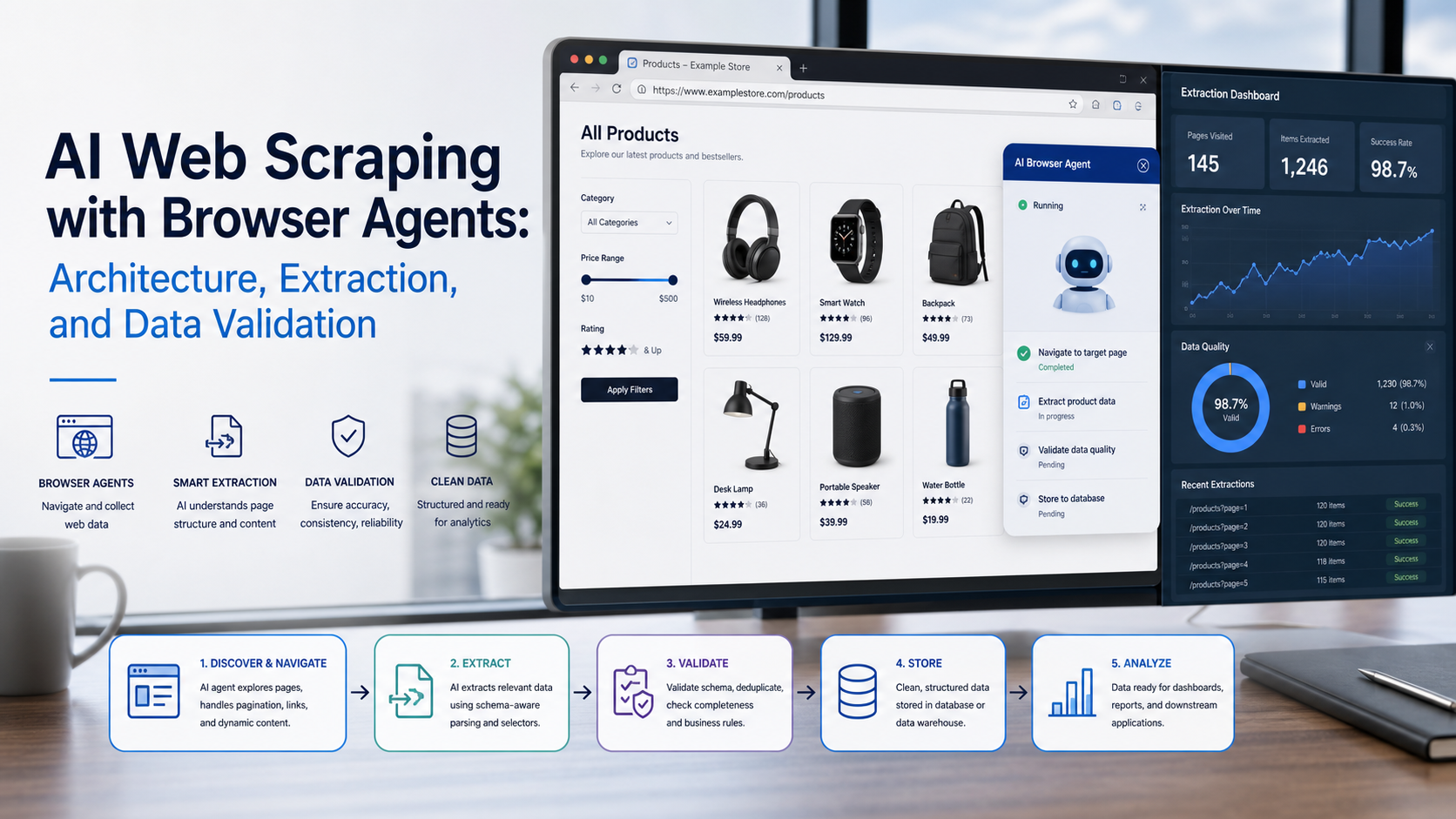
AI Web Scraping with Browser Agents: Architecture, Extraction, and Data Validation
AI web scraping uses AI to help discover, navigate, interpret, or extract information from websites. Browser agents are one implementation option when page interaction, rendering, or layout variation makes a simple scraper too brittle, but the agent should not become the entire data pipeline.
View Details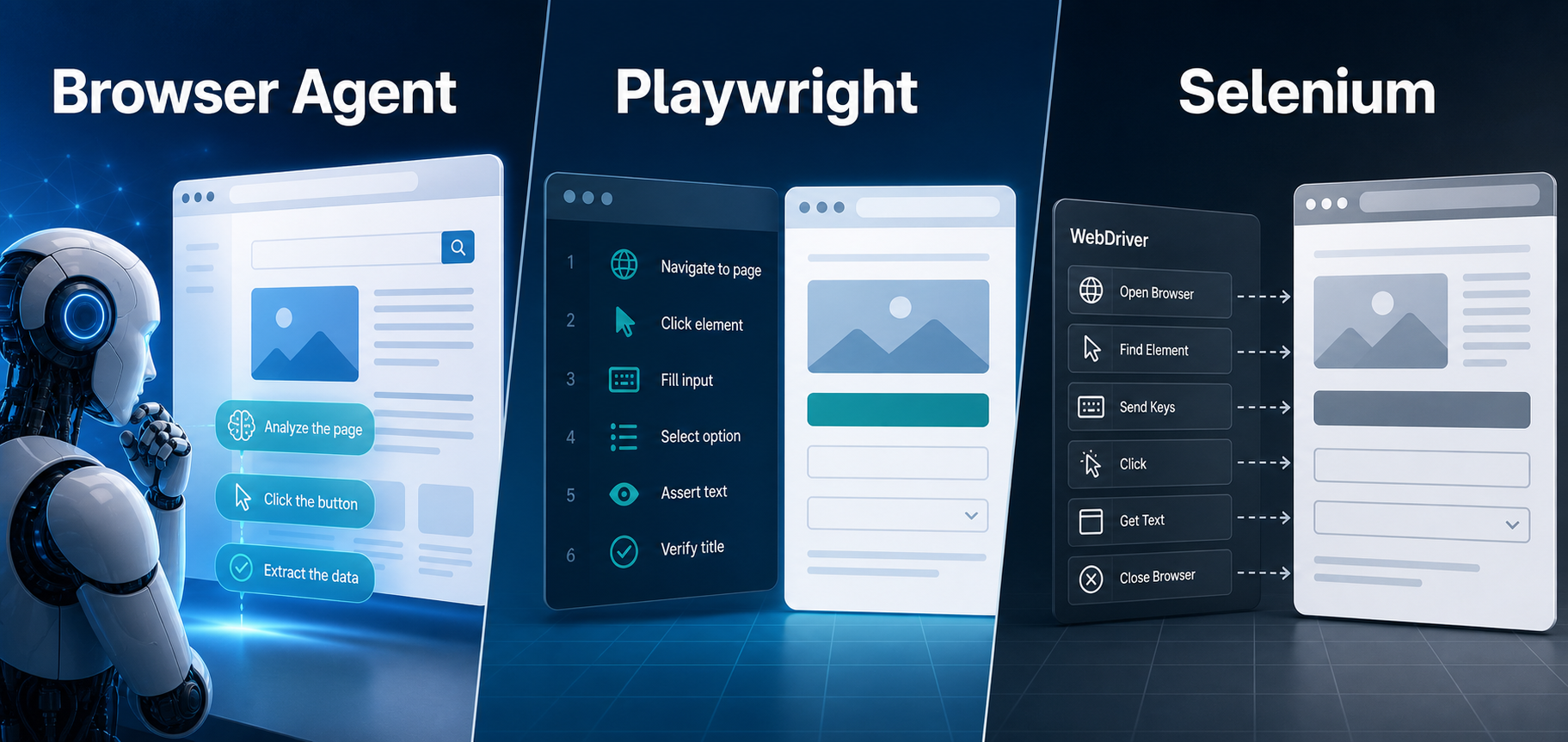
AI Browser Automation: Browser Agents vs Playwright vs Selenium
A browser agent interprets a goal and decides what browser action to take next. Playwright and Selenium can execute explicit, testable browser logic defined by developers. In 2026, however, Playwright also provides official MCP and agent-oriented workflows, so Playwright is no longer just the deterministic alternative to agentic automation. It can also serve as the browser-control layer inside an agent system.
View Details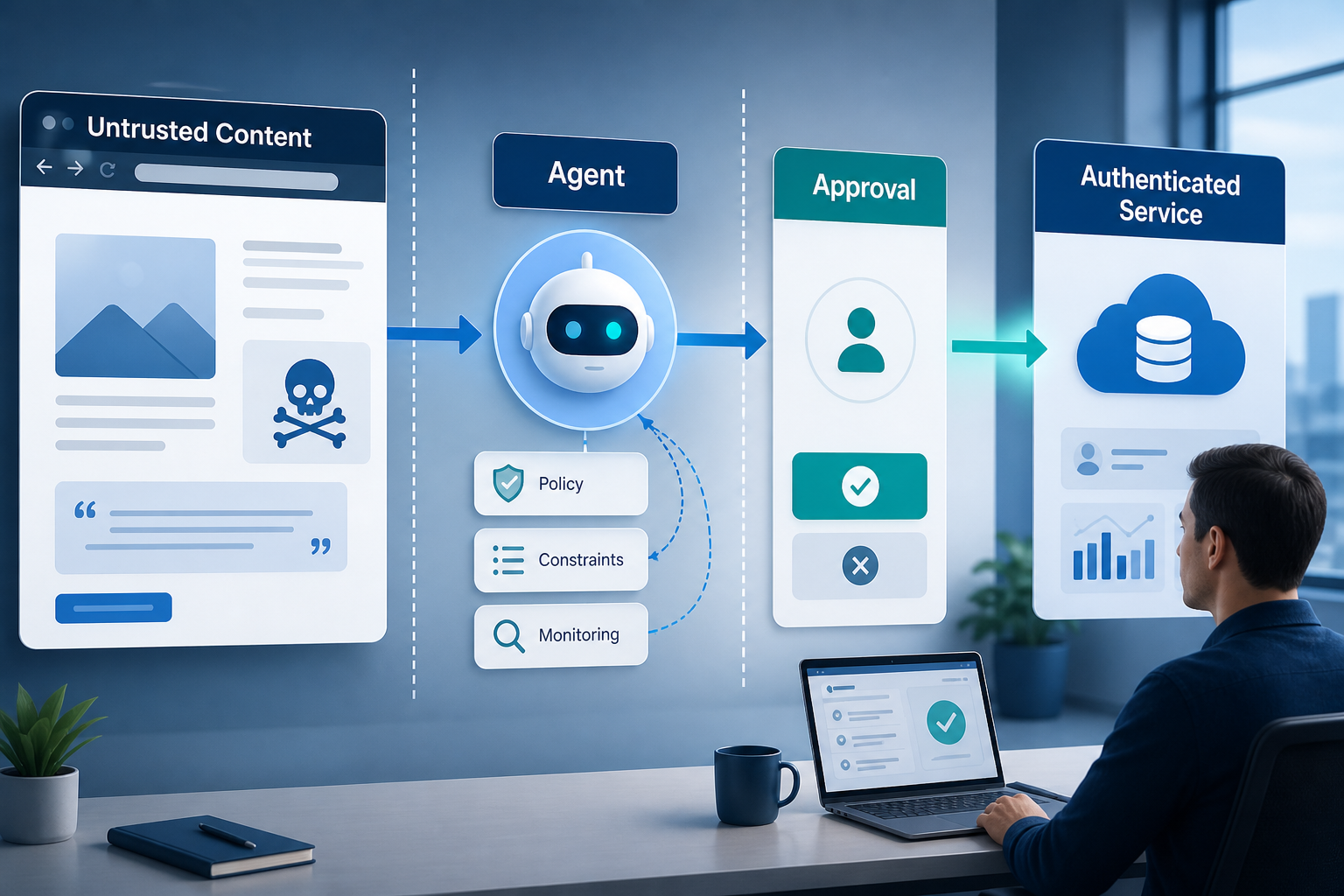
Agentic Browser Security: Prompt Injection, Permissions, and Safe Deployment
That combination creates risks that are different from ordinary browsing and traditional automation. The most important is indirect prompt injection, where hostile instructions hidden in web content attempt to redirect the agent away from the user's goal. Google describes indirect prompt injection as a primary new threat for agentic browsing and has introduced layered defenses that include origin constraints, independent action checks, threat detection, and user confirmation for sensitive actions. Google's Chrome security architecture is a useful reference for how browser-agent defenses are evolving.
View Details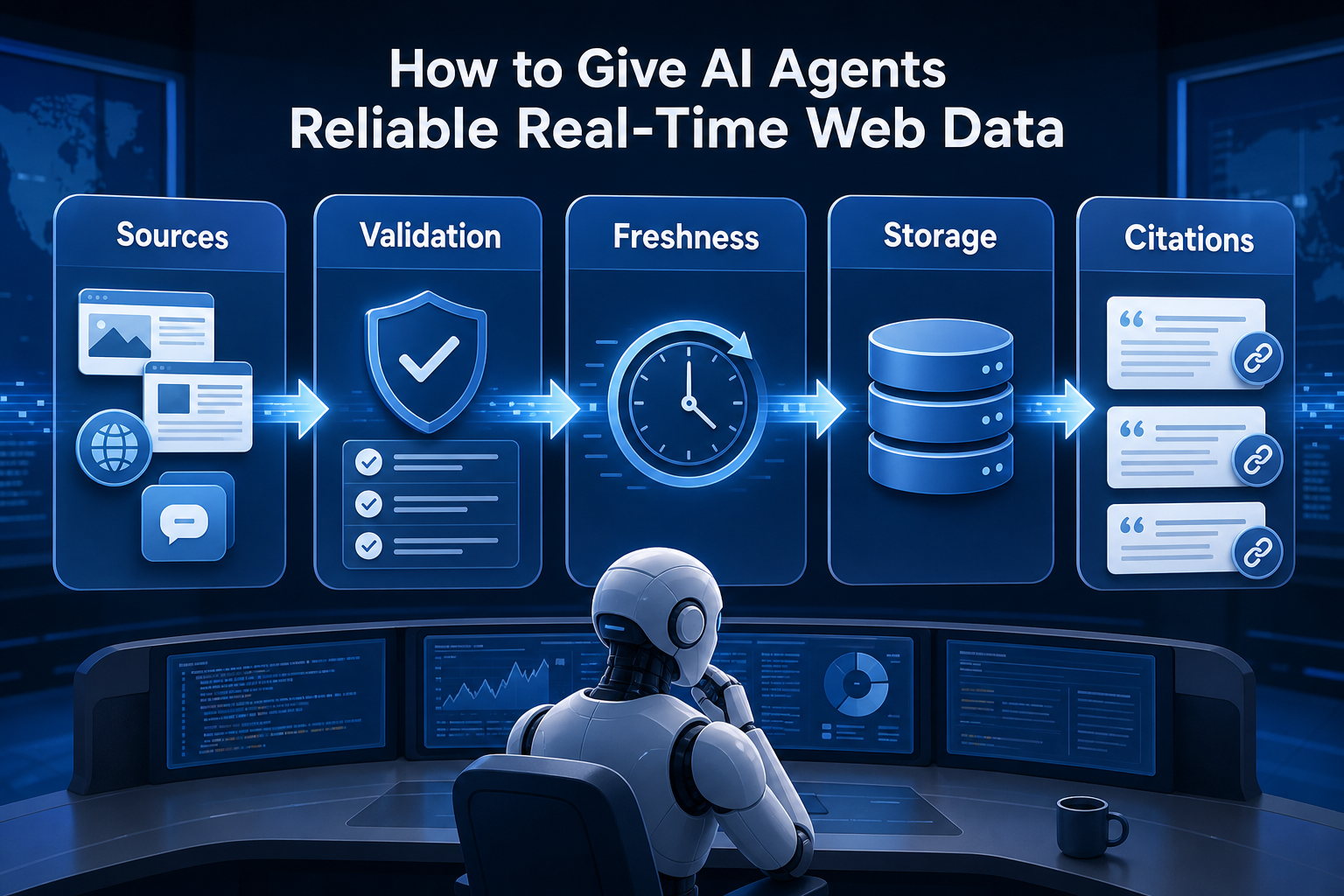
How to Give AI Agents Reliable Real-Time Web Data
A production-ready solution therefore needs more than a web scraper. It needs a web data layer that connects acquisition, validation, storage, retrieval, security, and observability. This guide explains how to design that layer.
View Details