
What Is a Syntax Error in Code? Python Meaning, Examples, and Fixes
What Is a Syntax Error in Code? Python Meaning, Examples, and Fixes
What is a syntax error in programming?
A syntax error is a critical mistake in the structure of your code that violates the grammar rules of the programming language, preventing the program from running entirely. Just as human languages have strict rules regarding punctuation and word order, programming languages require precise arrangement of keywords and symbols. If the computer cannot parse your code because of a structural flaw, it will not execute a single instruction; instead, it returns a syntax error.
What does “syntax” mean in the context of code and grammar?
Syntax refers to the set of rules that define the combinations of symbols that are considered to be a correctly structured document or fragment in that language. In the world of code, syntax dictates how you must arrange:
- Keywords: Reserved words like if, while, def, or return.
- Punctuation: Characters that structure logic, such as the colon, semicolon, parentheses, and braces.
- Operators: Symbols that perform actions, such as =, +, or ==.
If you write a sentence in English like "Cat the dog chased," you have a syntax error in grammar, the words are valid, but the order is unintelligible. Similarly, in programming, using a valid keyword in the wrong place confuses the compiler or interpreter.
When does a syntax error stop your code from running?
A syntax error stops your code during the parsing stage, which happens before execution (runtime). Whether you are using a compiled language like C++ or an interpreted language like Python, the software must first "read" your code to understand the instructions. If it encounters a violation of the rules, it cannot translate the source code into machine code or bytecode.
Consequently, the program crashes immediately. You will usually see a detailed error message indicating:
- The type of error (e.g., SyntaxError).
- The file name.
- The specific line number where the parser gave up.
Use LycheeIP to test rotating proxies
How is a syntax error different from a logical error or runtime error?
A syntax error prevents the program from starting, whereas a logical error allows the program to run but produces incorrect results. This distinction is vital for debugging because the method to resolve the error changes depending on when the error occurs.
What is a logical error with a simple example?
A logical error occurs when the syntax is perfect, but the logic inside the code is flawed. The computer understands exactly what you wrote, but what you wrote doesn't achieve your intended goal.
Consider a snippet where you want to calculate the average of two numbers, 10 and 20.
Python
# Logical Error Example
average = 10 + 20 / 2
print(average)
The output will be 20.0 (because division happens before addition), not 15.0. The code ran successfully without a SyntaxError exception, but the result is wrong. This is a logical error.
How do syntax, runtime, and logical errors compare in a table?
To help you identify syntax error vs logical error quickly, review this comparison:
| Feature | Syntax Error | Runtime Error | Logical Error |
| When it occurs | During parsing (before execution). | During execution (while running). | After execution (when checking results). |
| Cause | Incorrect code structure, typos, missing punctuation. | Illegal operations (e.g., dividing by zero). | Flawed algorithm or reasoning. |
| Program State | Fails to start. | Crashes midway. | Runs to completion but is wrong. |
| Example Message | SyntaxError: invalid syntax | ZeroDivisionError, TypeError | None (Output is just incorrect). |
[Link to: Proxy Types]
What is a SyntaxError in Python specifically?
In Python, a SyntaxError is a specific exception class that is raised when the Python parser encounters code that doesn't follow the Python language reference. Unlike other exceptions that occur while the script is doing work (like trying to open a file that doesn't exist), SyntaxError exceptions happen when Python is simply trying to read your script.
How does Python raise SyntaxError exceptions while parsing code?
When you run a script (e.g., python script.py), the interpreter scans the file to convert it into bytecode. If it finds a token it didn't expect, it halts the process and raises the exception.
Because this happens at the parsing layer, you generally cannot catch a SyntaxError using a try...except block within the same file. The error happens before the try block is even recognized.
Which common Python syntax mistakes trigger “SyntaxError: invalid syntax”?
The most frequent message developers see is simply SyntaxError: invalid syntax. This generic message often points to:
- Python 2 vs Python 3: Using print "Hello" (Python 2 style) instead of print("Hello") (Python 3 style).
- Variable Names: Starting a variable name with a number (e.g., 1variable = 5).
- Keywords: Using a reserved keyword as a variable name (e.g., class = "math").
- Incomplete Structures: An if statement without a body or a missing colon.
Use LycheeIP to test rotating proxies
How do you fix “SyntaxError: invalid syntax” in Python step by step?
To resolve the error, you need to adopt a methodical approach. Python's error reporting is helpful, but it requires interpretation.
What checklist helps you resolve the error quickly?
When you encounter a Python syntax error, follow this four-step checklist:
- Read the Line Number: Python tells you exactly where it got confused. Go to that line in your editor.
- Look Backward: This is the most important tip. Often, the error is actually on the previous line. For example, if you forgot to close a parenthesis on line 10, Python might only realize something is wrong when it reaches line 11.
- Check for Closure: Ensure every opening parenthesis (, bracket [, brace {, and quote ' has a matching closing partner.
- Verify Indentation: While usually raising an IndentationError, mixed tabs and spaces can sometimes confuse the parser into throwing a syntax error.
How can beginners use tracebacks and caret markers to find the bug?
Python tracebacks include a small caret symbol (^) pointing to the specific character where the parser detected the issue.
Python
File "example.py", line 1
if x = 5:
^
SyntaxError: invalid syntax
In this example, the caret points to the equals sign. This helps you realize you used the assignment operator (=) instead of the comparison operator (==) inside an if statement.
Which code patterns most often cause syntax errors in real projects?
Certain patterns trip up developers repeatedly, regardless of their experience level. Recognizing these patterns helps you debug faster.
How do missing parentheses, brackets, or quotes break code?
The most common culprit is an unclosed container. If you open a list with [ but forget the closing ], the parser continues reading the rest of your file as if it were part of that list, eventually crashing when it reaches the end of the file or finds a token that makes no sense inside a list.
Example of a missing parenthesis:
Python
print("Data collection started"
x = 5
Python will likely report the error on the line x = 5, even though the fix belongs on the line above.
How do misspelled keywords and bad indentation raise syntax errors?
Typos in keywords are frequent sources of frustration. Writing whiel instead of while or def instead of def will cause the parser to treat the word as a variable name, which typically leads to an invalid syntax error because the structure that follows doesn't fit a variable assignment.
Additionally, Python relies on indentation to define blocks of code. While modern IDEs help manage this, pasting code from the internet can often introduce mixed tabs and spaces, leading to IndentationError or SyntaxError.
Use LycheeIP to test rotating proxies
Which tools help you avoid syntax errors before running your code?
You should rely on modern tooling to catch these errors before you ever attempt to run the script. This is essentially "spell check" for code.
How do linters, formatters, and IDEs highlight syntax issues?
- Linters (e.g., Pylint, Flake8): These tools analyze your code statically. They can spot a syntax error instantly and underline it in red.
- Formatters (e.g., Black): These tools automatically reformat your code to meet style guidelines, often fixing indentation issues in the process.
- IDEs (e.g., VS Code, PyCharm): Integrated Development Environments have built-in syntax highlighting. If your code turns a weird color or gets a red squiggly line, do not run it—fix the syntax first.
How can CI pipelines catch syntax errors in data and scraping code?
For teams working on data infrastructure, catching errors early is critical. You can configure your Continuous Integration (CI) pipeline to run a syntax check (e.g., python -m compileall .) every time code is pushed. This ensures that a file containing a syntax error never makes it to production, protecting your data collection jobs from failing silently.
What does “syntax error” mean in grammar, spreadsheets, and queries?
The concept of a syntax error extends beyond standard programming languages like Python or Java. It applies anywhere strict rules govern communication.
How do syntax errors show up in Apple Numbers or Excel formulas?
If you are working in a spreadsheet and type =SUM(A1:A10, you will likely get a popup warning you about a typo. This is a syntax error. The formula engine requires a closing parenthesis to understand the instruction. Similarly, using a comma where a semicolon is required (depending on your region settings) will trigger a general formula error.
Why do SQL and configuration files also have syntax rules?
SQL queries are notorious for syntax strictness. A missing comma between column names or a missing quote around a string literal will cause the database engine to reject the query entirely. Configuration files like JSON or YAML also have strict syntax; a single missing brace in a JSON file can render an entire configuration invalid, causing applications to fail at startup.
Why do syntax errors matter so much for data engineers and web scraping teams?
In the world of data infrastructure, reliability is everything. A syntax error isn't just a nuisance; it's a blocker that prevents automated systems from initializing.
How can teams reduce syntax errors in shared repositories?
When multiple engineers work on the same scraping logic or proxy management scripts, "it works on my machine" isn't good enough.
- Pre-commit hooks: Install scripts that prevent a commit if the syntax is invalid.
- Standardized Environments: Ensure everyone uses the same linter settings.
Which habits keep production jobs from breaking on a single typo?
At LycheeIP, we understand that developer uptime is as important as proxy uptime. When you are managing complex scraping tasks using our API or residential proxies, you want to focus on data strategy, not debugging basic typos.
- Modular Code: Break large scripts into smaller modules. It is easier to spot a syntax error in a 50-line file than a 5000-line file.
- Test-Driven Development: Write tests that import your code. If the import fails due to a SyntaxError, the test suite fails immediately.
Using robust infrastructure like LycheeIP ensures your network connection is stable, but maintaining clean code ensures your logic utilizes that connection effectively.
Use LycheeIP to test rotating proxies
What should you do next when you see a syntax error?
When you encounter a syntax error, do not panic. It is simply the computer's way of saying it doesn't understand your grammar.
- Read the error message.
- Locate the line (and check the line above).
- Look for missing parentheses, quotes, or colons.
- Use a linter to prevent it from happening again.
By understanding what is a syntax error and how to read the traceback, you can fix issues in seconds rather than hours.
Comparison Table: Syntax vs. Logical vs. Runtime Errors
| Characteristic | Syntax Error | Runtime Error | Logical Error |
| Detection Time | Pre-compilation / Parsing | During Execution | Post-Execution (User Review) |
| Root Cause | Violation of language grammar | Valid syntax, illegal operation | Flawed logic/algorithm |
| Example | if x = 10: (missing ==) | x = 10 / 0 (division by zero) | area = length + width (wrong formula) |
| Resolution | Fix code structure | Add error handling (try/except) | Correction of algorithm |
Use LycheeIP to test rotating proxies
Frequently Asked Questions:
Q1: What is a syntax error in computer science?
A syntax error is a mistake in the source code where the character sequence violates the rules of the programming language. Because the structure is invalid, the compiler or interpreter cannot translate the code, and the program cannot run.
Q2: How do I fix "SyntaxError: unexpected EOF while parsing"?
This error (EOF stands for End Of File) usually means you opened a parenthesis (, bracket [, or block of code but never closed it. The parser reached the end of the file while still waiting for the closing symbol. Check the very end of your code blocks and ensure all containers are closed.
Q3: Can a syntax error cause a security vulnerability?
Generally, no, because a syntax error prevents the code from running at all. However, in interpreted languages like SQL, improper syntax handling in dynamic queries can lead to SQL Injection, which is a security flaw. But strictly speaking, a standard code syntax error just breaks the application.
Q4: Why does Python raise a SyntaxError for valid math?
You might be using a variable name that is illegal, or you might have a hidden character. For example, copying code from a formatted blog post might include "smart quotes" (curly quotes) instead of standard straight quotes. Python does not recognize smart quotes, resulting in SyntaxError: invalid syntax.
Q5: What is the difference between SyntaxError and IndentationError in Python?
Technically, IndentationError is a subclass of SyntaxError. Python treats bad indentation as a grammatical violation. If you mix tabs and spaces or fail to indent a block following a colon, Python raises an IndentationError, but the root cause is the same: the structure of the code does not meet the language rules.
Q6: Does LycheeIP help with syntax errors?
LycheeIP provides the robust proxy infrastructure you need to run your code, but we don't write the code for you. However, our documentation and developer-friendly dashboard are designed to be as clear as possible to help you integrate our API without confusion, minimizing the chance of configuration-related syntax errors in your requests.

Recommended Articles
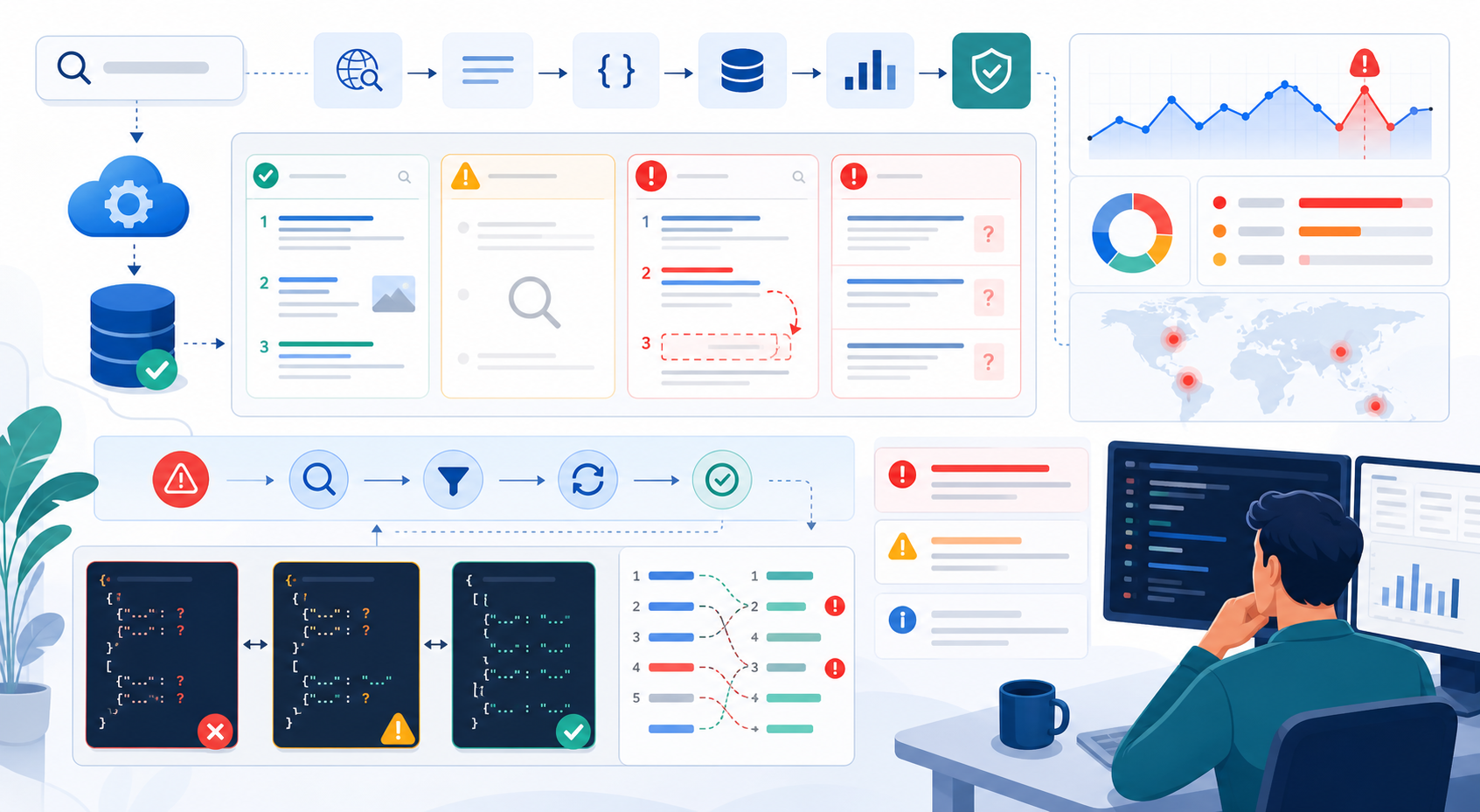
SERP API Troubleshooting: Fix Empty, Wrong, or Inconsistent Search Results
SERP API failures are not limited to obvious HTTP errors. A request can return successfully and still produce empty, incomplete, geographically wrong, duplicated, or misinterpreted search data. Production troubleshooting therefore has to separate transport problems from provider processing, SERP differences, and downstream parsing errors.
View Details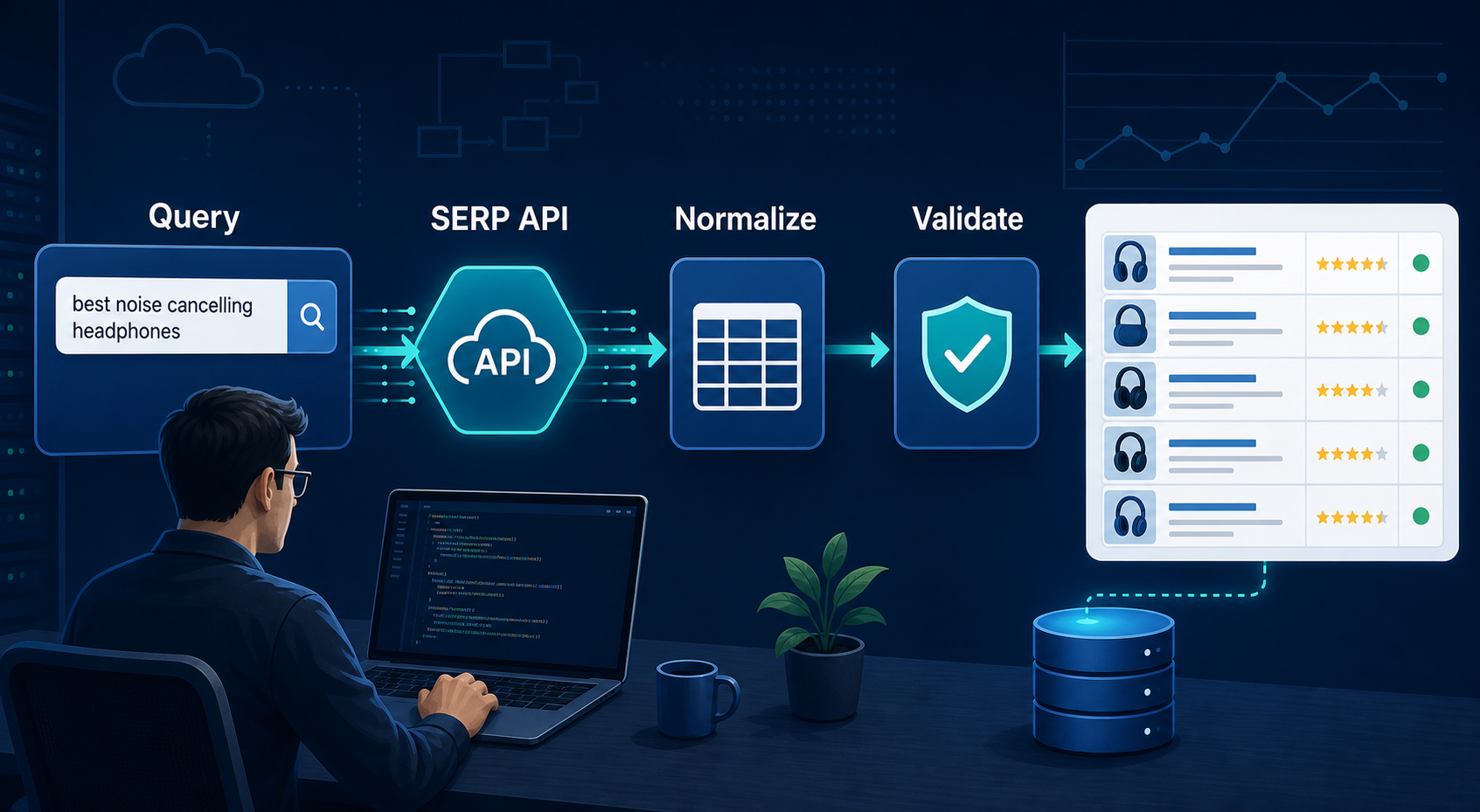
SERP API Python: How to Build a Reliable Search Data Pipeline
This guide shows a provider-neutral workflow for building that pipeline. It does not rank SERP API vendors. Instead, it focuses on the implementation choices that make a Python integration easier to operate, test, and migrate.
View Details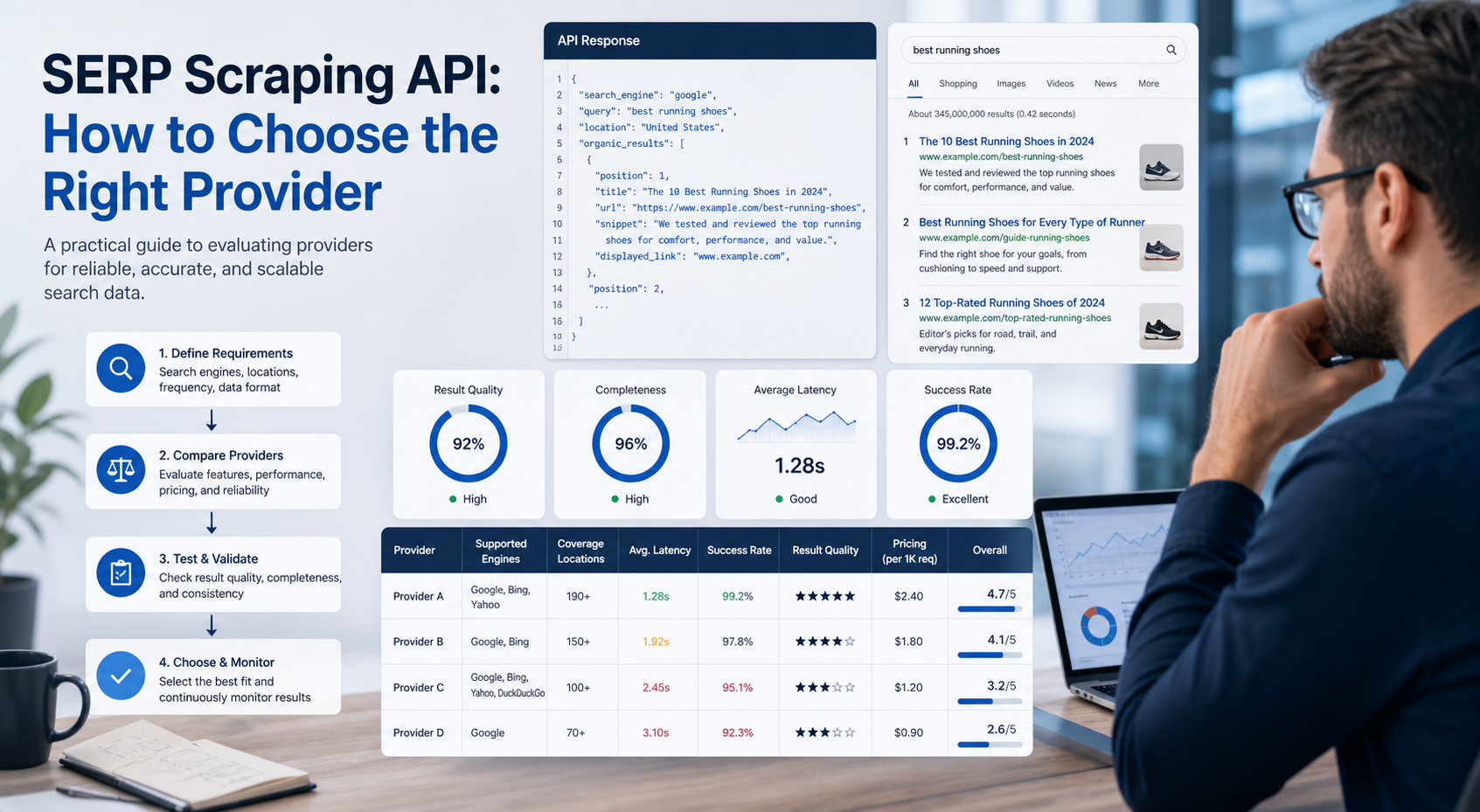
SERP Scraping API: How to Choose the Right Provider
Recommended Meta Description: Compare SERP scraping APIs by data coverage, localization, reliability, workflow fit, and cost structure, then choose and validate the right provider.
View Details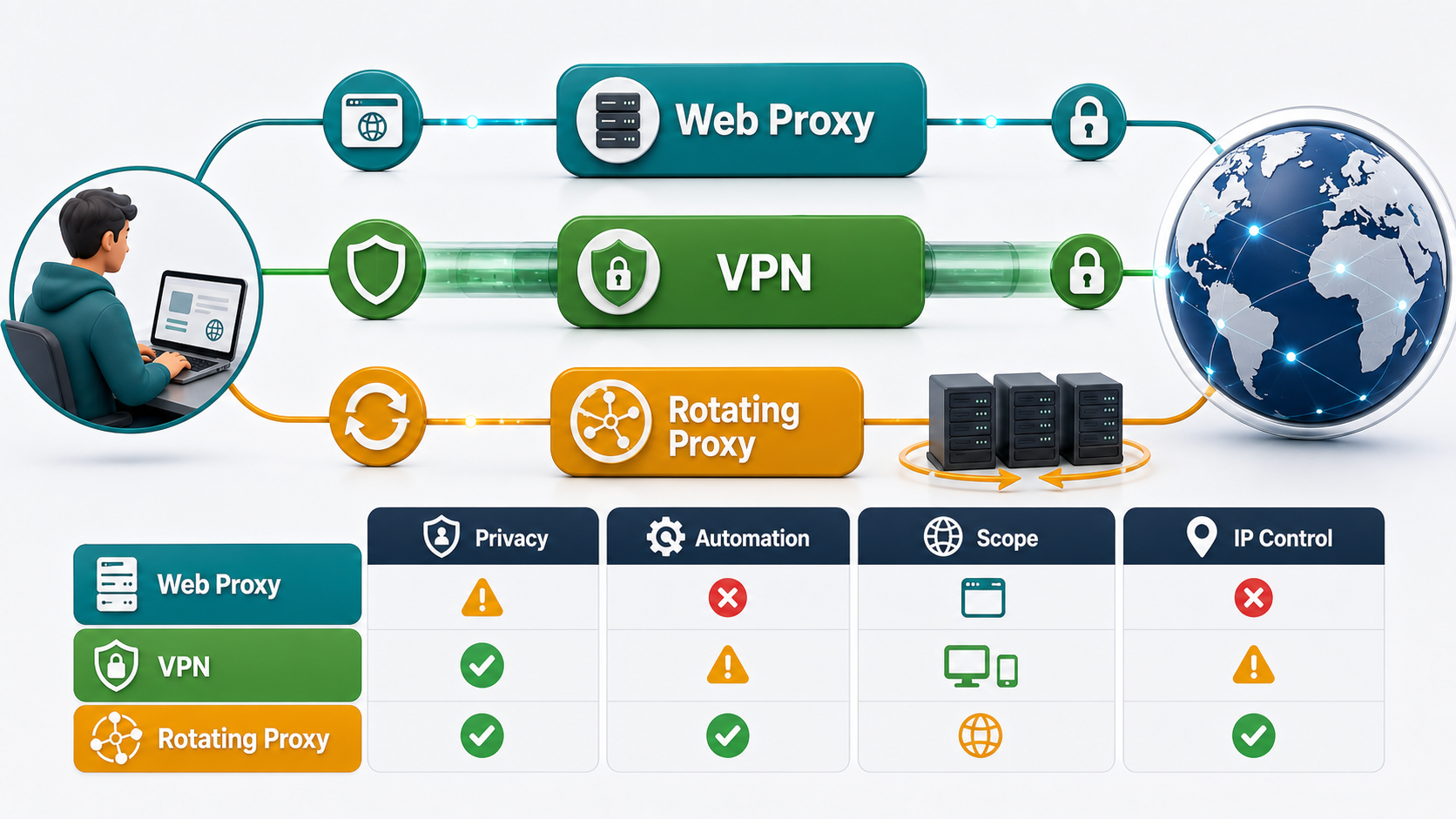
Free Web Proxy vs VPN vs Rotating Proxy: Which Should You Use?
Compare free web proxies, VPNs, rotating proxies, static proxies, and datacenter proxies by scope, encryption, IP control, automation, streaming, and account workflows.
View Details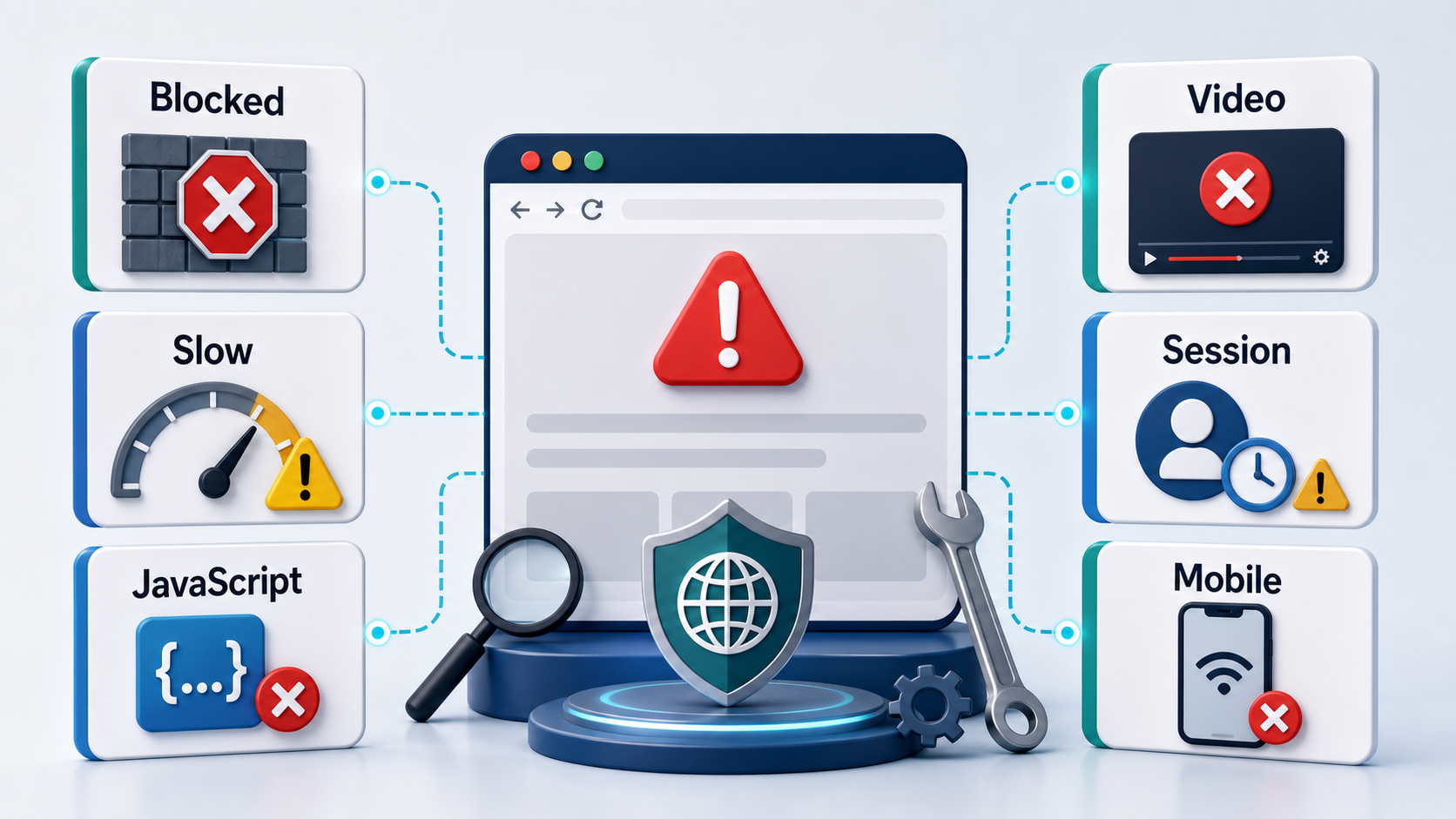
BlockAway Not Working? Fix Common Proxy, Video, and Access Problems
Troubleshoot BlockAway when pages are blocked, YouTube fails, JavaScript breaks, speed drops, sessions expire, or mobile access behaves differently.
View Details