
Tor Browser vs Feds: The Azure Censorship Battle & Your Privacy
Tor Browser vs Feds: The Azure Censorship Battle & Your Privacy
The landscape of internet privacy is often a game of cat and mouse. On one side, users seek anonymity; on the other, government agencies ("the Feds") and corporations seek visibility. Nothing illustrates this tension better than the conflict involving the Tor Browser, Microsoft Azure, and international censorship.
For developers and privacy advocates, understanding this history is vital. It explains why connections break, why online activities are flagged, and why relying on the wrong infrastructure for data projects can be disastrous.
Use LycheeIP to access residential IPs
What is Tor Browser and why does it worry government agencies?
Tor Browser is a specialized web browser designed to protect user anonymity by routing traffic through a distributed network of relays. It prevents anyone watching your network connection from knowing what websites you visit, and it prevents the sites you visit from knowing your physical location.
How does the Tor web browser differ from standard Firefox?
The Tor web browser is essentially a modified version of Firefox ESR (Extended Support Release). If you look at the codebase or search for tor browser firefox, you will see they share the same DNA. However, the Tor Project has stripped out telemetry, patched privacy leaks, and integrated the Tor proxy directly into the application.
While standard browsers prioritize speed and personalized features, Tor prioritizes anonymity. It blocks scripts by default in higher security settings and isolates each website you visit so third-party trackers and ads can’t follow you.
What is the Tor Browser history regarding law enforcement?
Tor Browser history is intertwined with US government funding and simultaneous government opposition. Originally developed with help from the US Naval Research Laboratory to protect government communications, it became an open-source project used by activists, journalists, and criminals alike.
This dual nature worries agencies like the FBI and NSA. While they use Tor relays for their own covert operations, they also view the network as a "black box" for criminal activity. This has led to high-profile clashes, often summarized as "Tor Browser vs Feds", where law enforcement utilizes malware or network vulnerabilities to de-anonymize users.
How did Tor Browser end up relying on Microsoft Azure to beat censorship?
To understand the Azure conflict, you must understand how Tor bypasses blocking. When a country blocks the public list of Tor nodes, the Tor Project browser uses "bridges"—secret entry nodes.
One of the most clever bridge techniques was "domain fronting," specifically a setup called meek-azure.
Domain fronting hides the true destination of a connection inside a secure HTTPS connection to a different, innocent-looking site. To a censor’s firewall, the traffic looks like it is going to ajax.aspnetcdn.com (a Microsoft domain). Inside the encrypted tunnel, the request is actually routed to the Tor network.
This allowed online tor browser traffic to blend in with millions of business users accessing Microsoft services.
How did Tor relays and bridges hide inside cloud traffic?
By routing traffic through the Azure cloud, Tor made censorship expensive. A government couldn't simply block the Tor browser internet connection without also blocking essential Microsoft services used by their own banks, hospitals, and businesses. This "collateral damage" threat kept Tor accessible in highly restrictive environments for years.
Use LycheeIP to access residential IPs
What happened when censorship moves hit Azure and Tor users?
The stalemate broke when the risks to the cloud providers outweighed the benefits of supporting privacy.
How did blocking Tor traffic impact innocent Azure apps?
In late 2023 and early 2024, the conflict intensified. Censorship bodies in Russia and elsewhere began aggressively blocking IP ranges associated with meek-azure. Because these IPs were shared with legitimate Azure customers, innocent businesses experienced downtime.
Simultaneously, Microsoft updated its policies. Effective January 2024, Azure Front Door and CDN services began blocking domain fronting attempts actively. Microsoft framed this as a move for online security and compliance, stating that domain fronting was a violation of their terms.
The "Tor Browser vs Feds" narrative has shifted from breaking encryption to attacking infrastructure. By pressuring cloud providers like Azure to police their networks, governments can effectively cut off the "bridges" that Tor browser users rely on.
For users, this means the online tor browser connectivity is less stable in censored regions, forcing a migration to newer protocols like Snowflake.
How does Tor Browser actually work across Windows, Mac, and Mobile?
Despite the Azure drama, the core mechanics of Tor remain consistent across platforms.
How does onion routing protect your online activities?
Tor is often called the tor onion browser because of its layers of encryption.
- Entry Node: The browser connects to a guard relay. This node knows your IP but not your destination.
- Middle Node: Traffic is passed to a second relay. It knows the previous node and the next node, but nothing else.
- Exit Node: The final relay decrypts the request and sends it to the open internet.
This triple-hop process ensures that no single point in the network knows both who you are and what you are reading.
How should you handle Tor Browser download and installation safely?
Security starts with the download tor browser process. Fake versions loaded with malware are common on third-party sites.
- Tor Browser for Windows / Tor Browser Mac: Only download from the official Tor Project website (torproject.org). Verify the GPG signature if you require high security.
- Tor Browser Android: Use the official app from the Google Play Store or the APK from the official site.
- Tor Browser for iPhone: There is no official Tor Browser for iPhone due to Apple's WebKit restrictions. The Tor Project recommends Onion Browser (open source) as the trusted alternative.
- Tor Browser TestFlight: Occasionally, beta versions appear on TestFlight. Be cautious and verify the developer is legitimate before installing.
Note: Avoid searching for "online tor browser" hoping to use Tor inside a Chrome tab without installing anything. These are almost always phishing traps.
Which risks should developer teams consider before using Tor?
At LycheeIP, we often speak with data teams trying to cut costs by using Tor for scraping or market research. This is usually a mistake.
How do banks and security teams detect Tor Browser internet traffic?
Tor exit nodes are public knowledge. Financial institutions, Tor Browser Bitcoin exchanges, and streaming services automatically flag requests from these IPs as high-risk.
- Fraud Flags: A login from a Tor IP often triggers immediate account locking.
- Velocity Limits: Tor relays are slow and congested.
- CAPTCHAs: You will spend more time solving puzzles than collecting data.
When is Tor Browser the wrong tool for data collection?
If you are a developer looking to scrape e-commerce pricing or monitor SERPs, Tor web browser routing is inefficient. The IPs are "dirty", highly abused and heavily blocked.
LycheeIP provides a cleaner alternative: ethically sourced residential proxies. Unlike Tor, which routes you through flagged exit nodes, residential proxies route traffic through genuine consumer IPs that do not trigger anti-bot systems. For professional data infrastructure, reliability beats anonymity.
Use LycheeIP to access residential IPs
How does Tor Browser compare with VPNs and alternatives?
The tor vs vpn debate is common, but they serve different purposes.
Tor vs VPN: Which tool offers better online security?
| Feature | Tor Browser | Virtual Private Network (VPN) |
| Primary Goal | Anonymity (hiding identity) | Privacy (hiding data from ISP) |
| Speed | Slow (multi-hop routing) | Fast (single-hop) |
| Cost | Free (volunteer network) | Paid (commercial service) |
| Trust | Trustless (mathematical safety) | Trust-based (provider sees traffic) |
| Best For | Whistleblowing, activism | Geo-unlocking, general security |
Many users combine them (tor browser vpn setups), connecting to a VPN first and then Tor. This hides Tor usage from the ISP but does not necessarily fix the speed issues.
What about Tor Browser alternative options and strict firewalls?
If you are searching for a tor browser alternative because Tor is blocked, consider:
- I2P: A separate anonymous network, purely for hidden services (not the open web).
- Brave: Offers a "Private Window with Tor" for light usage.
- LycheeIP: For business automation where you need to change locations without the baggage of the Tor network.
How can you use Tor Browser more safely for privacy?
Using Tor onion browser technology requires discipline. Technology alone cannot save you from bad habits.
What are the rules for accessing the Tor Browser dark web?
When users search for "tor browser dark web" or "tor browser wiki hiddeb links," they are looking for .onion sites. These are sites hosted inside the Tor network.
- Don't Torrent: File sharing over Tor slows the network for everyone and leaks your IP.
- Disable Scripts: Use the "Safest" security level.
- Verify Links: Dark web directories are often scams. Only use URLs from trusted sources.
How should you handle Tor Browser email, Bitcoin, and identity?
If you log into Tor Browser Twitter or your personal Gmail, you have de-anonymized yourself. The site now knows that you are using Tor at that specific time.
- Person Search: Do not perform a tor browser person seach on yourself; it creates a correlation record.
- Bitcoin: Tor Browser Bitcoin transactions are not anonymous if the wallet is linked to your ID.
- Email: Use disposable, privacy-centric email providers specifically for Tor sessions.
Why does the Azure fight show where Tor is heading next?
The shutdown of meek-azure proves that relying on the "goodwill" of Big Tech is not a sustainable strategy for privacy networks. The future involves ephemeral bridges (like Snowflake) that are harder for the Feds or Azure to classify.
For the average user, Tor Browser remains a critical tool for circumventing censorship. However, for businesses and data teams, the message is clear: the Tor network is a battleground. It is unpredictable, slow, and hostile to commercial activity.
Use LycheeIP to test rotating residential proxies for a stable, compliant, and high-performance alternative to Tor-based scraping.
Comparison Table: Tor Browser vs. VPN vs. Proxy (LycheeIP)
| Feature | Tor Browser | VPN | LycheeIP (Proxies) |
| Anonymity Level | Extreme (Triple Encryption) | Moderate (Single Encryption) | High (Residential IPs) |
| Speed | Very Slow | Fast | Fast |
| Block Rate | Very High (Exit nodes are public) | Low to Medium | Very Low (Clean IP pools) |
| Use Case | Activism, Dark Web, Evasion | Streaming, Public WiFi Security | Web Scraping, Market Research |
| Ease of Automation | Difficult (Anti-bot triggers) | Medium | Easy (API compatible) |
Use LycheeIP to access residential IPs
Frequently Asked Questions:
1. Is it illegal to download Tor Browser?
In most countries, including the US and UK, it is perfectly legal to perform a tor browser download and use the software. However, using it for illegal activities remains illegal. In regime-controlled regions, the software itself may be banned, so always check local laws.
2. Can I use Tor Browser for iPhone?
There is no official app named "Tor Browser" for iOS. The Tor Project recommends downloading Onion Browser from the App Store. Be wary of apps labeled "tor browser bundle for iphone" that charge fees; Tor is free software.
3. Does Tor Browser include a VPN?
No. Tor operates differently from a virtual private network. It routes traffic through volunteer computers. While some users run a tor browser vpn configuration (connecting to a VPN before opening Tor), the browser itself does not include a built-in VPN provider.
4. What is the Tor Browser dark web?
The "dark web" refers to .onion websites that are not indexed by standard search engines. While often associated with illicit markets, it also hosts whistleblowing platforms (SecureDrop) and uncensored news mirrors. Avoid clicking random tor browser wiki hiddeb links as they can be dangerous.
5. Why is my internet so slow on Tor?
When you use the tor web browser, your data bounces through three different servers around the world (relays). This detour, combined with heavy encryption at each step, inevitably slows down your online activities compared to a direct connection.
6. Can I use Tor for web scraping?
It is not recommended. Tor relays are often blacklisted by major websites (like Amazon, Google, or Cloudflare). For data extraction, using a dedicated infrastructure provider like LycheeIP ensures better success rates and faster speeds than the tor project browser.

Recommended Articles

Best Real Estate Scrapers in 2026
Best Real Estate Scrapers in 2026
View Details
How to Choose a Web Crawler: A Technical Decision Framework
The wrong way to choose a web crawler is to begin with a list of products. The right starting point is the system you need to build. Before comparing tools, define:
View Details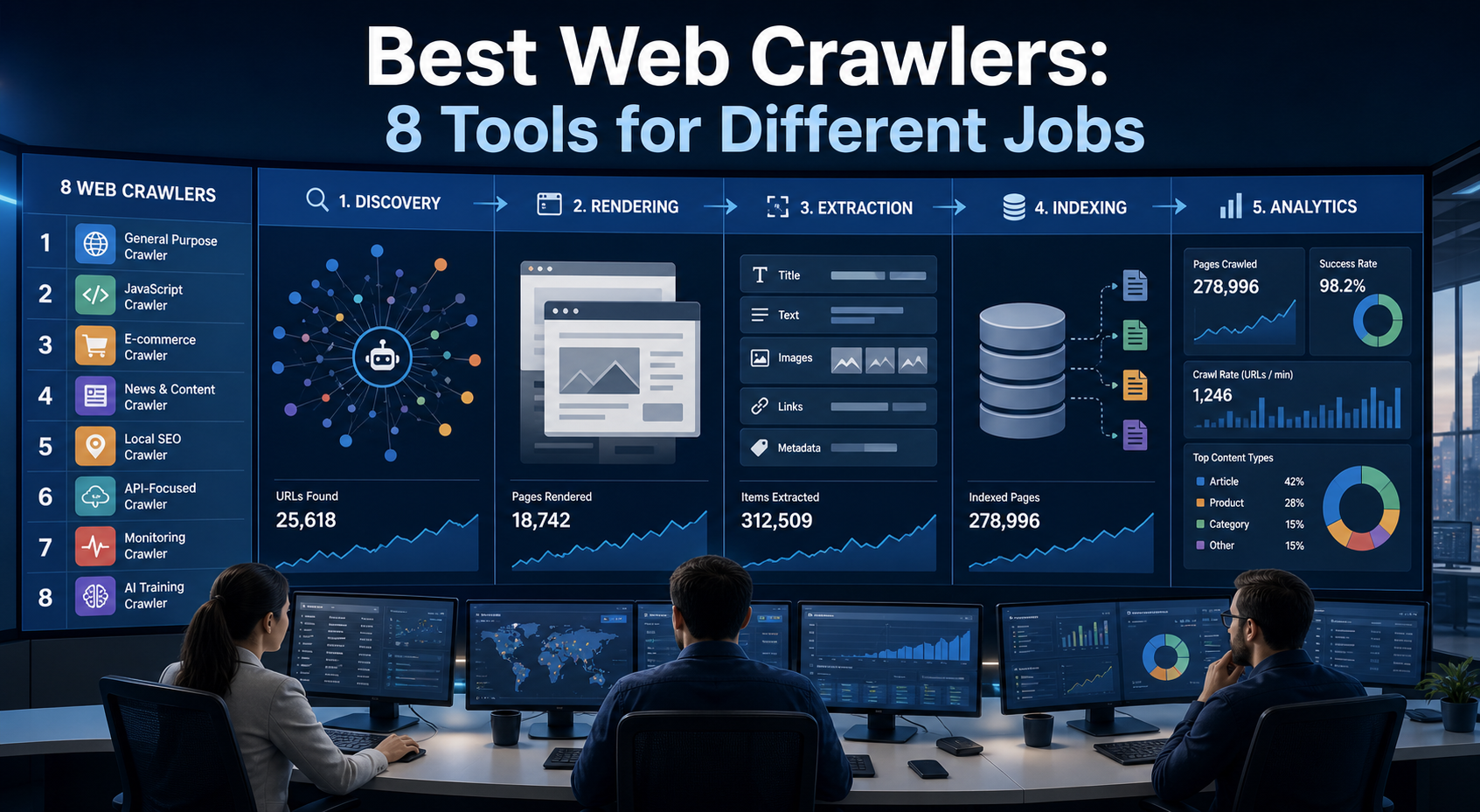
Best Web Crawlers: 8 Tools for Different Jobs
There is no single best web crawler for every project. A technical SEO audit, an AI knowledge pipeline, an internet archive, and a distributed search index may all involve crawling URLs, but they require different capabilities. The most useful way to compare web crawler tools is therefore to ask what job each one was designed to perform. This guide evaluates eight strong options across:
View Details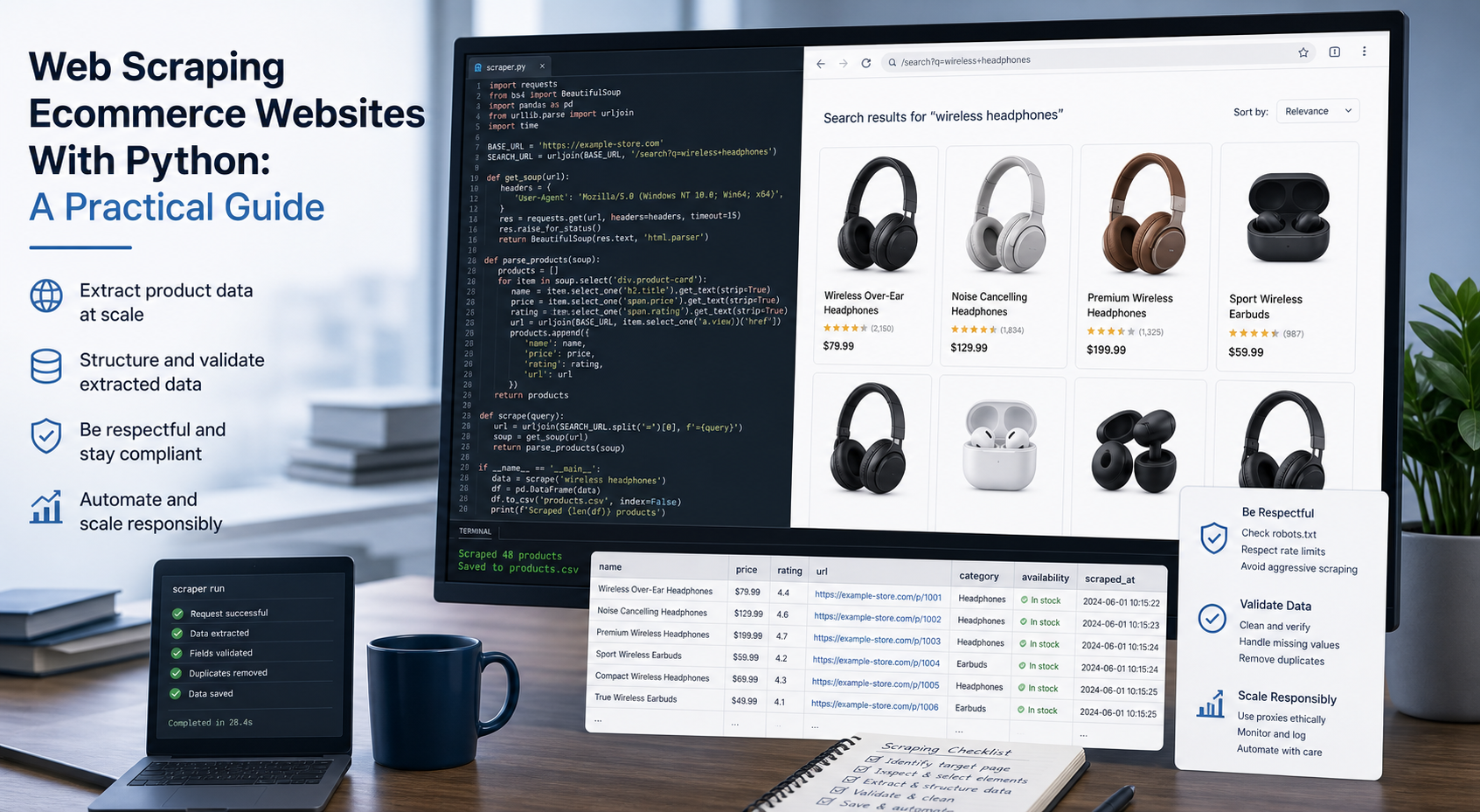
Web Scraping Ecommerce Websites With Python: A Practical Guide
Recommended meta title: Web Scraping Ecommerce Websites With Python: Guide Recommended meta description: Learn how to scrape ecommerce websites with Python using Requests, Beautiful Soup, Playwright, and Scrapy, with validation and scaling guidance. URL slug: /web-scraping-ecommerce-websites-python/
View Details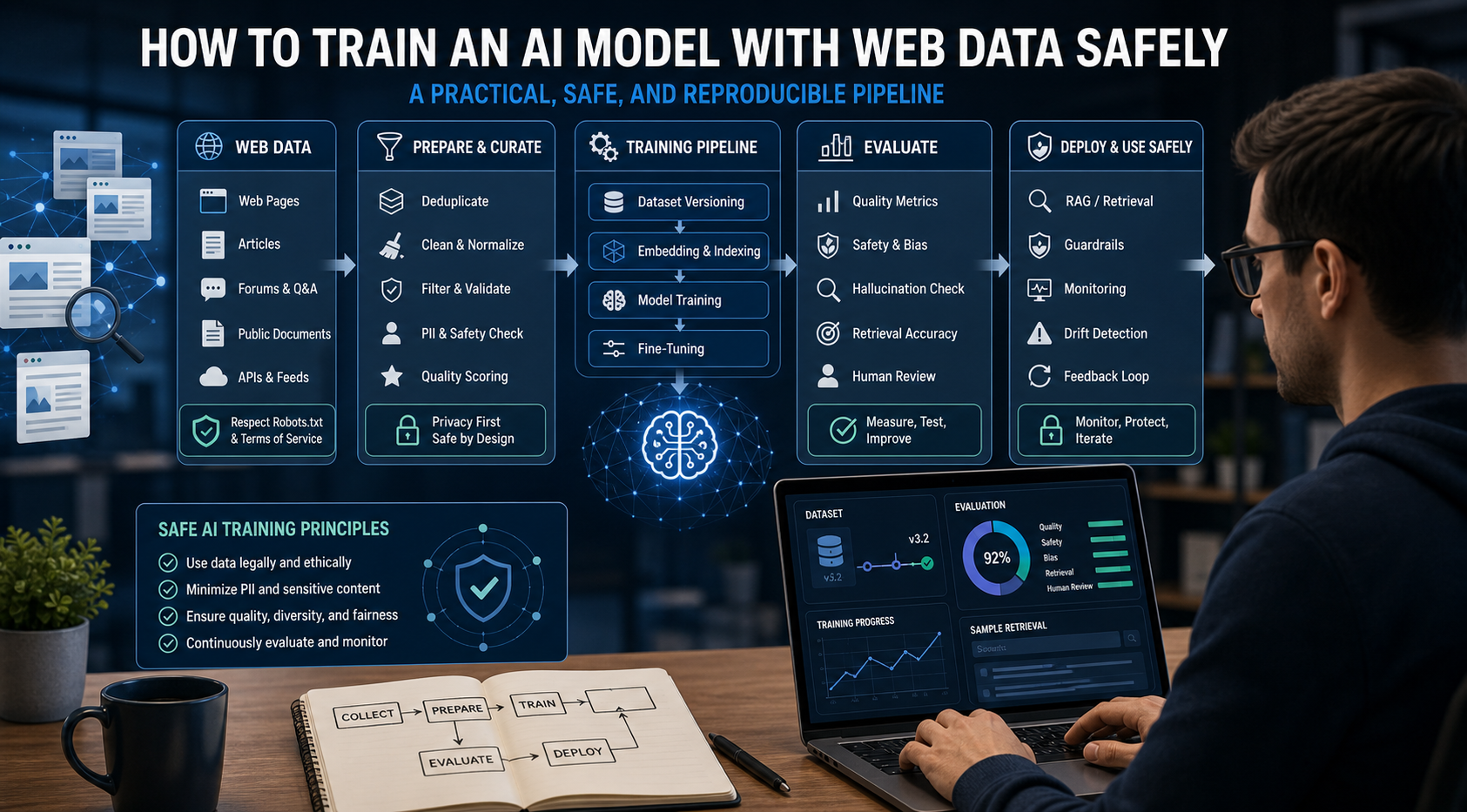
How to Train an AI Model With Web Data Safely
To train an AI model with web data, start by deciding whether you actually need training. Then collect representative sources, preserve provenance, remove duplicates and low-quality content, create leakage-resistant splits, build a baseline, fine-tune or train the appropriate model, and evaluate on real held-out examples before deployment.
View Details