
Selenium WebDriver in Python: The Production Stability Guide
Selenium WebDriver in Python: The Production Stability Guide
Selenium is the industry-standard library for browser automation, allowing developers to drive a real web browser through code. While the word "selenium" also refers to a chemical element and a mineral found in selenium rich foods like Brazil nuts, this guide focuses strictly on Selenium software, the tool used by engineers for testing and data workflows.
If you are looking to automate a login flow, test a UI, or scrape a JavaScript-heavy website, you are in the right place.
Explore LycheeIP Proxies
What Is Selenium (and What Is It Not)?
Selenium is an umbrella project for a range of tools and libraries that enable web browser automation. It is not a standalone application you simply "install and run" like Excel; it is a library you import into your code.
It is important to distinguish between the three main components:
- Selenium WebDriver: The library used to write code (in Python, Java, etc.) that controls the browser. This is what 90% of developers need.
- Selenium IDE: A browser extension for record-and-playback. Useful for quick bug reproduction but brittle for production.
- Selenium Grid: A tool for running tests across multiple machines and browsers in parallel.
Note: Selenium is not a lightweight HTTP client. If your goal is to download raw HTML instantly without rendering JavaScript, standard requests libraries are faster. Selenium is for when you need a real browser engine.
How Does Selenium WebDriver Actually Work?
At a high level, Selenium WebDriver translates your Python code into commands that a specific browser understands.
- The Client: Your Python script sends a command (e.g., driver.get("url")).
- The Driver: A binary executable (like selenium chromedriver) receives this command via HTTP.
- The Browser: The driver uses the browser's native support for automation to execute the action.
- The Response: The browser sends the execution status back to your script.
This architecture allows Selenium to interact with elements exactly like a human user would—clicking, typing, and scrolling—which is essential for modern dynamic websites.
Quick Start: Installing Selenium for Python 3.9+
To get started, you need Python installed and the Selenium package. Modern Selenium (version 4.6+) largely handles browser driver management for you, simplifying the setup significantly.
1. Install the package
Bash
pip install selenium
2. Create scraper.py
Use this minimal, clean template to validate your environment.
Python
from selenium import webdriver
from selenium.webdriver.common.by import By
from selenium.webdriver.support.ui import WebDriverWait
from selenium.webdriver.support import expected_conditions as EC
def main():
# Set options for a clean session
options = webdriver.ChromeOptions()
# options.add_argument("--headless=new") # Uncomment for headless mode later
driver = webdriver.Chrome(options=options)
try:
driver.get("https://example.com")
# Explicit wait (Best Practice)
wait = WebDriverWait(driver, 10)
heading = wait.until(EC.visibility_of_element_located((By.TAG_NAME, "h1")))
print(f"Success! Found header: {heading.text}")
except Exception as e:
print(f"Error: {e}")
finally:
driver.quit()
if __name__ == "__main__":
main()
If this script opens Chrome, prints the header text, and closes, your selenium python environment is ready.
Explore LycheeIP Proxies
The STABLE-8 Framework for Flakiness Prevention
The biggest complaint about UI automation is "flakiness"; tests that fail intermittently without code changes. To solve this, apply the STABLE-8 framework to every script you write.
- Scope the Journey: Do not automate everything. distinct small flows are easier to debug than one massive script.
- Target Attributes: Never use auto-generated XPaths. Rely on IDs or data-attributes (see the Scorecard below).
- Always Wait Explicitly: Never use time.sleep(). Wait for a condition (e.g., button is clickable).
- Block the Noise: Disable analytics, images, or pop-ups that might intercept clicks.
- Localize Search: Find a parent container first, then find the specific button inside it to avoid ambiguity.
- Eliminate State: ensure a clean session (cookies/cache) for every run to avoid data pollution.
- Instrument Failure: If a script fails, automatically save a screenshot and the page source.
- Lock Environment: Pin your browser version and library version in your requirements file.
Choosing the right way to find an element is the difference between a script that runs for months and one that breaks tomorrow. Use this scorecard to make decisions.
| Selector Type | Stability | Verdict |
| ID (id="submit-btn") | High | Best Choice. usually unique and stable. |
| Data Attributes (data-testid="submit") | High | Excellent. specifically added for testing/automation. |
| CSS Class (class="btn btn-primary") | Medium | Risky. Classes change for styling reasons often. |
| Link Text ("Click here") | Low | Poor. Copy changes frequently. |
| XPath (Absolute) (/div/div[2]/span) | Zero | Avoid. Breaks if a single layout element moves. |
Waiting Strategy: The End of time.sleep()
In a Selenium testing tool context, timing is everything. A webpage loads elements asynchronously. If your script tries to click a button before it renders, it crashes.
The Wrong Way:
Python
import time
time.sleep(5) # Wastes time if the page loads in 1s; Fails if it takes 6s.
The Right Way (Explicit Waits):
Explicit waits pause execution only until a specific condition is met or a timeout is reached.
Python
from selenium.webdriver.support.ui import WebDriverWait
from selenium.webdriver.support import expected_conditions as EC
# Wait max 10 seconds for the element to be clickable
button = WebDriverWait(driver, 10).until(
EC.element_to_be_clickable((By.ID, "submit-order"))
)
button.click()
Troubleshooting Common Selenium Failures
Even with the best code, errors happen. Here is how to map the symptom to the fix.
| Error / Symptom | Likely Cause | Immediate Fix |
| NoSuchElementException | The element is not in the DOM yet or the selector is wrong. | Check your selector in the browser console. Add an explicit wait. |
| ElementClickInterceptedException | A popup, overlay, or sticky header is covering the button. | Use JS click driver.execute_script("arguments[0].click();", element) or wait for the overlay to vanish. |
| StaleElementReferenceException | The page refreshed, and the element object is old. | Re-locate the element immediately before interacting with it. |
| TimeoutException | The specific condition was never met. | Check if the page loaded correctly. Increase timeout if network is slow. |
Scaling, Proxies, and Responsible Automation
Running Selenium locally is simple. Running it at scale, for data aggregation or testing across regions, introduces complexity. Sites may rate-limit your IP if you send too many requests from a single location.
Integrating Proxies
For production workflows, you often need to route traffic through a proxy server. This is vital for accessing geo-specific content or maintaining uptime.
Python
options = webdriver.ChromeOptions()
# Format: protocol://username:password@ip:port
options.add_argument('--proxy-server=http://user:pass@1.2.3.4:8080')
driver = webdriver.Chrome(options=options)
Explore LycheeIP Proxies
How LycheeIP Fits
If your automation requires high-quality IP resources, generic free proxies will typically fail or introduce security risks. LycheeIP provides infrastructure designed for stability.
- Clean Pools: Resources are allocated directly from operators, not resold botnets.
- Cooling Period: IPs undergo a cooling period of over six months before reuse, ensuring high reputation.
- Compliance: Fully compliant with GDPR/CCPA for safer enterprise operations.
- Simple Management: Monitor usage via a web dashboard or API.
When to Choose Selenium vs. Playwright vs. HTTP
Selenium is powerful, but it is not always the right tool.
- Use HTTP Libraries (Requests/Httpx): When you only need public data that is available in the raw HTML or API responses. It is 100x faster and cheaper.
- Use Playwright: If you are starting a new project and need modern features like auto-waiting, trace viewers, and faster execution speed.
- Use Selenium: If you need support for legacy browsers, require specific integrations with the vast Selenium webdriver ecosystem, or work in a team already deep into the Selenium stack.
Assumptions and Limitations
Before deploying Selenium to production, be aware of the operational reality:
- Resource Heavy: A headless browser consumes significant RAM and CPU compared to standard scripts.
- Detection: Many modern websites have anti-bot measures that detect WebDriver attributes.
- Maintenance: Websites change. If the UI changes, your selectors break. Plan for maintenance time.
Explore LycheeIP Proxies
Frequently Asked Questions:
1. What is the difference between Selenium and selenium sulfide?
They are unrelated. Selenium is software for browser automation. Selenium sulfide is a chemical compound often used in shampoos to treat dandruff or a selenium deficiency.
2. Can I use Selenium for web scraping?
Yes, especially for dynamic sites that use React, Angular, or Vue. However, it is slower than non-browser methods, so use it only when necessary to render JavaScript.
3. What are the best sources of Selenium documentation?
The official Selenium.dev documentation is the most reliable source. Avoid outdated tutorials that use the deprecated find_element_by_* syntax.
4. How do I handle CAPTCHAs in Selenium?
Selenium cannot solve CAPTCHAs natively. You typically need to use a third-party solving service or, better yet, use high-quality proxies (like residential IPs) to avoid triggering them in the first place.
5. Why does my Selenium script work locally but fail in CI?
CI environments often have different screen resolutions (viewport sizes) or slower CPUs. Set a fixed window size (driver.set_window_size(1920, 1080)) and increase your wait timeouts for CI.
6. Is Selenium free to use?
Yes, Selenium is open-source and free. However, running it at scale may incur costs for cloud hosting or proxy services.

Recommended Articles
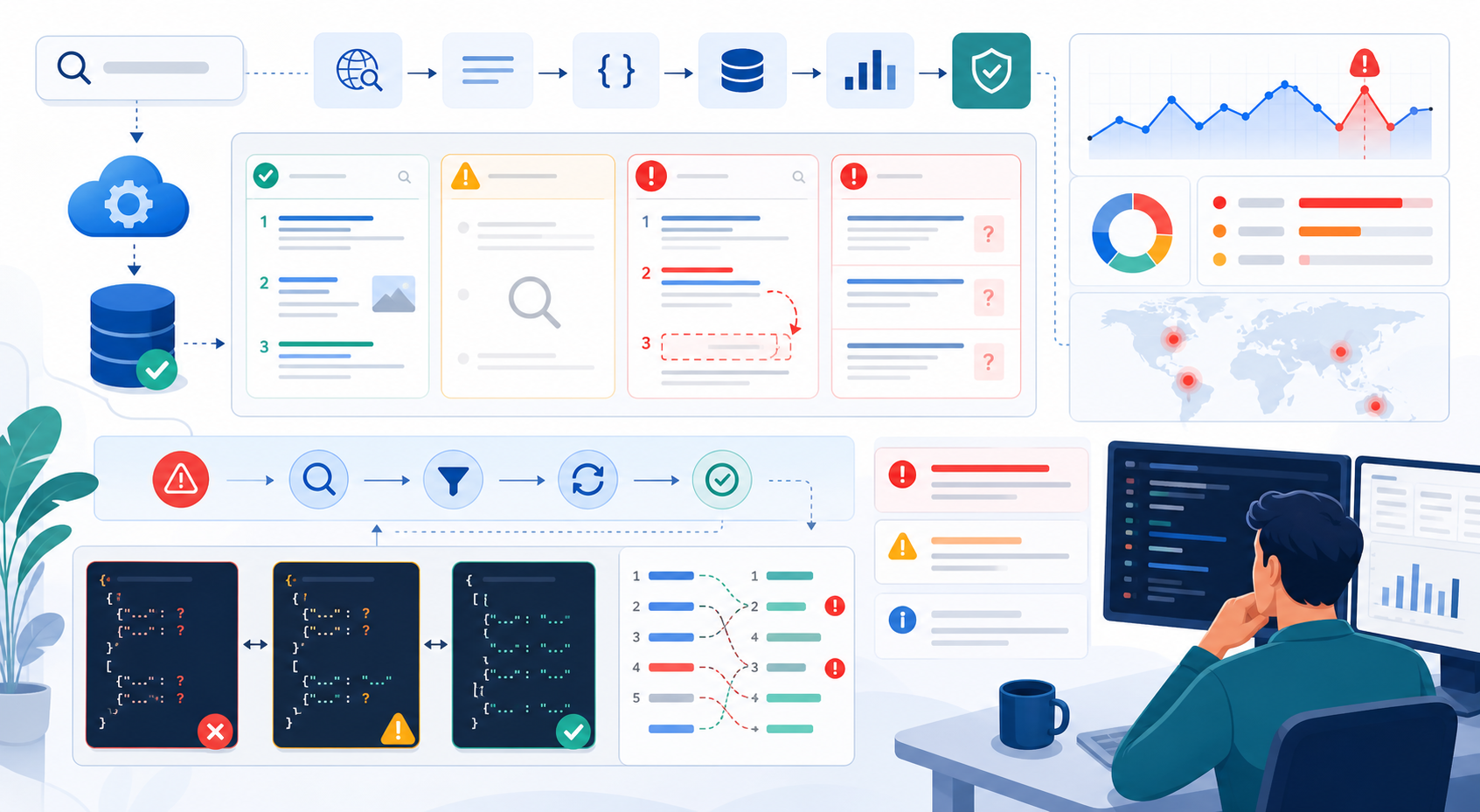
SERP API Troubleshooting: Fix Empty, Wrong, or Inconsistent Search Results
SERP API failures are not limited to obvious HTTP errors. A request can return successfully and still produce empty, incomplete, geographically wrong, duplicated, or misinterpreted search data. Production troubleshooting therefore has to separate transport problems from provider processing, SERP differences, and downstream parsing errors.
View Details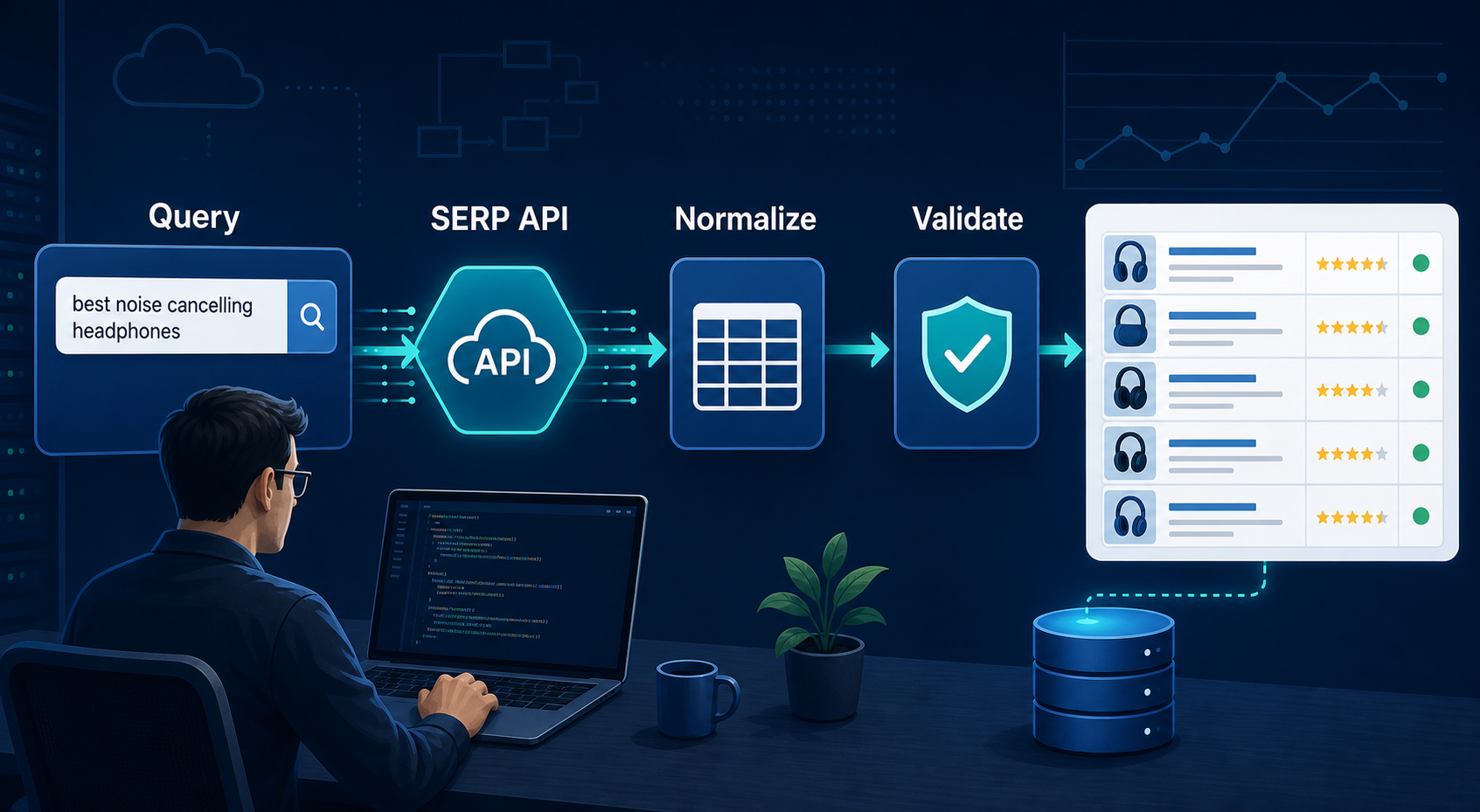
SERP API Python: How to Build a Reliable Search Data Pipeline
This guide shows a provider-neutral workflow for building that pipeline. It does not rank SERP API vendors. Instead, it focuses on the implementation choices that make a Python integration easier to operate, test, and migrate.
View Details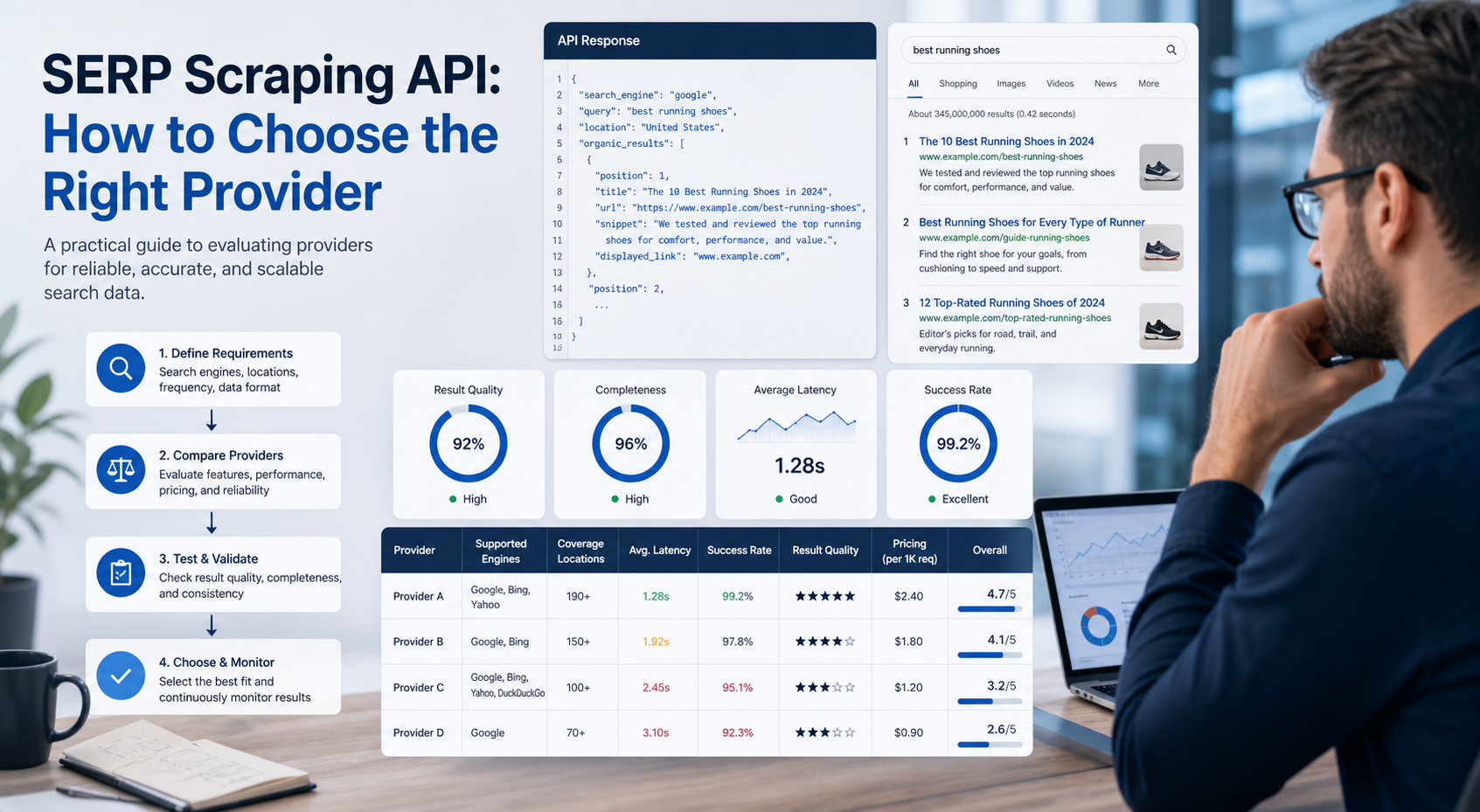
SERP Scraping API: How to Choose the Right Provider
Recommended Meta Description: Compare SERP scraping APIs by data coverage, localization, reliability, workflow fit, and cost structure, then choose and validate the right provider.
View Details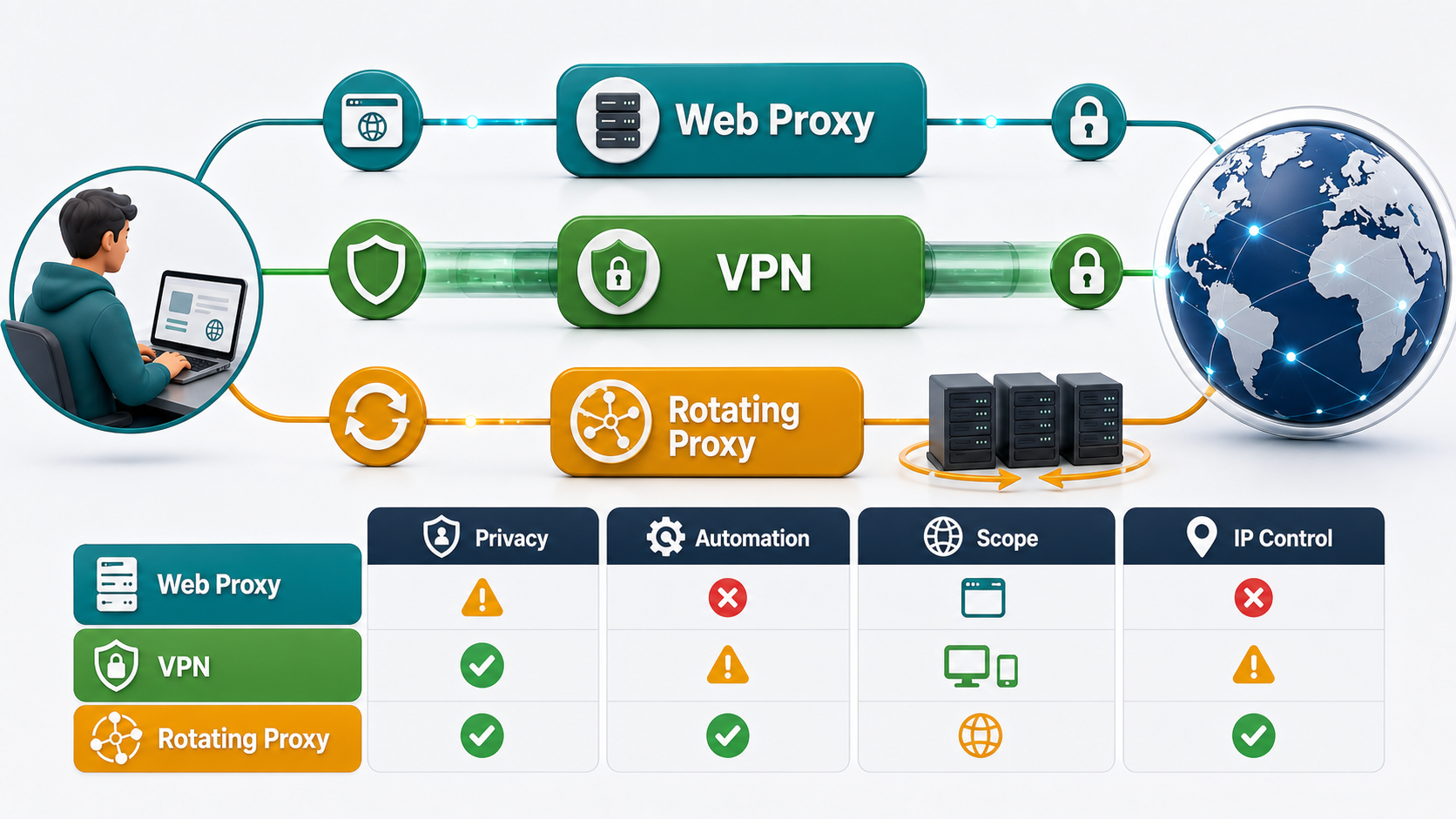
Free Web Proxy vs VPN vs Rotating Proxy: Which Should You Use?
Compare free web proxies, VPNs, rotating proxies, static proxies, and datacenter proxies by scope, encryption, IP control, automation, streaming, and account workflows.
View Details
BlockAway Not Working? Fix Common Proxy, Video, and Access Problems
Troubleshoot BlockAway when pages are blocked, YouTube fails, JavaScript breaks, speed drops, sessions expire, or mobile access behaves differently.
View Details