
Multimodal AI: A Practical Guide to Agentic Assistants, Data, and Best Practices
Multimodal AI: A Practical Guide to Agentic Assistants, Data, and Best Practices
Multimodal AI combines text, images, audio, video, and structured data in one system so it can reason across inputs instead of treating everything as text. In practice, that means your product can “read a screenshot,” “listen to a request,” and “act on a workflow” in one loop. This capability is why multimodal AI’s new frontier is quickly shifting from simple analysis to autonomous action.
For developers, this evolution changes the infrastructure requirements. You are no longer just sending JSON strings; you are piping high-bandwidth multimodal data through your Python environment or Node.js backend.
Use LycheeIP to test rotating proxies
What is multimodal AI, and why is the “agents edition” the new frontier?
Multimodal AI is an artificial intelligence system that processes and interprets more than one input type simultaneously, such as text plus images or audio plus video. While early AI focused on single tasks (unimodal), multimodal machine learning aims to mimic human perception by combining senses.
The "agents edition" of this technology represents a shift from passive observation to active participation. An agents edition system doesn't just describe an image; it uses that visual data to trigger external tools like updating a database or scraping a website. This ability to reason and act is multimodal AI’s new frontier, turning chatbots into capable employees.
What is a modality and what is multimodal data?
A modality is simply one type of data channel. Common examples include text, image, audio, video, and structured tables. Multimodal data is a bundle of these modalities tied to a single event or context.
For a multimodal AI specialist, the challenge isn't just processing the data, but aligning it. A video file, for instance, is a rich source of multimodal data containing visual frames, audio tracks, and temporal metadata. Effective multi modal learning AI relies on clean, high-quality inputs. If you are scraping data to train these models, the quality of your proxy infrastructure matters, poor IPs lead to blocked images and incomplete data sources.
Here is a simple way to categorize the "editions" teams end up building:
| Edition | What it means | Best for |
| Vision edition | Text + image understanding (screenshots, docs) | QA, e-commerce, fraud review |
| Comfy edition | Visual generation workflows (node-based) | Creative ops, marketing automation |
| Agents edition | Tool-using assistants that take actions | Operations, support automation |
| Local edition | Runs on-device or in your own VPC | Privacy-focused, regulated data |
| Open-source edition | Uses open-weight models/self-hosted stack | Cost control, customization |
How do multimodal AI models work under the hood?
Multimodal AI models work by encoding distinct modalities into vectors, fusing those signals into a shared representation, and decoding them into a useful output. This process allows multi modal generative AI to create text from images or images from audio.
What do encoders do for each data type?
Encoders are the translators of the AI world. In multimodal machine learning, specific encoders convert raw data into mathematical vectors.
- Text: Uses a Transformer backbone.
- Vision: Uses Convolutional Neural Networks (CNNs) or Vision Transformers (ViT).
- Audio: Uses spectrogram analysis.
For a multimodal AI application, the quality of the encoder determines the system's "literacy" in that medium. If you are building a vision edition tool, your image encoder must be robust enough to handle noise, different resolutions, and compression artifacts often found in scraped data sources.
How do fusion modules combine signals?
Fusion is the step where the model combines the encoded vectors. In multi modal learning AI, fusion strategies define how deeply the modalities interact:
- Early Fusion: Combines raw data at the start.
- Late Fusion: Processes modalities separately and combines the results at the end.
- Deep Fusion: Interactions happen throughout the network layers.
Most multimodal AI examples in production today utilize deep fusion to allow the text and image understanding to inform each other contextually.
Use LycheeIP to test rotating proxies
Which multimodal data sources should you use for your use case?
You should pick multimodal data sources based on the decisions your system must make, not just what is easiest to download. Reliable multimodal data is the fuel for any multimodal AI application.
- E-commerce: Product images, 360-views, description text, specification tables.
- Social Media: Video clips, audio tracks, user comments, timestamps.
- Finance: PDF invoices, scanned receipts, transaction logs.
Collecting this data requires robust infrastructure. If you are scraping high-value targets, you will often encounter heavy bot protection.
How do web-scraping teams handle JavaScript rendering safely?
Web-scraping teams handle JavaScript rendering by using headless browsers controlled by automation tools, routed through high-quality residential proxies. Because modern data sources rely heavily on client-side code, simple HTTP requests often miss the actual content (like images lazy-loaded via JS).
In a Python environment, tools like Playwright or Selenium manage JavaScript rendering. In Node.js, Puppeteer is the standard. However, JavaScript rendering is resource-intensive and slow. To scale your multimodal AI application, you must optimize rendering. Teams often switch to a dedicated Web Scraping API to handle the rendering load automatically:
- Block unnecessary assets (ads, trackers) to speed up JavaScript rendering.
- Use rotating residential proxies to prevent CAPTCHAs from blocking the render.
- Wait for specific DOM elements (like the main product image) to ensure your multimodal data is complete.
How do you design a multimodal AI application that stays reliable at scale?
You keep a multimodal AI application reliable by compartmentalizing the pipeline: ingestion, normalization, reasoning, and action. A multimodal AI specialist knows that trying to do everything in one prompt leads to hallucinations.
What does a production pipeline look like end to end?
A robust pipeline ensures that your agents edition or vision edition apps don't crash on bad inputs.
- Ingest: Receive inputs via API. Support various data sources (S3 urls, base64, raw bytes).
- Normalize: Standardize the multimodal data. Resize images, convert audio to 16kHz mono, parse JavaScript rendering results into clean HTML.
- Ground: Fetch context. Use LycheeIP proxies to search the web for real-time data verification.
- Reason: Pass the normalized data to the multimodal AI model.
- Act: The agent triggers a tool (e.g., "Refund User").
- Audit: Log the input, the reasoning trace, and the output.
Which multimodal AI frameworks and tools make building faster?
Multimodal AI frameworks act as the glue between your data, your models, and your application logic. Using the right framework accelerates development for both Python environment and Node.js teams.
How do LangChain and LlamaIndex handle multimodal inputs?
LangChain and LlamaIndex handle multimodal inputs by providing abstractions for "Multimodal Messages."
- LangChain: Standardizes how you pass images into chat models, making it easier to swap between OpenAI and Anthropic. It is essential for multimodal AI frameworks.
- LlamaIndex: Excel at multimodal data indexing. It allows you to vectorize images and text into a shared store, enabling "chat with your images" features.
These multimodal AI frameworks are critical for orchestration, but they don't replace the need for clean underlying data sources.
What is “Comfy edition” and where does ComfyUI fit?
Comfy edition refers to the ecosystem of workflows built on ComfyUI, a node-based interface for multi modal generative AI. While originally for image generation, the Comfy edition approach is being adopted for complex logic pipelines.
- Comfy edition allows non-coders to visually chain models.
- Developers use Comfy edition backends to serve API requests for image processing.
- It is a prime example of open-source edition tooling influencing production stacks.
When does Lumen AI help with data-to-insight workflows?
Lumen AI represents a class of specialized agents designed for data analysis. If your multimodal AI application needs to generate charts or analyze spreadsheets, tools like Lumen AI bridge the gap between raw data and visual insight.
- Lumen AI handles the "structured data" modality exceptionally well.
- Unlike general chatbots, Lumen AI is optimized to output code that renders visualizations.
- Integrating Lumen AI capabilities into your agents edition stack allows users to ask "Show me a graph of sales" and get a rendered result, not just text.
Use LycheeIP to test rotating proxies
How do you build a multimodal AI chat assistant in a Python environment or Node.js?
You build a multimodal AI chat assistant by defining a strict schema for how inputs are received and processed. Whether you choose a Python environment or Node.js, the architecture remains similar: an API gateway, a state manager, and a model client.
Node.js is excellent for handling the asynchronous nature of streaming chat and JavaScript rendering for web tools. A Python environment is often preferred for heavy data processing and direct integration with ML libraries like PyTorch.
What is the minimum viable request schema?
To build a reliable multimodal AI chat assistant, enforce a schema like this:
JSON
{
"request_id": "uuid",
"modality_type": "text_and_image",
"payload": {
"text": "Analyze this competitor's pricing page.",
"images": ["https://s3.bucket/screenshot.png"],
"context": {"url": "https://competitor.com"}
},
"agent_config": {
"rendering": "javascript_enabled",
"model": "gpt-4o"
}
}
This schema helps your Python environment or Node.js server route the request correctly, ensuring the right multimodal data reaches the right model.
Which local and open-source multimodal AI models are worth testing now?
The open-source edition of multimodal models has exploded in quality. Testing best local multimodal ai model options is crucial for cost savings and privacy.
- Llava: A popular open-source edition model based on Llama.
- Qwen-VL: Often cited as a best local multimodal ai model for high-resolution document understanding.
- BakLLaVA: A faster, lightweight local edition variant.
When is local edition a must?
A local edition is a must when you are dealing with PII (Personally Identifiable Information) or require zero-latency interaction.
- Privacy: If your multimodal data contains medical records or financial docs, a local edition ensures data never leaves your VPC.
- Cost: Running a best local multimodal ai model can be cheaper than API tokens for high-volume vision edition tasks.
- Offline: A local edition application can function on edge devices (drones, tablets) without internet.
Use LycheeIP to test rotating proxies
Why do multimodal systems fail, and what are the best multimodal AI practices to prevent it?
Multimodal systems fail due to conflicting signals, poor data quality, or "hallucination propagation" where the model misinterprets an image and invents text to match. Adhering to best multimodal ai practices is the only defense.
Common multimodal AI examples of failure include an agent buying the wrong product because it misread a screenshot, or a Lumen AI style analyzer generating a graph based on hallucinated table rows.
How do you secure multimodal agents against common risks?
Security is paramount in multimodal AI's new frontier.
- Input Validation: Sanitize all inputs. Malicious images can contain "visual prompt injections."
- Traceability: Every action by your agents edition bot must be logged.
- Sandboxing: When using Python environment tools for execution, ensure they run in isolated containers.
- Proxy Rotation: If your agent scrapes the web, use LycheeIP to rotate IPs. Static IPs get flagged, causing the agent to feed "Access Denied" pages into the model, breaking the logic.
Following these best multimodal ai practices ensures your multimodal AI chat assistant remains helpful, not harmful.
When should you use classic computer vision like YOLO/OpenCV instead of a multimodal LLM?
You should use classic computer vision when you need speed, precision, and low cost. While multimodal machine learning is powerful, it is overkill for simple detection.
- YOLO (You Only Look Once): The standard for real-time object detection. Use this over a vision edition LLM for counting cars, detecting people, or cropping faces.
- OpenCV: The Swiss Army knife of image processing. Use it to pre-process images before sending them to a multimodal AI model.
Multimodal AI examples where LLMs win: "Read this menu and tell me which dishes are vegan."
Classic CV examples where YOLO wins: "Count the number of red cars in this video stream."
If you need a multimodal AI specialist task like reasoning, use an LLM. If you need geometry or pixel manipulation, stick to Python environment libraries like OpenCV.
Comparison Table:
Multimodal AI vs. Classic Computer Vision
| Feature | Multimodal AI (LLMs) | Classic CV (YOLO/OpenCV) |
| Primary Capability | Reasoning & Description | Detection & Measurement |
| Input Flexibility | High (Messy/Unstructured) | Low (Needs standard formats) |
| Inference Cost | High (GPU intensive) | Low (Runs on CPU/Edge) |
| Training Data | Massive pre-training | Task-specific datasets |
| Best Use Case | "Explain this image" | "Locate object X" |
Use LycheeIP to test rotating proxies
Frequently Asked Questions (FAQs):
1. What is the difference between multimodal AI and generative AI?
Multimodal AI refers to the ability to process multiple input types (text, image, audio). Multi modal generative AI is a subset that can create new outputs in those formats. Not all multimodal models generate images; some only analyze them.
2. Which is the best local multimodal AI model for developers?
Currently, Qwen-VL and LLaVA are strong contenders for the best local multimodal ai model. They offer a good balance of performance and resource usage, making them ideal for a local edition deployment in a Python environment.
3. Can I use Node.js for multimodal AI development?
Yes. Node.js is excellent for the orchestration layer, handling API requests, and managing JavaScript rendering for data collection. While the heavy ML training usually happens in Python, the application logic often runs on Node.js.
4. How does Lumen AI fit into the multimodal landscape?
Lumen AI and similar tools specialize in the "structured data" modality. They are essentially agents edition tools built specifically to chat with datasets and generate visual insights, reducing the need for manual SQL or Pandas coding.
5. Why is JavaScript rendering important for multimodal data collection?
Many data sources load images and text dynamically using JavaScript. Without proper JavaScript rendering (often supported by headless browsers and residential proxies), your scraper will only see a blank page, starving your multimodal AI application of data.
6. What are the risks of using Comfy edition workflows in production?
Comfy edition (ComfyUI) workflows are powerful but can be brittle. They are often designed for manual experimentation. For production, you must wrap them in robust API services and validate inputs to ensure best multimodal ai practices are followed.

Recommended Articles
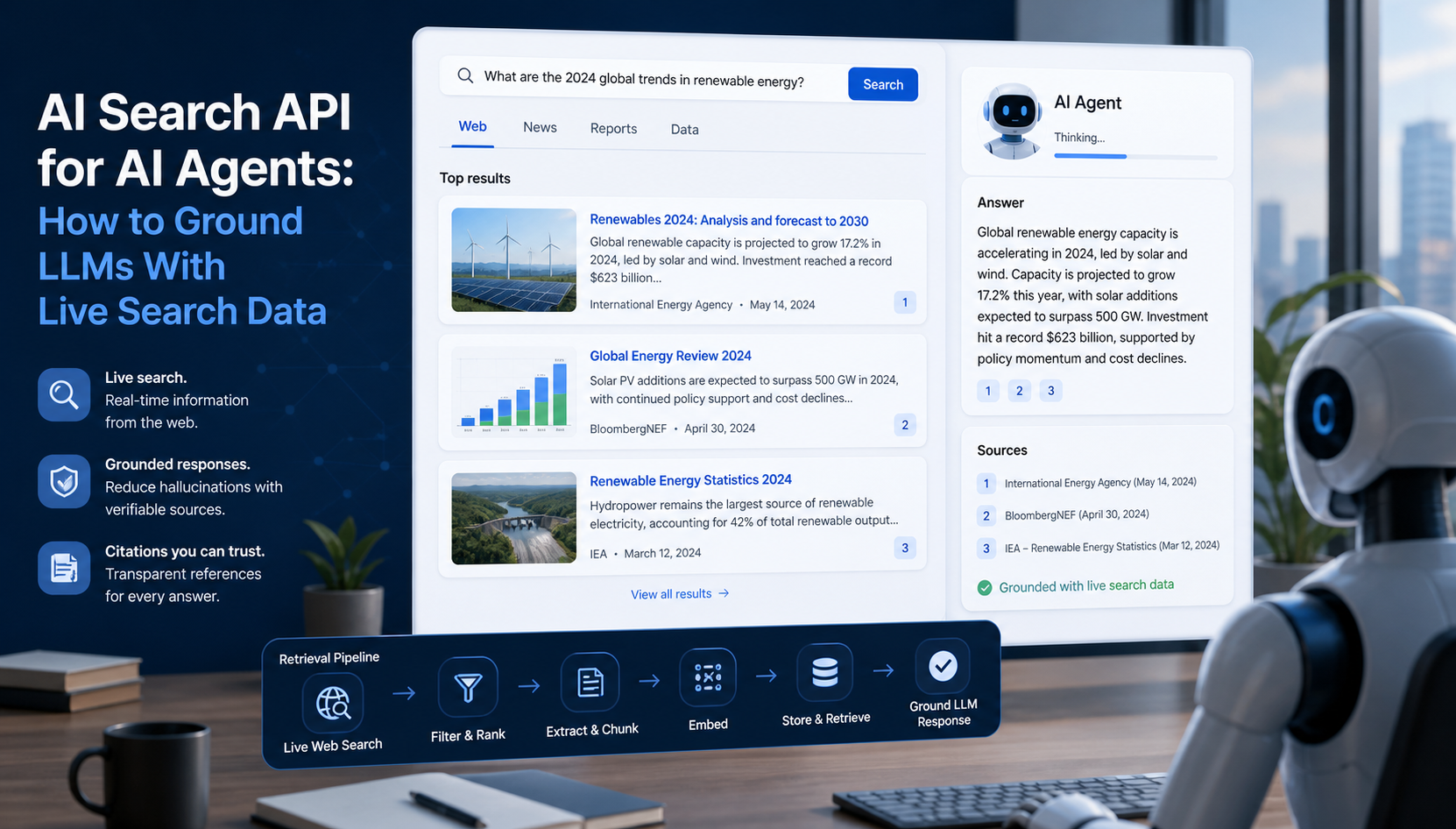
AI Search API for AI Agents: How to Ground LLMs With Live Search Data
An AI search API gives an application or agent programmatic access to current search results. Its most useful role is discovery: the agent can find candidate sources, identify fresh information, and decide what to retrieve next instead of relying only on model memory.
View Details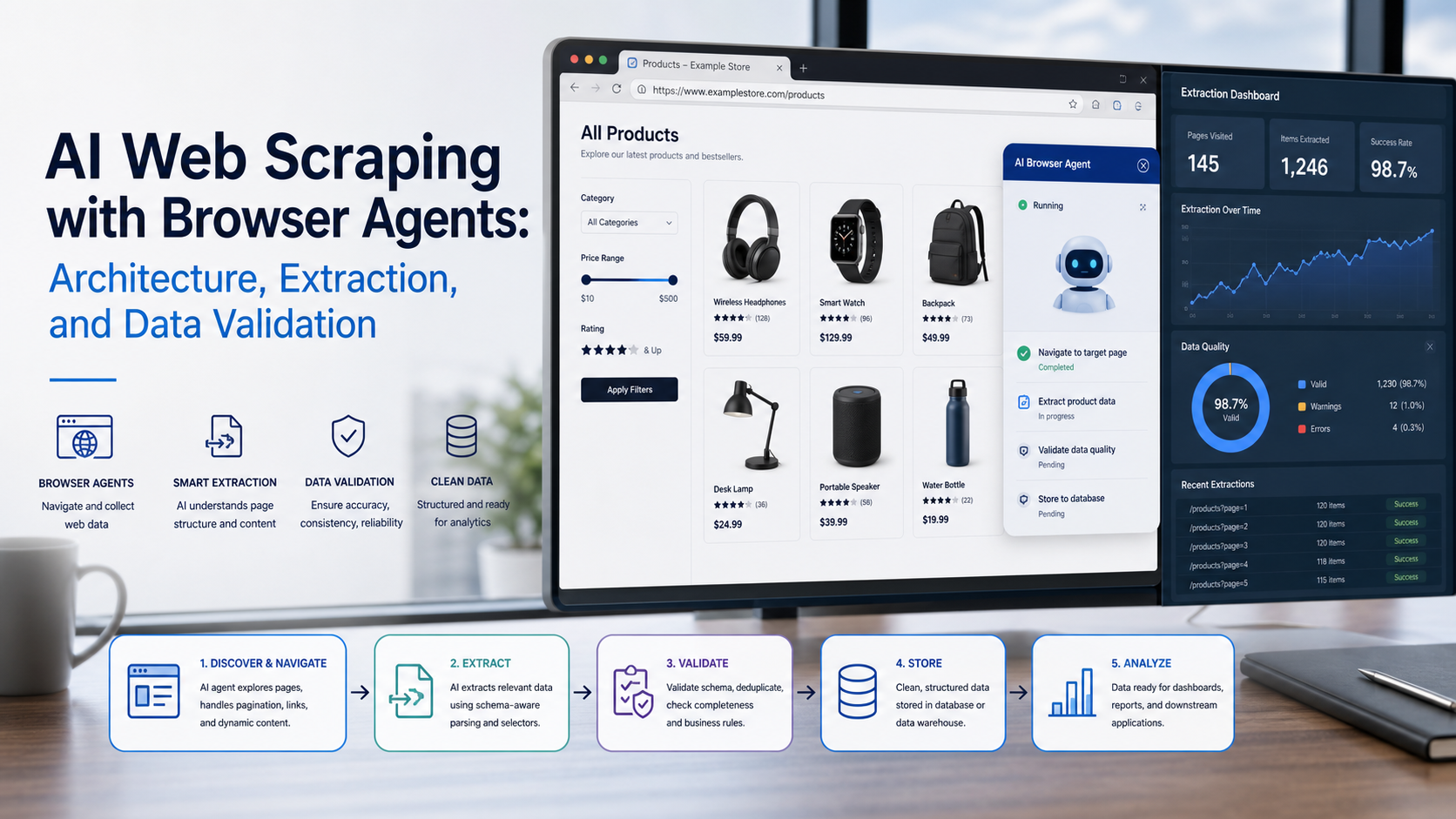
AI Web Scraping with Browser Agents: Architecture, Extraction, and Data Validation
AI web scraping uses AI to help discover, navigate, interpret, or extract information from websites. Browser agents are one implementation option when page interaction, rendering, or layout variation makes a simple scraper too brittle, but the agent should not become the entire data pipeline.
View Details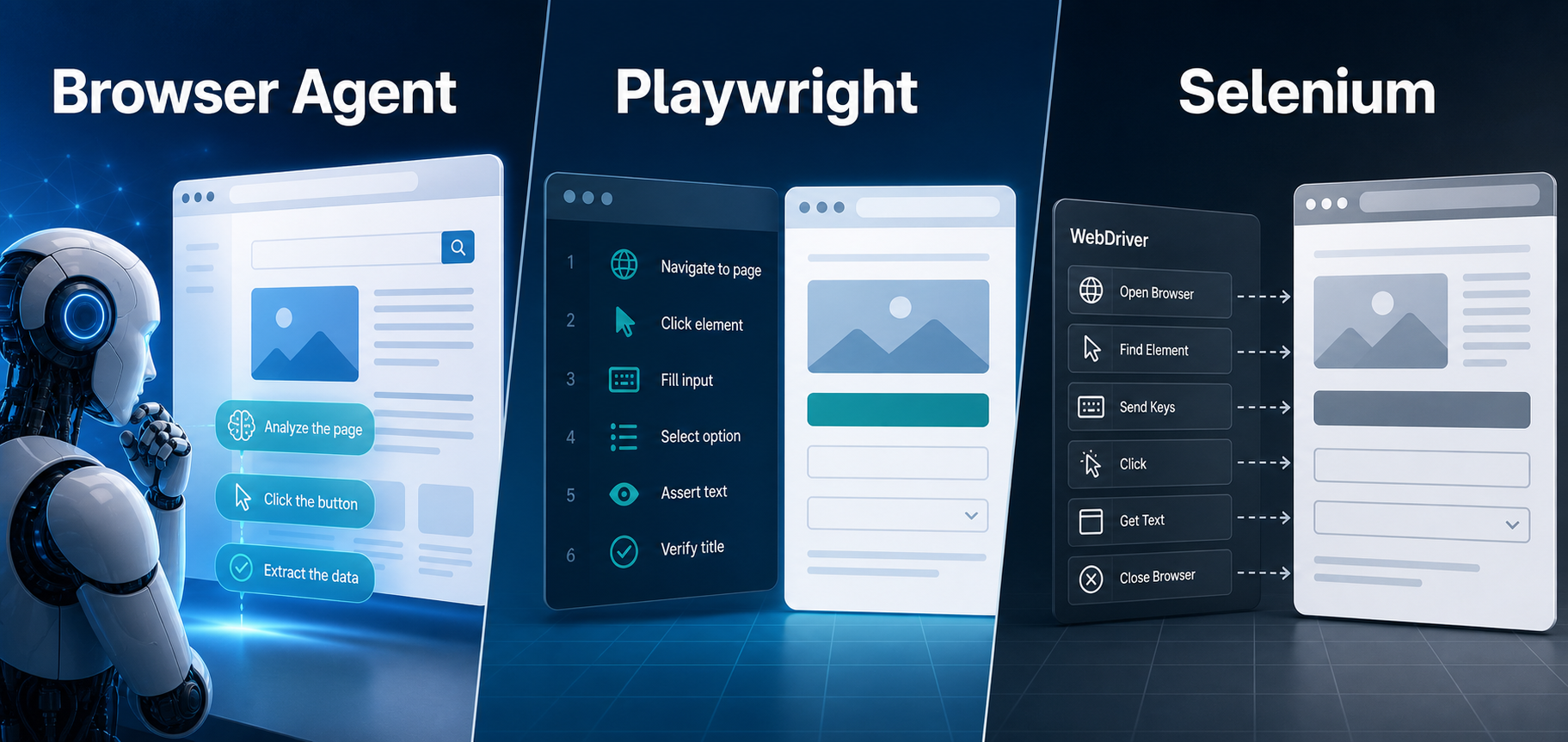
AI Browser Automation: Browser Agents vs Playwright vs Selenium
A browser agent interprets a goal and decides what browser action to take next. Playwright and Selenium can execute explicit, testable browser logic defined by developers. In 2026, however, Playwright also provides official MCP and agent-oriented workflows, so Playwright is no longer just the deterministic alternative to agentic automation. It can also serve as the browser-control layer inside an agent system.
View Details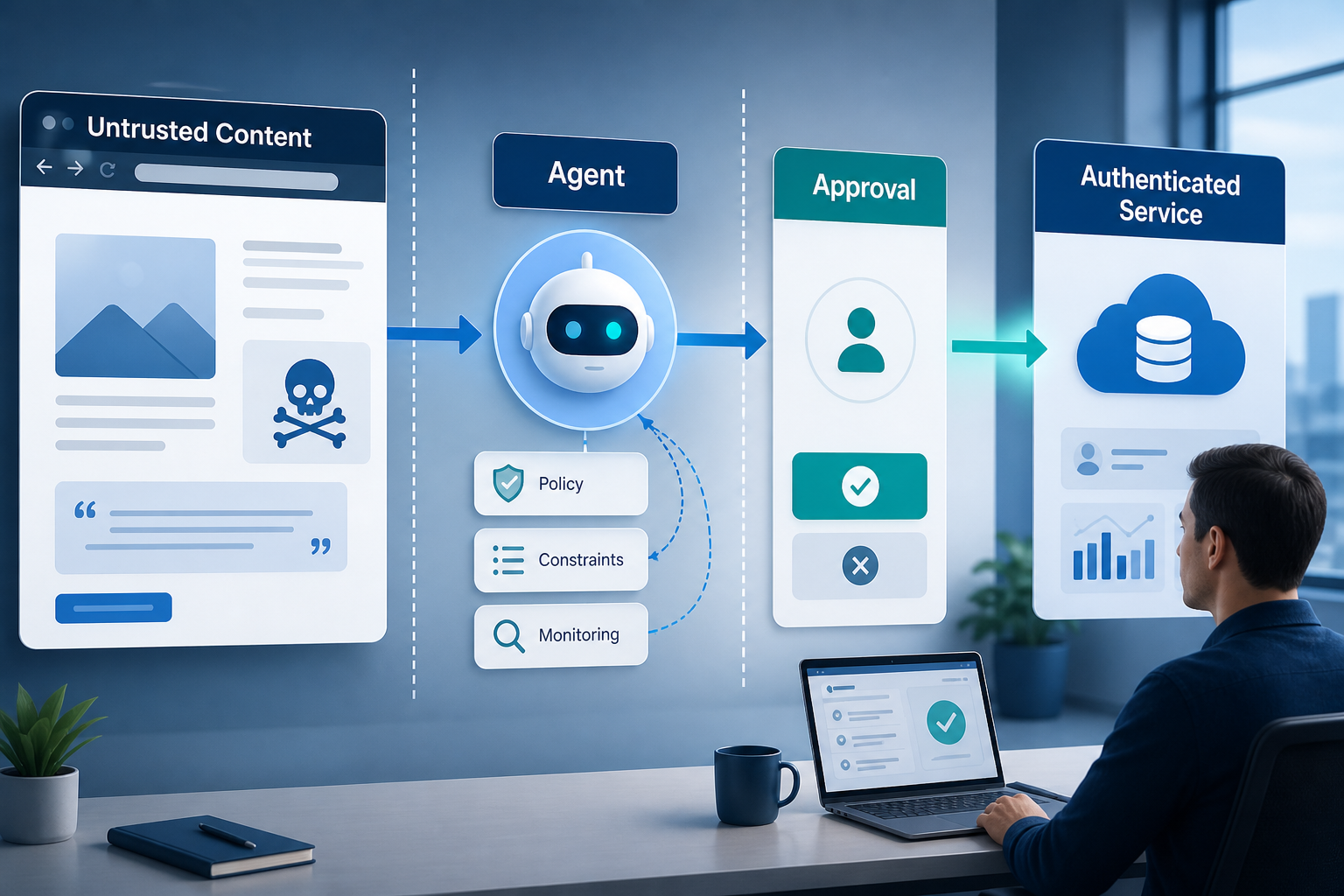
Agentic Browser Security: Prompt Injection, Permissions, and Safe Deployment
That combination creates risks that are different from ordinary browsing and traditional automation. The most important is indirect prompt injection, where hostile instructions hidden in web content attempt to redirect the agent away from the user's goal. Google describes indirect prompt injection as a primary new threat for agentic browsing and has introduced layered defenses that include origin constraints, independent action checks, threat detection, and user confirmation for sensitive actions. Google's Chrome security architecture is a useful reference for how browser-agent defenses are evolving.
View Details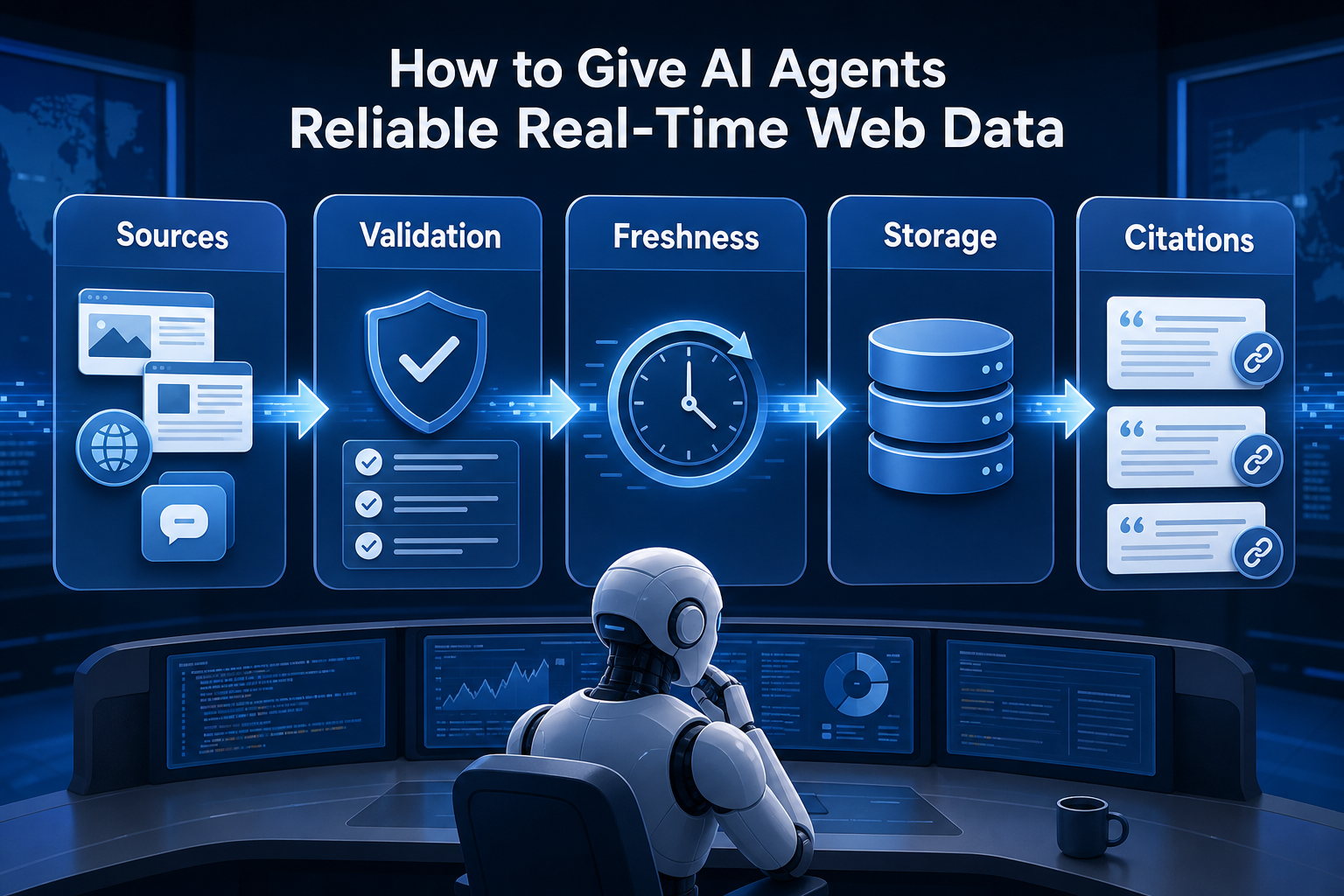
How to Give AI Agents Reliable Real-Time Web Data
A production-ready solution therefore needs more than a web scraper. It needs a web data layer that connects acquisition, validation, storage, retrieval, security, and observability. This guide explains how to design that layer.
View Details