
Multilogin Cloud Phone vs Traditional Anti-Detect: The Ultimate 2026 Comparison
Multilogin Cloud Phone vs Traditional Anti-Detect: The Ultimate 2026 Comparison
Cloud phones might replace anti-detect browsers entirely. This bold prediction is gaining traction among digital marketers, account managers, and privacy-conscious professionals as cloud-based virtual Android devices mature into legitimate alternatives to desktop fingerprinting solutions.
But is this technological shift inevitable, or are we witnessing parallel evolution of two distinct tools serving different masters? If you're managing multiple accounts across mobile apps and desktop platforms, choosing between cloud-based solutions like Multilogin Cloud Phone and traditional anti-detect browsers could mean the difference between seamless scalability and operational bottlenecks.
This comprehensive analysis breaks down the architectural differences, real-world use cases, and cost implications to help you make an informed decision.
Get LycheeIP reliable proxies
ACT 1: Virtual Android Devices vs Browser Fingerprinting
What is Multilogin Cloud Phone?
Multilogin Cloud Phone represents the next generation of multi-accounting technology: fully functional virtual Android devices running in the cloud. Unlike emulators or simulators that mimic Android behavior on your local machine, cloud phones are actual Android instances hosted on remote servers.
Core Architecture:
- Real ARM-based Android OS (typically Android 9-12)
- Unique device fingerprints (IMEI, Android ID, MAC address)
- Cloud-based processing (no local resource consumption)
- Remote access via browser interface
- Persistent storage and app data
Each cloud phone instance appears to apps as a genuine physical device with its own hardware identifiers, geographical location, and behavioral patterns. This creates an unprecedented level of isolation for mobile multi-accounting.
What Are Traditional Anti-Detect Browsers?
Anti-detect browsers like Multilogin's Mimic and Stealthfox, GoLogin, AdsPower, and Dolphin Anty focus exclusively on desktop browser fingerprinting. They create isolated browser profiles with unique digital fingerprints to prevent cross-account linking.
Core Architecture:
- Modified Chromium or Firefox engines
- Canvas, WebGL, and audio fingerprint spoofing
- Configurable browser fingerprints (timezone, language, screen resolution)
- Cookie and cache isolation
- Proxy integration for IP diversity
These solutions excel at managing multiple web-based accounts (social media, e-commerce platforms, ad accounts) by making each browser profile appear as a completely separate user.
The Fundamental Divide
The key distinction isn't just mobile vs desktop. It's application environment vs web environment:
| Feature | Cloud Phone | Anti-Detect Browser |
|---|---|---|
| Platform | Mobile apps (APK) | Web applications |
| Fingerprinting | Device-level (IMEI, sensors) | Browser-level (canvas, fonts) |
| Processing | Cloud-hosted | Local machine |
| Persistence | Always-on availability | Session-based |
| Detection Methods | Mobile SDK fingerprinting | JavaScript fingerprinting |
Anti-detect browsers manipulate what websites can see about your browser environment. Cloud phones provide entirely separate virtual devices that mobile apps interact with as if they were physical smartphones.
Get LycheeIP reliable proxies
ACT 2: Use Cases and Multi-Accounting Capabilities
When Cloud Phones Dominate
1. Native Mobile App Management
If your operations involve Instagram, TikTok, WhatsApp Business, or any app that requires mobile installation, cloud phones are non-negotiable. Many modern apps:
- Detect emulators and root access
- Implement advanced device fingerprinting through mobile SDKs
- Restrict critical features to mobile-only access
- Monitor sensor data (gyroscope, accelerometer) for authenticity
Try managing 20 Instagram accounts for influencer marketing through browser versions alone, and you'll quickly hit platform limitations. The mobile app experience is fundamentally different, with features like Stories, Reels creation, and DM functionality optimized for native apps.
2. App Testing and Quality Assurance
Developers and QA teams benefit enormously from cloud phones:
- Test apps across different Android versions simultaneously
- Reproduce device-specific bugs without maintaining a physical device farm
- Automated testing scripts running 24/7 in the cloud
- Instant scaling for load testing
3. Mobile-First Platforms
E-commerce platforms like Shopee, Lazada, and mobile-centric marketplaces often provide superior deals or exclusive features through their apps. Cloud phones enable:
- Flash sale participation from multiple accounts
- Location-based promotions (with different GPS coordinates per cloud phone)
- Push notification management
When Traditional Anti-Detect Browsers Win
1. Desktop-Centric Workflows
For Facebook Ads management, Amazon seller accounts, Google Ads, or any professional platform designed for desktop use, anti-detect browsers remain superior:
- Full keyboard and mouse integration
- Multiple monitors and complex workflows
- Browser extensions and automation tools (Selenium, Puppeteer)
- Faster navigation for data-heavy interfaces
2. Resource Efficiency
Running 50 browser profiles on a decent laptop is entirely feasible. Running 50 cloud phone instances costs significantly more in subscription fees and requires no local processing power—but you're paying for that server infrastructure.
3. Web Scraping and Automation
The browser automation ecosystem is mature and powerful:
- Headless Chrome for background operations
- Established libraries (Playwright, Selenium)
- Easy integration with proxy rotation services
- Lower latency for rapid operations
The Hybrid Reality
Most advanced multi-accounting operations require both solutions:
- Anti-detect browsers for account creation and desktop management
- Cloud phones for mobile app engagement and authenticity signals
- Synchronized strategies across platforms
For example, a social media agency might:
1. Create Instagram accounts using anti-detect browsers (easier captcha solving, email verification)
2. Transfer accounts to cloud phones for daily posting, Stories, and engagement
3. Return to browsers for analytics review and ad campaign setup
Get LycheeIP reliable proxies
ACT 3: Cost and Scalability Considerations
Pricing Models Compared
Traditional Anti-Detect Browsers:
- Multilogin: €99-€399/month (10-100 profiles)
- GoLogin: $49-$149/month (100-1000 profiles)
- AdsPower: Free-$70/month (5-200 profiles)
Most anti-detect solutions charge based on profile count and team seats. You can run these profiles 24/7 with no additional cost beyond your proxy expenses.
Multilogin Cloud Phone:
- Pricing typically per device/hour or subscription per device
- Estimated €30-€100 per cloud phone per month (based on industry standards)
- Always-on instances cost more than on-demand usage
If you need 50 persistent cloud phones, monthly costs can easily exceed €2,000-€3,000, compared to €200-€400 for 50 anti-detect browser profiles.
Scalability Analysis
For Individuals (1-10 accounts):
- Anti-detect browsers: Highly cost-effective, especially with free tiers
- Cloud phones: Manageable costs, excellent for mobile-first strategies
- Verdict: Choose based on platform needs, not cost
For Small Teams (10-50 accounts):
- Anti-detect browsers: Still affordable, easy collaboration features
- Cloud phones: Costs escalate quickly; budget €500-€1,500/month
- Verdict: Hybrid approach, cloud phones for critical mobile accounts only
For Agencies/Enterprises (100+ accounts):
- Anti-detect browsers: Economies of scale kick in
- Cloud phones: Requires dedicated budget line; consider on-demand vs always-on
- Verdict: Negotiate enterprise pricing; automate device rotation
Infrastructure and Learning Curve
Anti-detect browsers run on your existing hardware:
- Laptop or desktop with 8GB+ RAM (16GB recommended for 10+ profiles)
- No special technical knowledge required
- Intuitive interfaces similar to regular browsers
Cloud phones require understanding of:
- Cloud computing concepts (though user interfaces are improving)
- Mobile app management (APK installation, app permissions)
- Potentially more complex proxy configuration
- Remote access latency considerations
The learning curve for cloud phones is steeper initially, but modern platforms have dramatically simplified the onboarding process.
Integration and Automation
Both technologies support API access for automation, but the ecosystems differ:
Anti-detect browser automation:
- Selenium/Puppeteer compatibility (mature, well-documented)
- Thousands of ready-made scripts and tools
- Active developer communities
Cloud phone automation:
- Appium for mobile automation (less intuitive than web automation)
- ADB (Android Debug Bridge) for advanced control
- Growing but smaller tool ecosystem
If your operation relies heavily on automation, anti-detect browsers currently offer more plug-and-play solutions.
The Verdict: When to Choose What
Choose Cloud Phones If:
✅ Your primary focus is native mobile apps (Instagram, TikTok, mobile games)
✅ You need genuine mobile device fingerprints for high-security apps
✅ App-exclusive features are critical to your operations
✅ You're conducting mobile app testing or development
✅ Budget allows for higher per-account costs
Choose Anti-Detect Browsers If:
✅ You manage web-based platforms (social media websites, e-commerce, ads)
✅ Cost efficiency is paramount
✅ You need to manage 50+ accounts on limited budget
✅ Your workflow involves complex desktop interfaces
✅ Browser automation is core to your operations
Choose Both If:
✅ You operate across mobile and desktop platforms
✅ You're running a professional agency or enterprise operation
✅ Account authenticity requires mobile app engagement signals
✅ You can allocate €500+ monthly to account management infrastructure
The Missing Link: Network Integrity
Regardless of whether you choose a virtual Android device or a masked browser, your success hinges on the IP address attached to that profile. This is where a dedicated proxy infrastructure like LycheeIP becomes the silent backbone of your operation, ensuring that your sophisticated hardware spoofing isn't instantly given away by a low-quality data center IP.
Strategic Infrastructure: How LycheeIP Completes the Ecosystem
While Multilogin Cloud Phones and anti-detect browsers handle device fingerprinting, LycheeIP manages the equally critical network fingerprinting. Here is how LycheeIP fits into the multi-accounting workflow:
1. Residential IP Authenticity
- The "Real User" Signal: High-security platforms (Google, Meta, Amazon) cross-reference device data with IP metadata. LycheeIP provides ethically sourced residential proxies that appear as genuine home internet users, matching the "mobile" or "desktop" profile you've created.
- Bypassing ASN Filtering: Many platforms flag IPs coming from known data centers. LycheeIP’s pool utilizes ISP-registered addresses, ensuring your Cloud Phone isn't flagged for originating from a server farm.
2. Geo-Location Synchronization
- Matching GPS to IP: If your Cloud Phone's virtual GPS is set to Los Angeles, but your IP address points to New York, you will be flagged. LycheeIP allows for granular city-level targeting to ensure your network location and device location are in perfect harmony.
- Global Scalability: With access to millions of IPs across 195+ countries, LycheeIP allows users to scale operations globally without physical presence in those regions.
3. Session Persistence and Stability
- Sticky Sessions: For account management, maintaining the same IP for the duration of a session is vital. LycheeIP offers stable "sticky" sessions that prevent "teleportation" flags caused by mid-session IP rotations.
- High Concurrent Limits: Designed for agencies, LycheeIP supports the high-bandwidth demands of running multiple Cloud Phone video streams or hundreds of browser profiles simultaneously.
4. Rotating Proxies for Scraping and Creation
- Anti-Ban Protection: For bulk account creation or web scraping, LycheeIP’s rotating proxy feature automatically switches your IP for every request, preventing rate-limiting and IP-based shadowbans.
- Clean IP Pool: LycheeIP actively monitors and cleans its pool to ensure high success rates and low CAPTCHA triggers, reducing the operational friction of managing large-scale profiles.
Get LycheeIP reliable proxies
Future Outlook: Convergence or Coexistence?
The claim that cloud phones might replace anti-detect browsers entirely is premature. What we're witnessing is platform specialization rather than technological obsolescence.
Mobile-first platforms will increasingly require genuine mobile device signals, making cloud phones essential for those ecosystems. Meanwhile, professional desktop tools will continue optimizing for browser-based workflows.
The more likely future involves:
1. Unified platforms offering both cloud phones and anti-detect browsers under single subscriptions
2. Cross-platform synchronization allowing seamless account management transitions
3. AI-powered routing automatically directing tasks to the optimal environment
Multilogin's offering of both browser profiles and cloud phones exemplifies this convergence strategy.
Making Your Decision
Start by auditing your current account portfolio:
- What percentage requires mobile apps vs web access?
- Which platforms generate the most revenue per account?
- What's your monthly account management budget?
- Do you have technical resources for automation?
For most users, the answer isn't either/or, it's finding the right ratio. A typical setup might involve:
- 70% of accounts on anti-detect browsers (cost-effective, broad platform coverage)
- 30% on cloud phones (high-value mobile accounts requiring authenticity)
The anti-detect browser market remains robust and innovative, while cloud phone technology is rapidly maturing. Rather than replacement, we're seeing the emergence of a comprehensive multi-accounting ecosystem where both tools play vital roles.
Choose based on your specific use cases, not industry hype. The best tool is the one that solves your actual problems at a sustainable cost.
Get LycheeIP reliable proxies
Frequently Asked Questions
Q: Can I use a regular Android emulator instead of cloud phones?
A: Basic Android emulators like BlueStacks or NoxPlayer are easily detected by sophisticated apps through emulator signatures, missing hardware sensors, and abnormal system properties. Cloud phones provide real Android OS instances with genuine device fingerprints that pass advanced detection mechanisms. For casual use, emulators work fine, but for multi-accounting on platforms with anti-fraud systems, cloud phones are necessary.
Q: Do anti-detect browsers work on mobile devices?
A: Anti-detect browsers are desktop software designed for Windows, macOS, or Linux. While you can access websites through mobile browsers, you cannot run traditional anti-detect browser software on phones or tablets. This is precisely why cloud phones exist, to provide the multi-accounting capabilities for mobile app environments that anti-detect browsers provide for desktop web platforms.
Q: How many cloud phones or browser profiles do I actually need?
A: This depends entirely on your operation scale and platform requirements. Individual marketers typically need 5-10 profiles, small agencies manage 20-50, while enterprises may run 100+. Start conservatively—most platforms offer scalable plans. It's better to fully utilize 10 profiles with proper management than spread yourself thin across 50 poorly maintained accounts. Quality of account activity matters more than quantity.
Q: Are cloud phones legal to use?
A: Cloud phones themselves are legal technology, they're virtual Android devices, similar to virtual private servers. However, how you use them must comply with platform terms of service. Running multiple accounts on platforms that prohibit it violates their policies (not laws), which can result in account bans. Always review platform guidelines. Legitimate uses include app testing, development, and managing business accounts permitted by the platform.
Q: What's the minimum budget to start with both solutions?
A: You can start with approximately $100-150/month: use a budget anti-detect browser like GoLogin ($49/month for 100 profiles) or AdsPower's free tier, plus 2-3 cloud phone instances ($50-100/month total). This hybrid setup covers both web and mobile operations without breaking the bank. As you identify which accounts generate ROI, scale up investment accordingly. Many users find that 80% of their revenue comes from 20% of accounts, focus your cloud phone budget there.

Recommended Articles
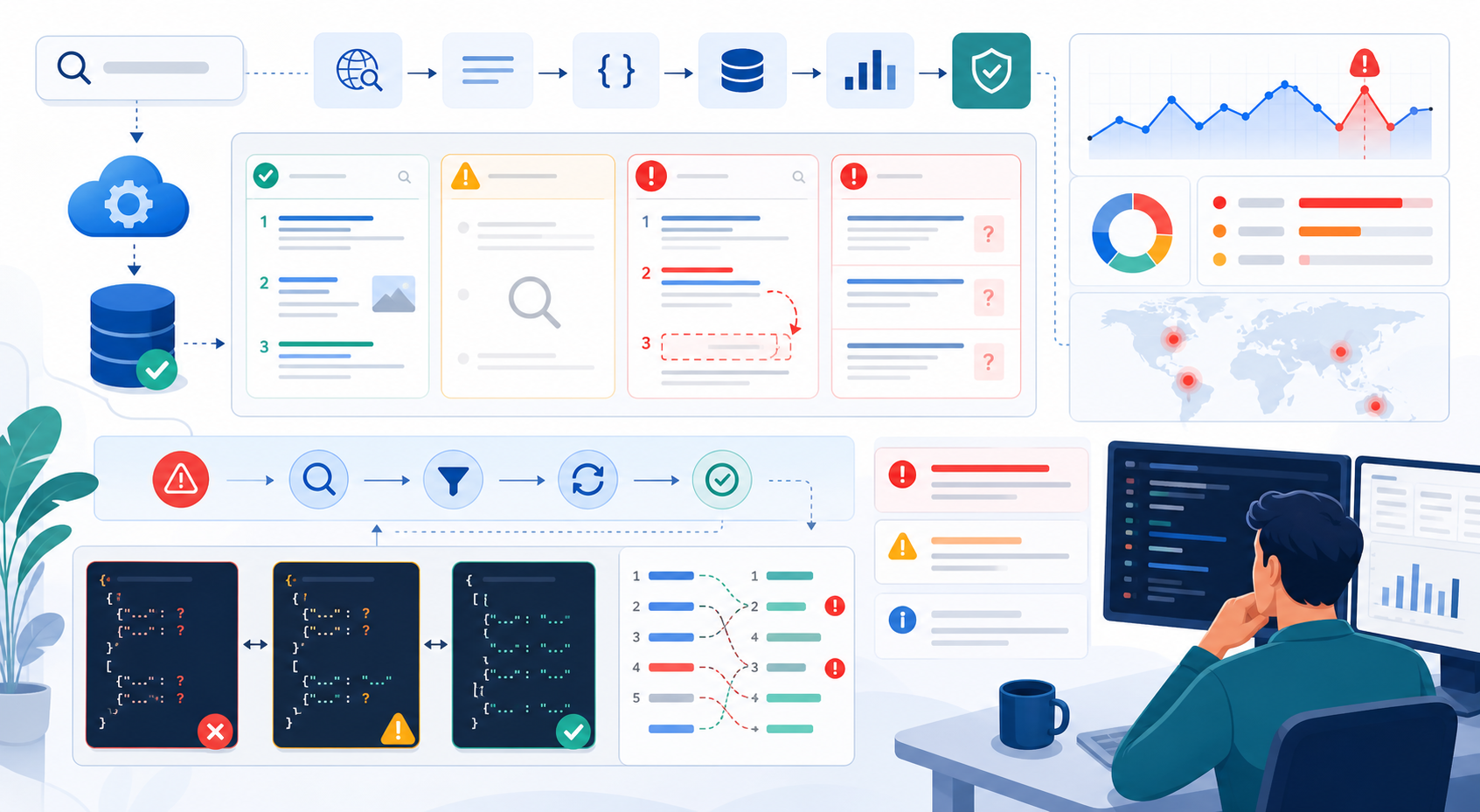
SERP API Troubleshooting: Fix Empty, Wrong, or Inconsistent Search Results
SERP API failures are not limited to obvious HTTP errors. A request can return successfully and still produce empty, incomplete, geographically wrong, duplicated, or misinterpreted search data. Production troubleshooting therefore has to separate transport problems from provider processing, SERP differences, and downstream parsing errors.
View Details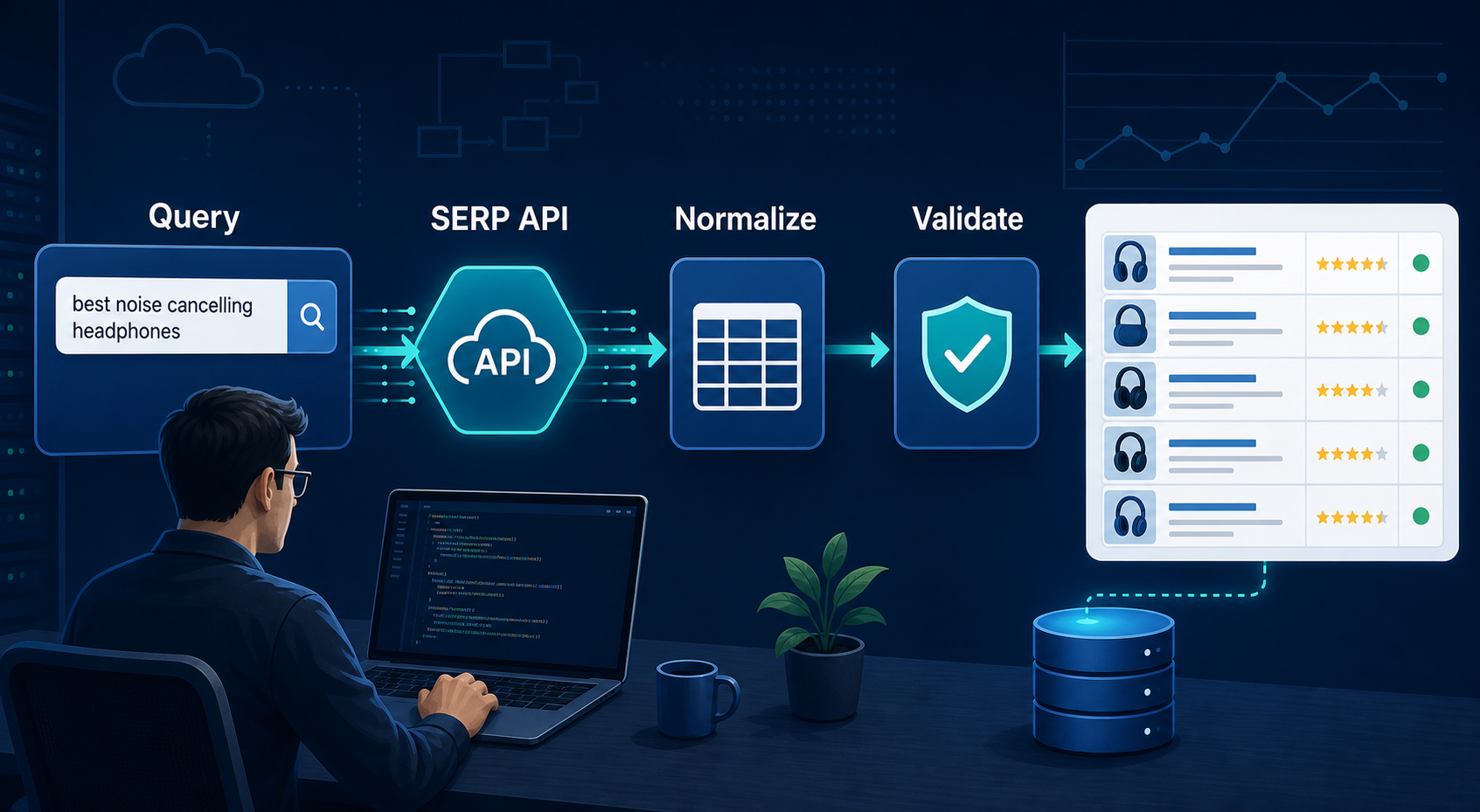
SERP API Python: How to Build a Reliable Search Data Pipeline
This guide shows a provider-neutral workflow for building that pipeline. It does not rank SERP API vendors. Instead, it focuses on the implementation choices that make a Python integration easier to operate, test, and migrate.
View Details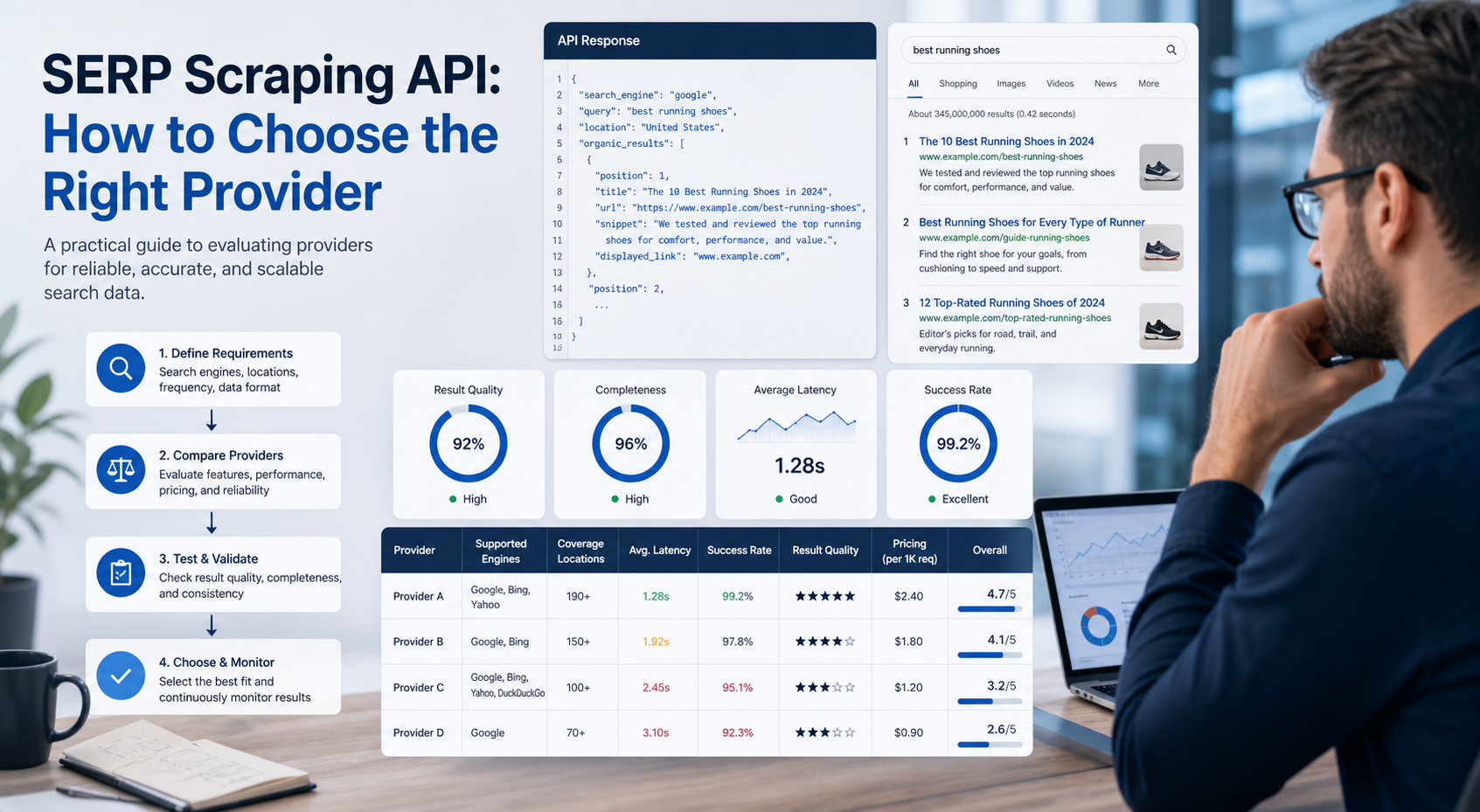
SERP Scraping API: How to Choose the Right Provider
Recommended Meta Description: Compare SERP scraping APIs by data coverage, localization, reliability, workflow fit, and cost structure, then choose and validate the right provider.
View Details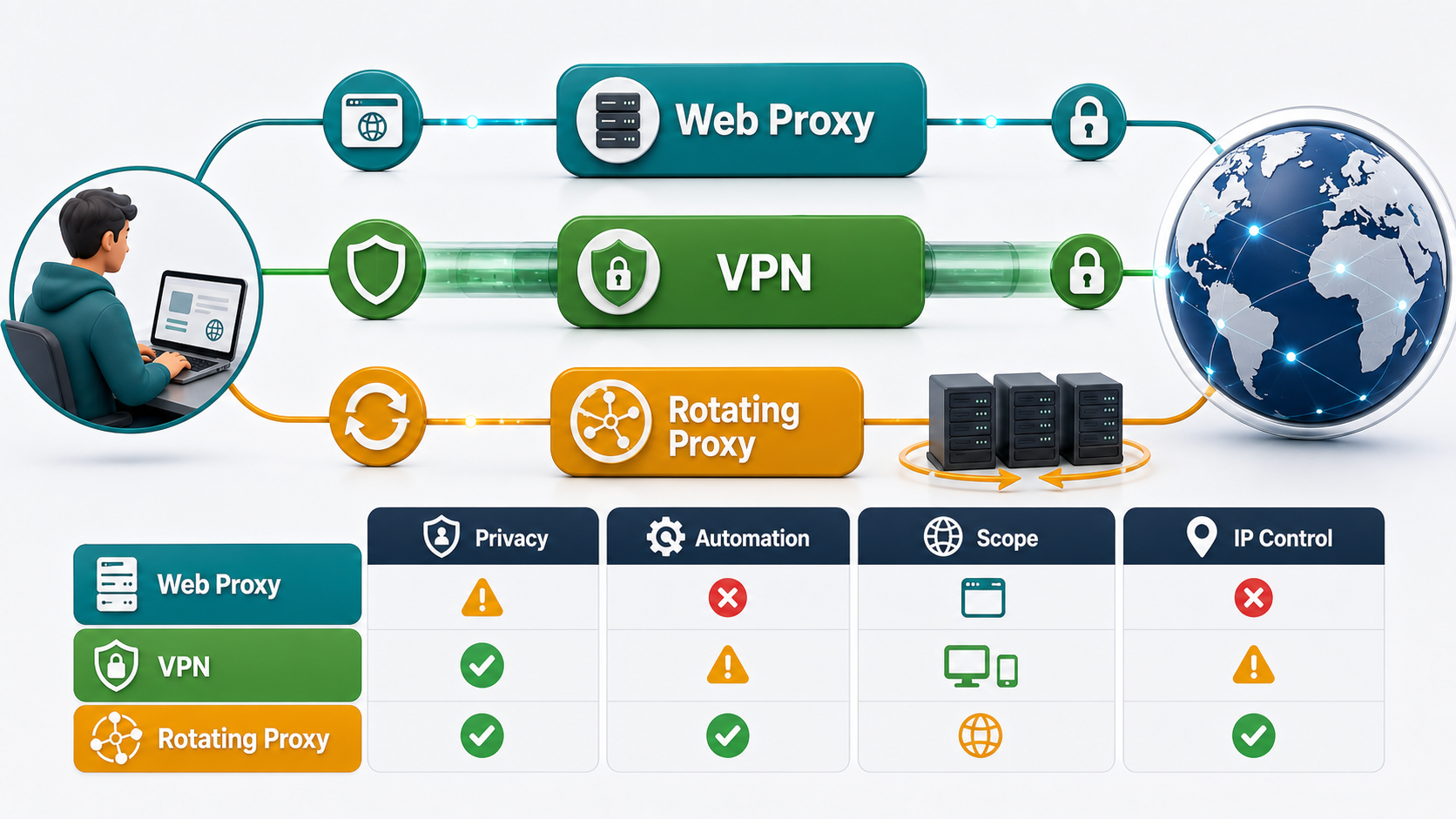
Free Web Proxy vs VPN vs Rotating Proxy: Which Should You Use?
Compare free web proxies, VPNs, rotating proxies, static proxies, and datacenter proxies by scope, encryption, IP control, automation, streaming, and account workflows.
View Details
BlockAway Not Working? Fix Common Proxy, Video, and Access Problems
Troubleshoot BlockAway when pages are blocked, YouTube fails, JavaScript breaks, speed drops, sessions expire, or mobile access behaves differently.
View Details