
Linux Essentials for Cybersecurity Professionals
Linux Essentials for Cybersecurity Professionals
You can't be a hacker without knowing Linux. This isn't gatekeeping, it's reality. Whether you're conducting penetration tests, analyzing malware, performing digital forensics, or managing security infrastructure, Linux proficiency isn't optional. It's the foundation upon which modern cybersecurity is built. Most security tools, from Metasploit to Wireshark, are designed with Linux as the primary platform. The command-line interface that might seem archaic to Windows users is actually the most powerful weapon in a security professional's arsenal. For IT staff and cybersecurity beginners coming from Windows backgrounds, the learning curve can feel steep, but the career rewards are undeniable. Understanding Linux transforms you from someone who runs security tools to someone who truly understands how systems work at a fundamental level. This knowledge is what separates script kiddies from respected professionals.
Explore LycheeIP secure proxies
Essential Linux Commands Every Security Professional Uses Daily
Mastering the Linux command line starts with understanding the tools you'll use every single day. These aren't academic exercises, they're the commands that will make or break your efficiency during security assessments, incident response, and system hardening.
Navigation and File Operations
The `ls`, `cd`, and `pwd` commands form your navigation trinity. While Windows users might reach for File Explorer, security professionals live in the terminal. The `ls -la` command reveals hidden files (those starting with a dot), file permissions, ownership, and timestamps—all critical during security audits. The `find` command becomes invaluable when hunting for SUID binaries during privilege escalation: `find / -perm -4000 2>/dev/null` will locate all files with the SUID bit set, potential vectors for gaining root access.
Text Processing and Analysis
The `grep` command is your best friend for log analysis. When investigating a potential breach, you might search thousands of log entries with `grep "Failed password" /var/log/auth.log` to identify brute force attempts. Combine it with `tail -f` to monitor logs in real-time, or pipe multiple commands together to filter and count specific events.
The `cat`, `less`, and `head` commands help you examine file contents. During forensics work, `strings` extracts human-readable text from binary files, often revealing hardcoded credentials or configuration details attackers left behind.
Network Reconnaissance
Network-related commands form the backbone of security reconnaissance. The `netstat -tulnp` command shows all listening ports and the processes using them—essential for identifying backdoors or unauthorized services. Modern alternatives like `ss` provide similar functionality with better performance.
The `ifconfig` or `ip addr` commands display network interface configuration, while `arp -a` reveals the ARP cache, useful for detecting ARP spoofing attacks. For DNS reconnaissance, `nslookup` and `dig` query domain information that often reveals infrastructure details.
Process and System Monitoring
Understanding running processes is critical for security work. The `ps aux` command lists all running processes, while `top` or `htop` provide real-time system monitoring. During incident response, you might use `ps -ef | grep suspicious_process` to track malicious software.
The `chmod` and `chown` commands manage permissions and ownership, fundamental for both hardening systems and understanding how attackers might exploit misconfigurations. Understanding that `chmod 777` grants everyone full permissions (a major security risk) is basic knowledge every professional needs.
Why Kali Linux Is the Standard for Penetration Testing
When you enter the world of offensive security, Kali Linux isn't just recommended, it's practically universal. Understanding why reveals important lessons about the cybersecurity ecosystem.
Purpose-Built for Security
Kali Linux, maintained by Offensive Security, comes pre-loaded with over 600 penetration testing tools. This isn't just convenience; it's about standardization. When a penetration testing framework mentions using Metasploit, Burp Suite, Nmap, or Aircrack-ng, they assume you're working in an environment where these tools are already configured and integrated. Kali provides this out of the box.
The distribution is specifically hardened for security work. It's designed to run tools that would trigger antivirus alerts on standard systems. It includes specialized kernel patches and drivers for packet injection, monitor mode on wireless adapters, and other functionality required for security assessments.
The Offensive Security Ecosystem
Kali's creators, Offensive Security, also offer the industry-leading OSCP (Offensive Security Certified Professional) certification. Their training environments and exam systems are built around Kali. Learning Kali isn't just about tools, it's about joining a professional ecosystem with consistent documentation, community support, and career pathways.
The community around Kali is massive. When you encounter issues during a penetration test, thousands of professionals have likely faced similar challenges and documented solutions. This collective knowledge base is invaluable when working under time pressure during security assessments.
Tool Categories That Matter
Kali organizes its tools into practical categories: Information Gathering (nmap, dmitry, maltego), Vulnerability Analysis (OpenVAS, Nikto), Wireless Attacks (Aircrack-ng, Reaver), Web Application Analysis (Burp Suite, SQLmap), Exploitation Tools (Metasploit, BeEF), and Post-Exploitation (Mimikatz, PowerSploit). Understanding this organization helps beginners navigate the overwhelming number of tools and build systematic testing methodologies.
Alternatives and When to Use Them
While Kali dominates penetration testing, ParrotOS offers similar functionality with a lighter footprint. For defensive security and digital forensics, distributions like SIFT Workstation or CAINE might be more appropriate. Understanding when to use which distribution demonstrates professional maturity beyond just running tools.
File System Navigation and Permissions in Security Contexts
The Linux file system hierarchy isn't arbitrary, it's a carefully organized structure that security professionals must understand intimately. Knowing where systems store logs, configurations, and executables often means the difference between finding evidence and missing critical indicators.
Critical Directories for Security Work
The `/etc` directory contains system configuration files. During security assessments, files like `/etc/passwd` and `/etc/shadow` contain user account information. The `/etc/ssh/sshd_config` file reveals SSH configuration that might include security weaknesses like password authentication or root login permissions.
The `/var/log` directory houses system logs essential for incident response. Files like `auth.log`, `syslog`, and `apache2/access.log` contain the forensic evidence needed to reconstruct security incidents. Understanding log rotation and how attackers might clear logs is fundamental knowledge.
The `/tmp` directory is world-writable, making it a common location for attackers to store malicious scripts or exploit code. Security professionals routinely check this location during incident response.
Understanding Permissions for Security
Linux permissions form a three-tier system: owner, group, and others, each with read (r), write (w), and execute (x) permissions. When you see `-rwxr-xr-x`, you're looking at a file where the owner has full permissions, while group and others can read and execute but not write.
The security implications are profound. A world-writable configuration file (permissions ending in `w`) could allow any user to modify system behavior. During privilege escalation, attackers hunt for exactly these misconfigurations.
Special Permissions: SUID, SGID, and Sticky Bit
The SUID (Set User ID) permission is particularly important for security. When set on an executable, it runs with the file owner's privileges, not the user who executes it. The `passwd` command needs this to allow regular users to change their passwords (which requires modifying `/etc/shadow`, a root-owned file).
But SUID is also a privilege escalation vector. If a SUID binary owned by root has a vulnerability, an attacker can exploit it to gain root access. This is why penetration testers always search for SUID files with `find / -perm -4000 -type f 2>/dev/null`.
The sticky bit (commonly seen on `/tmp`) prevents users from deleting files they don't own, even in world-writable directories. Understanding these nuanced permission mechanisms separates competent administrators from those who simply follow tutorials.
Path Traversal and Security
The Linux file system uses `/` as the root directory, with absolute paths starting from root (`/home/user/documents`) and relative paths based on your current location (`../../../etc/passwd`). This structure is critical for understanding path traversal attacks, where web applications fail to sanitize user input, allowing attackers to access files outside intended directories.
Building Your Linux Security Skillset
For Windows-background professionals and cybersecurity beginners, the path forward is clear: install Kali Linux (or start with Ubuntu if you want a gentler introduction), and commit to working in the terminal daily. Set up a home lab with virtual machines, practice on platforms like HackTheBox or TryHackMe, and challenge yourself to accomplish routine tasks via command line instead of GUI.
The cybersecurity industry doesn't require you to memorize every command, even experienced professionals reference documentation constantly. What matters is understanding core concepts: how the file system works, what processes are running and why, how permissions control access, and how to chain commands together to accomplish complex tasks efficiently.
Your career advancement in cybersecurity is directly proportional to your Linux proficiency. Every major security certification, from CompTIA Security+ to OSCP to GIAC certifications, assumes command-line competency. Every job posting for security analyst, penetration tester, or security engineer lists Linux skills as mandatory, not optional.
The good news? The skills you build learning Linux for security work transfer everywhere. You'll understand operating systems more deeply, think more systematically about problems, and develop the troubleshooting mindset that defines great security professionals. You really can't be a hacker without knowing Linux, but once you do, entire career pathways open before you.
Strategic Infrastructure: How LycheeIP Fits the Linux Security Workflow
While Linux provides the robust operating system and command-line tools required to perform security tasks, it cannot hide your physical network footprint. If you are conducting external penetration tests or simulating global threat actors, your Linux tools need professional-grade network infrastructure to function effectively in real-world scenarios.
This is where LycheeIP serves as the vital network layer for your Linux security environment:
1. Bypassing Automated Defenses with Residential Authenticity
- The Reputation Block: Security tools like Nmap or Gobuster are loud. If you run them directly from a standard cloud VPS or your home ISP, modern Web Application Firewalls (WAFs) will instantly drop your packets based on IP reputation.
- The LycheeIP Solution: LycheeIP provides access to 100% exclusive global residential proxy IP services. Because these IPs are assigned to real consumer devices, your Linux-based scanning traffic mimics legitimate human web requests, allowing you to bypass automated reputation filters and assess the true attack surface.
2. Precise Geographic Threat Simulation
- Testing Geo-Fencing: Many corporate environments block traffic originating from specific countries.
- Global Pivot: With coverage in 200+ countries and regions, LycheeIP allows your Linux machine to pivot its traffic geographically. You can configure your scripts to test if a target's geo-blocking firewall rules are actually working.
3. IP Purity and Cooling Protocols
- Avoiding Blacklist Interference: If you use a cheap, shared proxy in your Linux terminal, you risk inheriting an IP that is already on an abuse blacklist.
- Clean Baselines: LycheeIP enforces a strict cooling period of more than six months for every IP before it is reused. This guarantees your security assessments aren't blocked simply because the IP was previously used for spam.
4. Seamless Command-Line Integration
- Protocol Support: LycheeIP fully supports HTTP/HTTPS and SOCKS5 protocols.
- Linux Compatibility: This makes LycheeIP incredibly easy to integrate into a Linux workflow. By configuring the /etc/proxychains.conf file with your LycheeIP SOCKS5 credentials, you can force any Linux command (e.g., proxychains nmap -sT target.com) to route seamlessly through the proxy network without modifying the underlying tools.
Conclusion
Your career advancement in cybersecurity is directly proportional to your Linux proficiency. Every major security certification assumes command-line competency. Every job posting for a security analyst, penetration tester, or security engineer lists Linux skills as mandatory, not optional.
The skills you build learning Linux transfer everywhere. You'll understand operating systems more deeply, think more systematically about problems, and develop the troubleshooting mindset that defines great security professionals. You truly can't be a hacker without knowing Linux.
However, in today’s highly monitored internet landscape, technical expertise also requires an understanding of network integrity. Integrating a solution like LycheeIP into your practice allows you to route your Linux tools through pristine residential IPs, effectively simulating the sophisticated evasion tactics of real-world adversaries. Master the Linux command line, secure your network fingerprint with professional proxy infrastructure, and entire career pathways will open before you.
Frequently Asked Questions
Q: Do I need to learn Linux before starting cybersecurity training?
A: While you can start learning cybersecurity concepts on any platform, you'll hit a wall quickly without Linux skills. Most beginner-friendly certifications like CompTIA Security+ include Linux basics, so you can learn both simultaneously. However, having foundational command-line skills before diving into penetration testing or security operations will dramatically accelerate your progress.
Q: Should I start with Ubuntu or jump straight to Kali Linux?
A: If you have zero Linux experience, start with Ubuntu or Linux Mint for 2-4 weeks to get comfortable with basic navigation and commands. These distributions are more forgiving and have better documentation for beginners. Once you're comfortable with the terminal, transition to Kali Linux for security-specific work. Kali assumes you already know Linux fundamentals.
Q: What's the fastest way to learn essential Linux commands for security?
A: Hands-on practice beats reading every time. Set up a virtual lab with VirtualBox or VMware, install Kali Linux, and work through platforms like OverTheWire's Bandit challenges, TryHackMe's Linux Fundamentals rooms, or HackTheBox's Starting Point. Focus on commands you'll use daily: ls, cd, grep, find, chmod, netstat, and ps. Practice on real security scenarios rather than abstract tutorials.
Q: Can I do penetration testing on Windows instead of Linux?
A: While Windows Subsystem for Linux (WSL) and Windows-native tools exist, you'll struggle professionally. Most security teams use Linux-based systems, training materials assume Kali Linux, and many tools simply don't work properly on Windows. You can run Kali in a virtual machine on Windows hardware, giving you the best of both worlds, but your actual security work should happen in Linux.
Q: How long does it take to become proficient in Linux for cybersecurity?
A: Basic proficiency, comfortable navigating the file system, running security tools, and understanding permissions—takes about 2-3 months of regular practice (1-2 hours daily). Professional-level skills where you can write bash scripts, troubleshoot complex issues, and customize your environment typically require 6-12 months. The key is consistent hands-on practice, not just reading documentation.

Recommended Articles
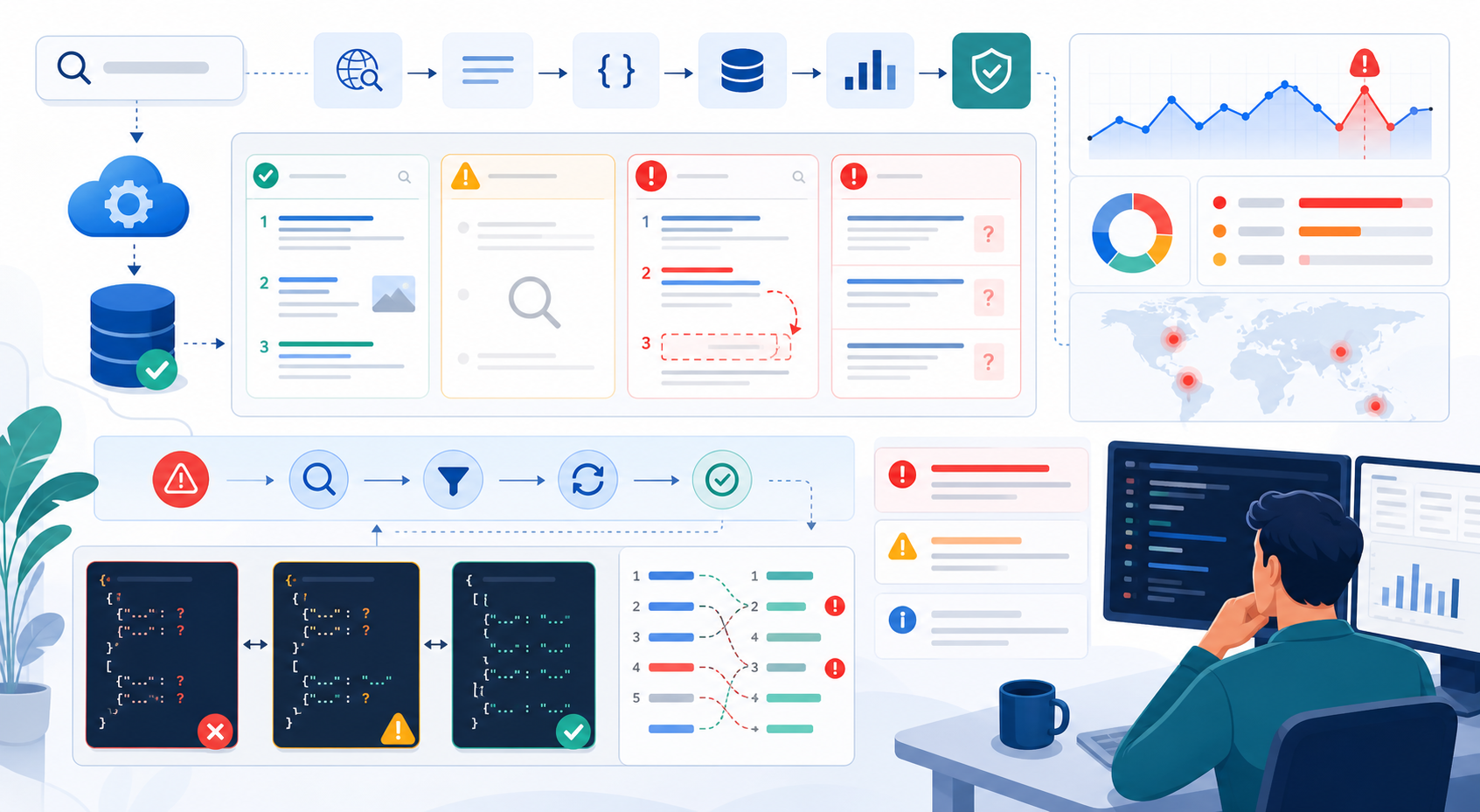
SERP API Troubleshooting: Fix Empty, Wrong, or Inconsistent Search Results
SERP API failures are not limited to obvious HTTP errors. A request can return successfully and still produce empty, incomplete, geographically wrong, duplicated, or misinterpreted search data. Production troubleshooting therefore has to separate transport problems from provider processing, SERP differences, and downstream parsing errors.
View Details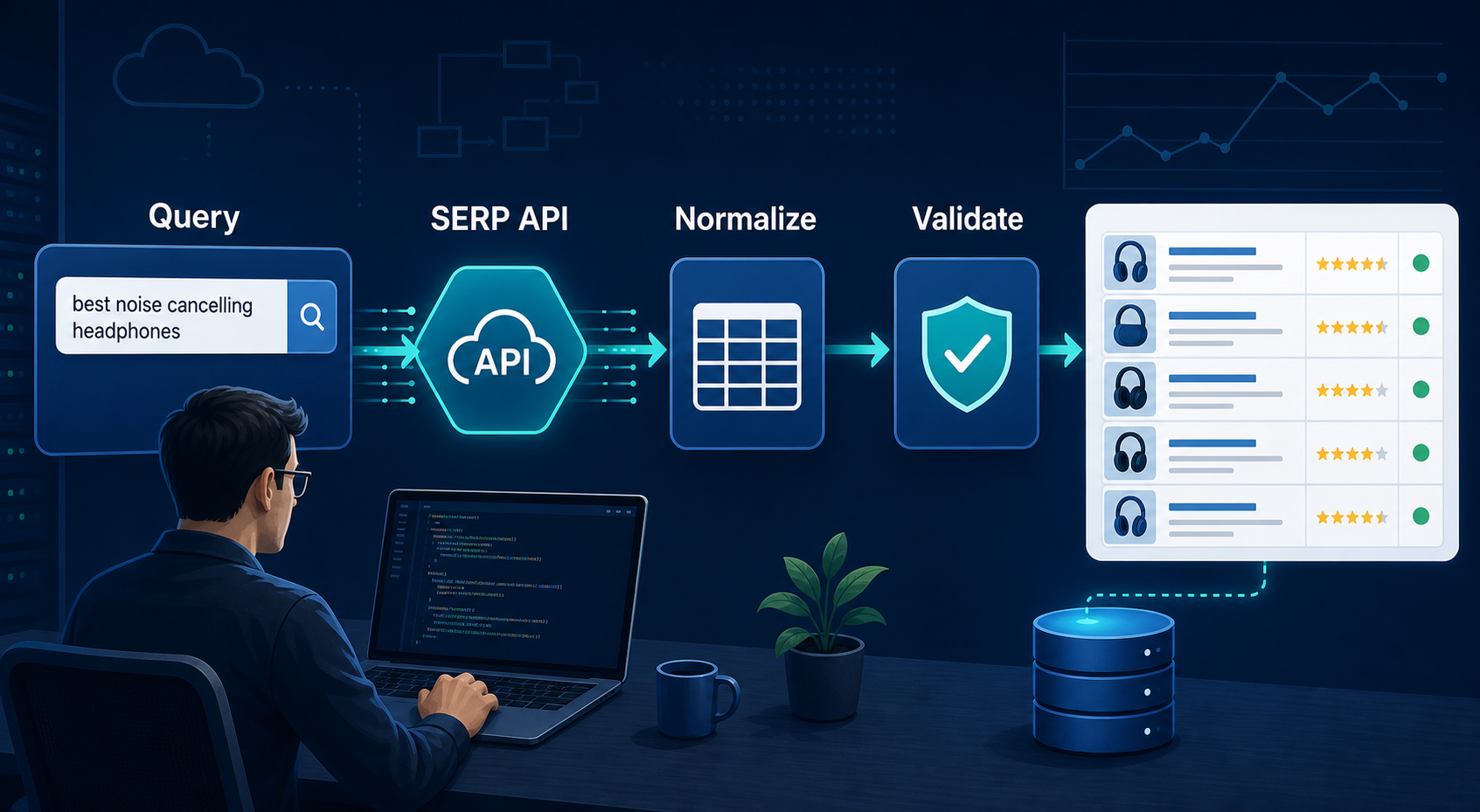
SERP API Python: How to Build a Reliable Search Data Pipeline
This guide shows a provider-neutral workflow for building that pipeline. It does not rank SERP API vendors. Instead, it focuses on the implementation choices that make a Python integration easier to operate, test, and migrate.
View Details
SERP Scraping API: How to Choose the Right Provider
Recommended Meta Description: Compare SERP scraping APIs by data coverage, localization, reliability, workflow fit, and cost structure, then choose and validate the right provider.
View Details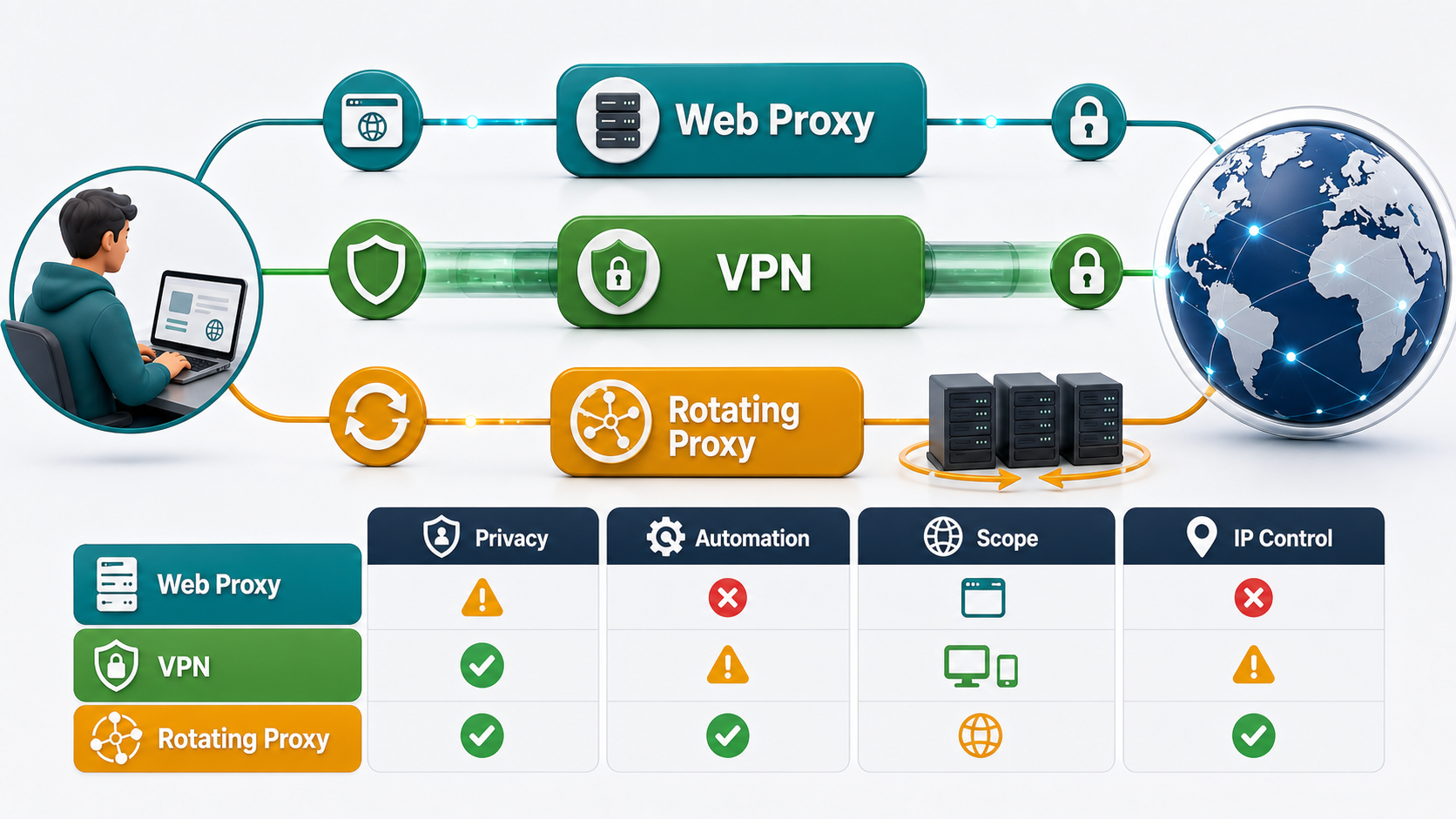
Free Web Proxy vs VPN vs Rotating Proxy: Which Should You Use?
Compare free web proxies, VPNs, rotating proxies, static proxies, and datacenter proxies by scope, encryption, IP control, automation, streaming, and account workflows.
View Details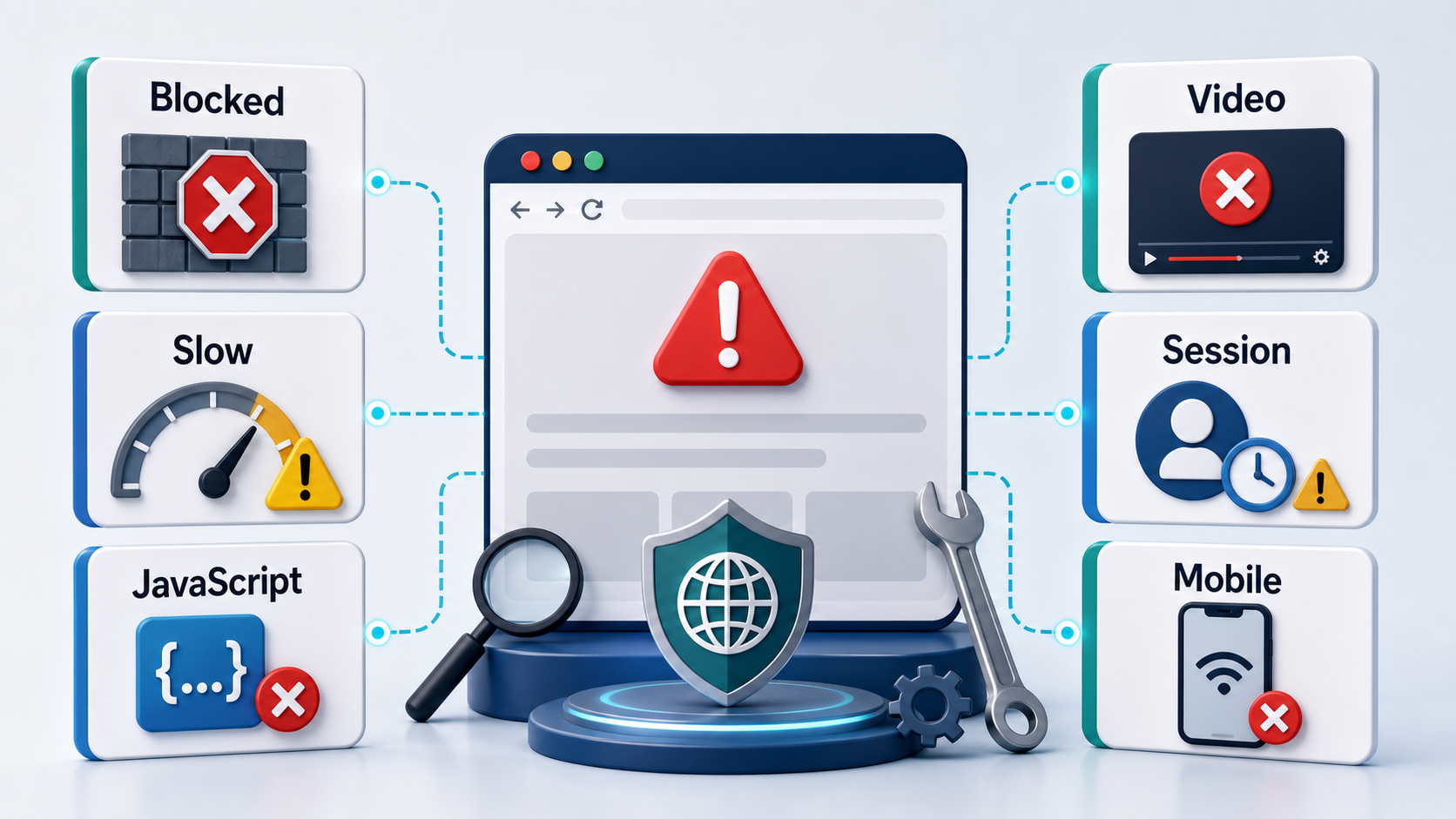
BlockAway Not Working? Fix Common Proxy, Video, and Access Problems
Troubleshoot BlockAway when pages are blocked, YouTube fails, JavaScript breaks, speed drops, sessions expire, or mobile access behaves differently.
View Details