
IP Metropolitan Area Network: How It Connects Cities And Business Networks
IP Metropolitan Area Network: How It Connects Cities And Business Networks
What is an IP metropolitan area network and how is it different from LAN and WAN?
An IP metropolitan area network is a high-performance network infrastructure that covers a city or a large campus, using Internet Protocol (IP) to interconnect multiple Local Area Networks (LANs) and bridge them to a Wide Area Network (WAN). Essentially, the IP metropolitan area network serves as the middle ground between the smaller scope of a single building and the global reach of the internet.
To understand the IP MAN, you must distinguish it from its counterparts. A LAN (Local Area Network) typically covers a single office or building, providing connectivity via Ethernet switches and Wi-Fi. A wide area network spans vast geographical distances: countries or continents, often utilizing leased infrastructure from major telecom providers. The metropolitan area network sits between them. It aggregates data from numerous LAN endpoints within an urban environment and funnels it toward the wide area network.
When developers ask what is MAN architecture efficiently, the answer lies in the protocol. By utilizing IP (Internet Protocol) rather than legacy circuit-switching, an IP metropolitan area network allows for flexible routing, easier scalability, and integration with modern cloud applications.
For a data infrastructure provider like LycheeIP, understanding the IP metropolitan area network is critical. The stability of residential proxies and data collection often depends on the quality of the IP MAN operated by local ISPs.
Use LycheeIP to test rotating proxies
How does an IP metropolitan area network work architecturally?
An IP metropolitan area network works by segmenting traffic into three distinct zones: the access layer, the aggregation layer, and the core layer. Traffic originates at the customer site, moves through the access layer, is combined at aggregation points, and travels rapidly through the core.
The role of the access layer in urban connectivity
The access layer is the entry point into the IP metropolitan area network. This is where a business LAN, a cell tower, or a residential building connects to the provider's network. In a modern IP MAN, the access layer often utilizes fiber optics to deliver high bandwidth directly to the user. Without a robust access layer, the capacity of the core network is wasted because data cannot enter or exit fast enough.
Aggregation and the core layer design
Once traffic leaves the access layer, it hits the aggregation layer. Here, switches combine traffic from many different access layer nodes. Finally, the core layer routes this aggregated traffic across the city or offloads it to the wide area network. The core must be incredibly fast, often handling Terabits of data per second.
Subnets and routing across the metro
Efficient IP addressing is vital. Network engineers use subnets to divide the urban area logically. This ensures that a broadcast storm in one part of the IP metropolitan area network does not paralyze the entire city.
Which technologies power a high bandwidth IP MAN?
A modern IP metropolitan area network relies heavily on Carrier Ethernet, E-Access, and advanced routing protocols like SR-MPLS to maintain speed and stability.
Carrier Ethernet and E-Access explained
Carrier Ethernet has become the standard for transport. It extends the simplicity of Ethernet (used in your LAN) over the larger footprint of a metropolitan area network. E-Access is a specific service type within Carrier Ethernet. E-Access allows a service provider to reach a customer location through a partner's network while maintaining a consistent Ethernet connection. For businesses requiring high bandwidth, Carrier Ethernet is superior to older copper-based technologies.
Moving away from legacy leased lines
Historically, organizations used T1/E1 leased lines for point-to-point connections. While secure, leased lines are expensive and difficult to scale. A modern IP metropolitan area network replaces multiple physical leased lines with virtual circuits over a shared fiber backbone. This reduces cost while increasing the available high bandwidth for users.
Implementing SR-MPLS and route reflectors
To manage routing efficiently, engineers use SR-MPLS (Segment Routing over MPLS). SR-MPLS simplifies the network by reducing the number of protocols needed to steer traffic. It allows the IP MAN to strictly control the path data takes through the urban grid. Additionally, route reflectors are used to manage BGP (Border Gateway Protocol) sessions. Instead of every router talking to every other router, route reflectors act as a central point for distributing routing information, significantly reducing overhead in a large IP metropolitan area network.
Why do organizations prioritize metropolitan area network uses?
Organizations prioritize metropolitan area network uses because they offer superior speed, lower latency, and better control than standard internet connections.
High bandwidth applications in business and government
Common metropolitan area network uses include interconnecting university campuses, linking government buildings, and connecting bank branches. In an urban setting, high bandwidth is non-negotiable. Hospitals use the IP MAN to transfer massive MRI files between clinics instantly. Financial firms rely on the low latency of the IP metropolitan area network for high-frequency trading.
Real-world metropolitan area network example cases
A classic metropolitan area network example is a "Smart City" deployment. Sensors on traffic lights, CCTV cameras, and public Wi-Fi all connect to a single IP metropolitan area network. Another metropolitan area network example is a regional ISP that aggregates traffic from thousands of residential modems (the access layer) before handing it off to a Tier 1 transit provider. For developers using LycheeIP, these residential ISP networks are exactly where ethical residential proxies operate.
Use LycheeIP to test rotating proxies
How does traffic management ensure reliability in an IP MAN?
Traffic management in an IP metropolitan area network ensures that critical applications receive priority during periods of congestion. Without active traffic management, a sudden surge in video streaming could choke out voice calls or critical database replication.
Controlling congestion with traffic management policies
Network engineers apply traffic management policies (QoS) at the access layer and the core. These policies tag packets based on importance. Voice and SR-MPLS control traffic get the highest priority. Bulk data transfers get lower priority. Effective traffic management is the difference between a jittery connection and a smooth, enterprise-grade link.
Configuring route reflectors for scalability
As the network grows, traffic management becomes linked to routing stability. Route reflectors play a key role here. If the routing table is unstable, traffic management policies cannot be applied correctly because the routers are too busy recalculating paths. By using route reflectors, the IP metropolitan area network remains stable, allowing traffic management rules to function effectively.
What are the metropolitan area network advantages and disadvantages?
When evaluating infrastructure, you must weigh the metropolitan area network advantages and disadvantages carefully.
Analyzing the metropolitan area network advantages and disadvantages
The primary metropolitan area network advantages and disadvantages revolve around performance versus complexity.
- Advantage: Extremely high bandwidth compared to standard wide area network links.
- Advantage: Lower latency because traffic stays local within the urban area.
- Advantage: Shared infrastructure reduces the cost compared to running physical leased lines everywhere.
However, the metropolitan area network advantages and disadvantages also include:
- Disadvantage: High installation costs if fiber does not already exist.
- Disadvantage: Complexity in managing traffic management and security across a shared medium.
- Disadvantage: A physical break in the urban fiber ring can impact many users if redundancy isn't configured.
Cost versus performance trade-offs
When reviewing metropolitan area network advantages and disadvantages, cost is a major factor. While Carrier Ethernet and E-Access reduce operational costs over time, the initial CapEx for access layer equipment and fiber trenching can be high.
How do topologies like partial mesh affect performance?
Network topology dictates how routers interconnect, and in an IP MAN, a partial mesh is often the preferred design.
Ring vs. partial mesh designs
A ring topology is common for the access layer. It’s cheap and offers simple redundancy. However, the core usually uses a partial mesh. In a partial mesh, key routers connect to multiple other routers, but not all of them. A partial mesh offers a balance between the high cost of a full mesh and the single point of failure in a star topology.
Redundancy in an urban environment
A partial mesh ensures that if one fiber path is cut by construction work (a common urban hazard), SR-MPLS can instantly reroute traffic through an alternate path. This resilience is vital for metropolitan area network uses involving emergency services or critical data infrastructure. Route reflectors are also often deployed in pairs within a partial mesh to ensure the control plane survives a failure.
How does LycheeIP view network reliability?
At LycheeIP, we understand that data collection is only as good as the network it travels on. Whether you are scraping public data or testing ad verification, the underlying IP metropolitan area network used by residential ISPs dictates uptime and success rates. We curate our proxy pools to ensure they run on robust, healthy networks that utilize modern traffic management and high bandwidth connections.
Comparison: LAN vs. IP MAN vs. WAN
| Feature | LAN (Local Area Network) | IP MAN (Metro Area Network) | WAN (Wide Area Network) |
| Scope | Single building or campus. | Urban city or large region. | Country, continent, or global. |
| Primary Protocol | Ethernet / Wi-Fi. | Carrier Ethernet / IP / SR-MPLS. | MPLS / IP / Fiber Optics. |
| Bandwidth | Very High (1Gbps - 100Gbps). | High bandwidth (100Mbps - 100Gbps). | Variable (depends on distance). |
| Ownership | Private (User owned). | Public/Private (ISP or Gov). | Service Provider / Consortium. |
| Topology | Star or Mesh (Wi-Fi). | Ring or Partial Mesh. | Point-to-Point / Mesh. |
| Key Component | Switch / Access Point. | Route Reflectors / Metro Switches. | Core Routers / Subsea Cables. |
Use LycheeIP to test rotating proxies
Frequently Asked Questions (FAQs)
1. What is MAN in the context of networking?
When people ask "what is MAN," they are referring to a Metropolitan Area Network. It is a network that spans a physical city or urban campus, connecting multiple LANs together using technologies like Carrier Ethernet.
2. How does SR-MPLS improve an IP MAN?
SR-MPLS (Segment Routing over MPLS) simplifies routing by encoding the path information in the packet header. This makes traffic management easier and allows the network to automatically route around failures in a partial mesh topology without heavy protocol overhead.
3. Why are leased lines being replaced by Carrier Ethernet?
Legacy leased lines are expensive, fixed-capacity circuits. Carrier Ethernet allows for scalable, flexible bandwidth over the same physical fiber, making it more efficient for modern metropolitan area network uses.
4. What is the function of the access layer?
The access layer is the edge of the network where end-user devices or business LANs connect to the service provider. It aggregates traffic onto the IP metropolitan area network using E-Access or similar standards.
5. What are common metropolitan area network advantages and disadvantages?
The main metropolitan area network advantages and disadvantages are speed versus complexity. Advantages include high bandwidth and centralized control. Disadvantages include higher setup costs and the need for skilled engineers to manage route reflectors and traffic management policies.
6. Can you give a metropolitan area network example?
A common metropolitan area network example is a cable TV provider's network in a city. It connects thousands of homes (LANs) to a central headend via fiber rings and a partial mesh core, eventually linking to the wide area network.

Recommended Articles
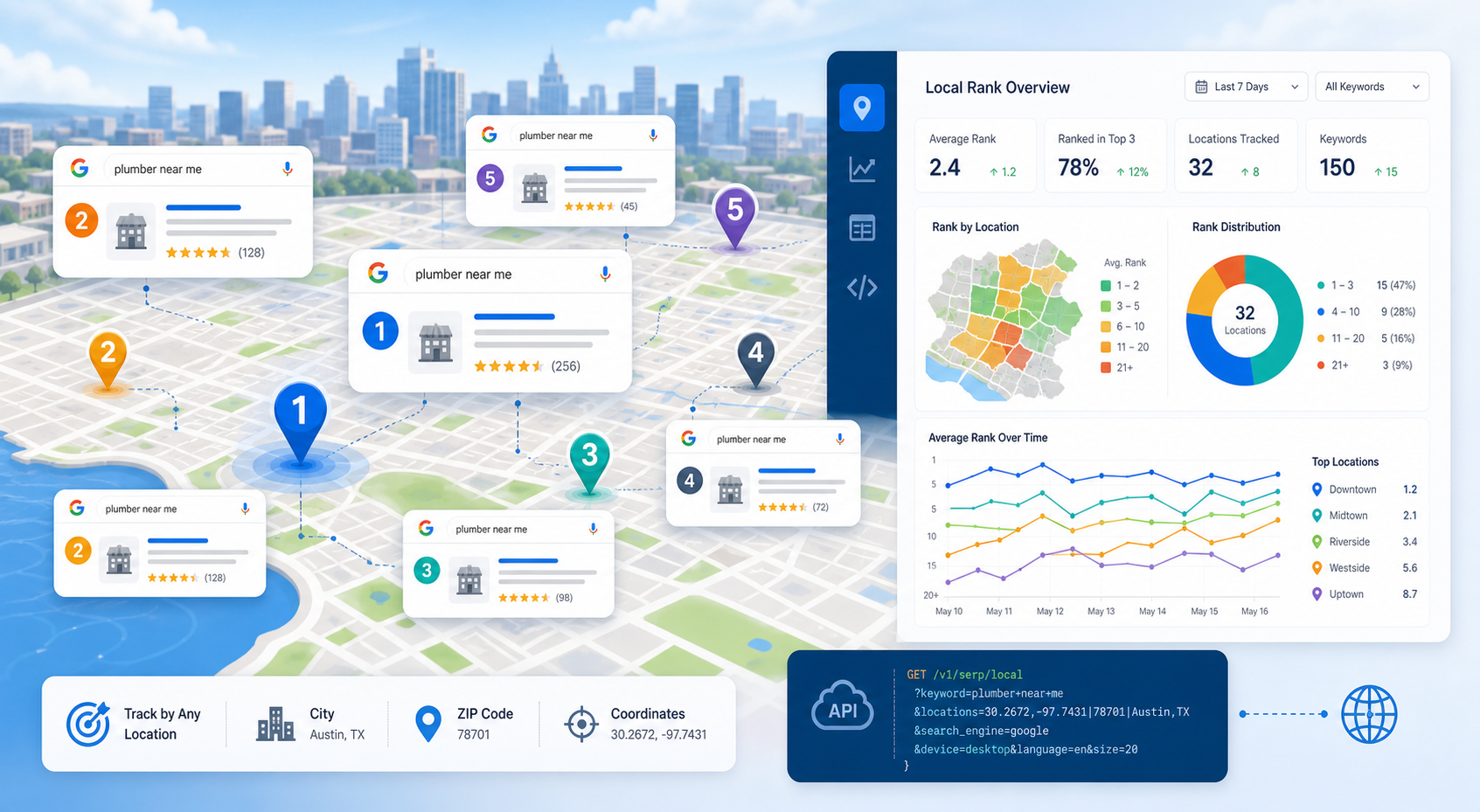
SERP Tracking API: How to Track Local Google Rankings by Location
A SERP tracking API collects search-result positions on a repeatable schedule so SEO teams can measure visibility over time. For local SEO, the useful question is not simply “What rank are we?” It is “What rank are we from this location, on this device, for this result type, at this time?”
View Details
Octo Browser for SEO & Affiliate Marketing: The Multi-Account Solution Marketers Trust
Stop losing your hard earned revenue to sudden account suspensions. Discover how to completely isolate your outreach profiles and scale your campaigns without ever triggering a security flag.
View Details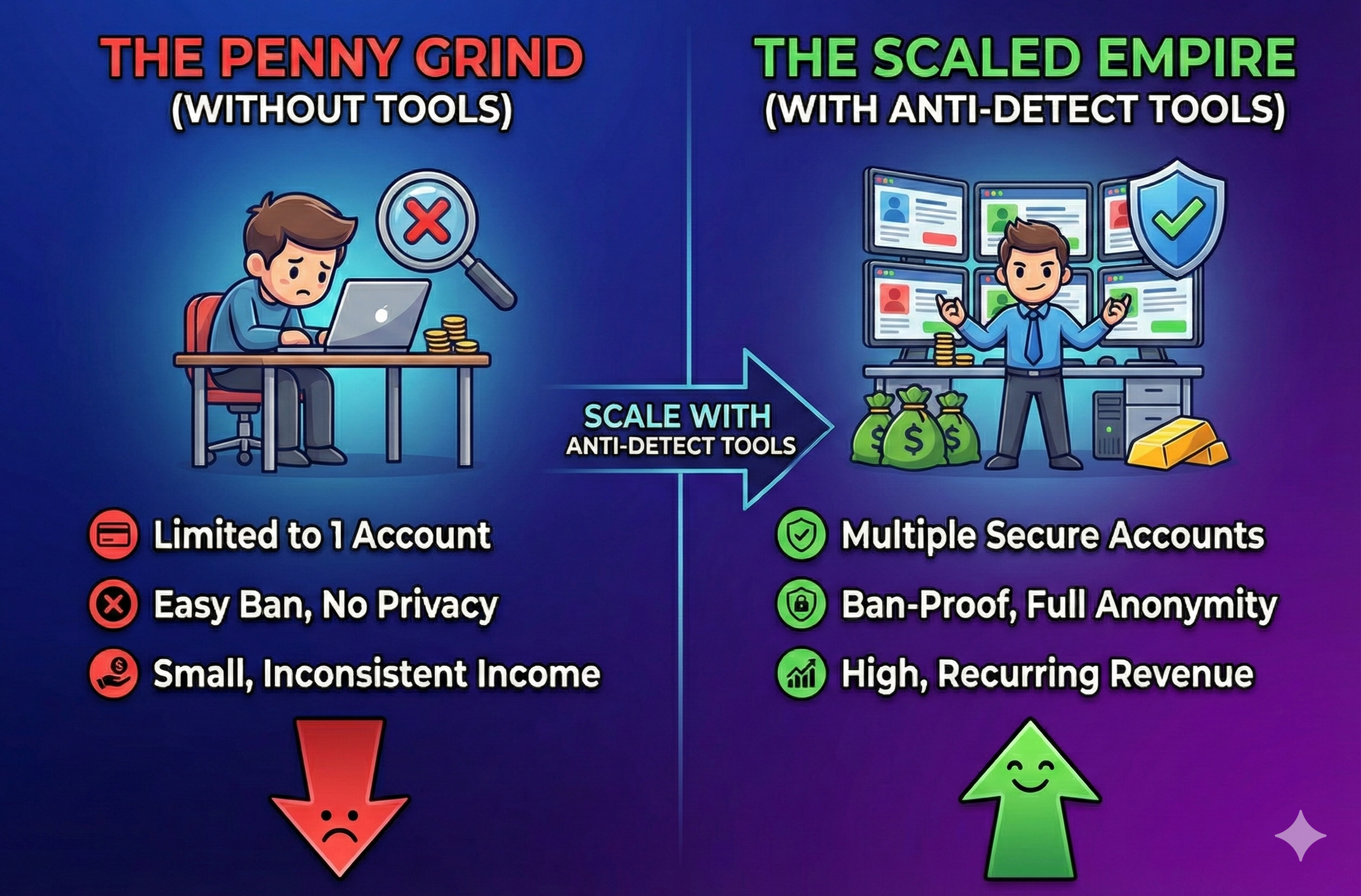
Stop Earning Pennies: Scale with Anti-Detect Tools
Stop letting the fear of account bans limit your business growth. Discover how modern antidetect browsers and clean proxies keep your digital identities isolated so your team can scale securely.
View Details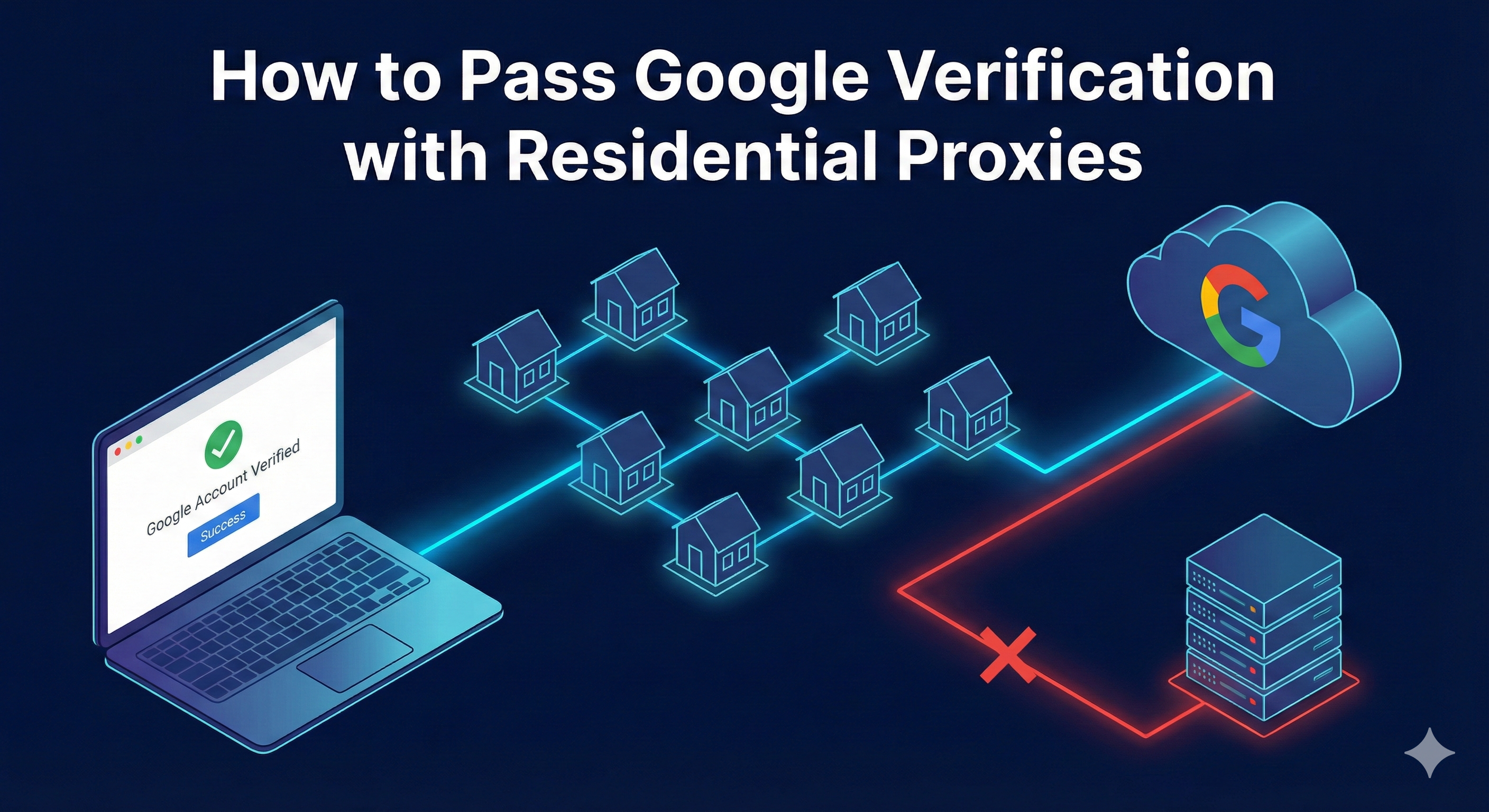
Google Account Verification Issues: Safe Troubleshooting Guide
If Google asks for verification, use the on-screen challenge or official account-recovery process from a familiar device and stable network. Do not try to bypass verification with purchased accounts, disposable phone numbers, anti-detect tools, or repeated proxy rotation. Those tactics can increase risk signals, violate policy, and make recovery harder.
View Details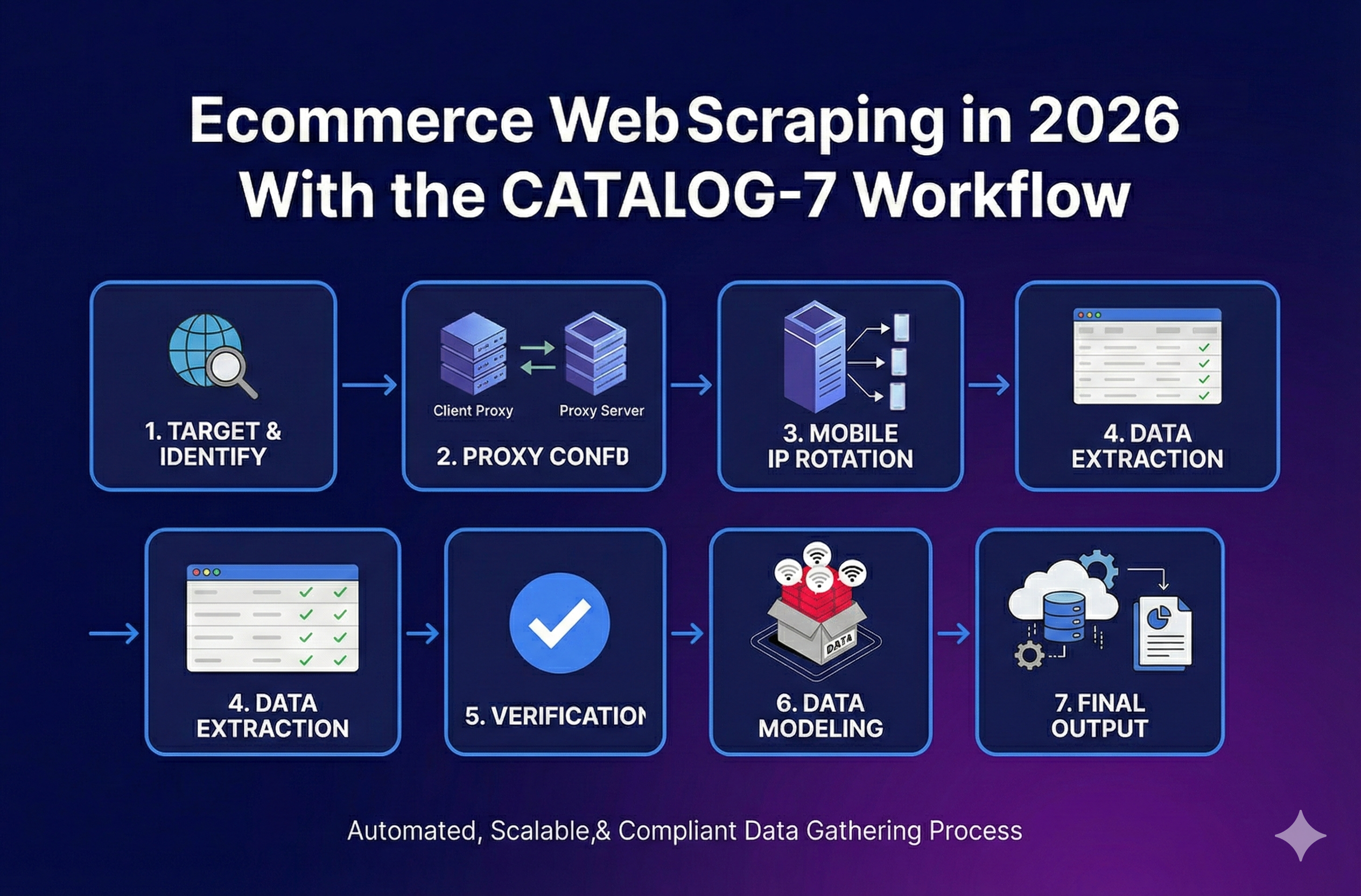
Ecommerce Web Scraping in 2026 With the CATALOG-7 Workflow
Stop broken feeds. Get a reliable ecommerce web scraping workflow, a Python stack picker, and a troubleshooting guide to handle variants and blocks.
View Details