
How to Use Hidemium to Run Multiple Accounts Without Getting Banned
Hidemium Antidetect Browser: Proxy Setup and Multi-Account Management
What is Hidemium and what does an antidetect browser do?
Hidemium is a specialized browser designed to create isolated browsing environments by altering "fingerprint" signals. Unlike standard browsers that share a single digital identity with every website you visit, Hidemium allows you to generate multiple, unique profiles that appear as completely different devices to tracking systems.
To understand how Hidemium works, it is helpful to define a few core technical concepts:
- Browser Fingerprint: A collection of data points (screen resolution, fonts, hardware specs, and software versions) that websites use to identify you even without cookies.
- Profile Isolation: The process of keeping cookies, local storage, and cache separate for every session so that "Account A" never sees data from "Account B."
- Proxy: A gateway server that replaces your actual IP address with a new one, providing the geographic and network identity for your profile.
Explore LycheeIP’s exclusive proxy pools
Why do teams use Hidemium for managing multiple accounts?
Managing multiple accounts on platforms like social media, e-commerce marketplaces, or ad networks is difficult because these platforms actively look for "linked" accounts. If one account is flagged, all other accounts sharing the same fingerprint or IP address are often banned simultaneously.
Common use cases include:
- E-commerce & Dropshipping: Operating multiple store-fronts or buyer accounts across different regions.
- Ad Verification: Checking how advertisements appear to users in different countries without being blocked.
- Social Media Agencies: Managing dozens of client accounts from a single workstation without triggering security alerts.
- QA & Web Scraping: Testing how websites respond to different device configurations or harvesting data without hitting rate limits.
Assumptions & Limitations
· Antidetect browsers do not guarantee 100% anonymity; platform algorithms are constantly evolving.
· Success depends heavily on the quality of the proxies used.
· Using these tools to bypass "Terms of Service" can result in permanent account suspension.
How do you configure proxy settings in Hidemium?
Proper proxy setup is the most critical step in ensuring your profiles remain undetected. Hidemium features a built-in proxy manager that allows for per-profile assignment or bulk importing.
To configure a proxy, you typically need to input data in one of these standard formats:
- IP:Port (e.g., 192.168.1.1:8080)
- IP:Port:User:Pass (e.g., 192.168.1.1:8080:username:password)
Step-by-Step Proxy Integration
- Create a New Profile: Open Hidemium and click on the "Create Profile" button.
- Navigate to Proxy Settings: Select the "Proxy" tab within the profile configuration window.
- Choose Protocol: Select either HTTP/HTTPS or SOCKS5. Ensure this matches the protocol provided by your proxy provider.
- Enter Credentials: Paste your proxy string. If using LycheeIP, you can often use the IP whitelisting feature (up to 5 IPs for static residential) to bypass the need for a password.
- Check Proxy: Always click the "Check Proxy" button before saving. This ensures the IP is active and the geolocation matches your intended target.
Explore LycheeIP’s exclusive proxy pools
How LycheeIP fits into your Hidemium workflow
While Hidemium manages the "browser" side of your identity, LycheeIP provides the "network" side.
- Exclusive Pools: Every IP undergoes a cooling period of over six months, reducing the risk of using a "burnt" or flagged address.
- Developer-First: Real-time usage statistics and account management are available via a simple API.
- High Performance: Static datacenter proxies offer low latency (<50ms) and 1Gbps+ throughput for intensive tasks.
- Global Coverage: Access to over 200 countries for dynamic residential needs.
Which proxy type works best for your workflow?
Choosing the right proxy depends on the sensitivity of the accounts you are managing.
| Proxy Type | Best For | Tradeoff |
| Static Residential | Long-term account management (Social/Ecom) | Higher cost per IP |
| Dynamic Residential | Web scraping, data collection, ad verification | IP changes frequently; not for persistent logins |
| Static Datacenter | High-speed tasks, bulk browsing, low-security sites | Easier for sophisticated platforms to detect |
| Broadcast Proxies | Large scale data needs requiring GDPR compliance | Shared resource pools |
How do you reduce bans when using Hidemium?
A proxy alone isn't enough. You must ensure that your browser's internal settings "match" the proxy’s location. This is often where users fail.
The Alignment Checklist
- Timezone: Your profile timezone must match the proxy IP's location. If your proxy is in New York, your browser clock should not be in London.
- WebRTC: Disable or "Fake" WebRTC to prevent your real local IP from leaking behind the proxy.
- DNS: Ensure your DNS requests are routed through the proxy, not your local ISP.
- Language: Set the browser language to match the proxy’s country (e.g., fr-FR for a Paris-based proxy).
Troubleshooting Common Failures
| Issue | Likely Cause | Recommended Fix |
| Proxy connection failed | Authentication error or dead IP | Check IP whitelist or re-verify username/password. |
| Website sees real location | WebRTC or DNS leak | Enable "Base on IP" for WebRTC/Timezone in Hidemium. |
| Account immediate ban | "Dirty" IP or fingerprint mismatch | Use IPs with a 6-month cooling period (like LycheeIP). |
| Slow loading speeds | High latency datacenter proxy | Switch to a provider with <50ms latency. |
Explore LycheeIP’s exclusive proxy pools
Which is better: Hidemium vs AdsPower?
Both tools are industry leaders, but they cater to slightly different preferences. AdsPower is often cited for its mature automation ecosystem and extensive "RPA" (Robotic Process Automation) features. Hidemium is frequently praised for its modern interface and specific community resources found in the Forum Hidemium.
If you require deep team collaboration and have complex automated workflows, AdsPower might have the edge. If you prefer a streamlined, developer-friendly experience with robust documentation, Hidemium is an excellent choice.
Official Resources and Support
To stay updated and avoid security risks, only use official channels for Hidemium:
- Documentation: docs.hidemium.io for API and setup guides.
- Forum: forum.hidemium.io for community-driven troubleshooting and templates.
- Dashboard: Always login through the official domain to manage your browser licenses.
Explore LycheeIP’s exclusive proxy pools
Frequently Asked Questions:
1. Can I use Hidemium to bypass Google security?
Hidemium helps manage identities, but "bypassing" security depends on your behavior and proxy quality. Google uses advanced AI to detect patterns beyond just fingerprints.
2. Is Hidemium a private browser?
It is an antidetect browser. While it offers more privacy than Chrome, its primary purpose is managing multiple identities, not simple "incognito" browsing.
3. How many proxies can I use in Hidemium?
There is no hard limit within the software; you can assign a unique proxy to every profile you create.
4. Does Hidemium work on mobile?
Hidemium is primarily a desktop application designed for managing complex browser environments that mobile OS restrictions often prevent.
5. How do I import a phone number into Hidemium?
You don't "import" a number into the browser; you use Hidemium to access the account that is verified by that number.
6. Is there a free version of Hidemium?
Most antidetect browsers offer a limited free tier or a trial period. Check the official pricing page for current offers.

Recommended Articles

SERP API Troubleshooting: Fix Empty, Wrong, or Inconsistent Search Results
SERP API failures are not limited to obvious HTTP errors. A request can return successfully and still produce empty, incomplete, geographically wrong, duplicated, or misinterpreted search data. Production troubleshooting therefore has to separate transport problems from provider processing, SERP differences, and downstream parsing errors.
View Details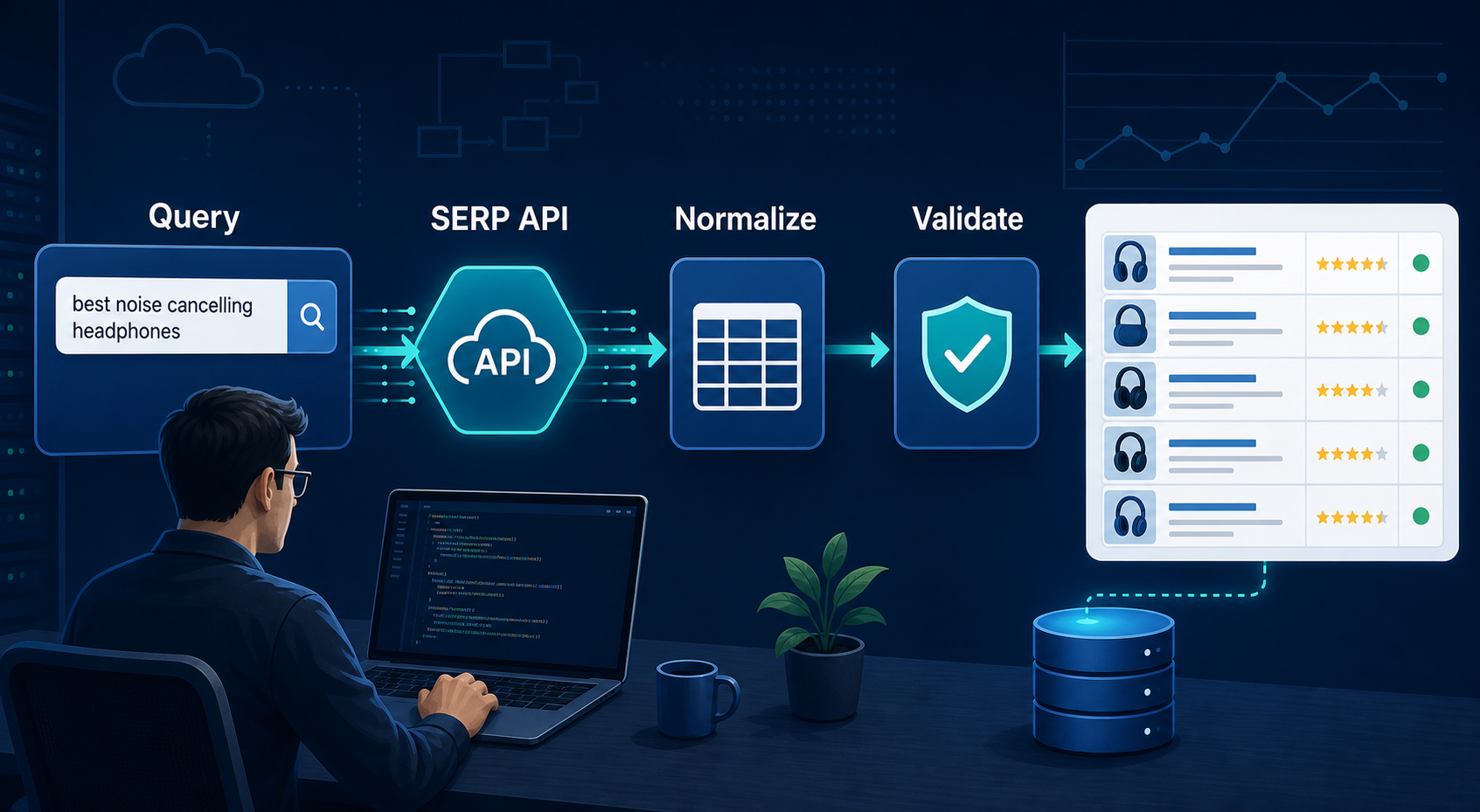
SERP API Python: How to Build a Reliable Search Data Pipeline
This guide shows a provider-neutral workflow for building that pipeline. It does not rank SERP API vendors. Instead, it focuses on the implementation choices that make a Python integration easier to operate, test, and migrate.
View Details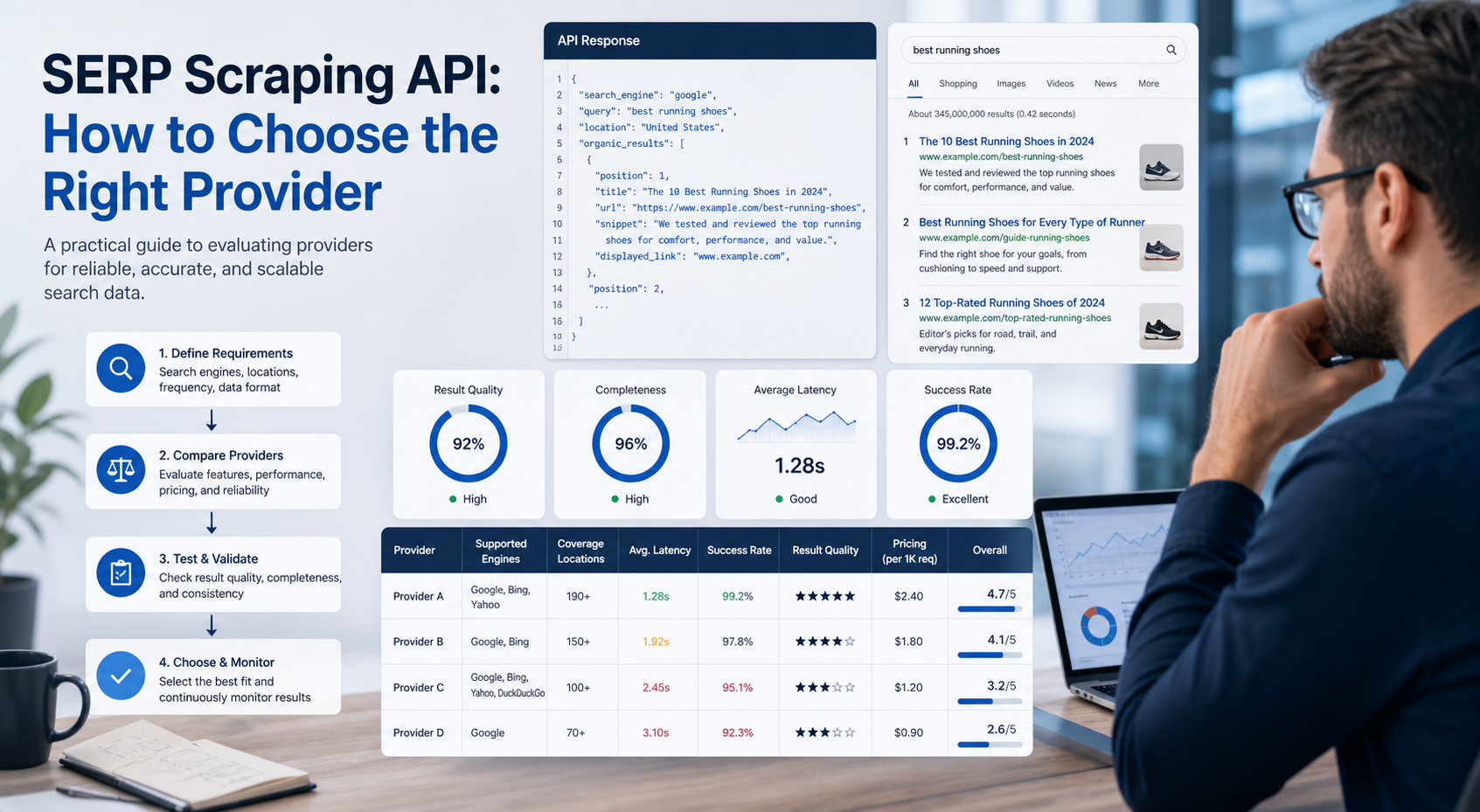
SERP Scraping API: How to Choose the Right Provider
Recommended Meta Description: Compare SERP scraping APIs by data coverage, localization, reliability, workflow fit, and cost structure, then choose and validate the right provider.
View Details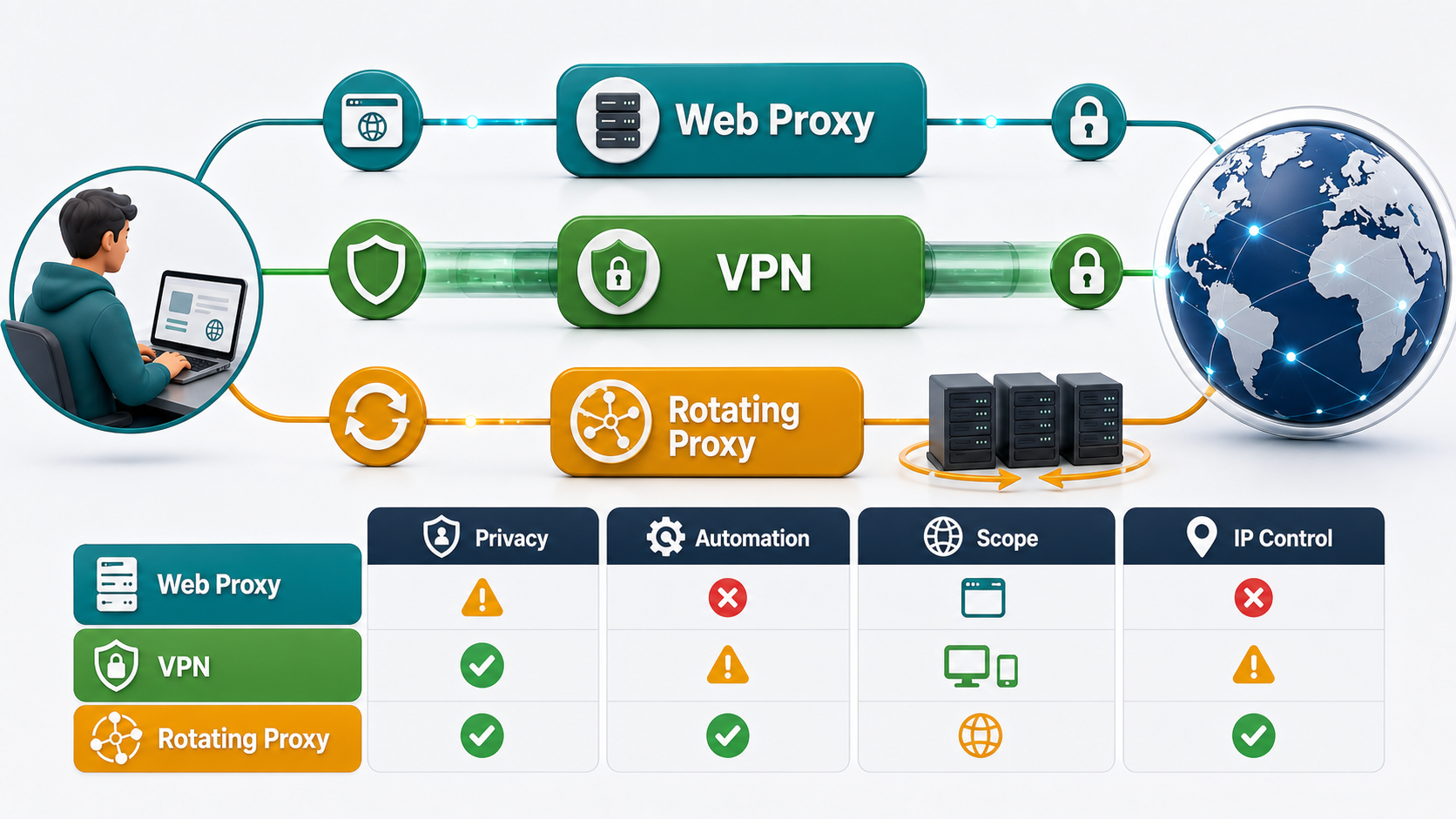
Free Web Proxy vs VPN vs Rotating Proxy: Which Should You Use?
Compare free web proxies, VPNs, rotating proxies, static proxies, and datacenter proxies by scope, encryption, IP control, automation, streaming, and account workflows.
View Details
BlockAway Not Working? Fix Common Proxy, Video, and Access Problems
Troubleshoot BlockAway when pages are blocked, YouTube fails, JavaScript breaks, speed drops, sessions expire, or mobile access behaves differently.
View Details