
Firecrawl for Job Hunting: How to Scrape, Filter and Track Roles Safely
Firecrawl for Job Hunting: How to Scrape, Filter and Track Roles Safely
Job hunting is a numbers game, but manually refreshing career pages is inefficient. Firecrawl helps developers automate this process by turning websites into clean, structured data that Large Language Models (LLMs) can actually understand. Whether you are building a personal job tracker or a commercial aggregator, understanding how to deploy Firecrawl effectively, and the infrastructure needed to support it, is essential.
Use LycheeIP to test rotating proxies
What is Firecrawl and why does it fit modern job hunting?
Firecrawl is a developer-first web scraping API and open source project designed to crawl web pages and convert them into Markdown or structured JSON. Unlike traditional scrapers that break when CSS selectors change, firecrawl.dev focuses on providing clean data for AI applications.
How does the Firecrawl API differ from traditional scrapers?
The Firecrawl API handles the complexity of modern web pages, including JavaScript rendering, caching, and dynamic content, so you don't have to build custom parsers for every job board. Traditional tools often require you to inspect the DOM and write brittle XPaths. In contrast, Firecrawl AI capabilities allow you to simply point the tool at a URL, and it returns the text content stripped of navigational clutter.
"AI job posting Firecrawl" logic refers to the workflow of scraping a raw job page and immediately feeding that text into an LLM for analysis. Instead of reading every description, you use Firecrawl to extract the text, and an AI model to answer questions like: "Does this role require 5+ years of Python?" or "Is the salary range listed?" This allows for massive scale filtering that manual reading cannot match.
How does Firecrawl turn job pages into LLM-ready data?
Firecrawl turns job pages into LLM-ready data by stripping away HTML boilerplate (navbars, footers, ads) and returning clean Markdown. This format is token-efficient and easy for models like GPT-4 or Claude to parse.
What do the scrape, crawl, and extract endpoints do?
You will primarily use three main endpoints when building a job hunter:
- Scrape: The /scrape endpoint grabs a single page. This is useful for analyzing a specific job description URL.
- Crawl: The /crawl endpoint explores a website from a starting root URL. You use this to map out a company's entire careers.example.com sub-domain.
- Extract: The Firecrawl extract endpoint allows you to define a schema (e.g., Title, Salary, Tech Stack) and have the AI return structured JSON matching that schema, rather than unstructured text.
How does firecrawl llms.txt help AI agents read career sites?
Firecrawl llms.txt support allows you to generate a standardized text file that summarizes a website's content for AI agents. If you are an employer, adding an llms.txt file to your career site helps AI search engines index your jobs correctly. For job seekers, pointing a Firecrawl instance at a company's llms.txt (if it exists) is the fastest way to get a high-level overview of their engineering culture and open roles without crawling every single page.
How can you use Firecrawl Python and LangChain to build a job finder?
You can use Firecrawl Python SDKs combined with Firecrawl LangChain integrations to build a sophisticated "job agent" that finds, reads, and ranks job postings automatically.
What is the basic script for using your firecrawl_api_key?
To start, you need a Firecrawl API key from the dashboard. Once you have it, a simple Python script can retrieve job data. Note how we handle the firecrawl_api_key securely via environment variables.
Python
import os
from firecrawl import FirecrawlApp
# Ensure your firecrawl_api_key is set in the environment
app = FirecrawlApp(api_key=os.environ['FIRECRAWL_API_KEY'])
# Scrape a target job listing
response = app.scrape_url(
url='https://example.com/careers/software-engineer',
params={'formats': ['markdown', 'json']}
)
print(response['markdown'])
How does Firecrawl LangChain integration filter results?
Firecrawl LangChain loaders allow you to treat web pages as "Documents" in a RAG (Retrieval-Augmented Generation) pipeline. You can load a list of Firecrawl student jobs or senior roles, convert them into vector embeddings, and then query them using natural language. For example, you could ask your codebase: "Show me all remote jobs that mention Kubernetes but do not require an active security clearance."
Use LycheeIP to test rotating proxies
How do you automate job tracking with Firecrawl MCP and n8n?
You automate job tracking by integrating the Firecrawl MCP server or utilizing low-code tools like n8n to connect scraping outputs directly to your databases.
What does the Firecrawl MCP server allow you to do?
The Firecrawl MCP server (Model Context Protocol) allows AI assistants (like Claude Desktop or IDEs) to call Firecrawl functions directly as tools. Instead of writing a script, you can instruct your AI assistant: "Check the Firecrawl logo on the homepage to ensure I'm on the right documentation, then crawl the 'Jobs' section and summarize new listings." This turns the Firecrawler capability into a conversational utility.
How does an n8n Firecrawl node automate spreadsheets?
The n8n Firecrawl node is a drag-and-drop integration that lets you build workflows without heavy coding. A typical workflow might look like this:
- Trigger: Runs every morning at 8:00 AM.
- Action: Uses the n8n Firecrawl node to crawl a specific job board URL.
- Filter: An AI node filters for keywords like "Python" or "Remote."
- Output: Adds the qualified links to a Google Sheet or Notion database.
Which Firecrawl hosting model is best for job scraping: cloud or self-host?
The Firecrawl cloud is best for speed and ease of use, while Firecrawl self host is superior for high-volume scraping where you want full control over the infrastructure and costs.
How do Firecrawl cloud, Firecrawl self host and Firecrawl Docker differ?
- Firecrawl Cloud: You pay for credits. It manages the underlying browsers and IPs. You simply log in via Firecrawl login and start scraping.
- Firecrawl Self Host (Docker): You run the Firecrawl Docker container on your own server. This gives you privacy and removes per-credit limits, but you are responsible for maintenance.
- Firecrawl Open Source: Since is Firecrawl open source? Yes. You can fork the Firecrawl GitHub repository and modify the scraping logic to fit niche edge cases.
Why is proxy management critical when using Firecrawl open source?
When you use the managed cloud version, Firecrawl handles IP rotation for you. However, if you choose Firecrawl self host, your requests will all originate from your single server IP. Job boards will quickly detect and block this behavior.
To make a self-hosted Firecrawl on X (formerly Twitter) or generic job boards viable, you must route your traffic through reliable proxies. This is where a provider like LycheeIP becomes essential. By configuring your self-hosted instance to use LycheeIP’s rotating residential proxies, you ensure that every request appears to come from a different, legitimate user device, preventing IP bans and ensuring continuous data flow.
Why do legality, ethics, and detection matter when scraping jobs?
Legality, ethics, and detection matter because aggressive scraping can violate Terms of Service (ToS) or even data privacy laws. Just because you have a Firecrawl API key does not mean you have carte blanche to scrape everything.
Is Firecrawl LinkedIn scraping safe to do?
Firecrawl LinkedIn scraping is technically possible but highly risky. LinkedIn enforces strict anti-bot measures and legally defends its data. While Firecrawl can parse the HTML, using it on logged-in environments or aggressively crawling profiles often leads to account restriction. It is generally safer to focus on public job boards or direct company career pages.
To avoid detection while acting as a "Firecrawler," you should emulate human behavior:
- Rate Limiting: Do not hit a server 100 times a second.
- Respect robots.txt: Check domain.com/robots.txt to see what the site allows.
- Use Proxies: As mentioned, rotating IPs prevents pattern recognition.
- User Agents: Ensure your headers look like a standard browser.
Use LycheeIP to test rotating proxies
Which Firecrawl alternatives and complements help with job hunting?
Firecrawl alternatives exist for different needs. Sometimes you need a simple request, and sometimes you need a full browser.
| Feature | Firecrawl | BeautifulSoup | Playwright |
| Primary Use | AI-ready data extraction | HTML Parsing | Browser Automation |
| Maintenance | Low (API handles parsing) | High (Manual selectors) | High (Scripting clicks) |
| Infrastructure | Managed or Self-hosted | Self-hosted | Self-hosted |
| Best For | LLM Pipelines | Simple static sites | Complex UI interactions |
If Firecrawl is overkill, BeautifulSoup is a lightweight Python library. However, for modern "AI job posting Firecrawl" workflows, Firecrawl remains the most efficient choice because it outputs Markdown directly.
What are your next steps to start using Firecrawl for job hunting?
Your next steps are to define your scope and set up your environment.
- Visit firecrawl.dev and create an account.
- Browse the Firecrawl GitHub to see example projects.
- Decide if you will use the cloud API or deploy Firecrawl Docker locally.
- If self-hosting, ensure you have clean proxy infrastructure ready.
Start small. Scrape one board, refine your prompt, and then scale up to track the entire market.
Comparison Table
Firecrawl vs. Traditional Scraping for Jobs
| Feature | Traditional Scraping (Selenium/BS4) | Firecrawl |
| Output Format | Raw HTML / Custom JSON | Clean Markdown / Structured JSON |
| Maintenance | High (Breaks on layout changes) | Low (AI handles structure) |
| Javascript Support | Requires headless browser setup | Native / Built-in |
| Scalability | Hard (Manual proxy rotation) | Easy (Cloud or Docker+Proxies) |
| LLM Integration | Requires post-processing | Native (LLM-ready output) |
Use LycheeIP to test rotating proxies
Frequently Asked Questions:
1. Is Firecrawl open source?
Yes, Firecrawl is open source. You can find the source code on the Firecrawl GitHub repository. This allows developers to inspect the code, contribute to the project, or deploy Firecrawl self host versions using Docker for internal use.
2. What is the Firecrawl API key and where do I get it?
The Firecrawl API key is a unique credential used to authenticate your requests to the Firecrawl cloud platform. You can generate one by signing up for an account via Firecrawl login at firecrawl.dev. If you are self-hosting, you manage authentication within your own infrastructure.
3. Can I use Firecrawl for LinkedIn job scraping?
Technically, Firecrawl can parse public web pages, but Firecrawl LinkedIn scraping is difficult due to strict anti-scraping measures and legal Terms of Service. It is generally recommended to use Firecrawl for company career pages and open job boards rather than social networking sites.
4. What is the difference between Firecrawl.dev and Firecrawl Docker?
firecrawl.dev is the managed cloud SaaS version where infrastructure, updates, and IP rotation are handled for you. Firecrawl Docker is the self-hosted version you run on your own servers. Self-hosting requires you to manage your own proxies and hardware but offers more control over data privacy.
5. How does the Firecrawl MCP server work?
The Firecrawl MCP server implements the Model Context Protocol, allowing AI tools (like Cursor or Claude) to "talk" to Firecrawl. This lets you use Firecrawl AI capabilities directly inside your coding environment or chat interface to fetch and process web content without writing separate scripts.
6. Is there a "Firecrawl student" discount or plan?
While specific plans change, Firecrawl typically offers a free tier that is excellent for students and hobbyists. Additionally, because it is open source, students can run Firecrawl locally on their own machines for free to learn about data engineering and AI agents.

Recommended Articles
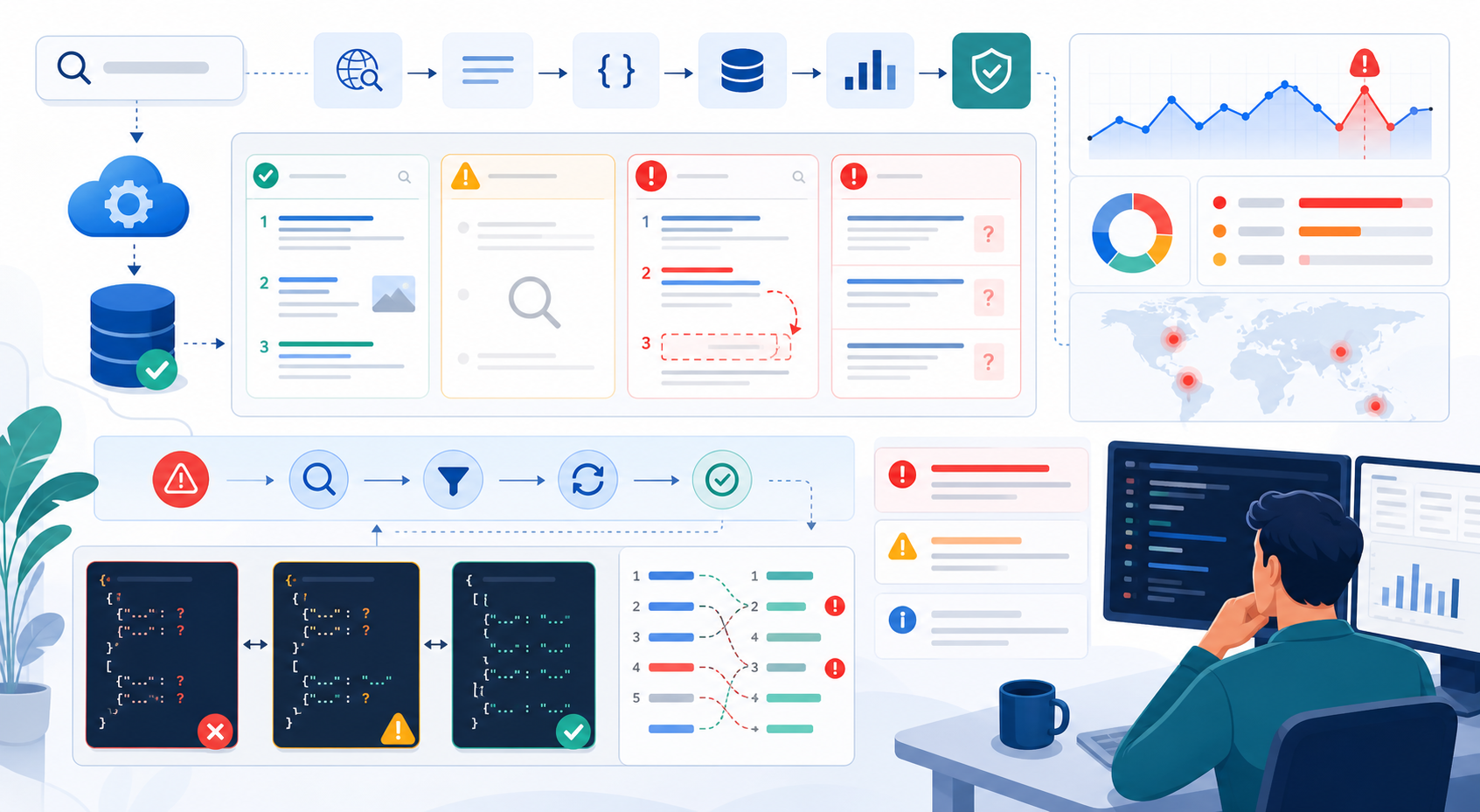
SERP API Troubleshooting: Fix Empty, Wrong, or Inconsistent Search Results
SERP API failures are not limited to obvious HTTP errors. A request can return successfully and still produce empty, incomplete, geographically wrong, duplicated, or misinterpreted search data. Production troubleshooting therefore has to separate transport problems from provider processing, SERP differences, and downstream parsing errors.
View Details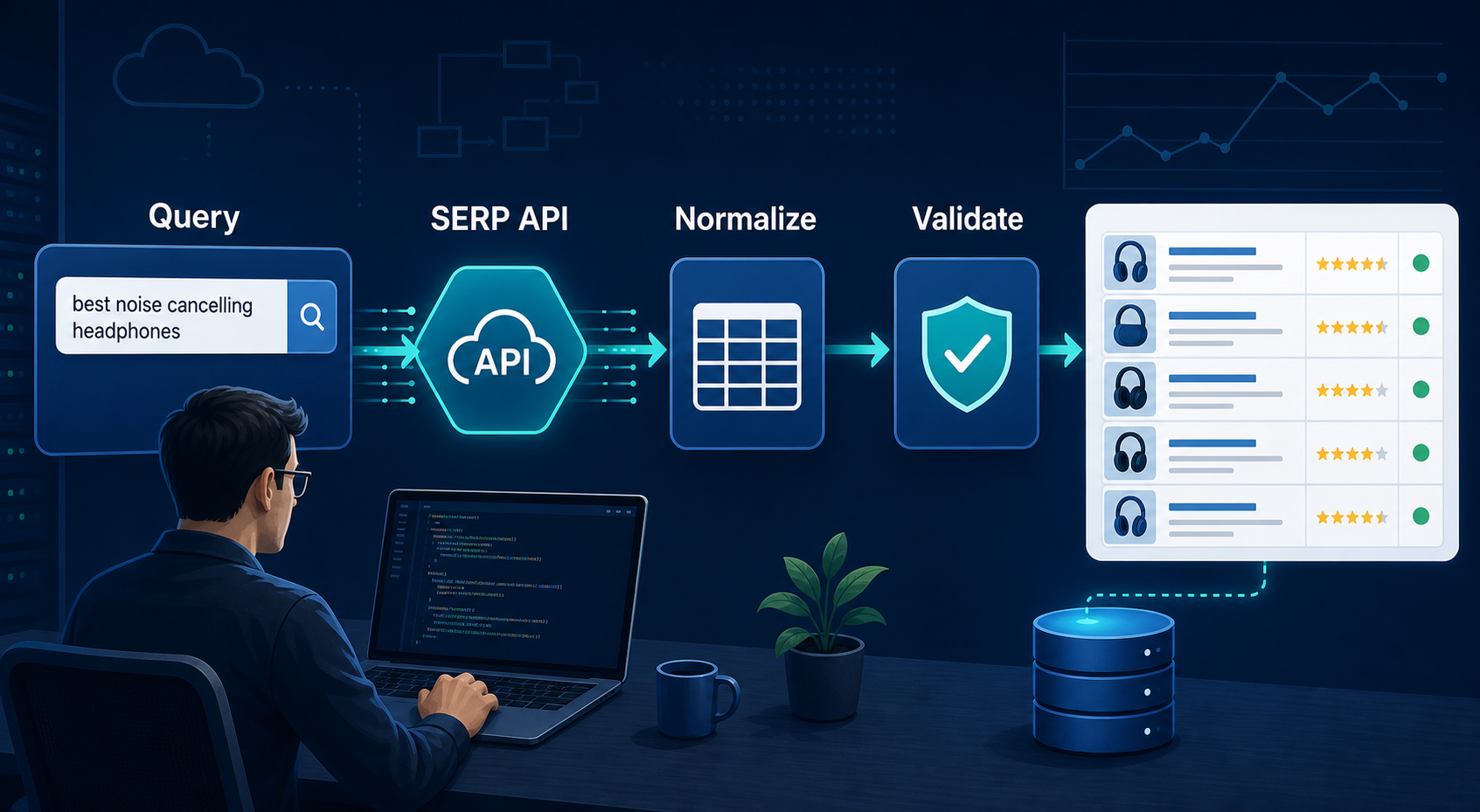
SERP API Python: How to Build a Reliable Search Data Pipeline
This guide shows a provider-neutral workflow for building that pipeline. It does not rank SERP API vendors. Instead, it focuses on the implementation choices that make a Python integration easier to operate, test, and migrate.
View Details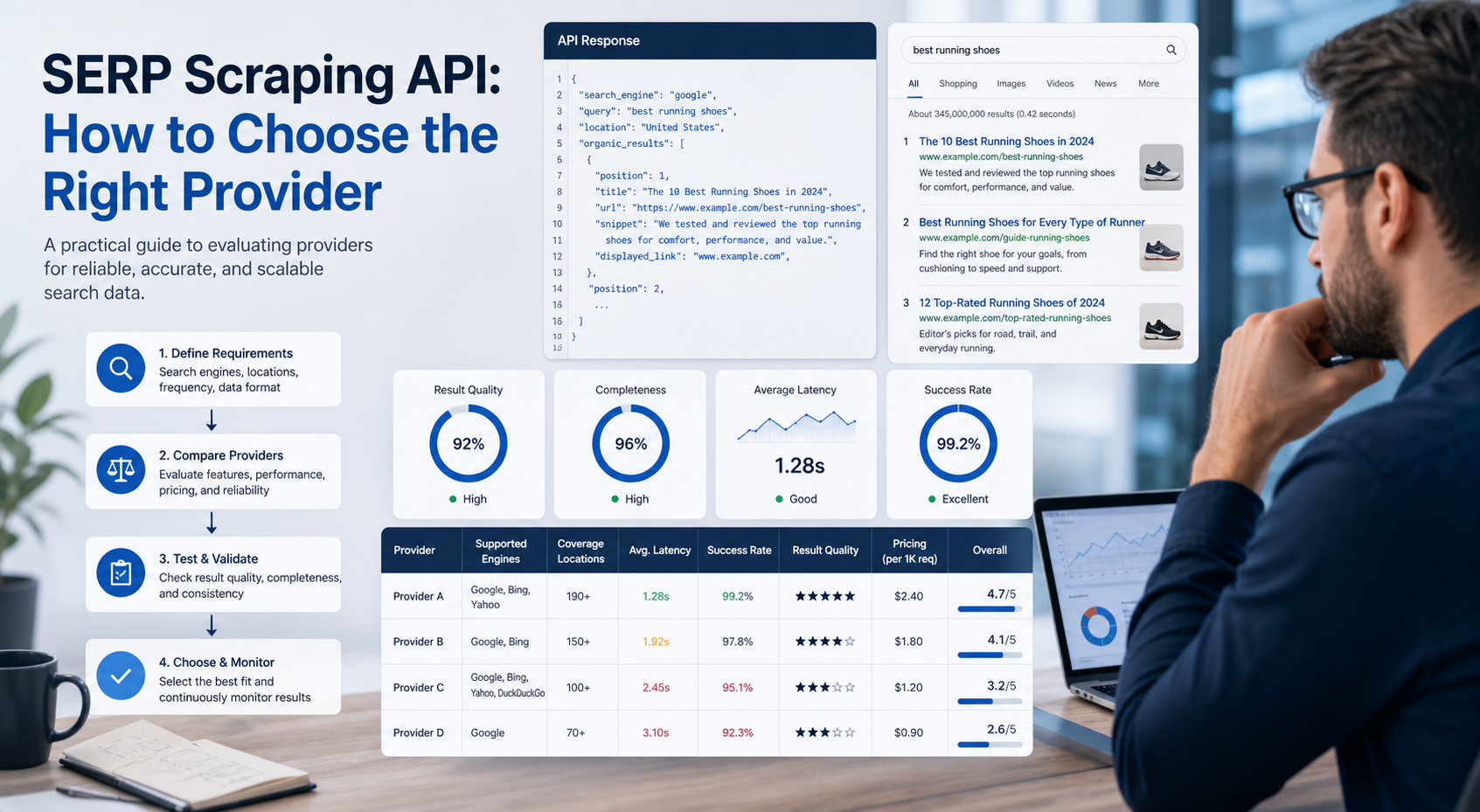
SERP Scraping API: How to Choose the Right Provider
Recommended Meta Description: Compare SERP scraping APIs by data coverage, localization, reliability, workflow fit, and cost structure, then choose and validate the right provider.
View Details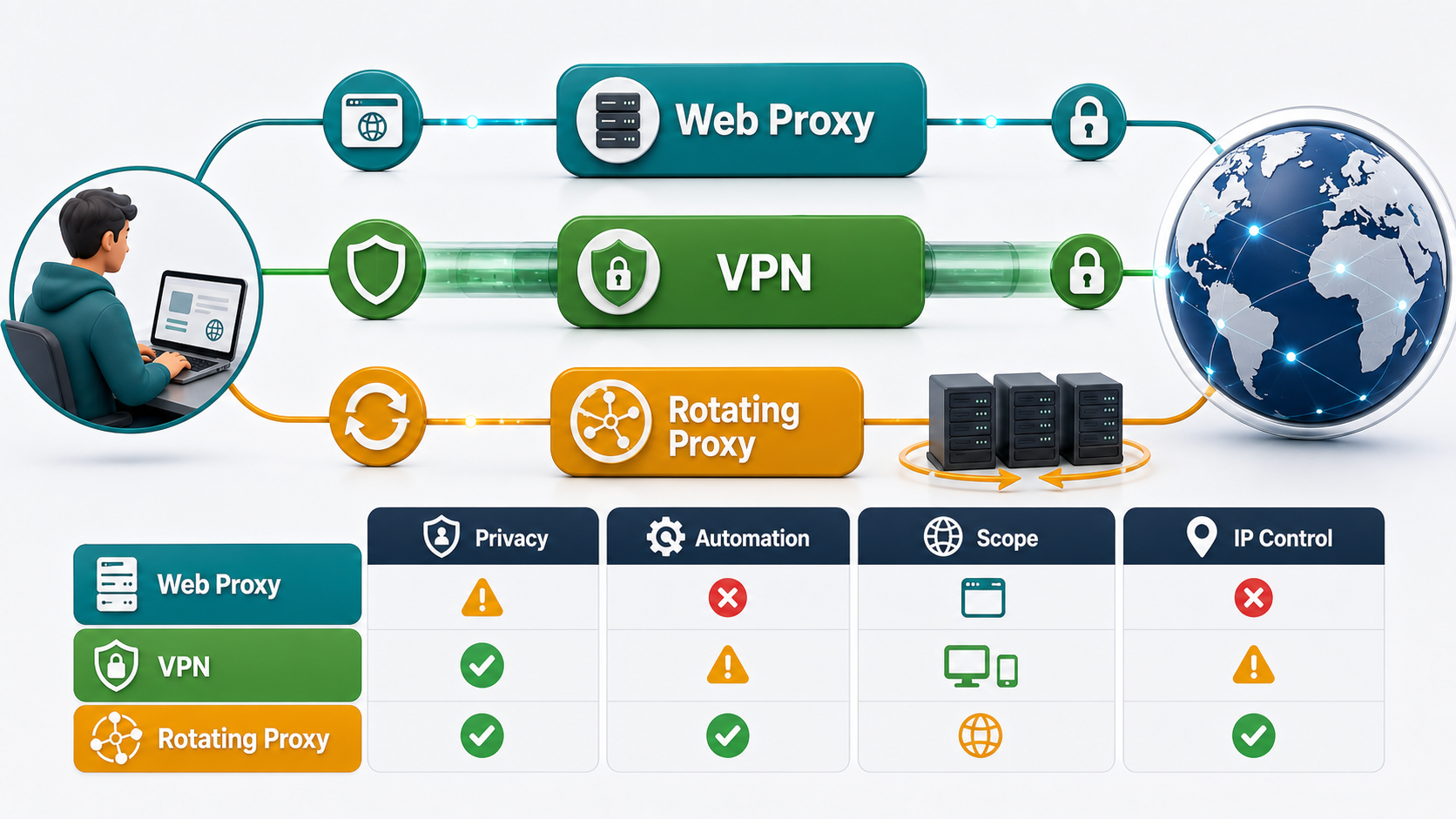
Free Web Proxy vs VPN vs Rotating Proxy: Which Should You Use?
Compare free web proxies, VPNs, rotating proxies, static proxies, and datacenter proxies by scope, encryption, IP control, automation, streaming, and account workflows.
View Details
BlockAway Not Working? Fix Common Proxy, Video, and Access Problems
Troubleshoot BlockAway when pages are blocked, YouTube fails, JavaScript breaks, speed drops, sessions expire, or mobile access behaves differently.
View Details