
Digital Fingerprint Protection: Complete Guide
Digital Fingerprint Protection: Complete Guide
Websites know it's you even in incognito mode. Here's how to truly hide.
The Privacy Illusion
You clear your cookies, switch to incognito mode, maybe even use a VPN. Yet somehow, websites still recognize you. They know your browsing habits, link your accounts, and track your movements across the internet. The culprit? Your digital fingerprint, a unique identifier more persistent than any cookie.
Browser fingerprinting has become the internet's most powerful tracking mechanism, operating silently in the background while users believe they're protected. Unlike cookies that you can delete, your browser fingerprint is generated from dozens of characteristics that combine to create a signature as unique as your actual fingerprint. For privacy-conscious users and anyone managing multiple online accounts, understanding this technology isn't optional, it's essential.
Protect Fingerprints with LycheeIP
What Are Digital Fingerprints?
A digital fingerprint is a composite profile built from information your browser automatically shares with every website you visit. When you load a webpage, your browser volunteers hundreds of data points about your system, and websites collect these to create a unique identifier.
Research from the Electronic Frontier Foundation's Panopticlick project demonstrates that among millions of browsers tested, each fingerprint is typically unique to one in 286,777 users. Even more concerning: their study found that 94.2% of browsers with Adobe Flash or Java enabled had a unique fingerprint.
The Fingerprinting Arsenal
Websites use numerous techniques to fingerprint your browser:
Canvas Fingerprinting: Websites instruct your browser to draw invisible images using the HTML5 Canvas element. Different systems render these images with microscopic variations based on their graphics hardware, installed fonts, and rendering engines. By analyzing these tinydifferences, websites create a unique identifier.
WebGL Fingerprinting: Similar to Canvas, WebGL (Web Graphics Library) fingerprinting exploits how your graphics card and drivers render 3D graphics. The rendering process produces unique outputs based on your specific GPU model, driver version, and system configuration.
Font Enumeration: The specific collection of fonts installed on your system is surprisingly unique. Websites use JavaScript to detect which fonts you have, creating another data point that narrows down your identity.
Audio Context Fingerprinting: Your system's audio stack processes sound in subtly different ways. Websites can generate and analyze audio signals to detect these variations, adding another layer to your fingerprint.
Screen Resolution and Color Depth: Your monitor's resolution, available screen space, and color depth (16-bit, 24-bit, 32-bit) contribute to your fingerprint. Even your pixel ratio and screen orientation provide identifying information.
Timezone and Language Settings: Your system's timezone, language preferences, and keyboard layout create geographic and cultural markers that narrow down your identity.
Browser Plugins and Extensions: The specific combination of installed plugins and extensions is highly distinctive. Even the order in which they're loaded can be fingerprinted.
The Technical Deep Dive: How Your Hardware Betrays You
Beyond browser-level fingerprinting, websites can access information about your underlying hardware and operating system that makes tracking even more precise.
Hardware Identifiers
GPU Information: Through WebGL, websites can query your graphics processing unit's vendor, renderer, and version. This information is ostensibly provided to optimize graphics performance, but it creates a powerful identifier. For example, you might reveal: "ANGLE (NVIDIA GeForce RTX 3070 Direct3D11 vs_5_0 ps_5_0)"—a highly specific identifier.
CPU Characteristics: While browsers try to limit direct CPU information exposure, timing attacks and performance benchmarking can reveal your processor's speed, core count, and architecture. Websites can run JavaScript benchmarks that perform differently based on your CPU's capabilities
Media Devices: The MediaDevices API allows websites to enumerate your connected cameras, microphones, and speakers. Even without accessing these devices, knowing their specific IDs and names contributes to your fingerprint.
Battery Status: The Battery API (now deprecated in many browsers due to privacy concerns) could reveal your battery's charge level and charging status, information that changed frequently enough to enable tracking across sessions.
Hardware Concurrency: The navigator.hardwareConcurrency property reveals how many logical processors your device has, another distinctive characteristic.
Operating System Fingerprints
User Agent String: This legacy header tells websites your browser version, operating system, and sometimes device model. While modern browsers are standardizing user agents to reduce fingerprinting, variations still exist.
Platform Details: Beyond the user agent, browsers expose your OS through navigator.platform, revealing whether you're on Windows, macOS, Linux, Android, or iOS.
System Fonts: Your operating system comes with specific default fonts. Windows 10, macOS Catalina, and Ubuntu each have distinctive font collections that immediately identify your OS and often its version.
Touch Support: Whether your device supports touch input, the maximum number of simultaneous touch points, and screen orientation capabilities all contribute identifying information.
DNT and Other Headers: The Do Not Track setting, HTTP headers, Accept-Language preferences, and encoding support create additional fingerprint dimensions.
Network-Level Identifiers
Websites also leverage network characteristics:
WebRTC IP Leak: Even behind a VPN, WebRTC (used for video calls) can leak your actual local and public IP addresses, completely bypassing VPN protection.
TCP/IP Stack Fingerprinting: The specific way your operating system implements TCP/IP networking creates detectable patterns in packet timing, window sizes, and options.
DNS Resolution Timing: How quickly your system resolves DNS queries can indicate your ISP and geographic location.
Protect Fingerprints with LycheeIP
How Browser Fingerprint Masking Works
Now that we understand the problem, let's explore solutions. Traditional privacy tools like VPNs and cookie blockers don't address fingerprinting—you need specialized approaches.
Anti-Detect Browsers: The Complete Solution
Anti-detect browsers are specialized tools designed specifically to defeat fingerprinting. Unlike regular browsers with privacy extensions, they fundamentally alter how your browser presents itself to websites.
Profile Isolation: Anti-detect browsers create completely separate browser profiles, each with its own fingerprint. These profiles are isolated at the system level, preventing websites from linking them together.
Fingerprint Substitution: Rather than blocking fingerprinting scripts (which itself is detectable), anti-detect browsers provide false but consistent information. They replace your real Canvas fingerprint with a generated one, spoof your WebGL renderer, and present fake hardware information.
Consistency Maintenance: A crucial aspect is consistency. Your spoofed fingerprint must remain stable across sessions, otherwise, websites detect the inconsistency and flag your account. Quality anti-detect browsers maintain fingerprint persistence.
Real Fingerprint Emulation: The best anti-detect solutions don't just randomize values. They emulate real device configurations. For example, if they claim you're using an iPhone 12, they'll match that device's exact screen resolution, user agent, touch capabilities, and sensor availability.
Key Technologies in Anti-Detect Browsers
Canvas Spoofing: Anti-detect browsers intercept Canvas drawing commands and introduce controlled noise that changes your Canvas fingerprint while keeping images visually identical. Each profile gets a unique, stable Canvas signature.
WebGL Masking: They spoof your GPU vendor, renderer, and WebGL parameters to match a chosen device profile. This requires deep integration with the browser's rendering engine.
Font Fingerprint Control: Anti-detect browsers can limit which fonts are reported as available, matching specific operating system configurations or providing custom font lists per profile.
Timezone and Geolocation Spoofing: They allow you to set custom timezones and geolocations that match your proxy or VPN, ensuring all your fingerprint elements tell the same story.
AudioContext Spoofing: By manipulating how audio is processed, anti-detect browsers create unique audio fingerprints for each profile.
Automation Framework Integration: Many anti-detect browsers integrate with Selenium, Puppeteer, or similar frameworks, allowing automated management of multiple accounts while maintaining unique fingerprints for each.
Browser Fingerprint Masking Strategies
If you're not ready for a specialized anti-detect browser, you can take partial protective measures:
Use Tor Browser: Tor Browser is designed to make all users look identical by standardizing fingerprint characteristics. However, this uniformity can itself be identifying, and Tor's slow speeds make it impractical for many use cases.
Privacy Extensions: Extensions like Canvas Blocker, WebGL Fingerprint Defender, and Privacy Badger can block some fingerprinting techniques, though blocking is detectable and may cause website functionality issues.
Resist Fingerprinting in Firefox: Firefox's about:config includes a privacy.resistFingerprinting setting that standardizes many fingerprint elements, though it's less comprehensive than dedicated anti-detect solutions.
Brave Browser's Fingerprint Randomization: Brave implements fingerprint randomization for Canvas and other elements, providing some protection without dedicated anti-detect browser complexity.
Protect Fingerprints with LycheeIP
Creating Unique Online Identities: Practical Applications
Understanding browser fingerprint protection isn't just academic, it has real-world applications that extend beyond privacy.
Multi-Account Management
Professionals managing multiple accounts for legitimate reasons need fingerprint protection:
- E-commerce sellers operating multiple storefronts on platforms that restrict multiple accounts
- Social media managers handling accounts for different clients without cross-contamination
- Affiliate marketers maintaining separate identities for different campaigns
- Privacy-conscious cryptocurrency traders keeping trading accounts isolated from personal identities
- Researchers and journalists maintaining source protection and operational security
For these use cases, each profile in an anti-detect browser presents a completely different identity. When combined with dedicated proxies or VPNs, websites see genuinely different users.
Account Security Enhancement
Even for single accounts, fingerprint masking provides security benefits. By changing your fingerprint periodically, you:
- Prevent cross-site tracking that builds detailed profiles of your behavior
- Reduce targeted advertising and dynamic pricing based on your browsing history
- Protect against browser-based exploits that rely on fingerprinting for targeting
- Limit data collected by third-party trackers embedded across websites
Geographic Testing
Developers and marketers need to see how websites appear to users in different locations with different device configurations. Anti-detect browsers allow them to emulate specific device and location combinations accurately.
Best Practices for Digital Fingerprint Protection
To maximize your fingerprint protection:
1. Match Your Story: Ensure all elements of your fingerprint align. If you're using a US proxy, set a US timezone, use English language settings, and choose appropriate screen resolutions.
2. Maintain Consistency: Once you establish a fingerprint for a profile, keep it stable. Changing fingerprints frequently signals suspicious behavior.
3. Use Quality Proxies: Your fingerprint spoofing is wasted if your IP address gives you away. Use residential or mobile proxies that match your claimed location.
4. Avoid Fingerprint Extremes: Don't use configurations that are statistically rare (like unusual screen resolutions or obscure operating systems) unless you have a specific reason.
5. Test Your Fingerprint: Use services like Browserleaks, AmIUnique, or CreepJS to verify what information your browser is leaking.
6. Separate Activities: Use different profiles for different activities, especially when managing multiple accounts on the same platform.
7. Update Regularly: Browser versions and OS fingerprints change over time. Update your spoofed fingerprints periodically to match current real-world distributions.
The Future of Fingerprint Protection
The fingerprinting arms race continues to evolve. Browsers are implementing privacy features like Firefox's Enhanced Tracking Protection and Safari's Intelligent Tracking Prevention, but trackers constantly develop new techniques.
Emerging fingerprinting methods include:
- Machine learning-based behavioral fingerprinting that identifies users by how they move their mouse, type, and interact with pages
- CSS fingerprinting that exploits how different systems render CSS
- TLS fingerprinting analyzing the specific way your system negotiates encrypted connections
- Sensor fingerprinting on mobile devices using accelerometer, gyroscope, and magnetometer data
As tracking becomes more sophisticated, protection must evolve. The future likely holds browser-level privacy improvements, regulatory pressure through privacy legislation, and continued advancement in anti-detect browser technology.
Strategic Infrastructure: How LycheeIP Secures Your Digital Identity
While anti-detect browsers mask your device, they rely entirely on your proxy provider to mask your network. If your IP address traces back to a known server farm or leaks your real location via WebRTC, your accounts will be linked. Here is how LycheeIP provides the enterprise-grade network infrastructure required to make your fingerprint masking impenetrable:
1. Guaranteeing Residential Authenticity
- The Datacenter Trap: Traditional VPNs and cheap proxies route your traffic through cloud hosting providers. Websites maintain massive databases of these ASN (Autonomous System Number) ranges and instantly classify them as non-human or proxy traffic.
- The LycheeIP Solution: LycheeIP provides access to over 90 million ethically sourced residential proxies. Because these resources are allocated directly from underlying network operators (ISPs), your traffic genuinely appears as a standard home user connecting from a residential Wi-Fi network, neutralizing network-level fingerprinting.
2. Ensuring Clean, Unflagged IPs
- The Shared IP Problem: Many budget proxy providers recycle IPs immediately. If you inherit an IP that was recently used for spam, web scraping, or botting, your fresh browser profile will be flagged by association.
- The LycheeIP Solution: LycheeIP enforces a strict 6-month cooling period for every IP in its network before it is reused. When you attach a LycheeIP proxy to your browser profile, you are guaranteed a pristine network reputation.
3. Precision Geographic Synchronization
- Preventing Location Mismatches: If your anti-detect profile is configured to mimic a user in London (with UK fonts, language, and timezone), but your IP address resolves to a server in Frankfurt, tracking scripts will flag the mismatch immediately.
- Global Targeting: With coverage across 190+ countries and regions, LycheeIP allows you to target specific locations down to the city level. This ensures your network location perfectly aligns with the browser fingerprint you generated.
4. Protocol Flexibility and Session Control
- SOCKS5 & HTTP/S Support: LycheeIP seamlessly supports both major protocols. Configuring a LycheeIP SOCKS5 connection ensures that UDP traffic (like WebRTC) is properly routed, preventing devastating real-IP leaks.
- Static vs. Dynamic Routing: For long-term account management, LycheeIP’s Static Residential (ISP) proxies provide a permanent IP address that won't change mid-session. For scaling automated tasks, the Dynamic Residential pool offers unlimited concurrency and rapid rotation.
Conclusion
Your browser is sharing far more information than you realize. Every website you visit receives a detailed dossier about your system, creating a fingerprint that tracks you across the internet regardless of cookies, incognito mode, or VPNs.
For privacy-conscious users, this reality demands action beyond traditional privacy measures. Whether you're managing multiple accounts, protecting your anonymity, or simply reclaiming your privacy, understanding digital fingerprints is the first step. Anti-detect browsers represent the most comprehensive solution for hardware masking, but they cannot operate in a vacuum.
The key takeaway: incognito mode isn't enough, and masking your screen resolution won't save you if your network betrays you. True online privacy requires a holistic approach. By pairing the device-level spoofing of an anti-detect browser with the pristine, operator-sourced residential network of LycheeIP, you take absolute control over both your hardware and network fingerprints.
Your digital identity is unique, make sure you are the one controlling how it is seen.
Protect Fingerprints with LycheeIP
Frequently Asked Questions
Q: Can websites track me even when I use incognito mode?
A: Yes, absolutely. Incognito mode only prevents your browser from storing cookies, history, and form data locally on your device. It doesn't prevent websites from fingerprinting your browser. Your digital fingerprint—created from your hardware, OS, browser configuration, fonts, screen resolution, and dozens of other factors—remains identical whether you're in incognito mode or not. Websites can still recognize and track you across sessions using these fingerprinting techniques.
Q: What's the difference between cookies and browser fingerprints?
A: Cookies are small files that websites store on your device to remember you. You can delete cookies, block them, or clear them in incognito mode. Browser fingerprints, however, are generated from information your browser automatically shares—like your screen resolution, installed fonts, GPU model, timezone, and system configuration. You can't simply delete a fingerprint because it's derived from your actual system characteristics. Fingerprints are also more unique than cookies; research shows that over 94% of browsers have a completely unique fingerprint.
Q: How do anti-detect browsers differ from VPNs?
A: VPNs only mask your IP address and encrypt your internet traffic. They don't protect against browser fingerprinting. Websites can still identify you through your unique browser fingerprint even when your IP is hidden. Anti-detect browsers go much further by spoofing or masking all the fingerprinting elements, Canvas rendering, WebGL output, fonts, hardware information, and more. The most effective privacy setup combines both: a VPN or proxy for IP protection and an anti-detect browser for fingerprint protection.
Q: Are anti-detect browsers legal?
A: Yes, anti-detect browsers are legal tools. They're software that controls what information your browser shares, which is within your rights. Many legitimate professionals use them: social media managers handling multiple client accounts, e-commerce sellers with multiple storefronts, privacy advocates, journalists protecting sources, and researchers. However, while the tool is legal, you must still comply with the terms of service of websites you visit and all applicable laws. Using anti-detect browsers to commit fraud, bypass security for malicious purposes, or violate website terms of service is illegal.
Q: Can I test what information my browser is leaking?
A: Yes, several websites allow you to test your browser fingerprint. Services like Browserleaks.com, AmIUnique.org, CreepJS, and the EFF's Cover Your Tracks (formerly Panopticlick) show you exactly what information your browser is sharing. These tools reveal your Canvas fingerprint, WebGL information, installed fonts, screen resolution, plugins, hardware details, and more. They also estimate how unique your fingerprint is compared to other users. Testing your fingerprint before and after implementing protection measures helps you verify that your privacy tools are working effectively.

Recommended Articles
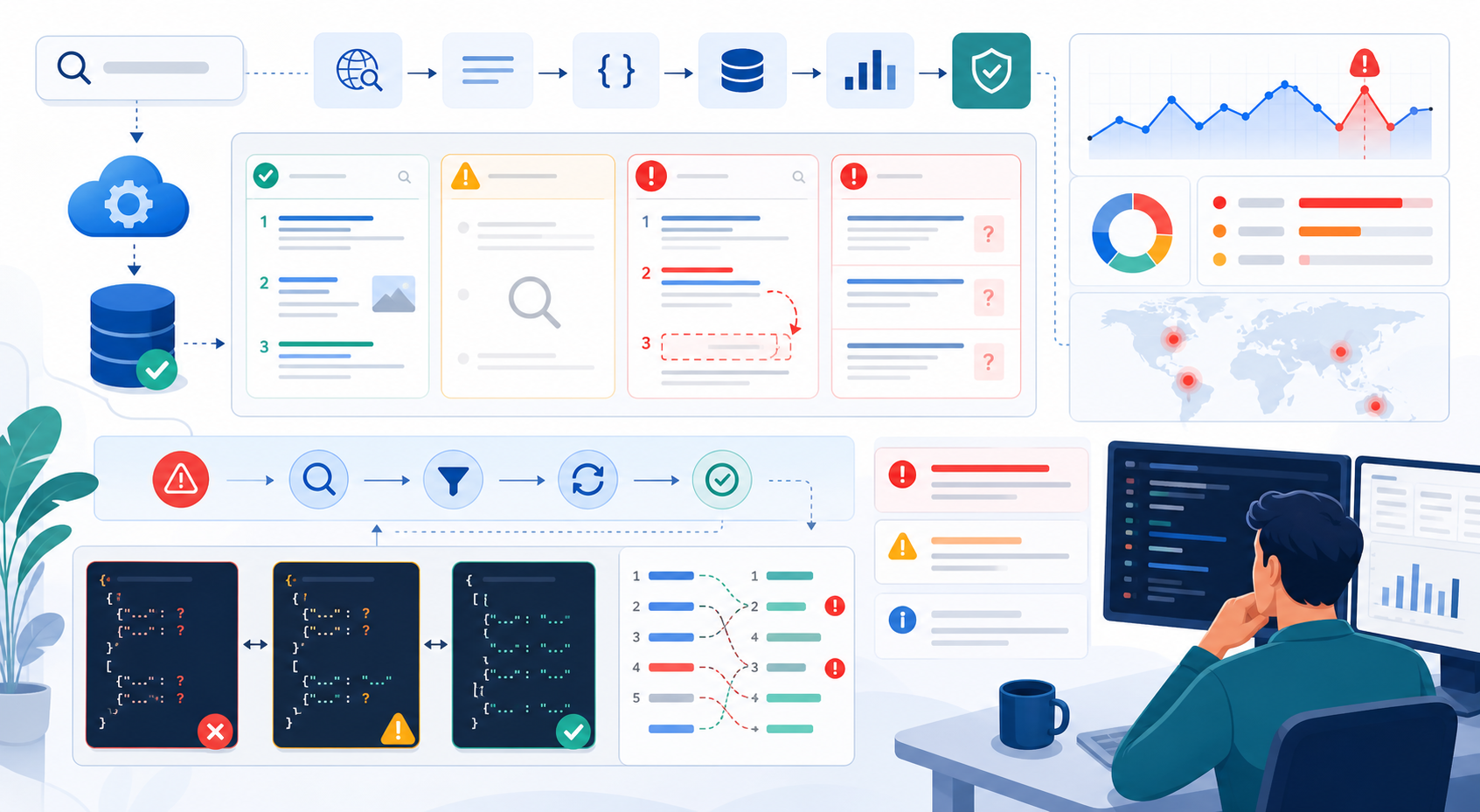
SERP API Troubleshooting: Fix Empty, Wrong, or Inconsistent Search Results
SERP API failures are not limited to obvious HTTP errors. A request can return successfully and still produce empty, incomplete, geographically wrong, duplicated, or misinterpreted search data. Production troubleshooting therefore has to separate transport problems from provider processing, SERP differences, and downstream parsing errors.
View Details
SERP API Python: How to Build a Reliable Search Data Pipeline
This guide shows a provider-neutral workflow for building that pipeline. It does not rank SERP API vendors. Instead, it focuses on the implementation choices that make a Python integration easier to operate, test, and migrate.
View Details
SERP Scraping API: How to Choose the Right Provider
Recommended Meta Description: Compare SERP scraping APIs by data coverage, localization, reliability, workflow fit, and cost structure, then choose and validate the right provider.
View Details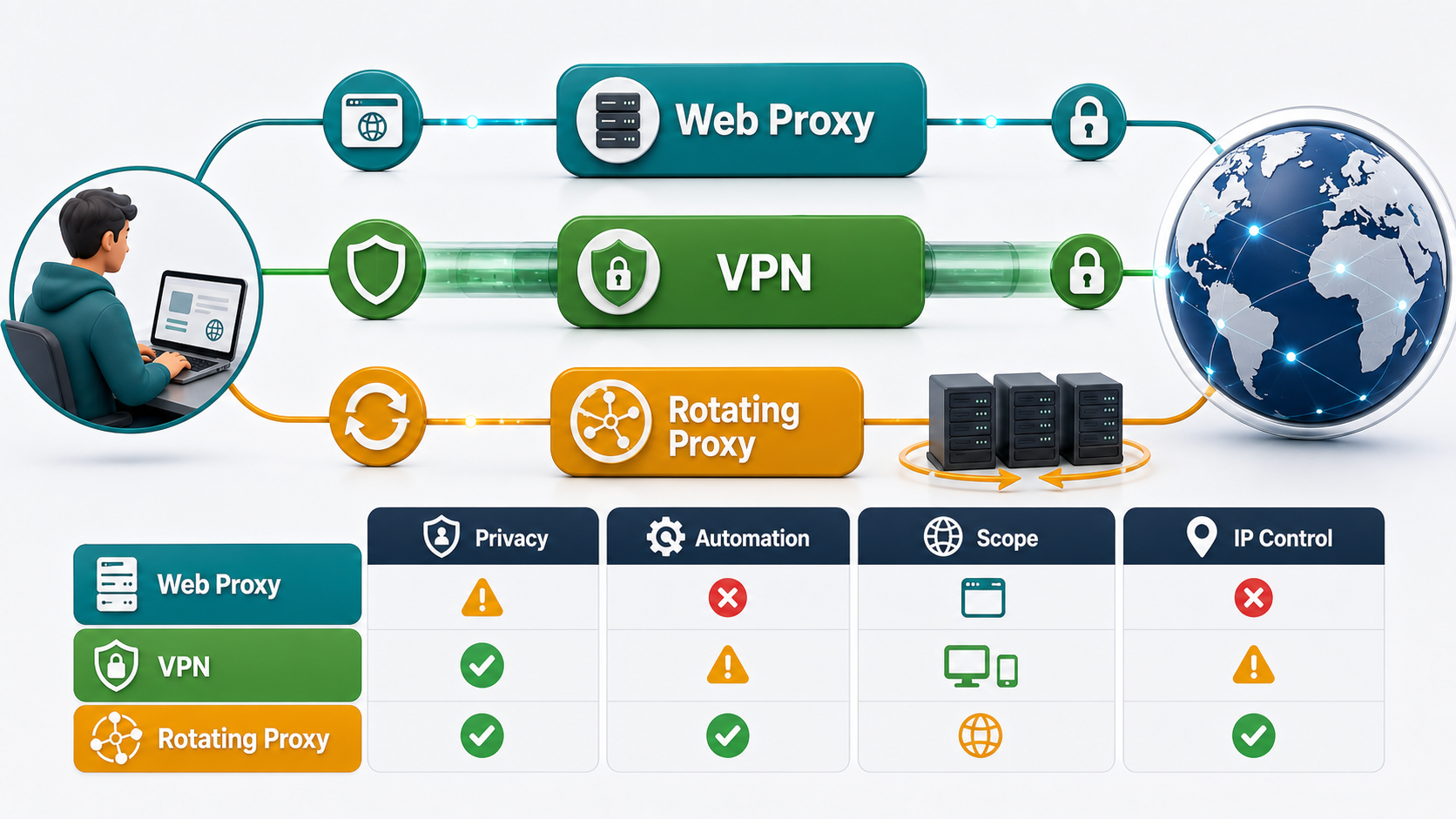
Free Web Proxy vs VPN vs Rotating Proxy: Which Should You Use?
Compare free web proxies, VPNs, rotating proxies, static proxies, and datacenter proxies by scope, encryption, IP control, automation, streaming, and account workflows.
View Details
BlockAway Not Working? Fix Common Proxy, Video, and Access Problems
Troubleshoot BlockAway when pages are blocked, YouTube fails, JavaScript breaks, speed drops, sessions expire, or mobile access behaves differently.
View Details