
Curl converter: How to turn any curl command into Python, Node.js or JavaScript
Curl converter: How to turn any curl command into Python, Node.js or JavaScript
Developers often treat the "curl converter" as a simple utility, but it is actually the bridge between manual API exploration and production-grade code. Whether you are debugging a third-party API, building a web scraper, or testing endpoints, moving from a raw shell command to a structured script in Python, Node.js, or JavaScript is a daily requirement.
This article details how to effectively use a curl converter, explores the mechanics behind the translation, and outlines the best workflows for integrating these tools into your development environment via VS Code, npm, and browser DevTools.
Use LycheeIP to run your scrapers
What is a curl converter and when should you use one?
A curl converter is a software utility that parses a raw curl command string and regenerates it as executable code for a specific programming language or HTTP client.
While seasoned developers can manually rewrite headers and payloads, a curl converter automates the tedious syntax mapping. It ensures that complex flags for authentication, cookies, and data bodies are transferred accurately into languages like Python, Go, or PHP.
You should reach for a curl converter when:
- API Documentation is Limited: The vendor only provides curl examples, and you need to integrate them into a Node.js application.
- Replicating Browser Requests: You have copied a complex request from the Chrome Network tab and need to mimic that traffic in a Python scraper.
- Standardizing Code: Your team needs to convert curl commands into a consistent format (e.g., Axios or Python requests) to maintain code quality.
- Rapid Prototyping: You want to test if a specific endpoint works in your application environment without writing boilerplate code from scratch.
What is curl in API terms?
In the context of APIs, curl (Client URL) is the universal command-line tool used to transfer data to and from a server. It creates a standardized description of an HTTP request, including:
- The Method: GET, POST, PUT, DELETE.
- The Headers: User-Agent, Content-Type, Authorization tokens.
- The Payload: JSON bodies, form data, or query parameters.
- The Context: Cookies and session data.
How does a curl converter differ from simple copy and paste?
A curl converter performs a semantic translation rather than a simple text copy. If you paste a curl command directly into a Python script, it will fail as a syntax error. A converter parses the shell syntax, understanding that -H means a header and -d means data, and constructs the corresponding object or dictionary structure required by the target library.
For example, it transforms a shell-based flag --data '{"user_id": 123}' into a native Python dictionary or a JavaScript object, handling the escaping and formatting nuances automatically.
How does a curl converter translate curl commands into real HTTP requests?
A curl converter translates commands by parsing the abstract syntax tree (AST) of the shell command and mapping specific arguments to the properties of an HTTP client library.
Internally, tools like the popular open-source curlconverter analyze the input string to identify arguments and flags. They then use templates to generate valid code for the selected output language. This process ensures that a command executed in a terminal behaves identically when run as a script.
How curl flags map to Python requests
When you convert curl to python, the most common target is the requests library. The mapping logic is straightforward but critical for accuracy:
- curl "url" becomes requests.get("url").
- -H "Header: Value" becomes a key-value pair in a headers dictionary.
- -d or --data becomes the data parameter.
- --data-raw with JSON content usually maps to the json parameter, ensuring the Content-Type header is set automatically.
How curl flags map to JavaScript fetch, Axios and Node.js clients
For Node.js and frontend JavaScript, the mapping handles asynchronous patterns.
- Fetch: The converter creates a fetch() call where headers and the body are passed in the options object.
- Axios: Since convert curl to javascript often implies using modern libraries, the converter generates an axios({}) configuration object containing method, url, headers, and data.
- Node.js Native: It can also generate code for the native http or https modules, though this is more verbose and less common for modern applications.
How curl converter handles headers, cookies and query strings
Complex requests often fail due to mishandled session data. A robust curl converter separates these elements:
- Headers: All -H flags are consolidated into a single object.
- Cookies: Flags like -b or --cookie are parsed into a dedicated cookie jar or header string.
- Query Strings: If a URL contains parameters (e.g., ?id=10), good converters extract them into a params object (Python) or searchParams (JavaScript) to make the code cleaner and easier to modify later.
Use LycheeIP to run your scrapers
How can you convert curl to Python, Node.js, JavaScript and Laravel HTTP in practice?
You can convert curl to your target language by using dedicated online tools, CLI utilities, or IDE extensions.
The process generally involves isolating the curl command, validating that it contains all necessary authentication tokens, and then running it through the conversion engine. Below are the practical steps for the most popular languages.
convert curl to Python with requests
Python is the dominant language for data engineering and scraping. To convert curl to python:
- Copy your full curl command (ensure secrets are redacted if using public tools).
- Paste it into the converter.
- Select "Python (requests)".
- The tool generates a script importing requests, defining headers and cookies dictionaries, and executing the call.
This output is immediately ready for use in scraping bots or data pipelines.
convert curl to JavaScript fetch or Axios
Frontend and backend developers frequently need to convert curl to javascript.
- For the browser: Select "JavaScript (fetch)". The output provides a snippet ready to paste into a browser console or React component.
- For Node.js: Select "Node.js (Axios)". This is ideal for backend service-to-service communication.
- Review the body formatting. Ensure that JSON objects are not stringified twice, a common error when doing this manually.
convert curl to Go, PHP and Laravel HTTP clients
Backend frameworks often have specific HTTP clients.
- Go: Converters generate code using the net/http package, handling the boilerplate of creating a client and setting headers.
- PHP: You can convert curl to standard PHP curl_init syntax.
- Laravel: To convert curl to laravel http, you often take the intermediate step of converting to generic PHP or explicitly looking for a converter that outputs Laravel's fluent Http::withHeaders() syntax. This allows you to integrate external APIs cleanly into your Laravel service classes.
How do you get a curl command from browser developer tools and the network tab?
You can generate a valid curl command directly from any modern browser via the Developer Tools suite.
This "copy as curl" workflow is the industry standard for debugging and scraping. It captures the exact state of a request—including temporary session tokens and user-agent strings—guaranteeing that the command works outside the browser.
Copy as curl from Chrome, Firefox and Safari
- Open Developer Tools (F12 or right-click > Inspect).
- Navigate to the Network tab.
- Perform the action on the website (e.g., click a button, load a page) to trigger the request.
- Locate the request in the list.
- Right-click the request.
- Chrome/Edge: Select Copy > Copy as cURL (bash).
- Firefox: Select Copy > Copy as cURL.
- Safari: Select Copy as cURL.
Paste into an online curl converter or VS Code extension
Once copied to your clipboard, the command is ready for translation.
- Online: Paste it into a web-based online curl converter for a quick one-off translation.
- VS Code: If you have the extension installed, simply open a new file and paste. This method is often preferred for maintaining focus within your IDE.
Use LycheeIP to run your scrapers
Which online curl converter tools should developers and scraping teams consider?
Developers have several reliable options ranging from open-source projects to vendor-specific tools.
curlconverter.com and the curlconverter npm ecosystem
The most prominent tool is the open-source project hosted at curlconverter.com. It supports dozens of languages including Python, JavaScript, Rust, and Elixir. It runs entirely in the browser (client-side), meaning your keys and data are not sent to a backend server. This project also powers the curlconverter npm package, allowing for CLI-based usage.
Proxy-vendor curl converters from Soax and Oxylabs
Major proxy providers like Soax, Oxylabs, and others offer their own branded converters. These are often optimized for web scraping use cases, providing outputs that integrate well with their specific proxy middleware. While useful, the underlying logic is frequently similar to the open-source standard.
Single-language converters for Python and Node.js
If you only ever need to convert curl to python or Node.js, lightweight, language-specific tools exist. However, general-purpose converters have become so accurate that specialized single-language tools are rarely necessary unless they offer specific framework integrations (like Django or Express specific code).
How can you use curl converter npm and the VS Code extension locally?
You can run conversions locally using the curlconverter npm package or a VS Code extension to enhance security and workflow speed.
Running tools locally is a best practice for teams handling sensitive data, as it ensures API keys never leave your machine.
Installing curlconverter npm globally
For command-line enthusiasts, the npm package offers the fastest workflow.
- Install via npm:
- Bash
npm install -g curlconverter
3.
4.
5. Run the curl command conversion directly in your terminal:
6. Bash
curlconverter --language python "curl http://example.com"
7.
8.
This outputs the Python code to stdout, which can be piped directly into a file.
Using “Paste cURL as <language>” in VS Code
The VS Code extension brings the converter directly into your editor.
- Search for "curlconverter" in the VS Code Marketplace and install it.
- Open a Python or JavaScript file.
- Copy a curl command to your clipboard.
- Right-click in the editor and select "Paste cURL as Python" (or your active language).
- The extension automatically generates the code at your cursor position.
Automating curl conversion in CI pipelines
Advanced teams use the curlconverter CLI within CI/CD pipelines. You can store "canonical" curl commands in a JSON file and have the CI pipeline generate client libraries for multiple languages automatically during the build process. This ensures all your SDKs stay in sync with the core API definition.
How do you convert curl commands to Postman, HTTP requests and JSON payloads correctly?
You can import curl commands into Postman to create a saveable, shareable collection of API requests.
Postman serves as a powerful GUI for refining requests before committing them to code.
Import curl into Postman and fix common issues
To convert curl to Postman:
- Click the "Import" button in the top left of Postman.
- Paste the raw text of your curl command.
- Postman parses the text and populates the method, URL, headers, and body.
- Check: Occasionally, complex quoting in the curl command can confuse the parser. Always verify that authorization headers were imported correctly.
Converting curl POST and JSON bodies
When you convert curl post commands, pay attention to the body type.
- If the curl uses --data-raw '{"a":1}' and Content-Type: application/json, Postman should automatically select "raw" and "JSON".
- If the curl uses -F, Postman maps this to "form-data".
Correctly mapping these ensures that your server receives the payload in the expected format.
Converting curl to plain HTTP request examples
Sometimes you need to convert curl to http request text for documentation (RFC 7230 format). While fewer tools output raw HTTP text directly, importing to Postman and viewing the "Code" snippet in "HTTP" format is a reliable workaround.
Use LycheeIP to run your scrapers
Why does security and privacy matter when using an online curl converter?
Security matters because curl commands frequently contain sensitive information like API keys, Bearer tokens, and session cookies.
Local browser conversion vs remote processing
Most reputable online converters (like curlconverter.com) perform the conversion via JavaScript running locally in your browser. This means the data never leaves your computer. However, you should always verify this behavior or use developer tools and local extensions when handling production secrets.
Managing secrets, API keys and tokens
Never commit converted code containing real API keys to GitHub.
- Convert the code using a placeholder or the real key locally.
- Immediately replace the hardcoded key with an environment variable (e.g., os.getenv('API_KEY') in Python).
- This practice protects you from accidental leaks.
Keeping curlconverter npm and other libraries updated
Maintain your local tooling. The curlconverter npm package and VS Code extensions receive updates to fix parsing bugs and security vulnerabilities. Regular updates ensure you aren't using a version with known exploits.
What is the best curl converter workflow for data engineers and scraping teams?
The optimal workflow combines browser emulation with robust infrastructure.
From single curl command to production scraper
- Capture: Use the Network tab to copy the target request as curl.
- Convert: Use the VS Code extension to convert curl to python.
- Parameterize: Replace static query parameters (like page numbers) with variables.
- Scale: Integrate the script into your data pipeline.
Using curl converters with proxies and infrastructure
A converted request is only as good as the IP address sending it. If you run the generated Python script from your local machine, you will likely get blocked quickly.
This is where LycheeIP fits into the developer's toolkit. Once you have converted your curl command to a script, you simply route that request through LycheeIP's high-performance proxy network.
- Clean Pools: Ensure your converted script isn't flagged by anti-bot systems.
- Simple Integration: Add the proxy URL to your requests or axios config in one line.
- Reliability: Developer-first uptime means your automated scripts finish the job.
Governance for multi-account and risk teams
Teams managing multiple accounts can use converted curl commands to standardize login procedures. By maintaining a library of "base" curl commands for different platforms, you can rapidly generate consistent scripts for compliance testing and risk monitoring.
When should you skip a curl converter and write the HTTP request by hand?
You should skip the converter when the request logic involves dynamic encryption or complex conditional flows that a static conversion cannot capture.
Edge cases where converters struggle
- Signed Requests: AWS Signature V4 or similar dynamic signing processes cannot be converted from a static curl command. The "signature" in the curl command will expire immediately.
- Client Certificates: Complex TLS configurations often require manual setup in the target language's library.
- Streamed Responses: If the API streams data (Server-Sent Events), a standard converter might treat it as a single block response.
Training junior engineers on HTTP fundamentals
Over-reliance on tools can hinder learning. It is beneficial to write requests by hand occasionally to understand the relationship between headers, methods, and status codes. A curl converter is an accelerator, not a replacement for understanding HTTP.
How should you summarise your curl converter options and next steps?
Mastering the curl converter workflow is a significant productivity boost for any developer working with APIs or data collection. Whether you choose the curlconverter npm CLI for automation, the VS Code extension for privacy, or a browser-based tool for speed, the goal remains the same: moving from manual execution to automated code efficiently.
Your next steps:
- Install the VS Code extension to handle conversions locally.
- Audit your current scraping scripts to ensure they use clean headers.
- Test your converted scripts with a reliable infrastructure provider like LycheeIP to ensure consistent success rates.
Comparison of Curl Converter Methods
| Feature | Online Converter (Browser) | VS Code Extension | npm CLI | Postman Import |
| Speed | Fastest (Instant) | Fast (Context Menu) | Fast (Terminal) | Moderate (GUI) |
| Privacy | High (if client-side) | Very High (Local) | Very High (Local) | High (Local account) |
| Language Support | Extensive (20+) | Extensive (20+) | Extensive (20+) | Moderate (Main languages) |
| Automation | No | No | Yes (CI/CD compatible) | No |
| Best For | Quick one-off tasks | Daily coding workflow | Batch processing | API Testing/Debugging |
Use LycheeIP to run your scrapers
Frequently Asked Questions:
1. How can I convert curl to Python with requests quickly?
You can use a curl converter tool or a VS Code extension. Simply copy your curl command, paste it into the tool, and select "Python" as the output language. The tool will generate a complete Python script using the requests library, including headers and payload handling.
2. Is it safe to use an online curl converter?
It is generally safe if the converter runs client-side (in your browser) and does not send data to a backend server. However, for commands containing sensitive production API keys or credentials, it is best to use a local tool like the curlconverter npm package or VS Code extension.
3. How do I convert a curl POST request to a JavaScript Fetch call?
Copy the curl command from your terminal or browser Network tab. Paste it into a converter and select "JavaScript" or "Node.js". The converter will map the -X POST method and --data flags to the fetch options object, ensuring the body is stringified correctly.
4. Can I convert curl to Laravel HTTP client code?
Yes. While some generic tools output standard PHP cURL code, you can use the output as a template. Map the headers and body from the generated PHP code into Laravel's Http::withHeaders([...])->post(...) syntax for a cleaner integration.
5. How do I use the "Copy as cURL" feature in Chrome?
Open Developer Tools (F12), go to the "Network" tab, and refresh the page to capture traffic. Right-click on the specific network request you want to replicate, hover over "Copy", and select "Copy as cURL". You can then paste this into any converter.
6. Does a curl converter handle file uploads?
Yes. If your curl command uses the -F (form-data) flag to upload files, a good converter will generate the appropriate code (e.g., using the files parameter in Python requests) to handle the multipart file upload correctly.

Recommended Articles

SERP API Troubleshooting: Fix Empty, Wrong, or Inconsistent Search Results
SERP API failures are not limited to obvious HTTP errors. A request can return successfully and still produce empty, incomplete, geographically wrong, duplicated, or misinterpreted search data. Production troubleshooting therefore has to separate transport problems from provider processing, SERP differences, and downstream parsing errors.
View Details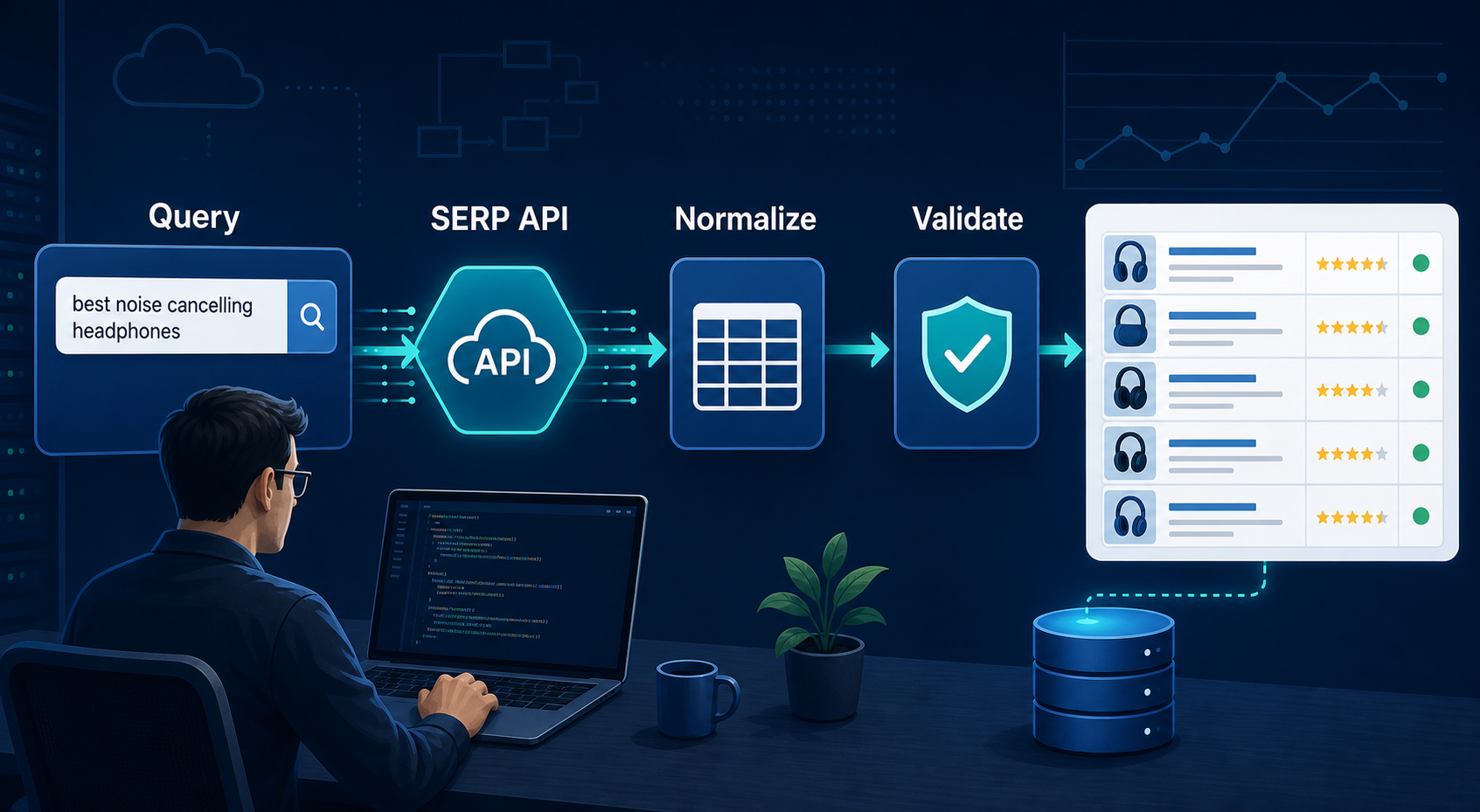
SERP API Python: How to Build a Reliable Search Data Pipeline
This guide shows a provider-neutral workflow for building that pipeline. It does not rank SERP API vendors. Instead, it focuses on the implementation choices that make a Python integration easier to operate, test, and migrate.
View Details
SERP Scraping API: How to Choose the Right Provider
Recommended Meta Description: Compare SERP scraping APIs by data coverage, localization, reliability, workflow fit, and cost structure, then choose and validate the right provider.
View Details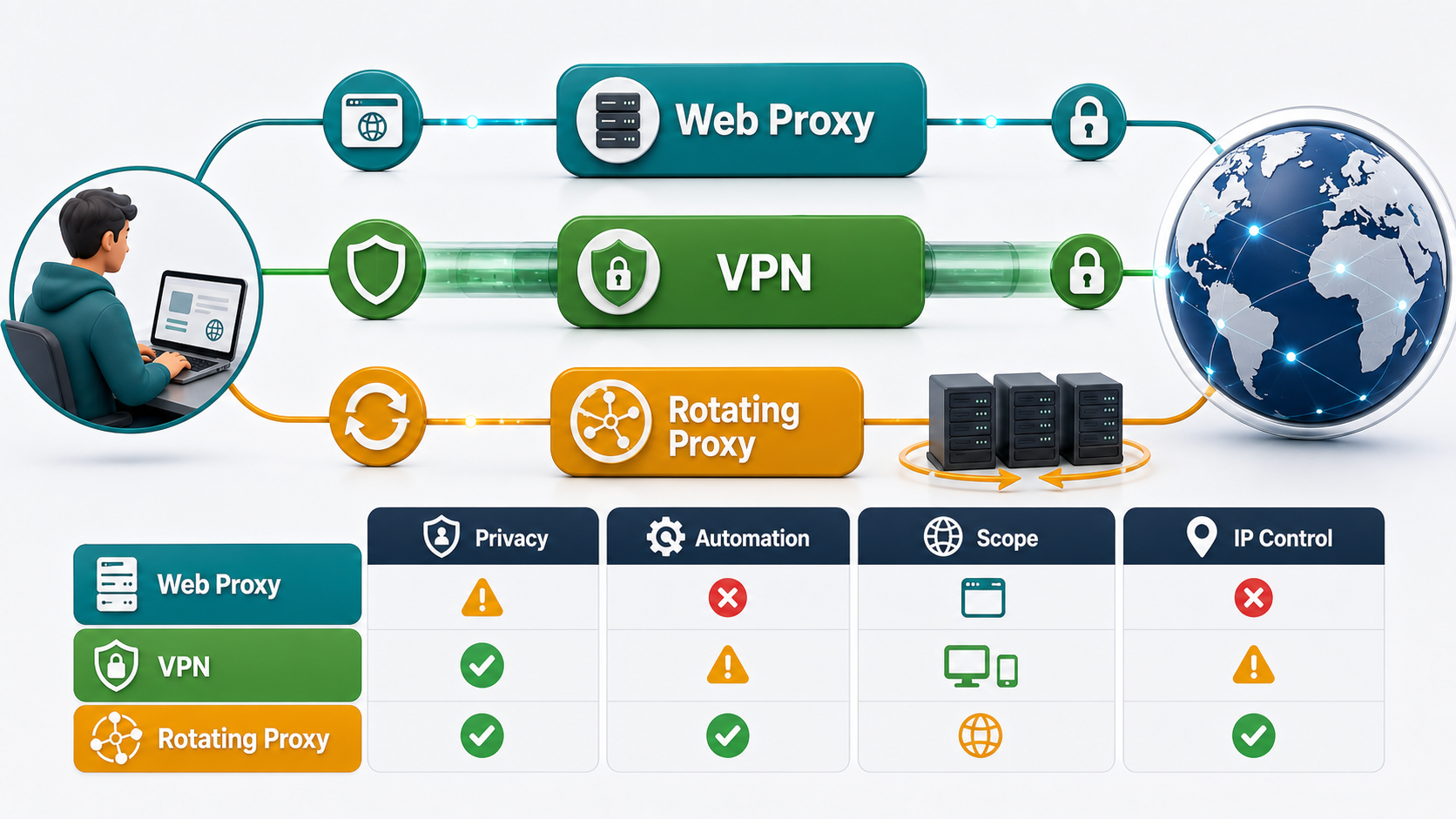
Free Web Proxy vs VPN vs Rotating Proxy: Which Should You Use?
Compare free web proxies, VPNs, rotating proxies, static proxies, and datacenter proxies by scope, encryption, IP control, automation, streaming, and account workflows.
View Details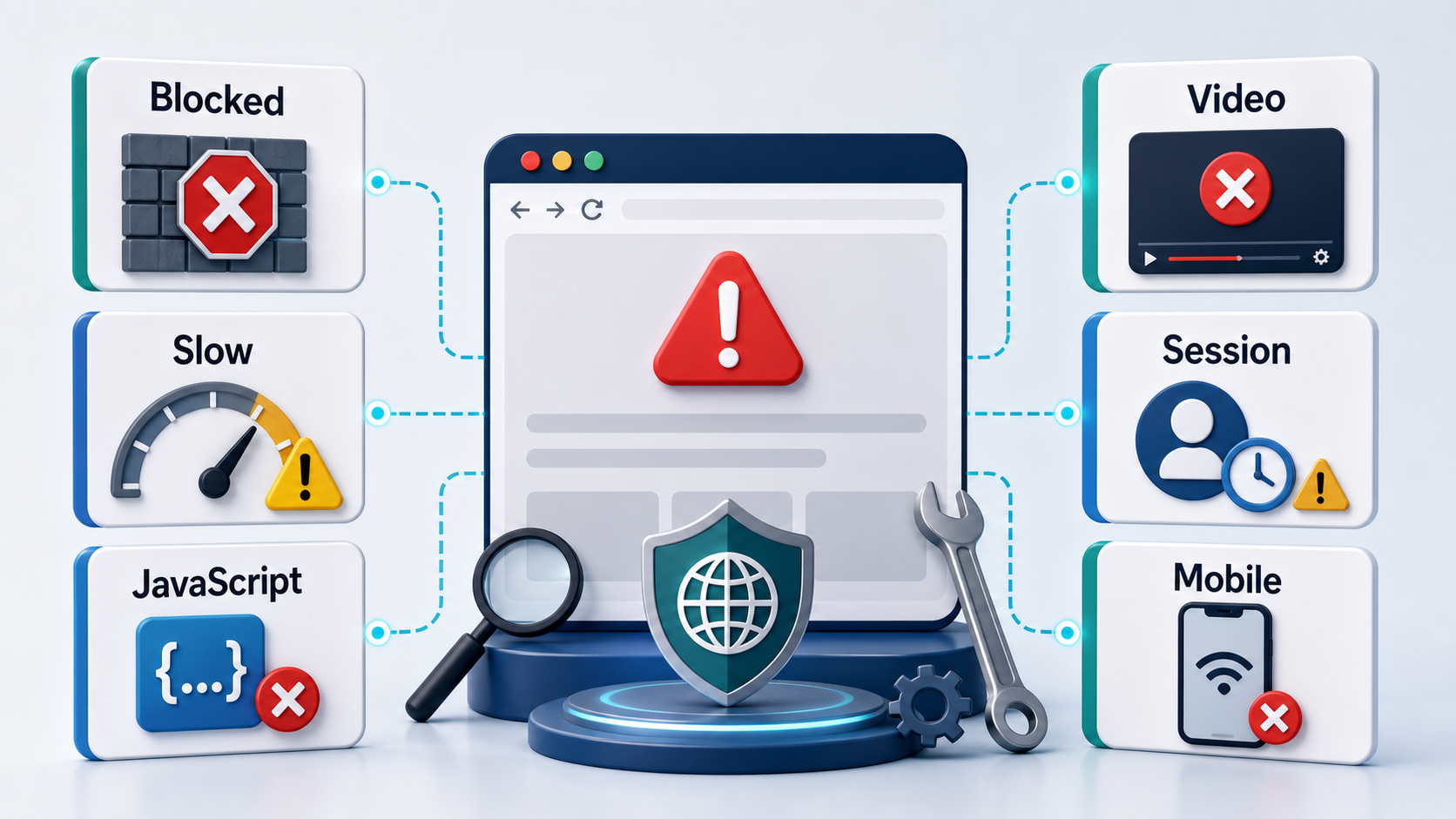
BlockAway Not Working? Fix Common Proxy, Video, and Access Problems
Troubleshoot BlockAway when pages are blocked, YouTube fails, JavaScript breaks, speed drops, sessions expire, or mobile access behaves differently.
View Details