
Browser Wars Are Over: What Comes Next?
Chrome won the browser war years ago. The real battle now is somewhere else entirely.
It's easy to forget how genuinely uncertain the browser landscape felt in the mid-2000s. Internet Explorer held a suffocating grip on the market. Firefox was the scrappy rebel. Safari was Apple's walled garden. Opera was the obsessive developer's secret weapon. The stakes felt real — which browser survived would shape how the entire web was built, experienced, and controlled.
That war is over. And the winner didn't just win. It won so completely that it rewrote the rules of the game.
Today, as of 2026, Chrome commands roughly 67% to 71% of the global browser market share. That alone is a decisive victory. But the more important number is the share of browsers running on Chromium, Google's open-source browser engine. When you add Chrome, Microsoft Edge, Opera, Brave, Vivaldi, and a dozen smaller players, the Chromium-based ecosystem accounts for approximately 75% of all browser usage worldwide.
Mozilla Firefox, running its own Gecko engine, sits at barely 2–3%. Apple's Safari, powered by WebKit, holds roughly 15–18% — almost entirely because it was historically the only browser engine Apple permitted on iOS.
The web was built on the foundational promise of openness and interoperability. Now, it is functionally rendered by one engine for three out of every four users. That has profound consequences.
Run global tests with LycheeIP
The Chromium Monoculture and What It Means for the Web
The story of how Chromium came to dominate isn't a story of malice. It is a story of engineering excellence, unparalleled distribution power, and market incentives aligning in one direction for fifteen years straight.
When Google launched Chrome, it achieved something revolutionary: it made the browser aggressively fast. The V8 JavaScript engine changed what was possible on the web overnight. Suddenly, web applications felt less like static documents and more like robust local software.
Microsoft's capitulation remains the most telling chapter in this story. After years of trying to make its EdgeHTML engine competitive, Microsoft abandoned it and rebuilt Edge entirely on Chromium. Microsoft acknowledged that the cost of maintaining a separate engine—and the developer frustration caused by cross-browser inconsistencies—outweighed the strategic benefit of independence. When Microsoft makes that call, the war is definitively over.
The Double-Edged Sword of Monoculture
The consequences for web standards are nuanced and worth examining carefully:
- Accelerated Innovation: Chromium's dominance has accelerated the rollout of complex web technologies. Features like WebAssembly, WebGPU, and modern CSS capabilities ship faster and with broader reach because Google controls the most-used browser and wields enormous influence over standards bodies.
- The Developer Feedback Loop: Developers rationally optimize for Chrome first. Features that Chrome hasn't implemented get deprioritized. Bugs that only appear in Firefox or Safari get fixed slowly, if at all. The practical result is that the web is increasingly developed for Chromium rather than to a shared, engine-agnostic standard.
- Commercial Web Policy: Google's core business is advertising, and Chrome acts as both a product and a massive data pipeline. When one company controls the browser experience for most of the web, its business decisions (like the Privacy Sandbox initiative) become de facto web policy, dictating how privacy and tracking operate globally.
The Desktop Environment as the New Competitive Battleground
If the browser engine war is settled, where does the competition go? The answer is that it has moved one layer up the stack—into the desktop environment and the operating system itself.
Browsers are no longer just applications that render web pages. For hundreds of millions of people, they are the primary computing environment. Progressive Web Apps (PWAs) have blurred the line between websites and desktop software. Electron-based applications—essentially Chromium instances running local code—power Slack, Visual Studio Code, Discord, and Notion. The browser is the OS.
Platform Integration and AI Agents
- Microsoft's Ecosystem Play: Edge isn't just a browser; it is deeply integrated into Windows, complete with sidebar tools, Copilot AI integration, and baked-in productivity assistants. Microsoft is competing for workflow ownership within its own operating system.
- Apple's Regulatory Reckoning: Safari on macOS and iOS has historically acted as an enforcement mechanism for Apple's platform control. Apple's longstanding rule prohibiting third-party browser engines on iOS was designed to ensure no browser became powerful enough to bypass the App Store. However, landmark legislation like the European Union's Digital Markets Act (DMA) forced Apple's hand, requiring it to allow alternative browser engines on iOS in EU markets—a massive regulatory shift that the UK's CMA recently mirrored.
- The Rise of AI-Native Browsers: We are witnessing the rapid emergence of browsers that treat artificial intelligence as a core interaction layer. Startups like The Browser Company (Arc) and new entrants like ChatGPT Atlas treat the browser not as a passive document viewer, but as an intelligent agent. These tools summarize pages, take actions on your behalf, and remember your preferences across sessions.
This is where the next war is being fought: over which platform owns the relationship between the user and their digital environment.
Run global tests with LycheeIP
What to Watch as the Next Platform War Takes Shape
For data teams, developers, and tech enthusiasts who care about the health of the open web, the post-browser-war landscape contains both genuine threats and underappreciated opportunities. Here is what deserves close attention:
- The Fate of Firefox: At 2–3% market share, Firefox might look like a rounding error. But Gecko is the last independent browser engine with meaningful desktop usage outside of Apple's ecosystem. Mozilla's ability to participate in standards bodies and ship meaningful privacy innovations acts as a vital check on Chromium's influence.
- Regulatory Pressure as the New Competition: The browser market won't be re-diversified by a better product alone—the network effects are too strong. What changes the calculus is antitrust enforcement. The DMA in Europe, the DOJ's ongoing cases against Google, and the CMA's scrutiny of Apple's WebKit mandate are applying immense pressure to the infrastructure that makes browser dominance self-sustaining.
- The Ethics of the AI Browser Layer: As browsers integrate agentic AI capabilities, the entity controlling that AI layer gains enormous influence over what users read, click, and buy. A browser that summarizes articles rather than displaying them in full fundamentally changes the economics of web publishing.
- WebKit's Future in a Post-DMA World: Apple's concessions under global regulatory scrutiny are still unfolding. If alternative browser engines (like Blink or Gecko) gain real traction on iOS, it could meaningfully shift mobile browser dynamics for the first time in a decade.
The browser war's end was always going to produce this moment—a period of apparent stability that masks a deeper restructuring of where power actually lives on the web. Chrome didn't just win a market share contest. It became the lens through which most of the world accesses digital reality. The question now isn't which browser runs faster or handles CSS better. The question is who controls the intelligent environment in which you live your digital life.
The war is over. The next one has already started. You just won't see it in a market share chart.
LycheeIP (Developer-First Proxy Infrastructure)
LycheeIP is a developer-first proxy and data infrastructure provider engineered to help technical teams seamlessly route network traffic, automate global QA, and execute secure public-data collection.
As the browser landscape fractures into AI-native agents and heavily localized progressive web apps, development and growth teams must rigorously test how their applications behave across different geographic regions. By integrating LycheeIP into your CI/CD pipelines, engineers can reliably verify localized web rendering and ensure compliance with regional regulations without triggering automated firewalls. For data teams conducting large-scale public data scraping to train the next generation of AI browser assistants, high-performance datacenter proxies deliver the unparalleled speed and stability required for heavy request volumes. Meanwhile, when validating complex mobile web experiences that depend on specific carrier environments, dynamic IP routing allows you to simulate authentic, residential user connections worldwide. Ultimately, utilizing a robust proxy and data infrastructure ensures that developers can confidently build for the modern web, knowing their applications will perform securely and consistently across any browser engine.
Run global tests with LycheeIP
Frequently Asked Questions
Q: Is Chrome's dominance actually a problem if it makes the web faster and more consistent?
A: It is a genuinely complicated tradeoff. Chromium's dominance has accelerated feature rollout and reduced cross-browser inconsistencies. However, it also means one company—whose core business relies on advertising—has outsized influence over web standards, privacy policies, and technological prioritization. A fast, consistent web controlled by a single commercial interest is not the same as a healthy, open web.
Q: Why does Firefox matter if almost nobody uses it anymore?
A: Firefox's importance isn't proportional to its market share. Mozilla's Gecko engine is the last independent rendering engine with meaningful desktop usage outside Apple's WebKit. Mozilla actively participates in web standards bodies and consistently champions user privacy. Losing that independent voice would leave Chromium's direction essentially unchallenged.
Q: What is the Digital Markets Act and why does it matter for browsers?
A: The Digital Markets Act (DMA) is EU legislation that designates certain large tech platforms as "gatekeepers" to ensure fair competition. For browsers, the DMA forced Apple to allow alternative browser engines on iOS in EU markets—a policy Apple had prohibited for over a decade. This represents the first major regulatory crack in Apple's mobile ecosystem control.
Q: What makes an AI-native browser different from just adding a chatbot to a browser?
A: A chatbot added to a browser is merely a feature. An AI-native browser treats artificial intelligence as the core interaction layer—summarizing content, taking autonomous actions on behalf of users, remembering context across sessions, and mediating the relationship between the user and the web. It transforms the browser from a passive renderer into an active, intelligent agent.
Q: Should developers bother testing in Firefox and Safari if most users are on Chrome?
A: Yes. Safari still holds roughly 15–18% of global browser usage, predominantly through iOS. Beyond market share, testing across multiple engines exposes underlying assumptions in your code that only Chromium handles in a specific way. Supporting engine diversity through rigorous testing is one of the most concrete ways developers can push back against the monoculture.
Q: Is Brave or Vivaldi genuinely independent from Google if they are built on Chromium?
A: Chromium-based browsers like Brave and Vivaldi are independent in terms of their user-facing features, privacy defaults, and business models. However, they remain entirely dependent on Google's upstream development of the core Chromium engine. They offer real choices within the ecosystem, but they do not provide the foundational engine-level diversity that Firefox and Safari represent.

Recommended Articles
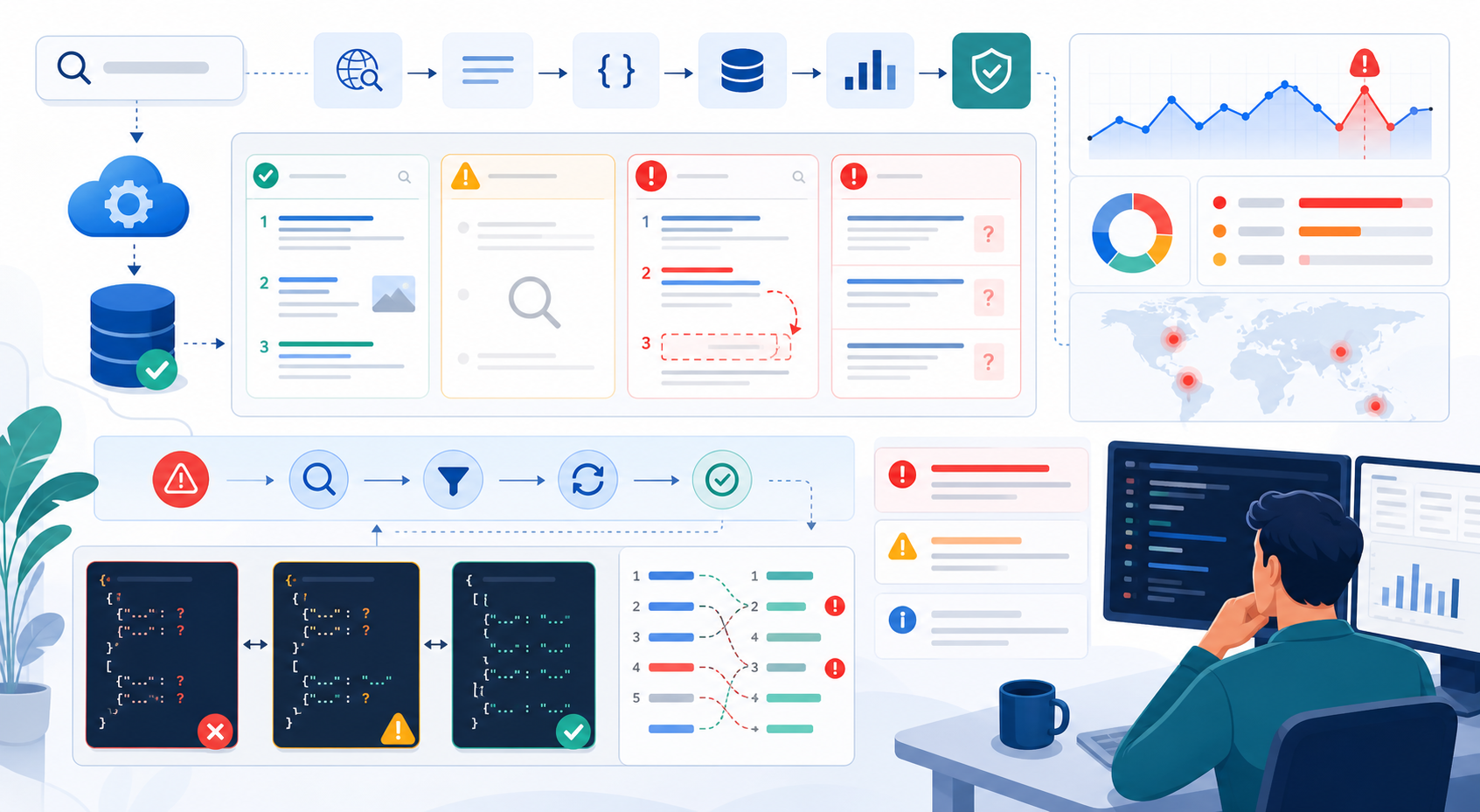
SERP API Troubleshooting: Fix Empty, Wrong, or Inconsistent Search Results
SERP API failures are not limited to obvious HTTP errors. A request can return successfully and still produce empty, incomplete, geographically wrong, duplicated, or misinterpreted search data. Production troubleshooting therefore has to separate transport problems from provider processing, SERP differences, and downstream parsing errors.
View Details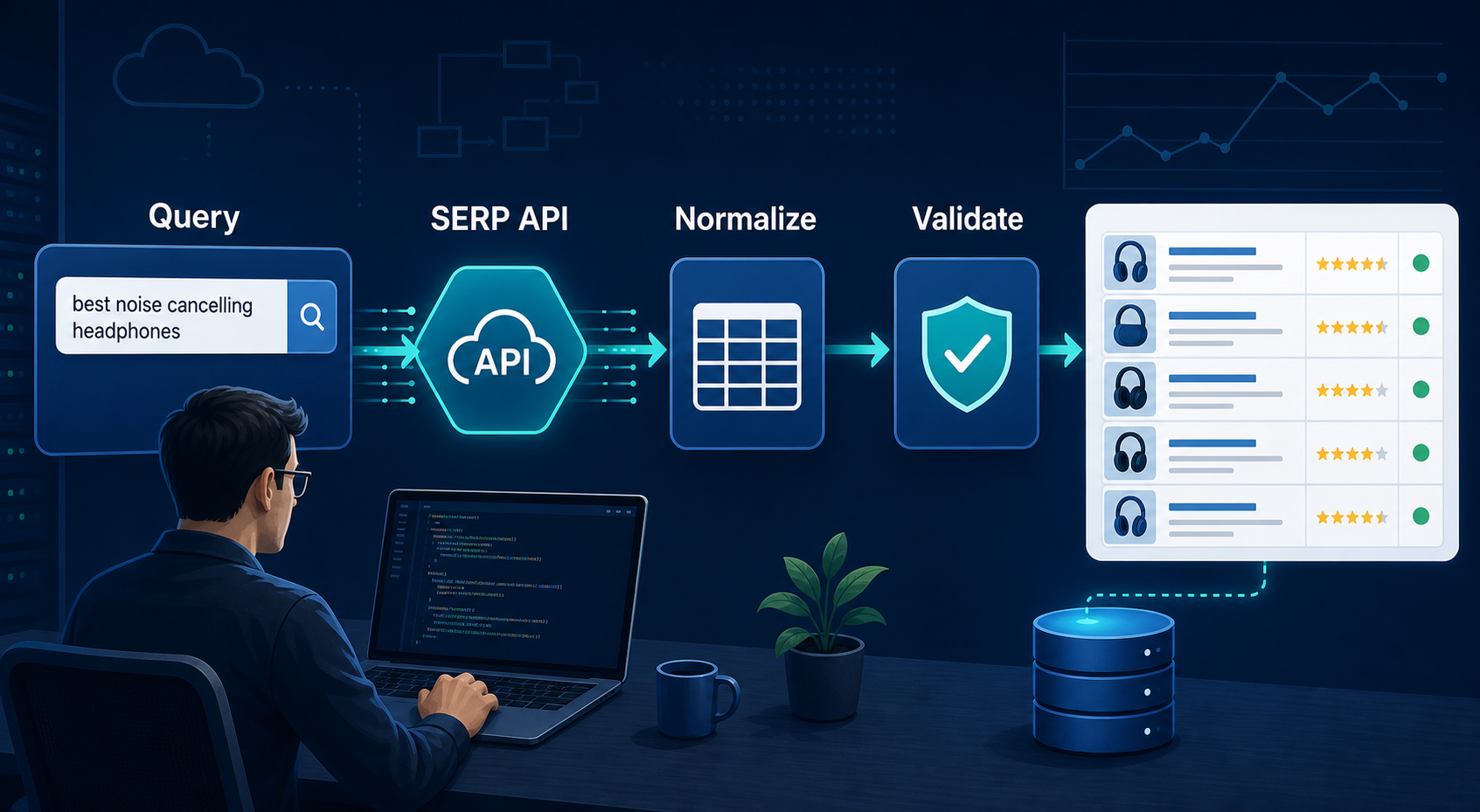
SERP API Python: How to Build a Reliable Search Data Pipeline
This guide shows a provider-neutral workflow for building that pipeline. It does not rank SERP API vendors. Instead, it focuses on the implementation choices that make a Python integration easier to operate, test, and migrate.
View Details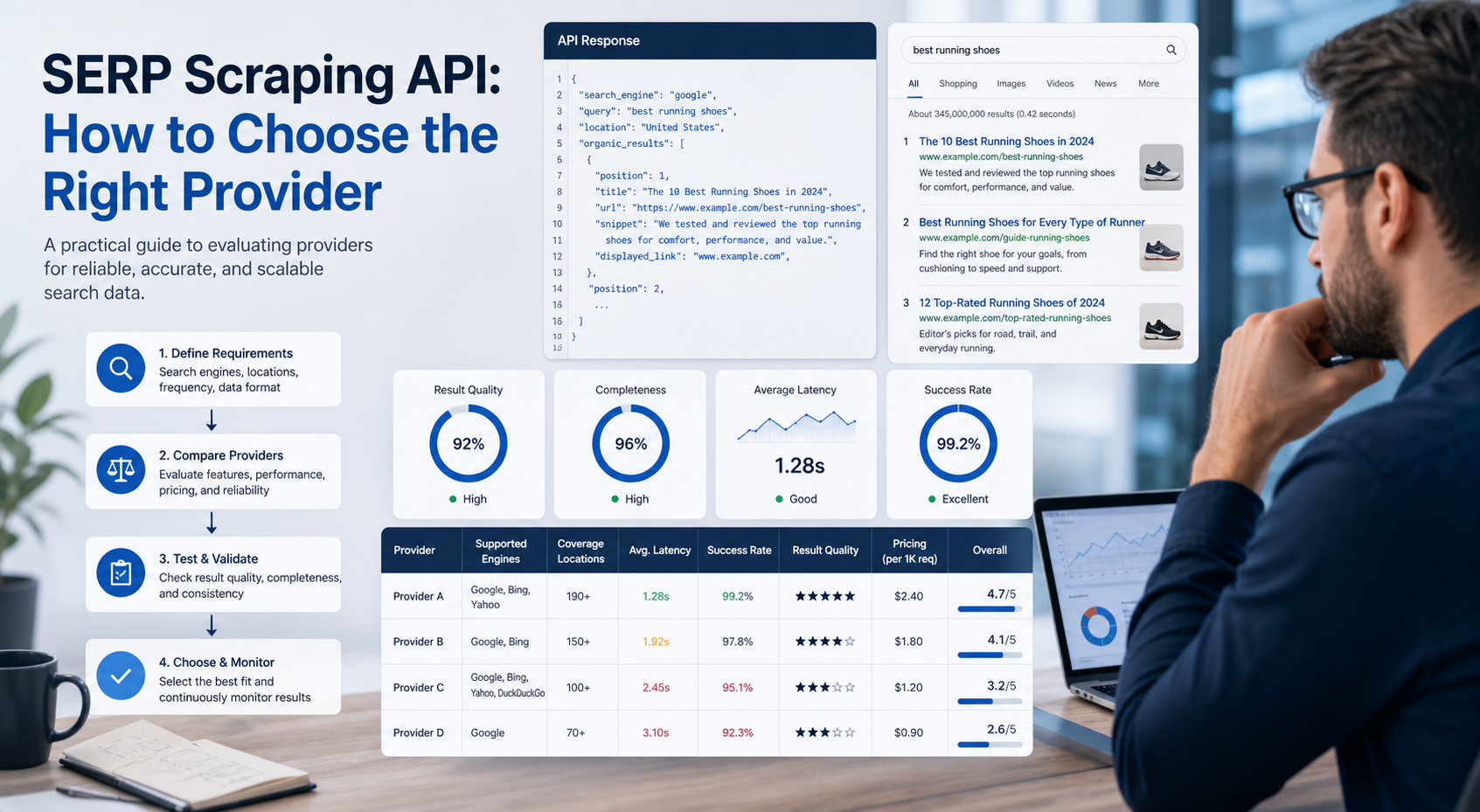
SERP Scraping API: How to Choose the Right Provider
Recommended Meta Description: Compare SERP scraping APIs by data coverage, localization, reliability, workflow fit, and cost structure, then choose and validate the right provider.
View Details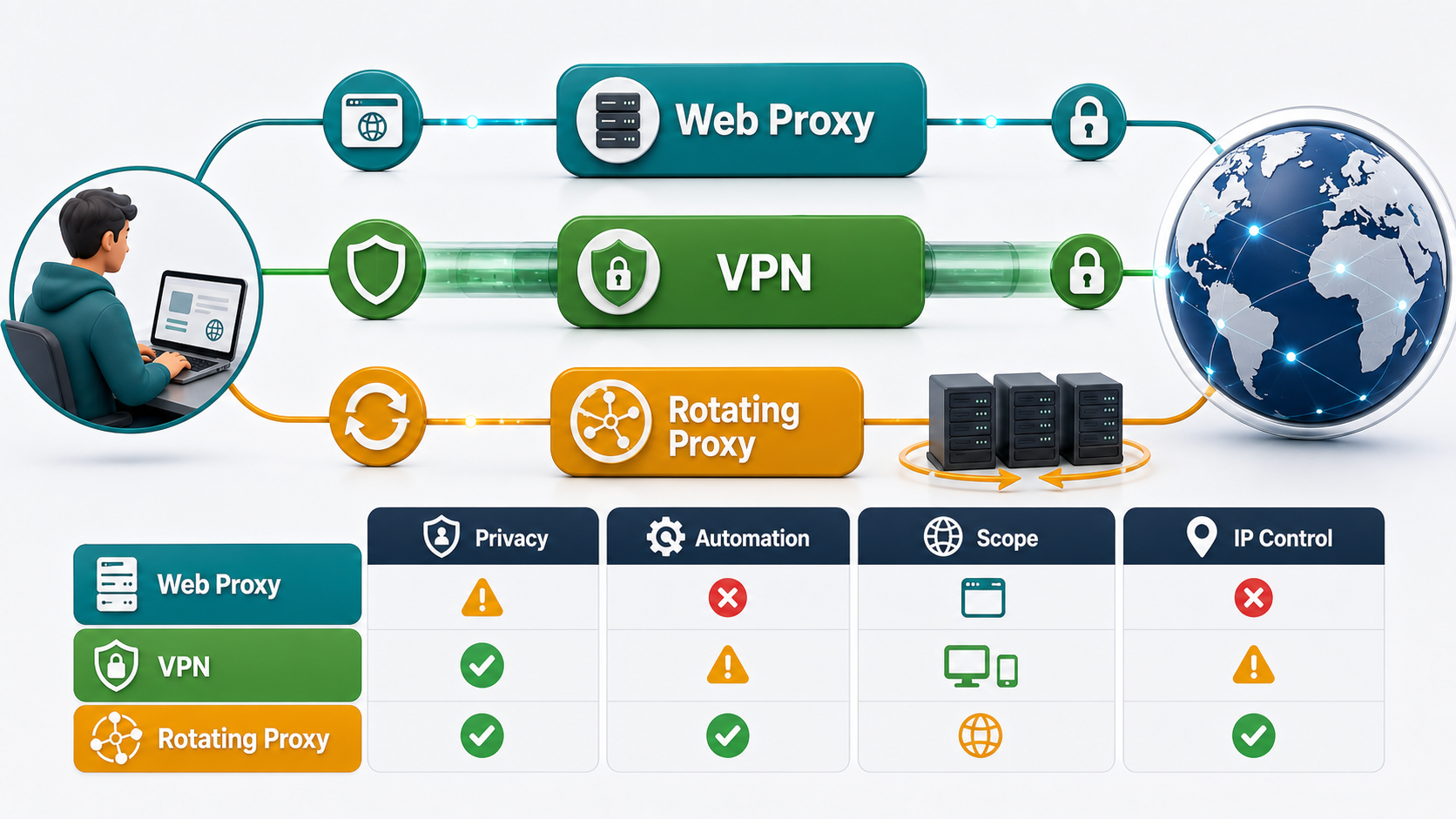
Free Web Proxy vs VPN vs Rotating Proxy: Which Should You Use?
Compare free web proxies, VPNs, rotating proxies, static proxies, and datacenter proxies by scope, encryption, IP control, automation, streaming, and account workflows.
View Details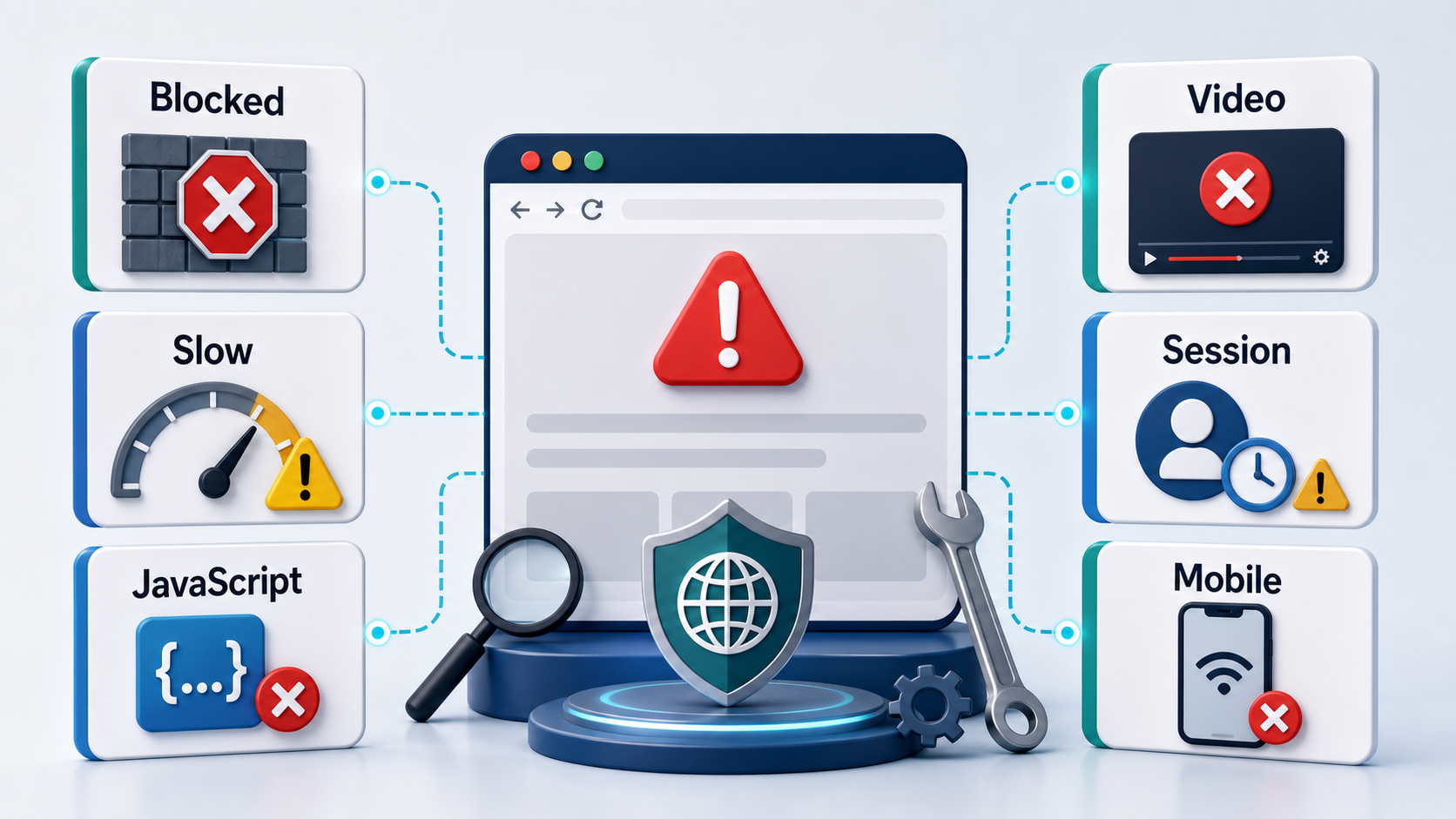
BlockAway Not Working? Fix Common Proxy, Video, and Access Problems
Troubleshoot BlockAway when pages are blocked, YouTube fails, JavaScript breaks, speed drops, sessions expire, or mobile access behaves differently.
View Details