
App Store Optimization in 2026: What Still Works, What Changed, and How to Rank
App Store Optimization in 2026: What Still Works, What Changed, and How to Rank
What is App Store Optimization and why is it data-driven in 2026?
App Store Optimization is the technical process of improving a mobile app’s visibility within an app store to drive organic downloads and conversion. While a standard ASO guide for beginners might focus purely on writing catchy titles, modern App Store Optimization in 2026 is a data engineering challenge. It involves precise measurement of stats, rigorous A/B testing, and infrastructure to monitor global apps accurately.
If you are a developer or data engineer, think of App Store Optimization as a conversion loop rather than a marketing task. The days of simple ASO hacks, like keyword stuffing or buying fake reviews, are over. Today, success depends on understanding how keywords index, how local rankings shift by region, and how to verify your data using clean ip addresses. Whether you are launching a utility app or managing a portfolio of games, the goal is to turn stats into actionable insights that improve your install rate.
Use LycheeIP to test rotating proxies
How do app store algorithms determine visibility without manual guessing?
App store algorithms prioritize apps based on a combination of metadata relevance, user behavior signals, and overall product quality. You do not need to guess; you need to feed the algorithm the right stats. Both Apple and Google utilize sophisticated weighting systems that punish ASO hacks and reward consistent engagement.
To rank well, you must align your metadata with what users actually search for. This means your keywords must match user intent, and your app performance (crash rates, retention) must meet technical standards. If you treat App Store Optimization as a precise science, you will realize that "virality" is often just excellent engineering meeting market demand.
How does App Store Optimization vs SEO compare in terms of technical signals?
App Store Optimization vs SEO shares a fundamental logic, relevance plus authority, but the technical signals differ significantly. In web SEO, you optimize for backlinks and page speed; in mobile app SEO, you optimize for install velocity and retention rates. An ASO guide for beginners often misses this distinction, leading teams to over-optimize descriptions while ignoring the crash vitals that actually hurt rankings.
- Web SEO: Crawlability, backlinks, domain authority.
- Mobile App SEO: Install velocity, uninstall rates, ratings, and keyword field precision.
Which App Store Optimization ranking factors matter most?
The most critical App Store Optimization ranking factors are the app title, localized keywords, visual conversion rates, and the volume of high-quality ratings. Unlike older ASO hacks that tried to game the system with hidden text, current App Store Optimization ranking factors heavily weight user engagement.
If users search for your keywords, tap your listing, but do not install, your rankings will drop. This "tap-to-install" conversion rate is a primary signal. Additionally, global apps must demonstrate relevance in specific locales. Using English meta-data in Japan will hurt your App Store Optimization ranking factors regardless of how popular your app is in the US.
How do you execute keyword research for App Store Optimization efficiently?
You execute keyword research by identifying high-volume, low-competition terms that specifically drive installs, not just traffic. Effective research moves beyond a basic ASO guide for beginners by incorporating competitor web scraping and data analysis. You are looking for keywords that describe your core value proposition.
Start by listing every feature your app offers. Then, use ASO tools to expand this list into synonyms and long-tail phrases. Filter these keywords based on difficulty scores. Remember, ranking #1 for a keyword nobody searches for yields zero stats that matter.
Which stats and signals should you collect for keyword decisions?
You should collect search volume estimates, difficulty scores, and current rank distribution for your target keywords. Do not rely on vanity stats; focus on the metrics that predict growth. For global apps, you must also collect these stats per country, as search behavior changes across borders.
Use LycheeIP to test rotating proxies
What is the optimal app store keywords field strategy for iOS?
The optimal app store keywords field strategy for iOS is to maximize the 100-character limit by using single words separated by commas and avoiding duplicates. Apple’s algorithm combines these words to form phrases, so repeating keywords from your title into your keyword field is a waste of space.
A robust app store keywords field strategy is purely mechanical. It is not about writing sentences; it is about efficient indexing.
- Do: finance,budget,money,tracker,planning,save,invest
- Don't: finance budget, money tracker, save money
How should the app store keywords field strategy handle commas and spaces?
Your app store keywords field strategy must eliminate all spaces after commas to save precious character count. Apple reads word1,word2 perfectly fine. If you add a space (word1, word2), you are wasting a character that could have been used for more keywords. This is one of the few legitimate "technical" ASO hacks that actually helps.
How does Google Play keyword optimization differ from iOS mechanics?
Google Play keyword optimization relies on natural language processing within the visible description, whereas iOS relies on a hidden field. This makes Google Play keyword optimization feel much closer to traditional App Store Optimization vs SEO on the web. You must weave your keywords naturally into sentences that users read.
If you apply an iOS app store keywords field strategy to Google Play (just listing words), you will look like spam. Google Play keyword optimization demands good copywriting.
What should you put in the title, short description, and long description?
- Title: Your brand name plus your single most important keyword.
- Short Description: A pitch focused on conversion that includes secondary keywords.
- Long Description: A detailed explanation of features where Google Play keyword optimization really happens through keyword density (without stuffing).
How do you improve conversion rates using data-backed creatives?
You improve conversion rates by testing screenshots and videos that address user pain points immediately. While an ASO guide for beginners might suggest "making it look pretty," data-driven App Store Optimization requires A/B testing distinct value propositions.
If your stats show high impressions but low installs, your creatives are failing. Use web scraping to analyze competitor creative trends, but differentiate your visual language.
When should you track local rankings for global apps using rotating mobile proxies?
You should track local rankings using rotating mobile proxies whenever you need to verify app performance in a country where you are not physically located. Global apps often face the challenge of personalized search results; checking rankings from your office IP in New York gives you US results, even if you are trying to view the French store.
Rotating mobile proxies allow you to route your connection through real mobile devices in target regions. This mimics a real user's connection. At LycheeIP, we provide the clean, ethical infrastructure developers need to monitor local rankings accurately without getting blocked.
How do rotating mobile proxies and ip addresses ensure accurate monitoring?
Rotating mobile proxies ensure accuracy by masking your scraping bot as a genuine mobile user with a residential or mobile carrier IP. App stores block data center ip addresses aggressively because they are associated with bot traffic. By using legitimate ip addresses from a provider like LycheeIP, you ensure that your web scraping scripts return the actual local rankings a real user sees, not a CAPTCHA or a skewed result.
This infrastructure is essential for:
- Verifying ad verification placements.
- Collecting unbiased stats on ranking positions.
- Monitoring global apps compliance across regions.
Use LycheeIP to test rotating proxies
Which ASO tools and web scraping setups suit developer teams?
The best ASO tools for developers are those that offer API access or integrate well with custom web scraping pipelines. While marketing-focused ASO tools offer pretty dashboards, engineering teams often prefer raw data to build their own models.
- Off-the-shelf ASO tools: Great for quick insights and basic stats.
- Custom Web Scraping: Essential for high-frequency monitoring of local rankings and competitor keywords.
If you build internal ASO tools, ensure you integrate rotating mobile proxies to avoid rate limits. A robust web scraping setup allows you to track thousands of keywords daily across global apps.
Why are ratings, reviews, and ad verification critical for trust?
Ratings and reviews are visible trust signals that directly impact conversion, while ad verification ensures your paid traffic isn't being hijacked. Negative reviews can tank your mobile app SEO efforts instantly. An ASO guide for beginners will tell you to "get good reviews," but advanced teams use web scraping to analyze review sentiment at scale.
Similarly, ad verification is vital. If you pay for ads to drive installs, you must ensure those ads appear in safe environments. Rotating mobile proxies allow you to anonymously verify ads in different geos, ensuring your App Store Optimization efforts aren't wasted on fraudulent traffic.
How do you measure App Store Optimization success with repeatable KPIs?
You measure App Store Optimization success by tracking Keyword Rankings, Impression-to-Install Rate, and Organic Uplift. Avoid vanity metrics. Real stats tell you if your app store keywords field strategy is working.
Use this simple logic:
- Input: Change metadata or keywords.
- Process: Wait 7-10 days.
- Measurement: Check local rankings via rotating mobile proxies and analyze console stats.
- Iteration: Refine based on data, not ASO hacks.
This cycle turns App Store Optimization from a guessing game into a reliable growth engine.
Comparison: iOS vs. Google Play Field Strategy
| Feature | iOS App Store | Google Play Store |
| Strategy Name | App store keywords field strategy | Google Play keyword optimization |
| Ranking Input | Hidden keyword field (100 chars). | Visible descriptions (Long & Short). |
| Ranking Factors | Exact match in Title/Subtitle/Keywords. | Keyword density & natural language. |
| Field Logic | No spaces after commas. No duplicates. | Readable sentences. Contextual usage. |
| Optimization Style | Mechanical engineering. | Mobile app SEO copywriting. |
| Measurement | Rank per keyword. | Rank per keyword + Semantic match. |
Use LycheeIP to test rotating proxies
Frequently Asked Questions:
1. Is App Store Optimization dead in 2026?
No, App Store Optimization is not dead; it has evolved. The era of easy ASO hacks is gone, replaced by a need for high-quality stats, genuine user engagement, and technical mobile app SEO strategies.
2. How do rotating mobile proxies help with ASO?
Rotating mobile proxies allow you to change your ip addresses to match specific countries. This helps you track accurate local rankings for global apps and perform ad verification without being served personalized or geo-biased results.
3. What is the difference between App Store Optimization vs SEO?
App Store Optimization vs SEO differs in ranking signals. SEO focuses on links and domain authority, while App Store Optimization focuses on install velocity, retention stats, and exact metadata matches in the app store keywords field strategy.
4. Can I use web scraping for ASO keyword research?
Yes. Web scraping is highly effective for monitoring competitor keywords and tracking local rankings at scale. However, you must use reliable ip addresses to avoid being blocked by store firewalls.
5. What is the most important field for Google Play keyword optimization?
The Title is the most important, followed closely by the Short Description. Google Play keyword optimization weighs words at the top of the listing heavier than those buried in the Long Description.
6. Do I really need an ASO guide for beginners if I am a developer?
Most ASO guide for beginners content is too basic for developers. You need technical documentation on ranking factors, API limits for ASO tools, and infrastructure for collecting stats—not just marketing fluff.

Recommended Articles
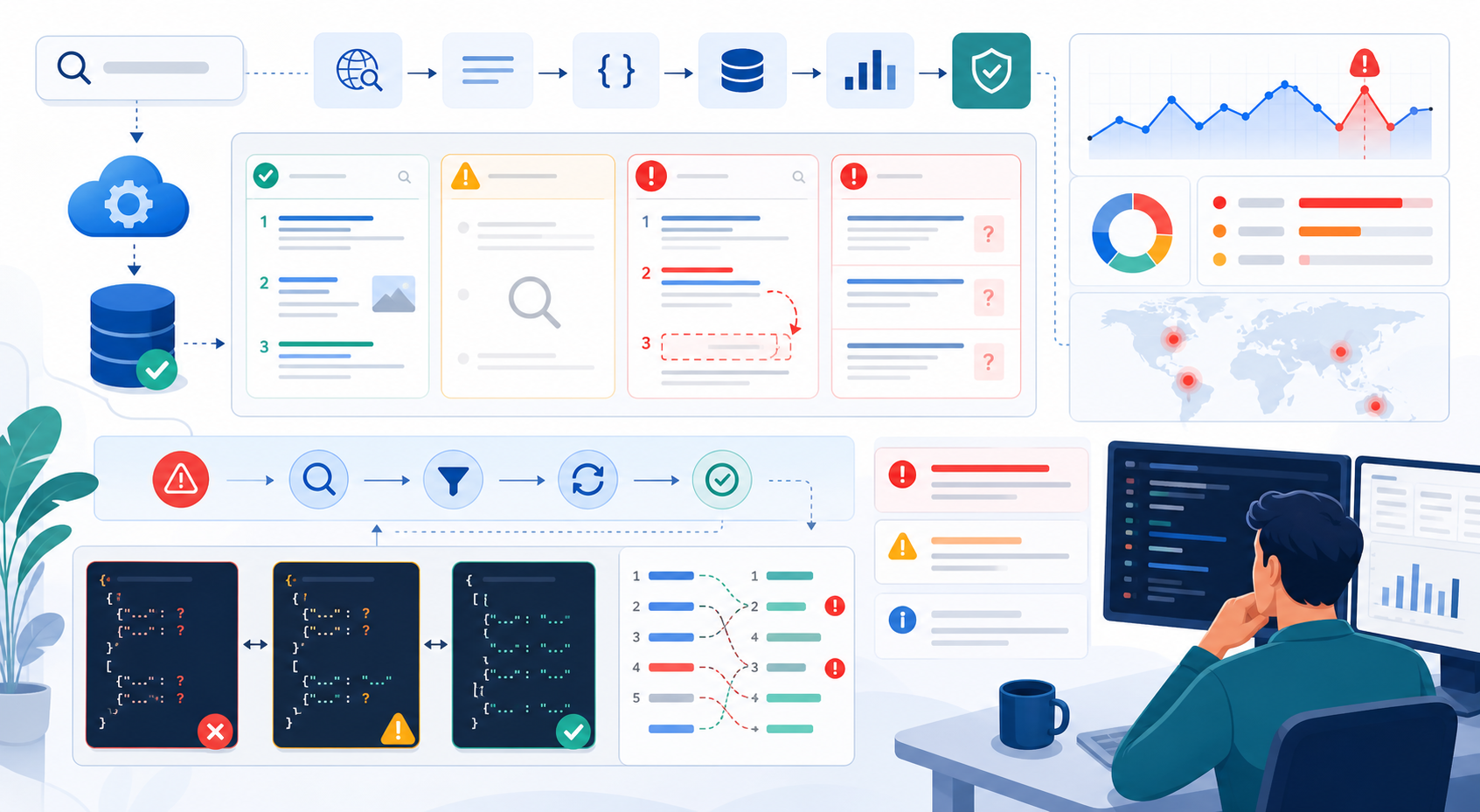
SERP API Troubleshooting: Fix Empty, Wrong, or Inconsistent Search Results
SERP API failures are not limited to obvious HTTP errors. A request can return successfully and still produce empty, incomplete, geographically wrong, duplicated, or misinterpreted search data. Production troubleshooting therefore has to separate transport problems from provider processing, SERP differences, and downstream parsing errors.
View Details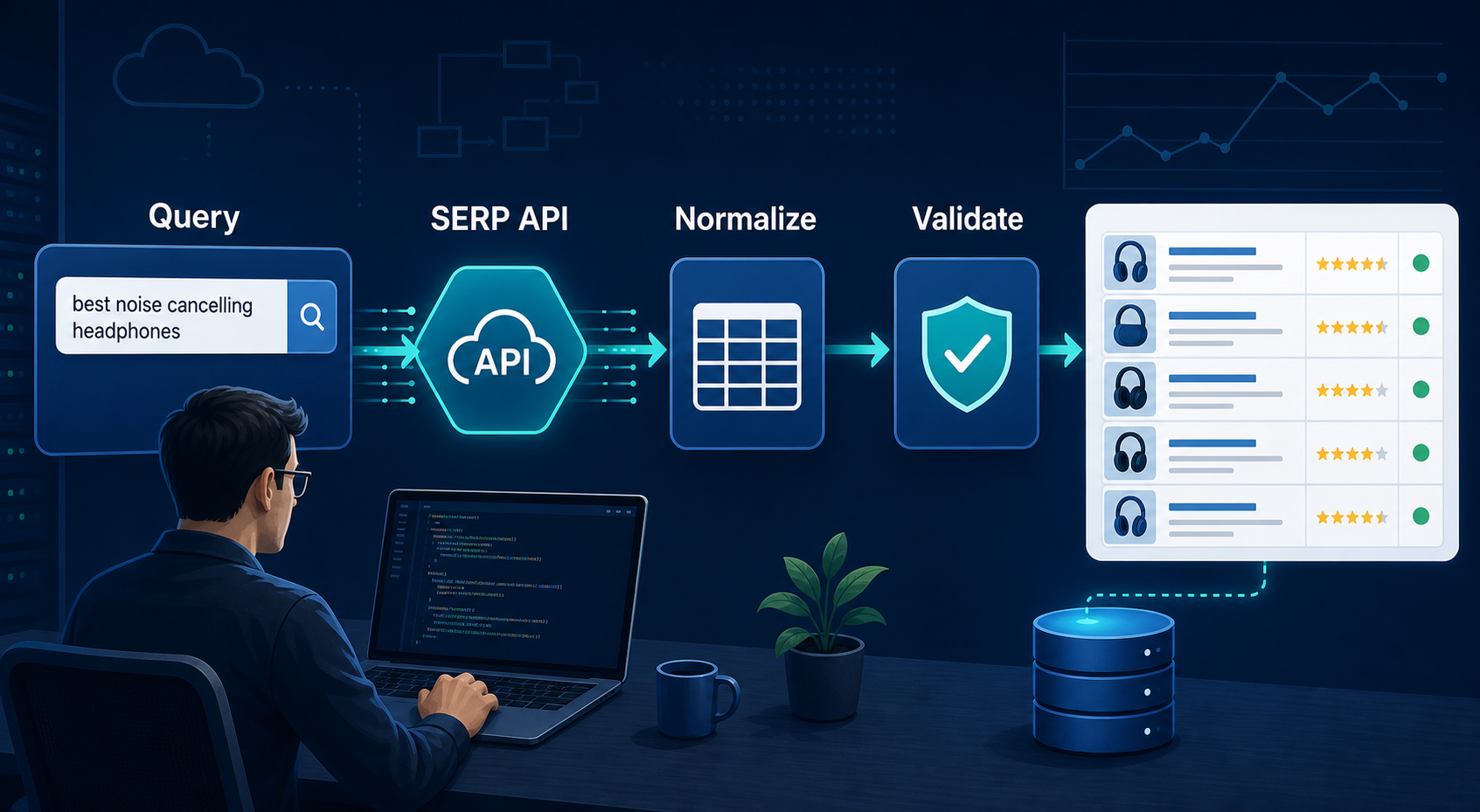
SERP API Python: How to Build a Reliable Search Data Pipeline
This guide shows a provider-neutral workflow for building that pipeline. It does not rank SERP API vendors. Instead, it focuses on the implementation choices that make a Python integration easier to operate, test, and migrate.
View Details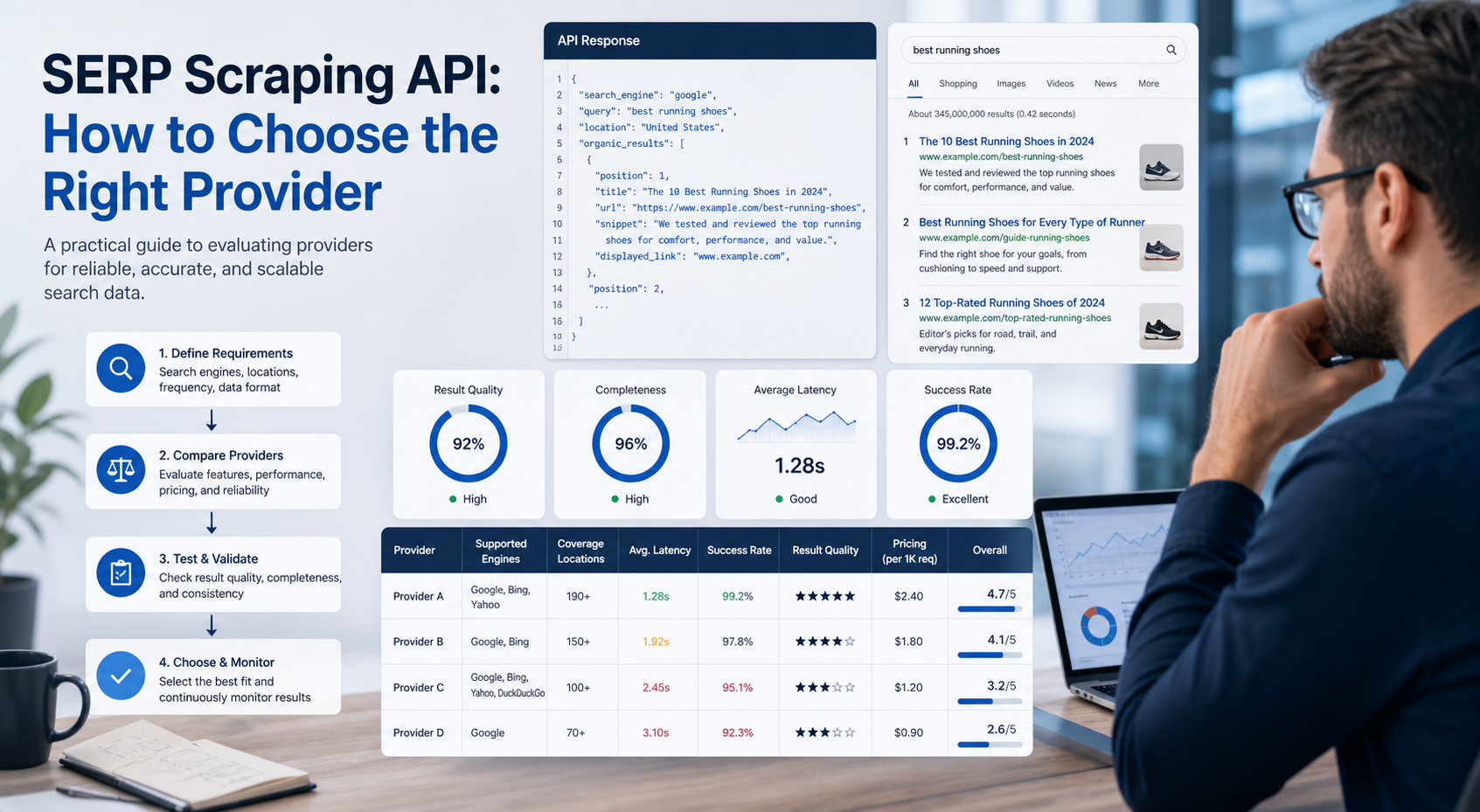
SERP Scraping API: How to Choose the Right Provider
Recommended Meta Description: Compare SERP scraping APIs by data coverage, localization, reliability, workflow fit, and cost structure, then choose and validate the right provider.
View Details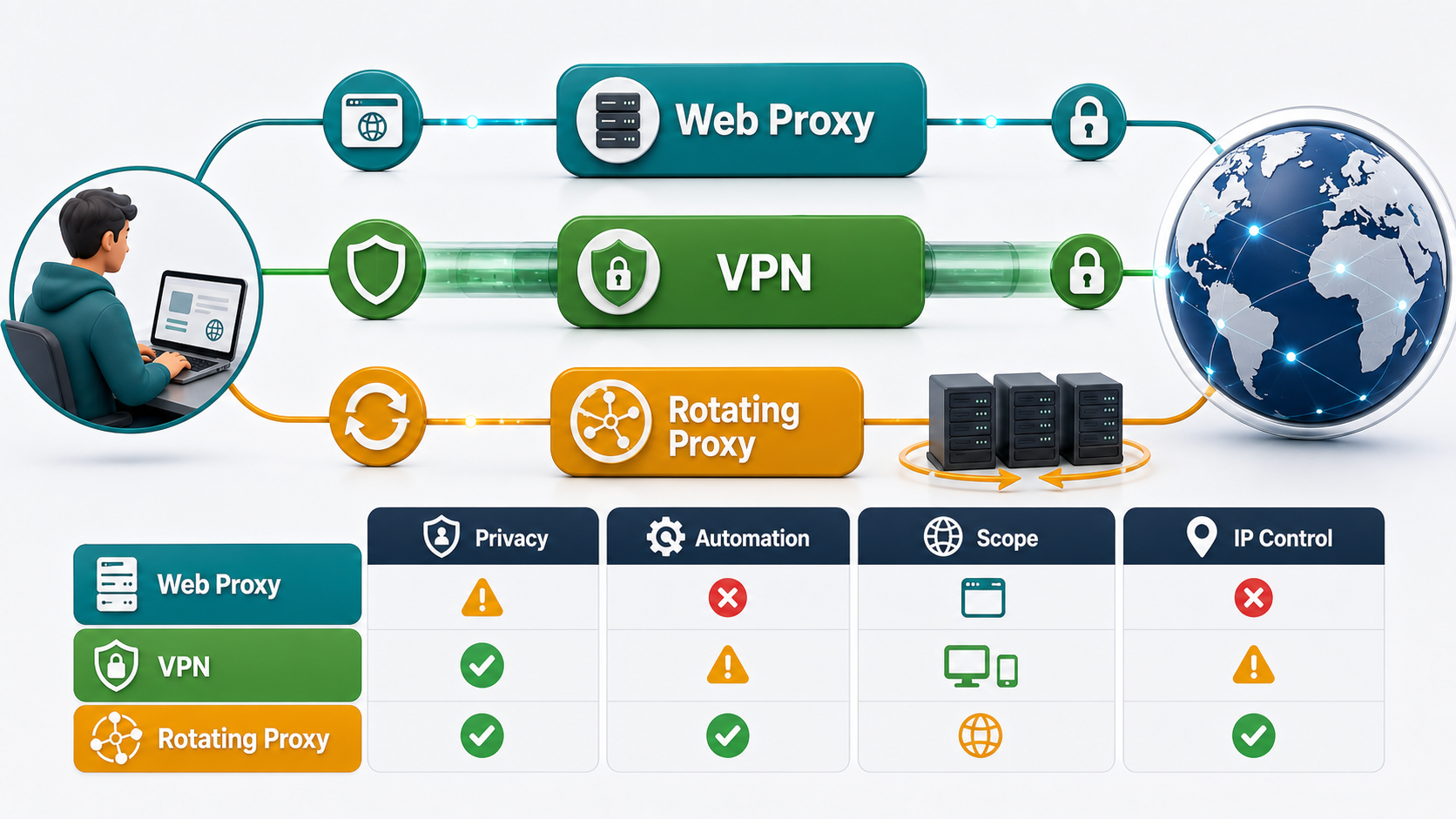
Free Web Proxy vs VPN vs Rotating Proxy: Which Should You Use?
Compare free web proxies, VPNs, rotating proxies, static proxies, and datacenter proxies by scope, encryption, IP control, automation, streaming, and account workflows.
View Details
BlockAway Not Working? Fix Common Proxy, Video, and Access Problems
Troubleshoot BlockAway when pages are blocked, YouTube fails, JavaScript breaks, speed drops, sessions expire, or mobile access behaves differently.
View Details